
Workout Plans: Building Structure for Real Results
Most men fail their fitness goals because they mistake information for preparation. You do not need another workout plan downloaded from the internet. You need a system you will actually execute, week after week, when motivation disappears and life gets harder. The difference between temporary enthusiasm and sustained results is not found in complexity but in accountability, structure, and the willingness to show up when it matters most. Training without a plan is hope disguised as effort. Training with the wrong plan is worse because it wastes your most limited resource: time.
Why Most Workout Plans Fail
The fitness industry has convinced you that the perfect program exists somewhere out there. You search for it, download it, start strong for two weeks, then abandon it when progress stalls or life demands attention. This cycle repeats because the plan was never the problem. Your environment was the problem.
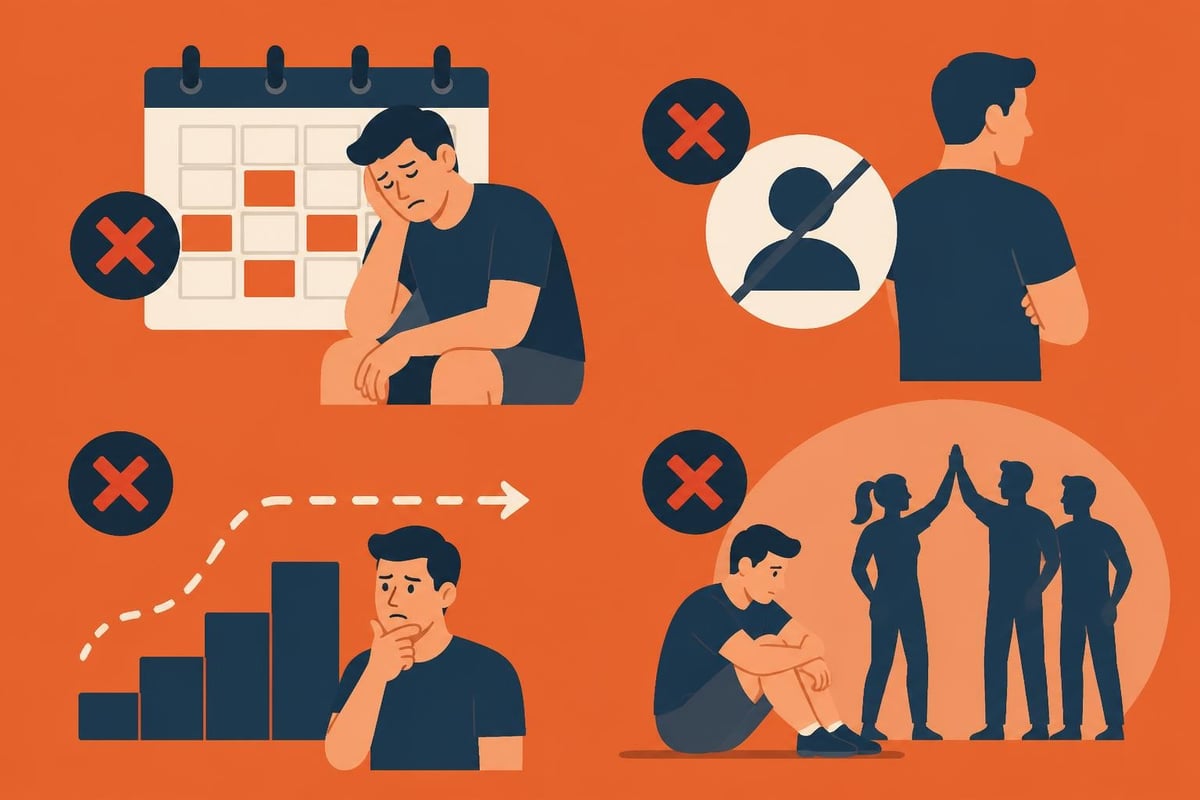
Workout plans fail for predictable reasons:
No accountability structure to enforce execution
Unrealistic time commitments that ignore your actual schedule
Generic programming that does not account for your current capacity
No adjustment mechanism when progress plateaus
Isolation from other men pursuing the same standard
You cannot outwork a broken system. The solution is not finding a better plan but building an environment where execution becomes inevitable. Men succeed when they train alongside other men who hold them to the standard they set for themselves.
The Information Trap
Access to unlimited workout plans has not made men stronger. It has created analysis paralysis and permission to delay. Every new program offers a fresh start, which means you never commit long enough to see real adaptation. This is not a knowledge problem. This is a leadership problem.
Your body does not respond to perfect programming. It responds to consistent overload applied progressively over months and years. Theresearch on resistance training guidanceconfirms what experienced lifters already know: basic principles applied consistently outperform complex programs executed sporadically.
Building Sustainable Training Structure
Effective workout plans start with honest assessment of your current reality. Not where you want to be. Not where you were five years ago. Where you are right now, today, with the time and capacity you actually have available.
Assessment FactorQuestion to AnswerAction RequiredTraining FrequencyHow many days can you realistically train each week?Block specific time slots on your calendarSession DurationHow long before other obligations demand attention?Design workouts that fit the window you controlRecovery CapacityHow does your body respond to current training volume?Start conservative, add volume as adaptation allowsEquipment AccessWhat tools do you have consistent access to?Build plans around available resources, not ideal scenarios
Start with three sessions per week. Forty-five minutes each. Full body training that hits major movement patterns. This is not the optimal plan. This is the plan you will actually execute while managing work, family, and the dozens of other demands competing for your attention.
Progressive Overload as Non-Negotiable Standard
Adaptation requires progressive challenge. Your muscles do not grow because you showed up. They grow because you forced them to handle loads they could not handle before. This is where most workout plans become decoration instead of tools.
Track these variables every single session:
Weight lifted for primary movements
Total reps completed across working sets
Rest periods between sets
Subjective difficulty rating (1-10 scale)
Sleep quality and stress level entering the session
You must add difficulty systematically. Add one rep to a set. Add five pounds to the bar. Reduce rest by fifteen seconds. The specific method matters less than the commitment to never accept stagnation as acceptable. When selectingappropriate workout programs, progression strategy should be the first filter you apply.
Designing Workout Plans for Fathers Over 35
Your body at 38 does not recover like it did at 28. This is not weakness. This is biology demanding you train smarter instead of just harder. Fathers carry stress most men do not understand until they live it: financial pressure, relationship dynamics, the weight of being the example your children need.
Your workout plan must account for this reality. High-frequency training works when you are 22 with no obligations. At 35 with three kids and a demanding career, it creates a recovery deficit that leads to injury, exhaustion, and eventual abandonment of training altogether.

Recovery as Primary Training Variable
Sleep deprivation, chronic stress, and suboptimal nutrition destroy your ability to adapt to training stimulus. Most men ignore this until forced injury takes the decision out of their hands. You do not get bonus points for training through pain that signals your body needs rest.
Recovery FactorStandardConsequence of FailureSleep Duration7-8 hours minimumReduced testosterone, impaired muscle protein synthesis, increased cortisolStress ManagementDaily practice (breathing, walking, meditation)Elevated inflammation, poor recovery, training becomes additional stressorNutrition TimingProtein every 4-5 hours, carbs around trainingInsufficient muscle repair, energy deficit during sessionsDeload FrequencyEvery 4-6 weeks reduce volume by 40%Accumulated fatigue, increased injury risk, performance plateau
Thecomplete guide to building muscle through full-body workoutsemphasizes recovery windows as critical as the training itself. Your body adapts during rest, not during the session. Training is the stimulus. Recovery is where growth happens.
Training Splits That Respect Your Schedule
You do not need six days per week in the gym. You need three days of focused work that drives adaptation without destroying your capacity to lead at home. Full body sessions allow higher frequency per muscle group with lower overall time commitment.
Three-day split structure:
Day 1:Squat pattern, horizontal push, horizontal pull, core
Day 2:Hinge pattern, vertical push, vertical pull, carries
Day 3:Unilateral lower, push variation, pull variation, conditioning
Each muscle group receives stimulus three times per week with 48 hours between sessions. This matches the protein synthesis window and allows consistent progress without requiring you to live in the gym. Men seekingcomprehensive workout plans tailored specifically for their goalsoften overlook the sustainability factor until they have already quit twice.
Accountability Systems That Enforce Execution
Your workout plan is worthless without enforcement mechanisms. Motivation is not a strategy. Discipline is not enough when you are exhausted from a 12-hour workday and your son needs help with homework. You need external accountability that makes training non-negotiable.
Brotherhood creates this standard. When other men expect you to report your training, when they notice your absence, when they call you out for making excuses, execution stops being optional. This is not about encouragement. This is about men holding each other to the standard they claim to want.
Accountability mechanisms that work:
Training partners who show up regardless of how you feel
Weekly check-ins where you report specific metrics
Financial commitment through coaching investment
Public declaration of your standard to men who will remember
Consequence for failure (additional work, community service, donation)
TheGroup Coaching Communityat The Father Forge builds this structure intentionally. Weekly calls where you report training completion. Other fathers who notice when you disappear. A standard set collectively that becomes harder to abandon than to execute.

Tracking Systems That Reveal Truth
You cannot manage what you do not measure. Most men train by feel, which means they repeat the same weights for months while convincing themselves they are progressing. Your training log is the objective record that exposes this self-deception.
Log every session. Every set. Every rep. Weight used. Rest taken. How the session felt. Patterns emerge over weeks that single sessions never reveal. You discover your squat progress stalls every fourth week. Your bench responds better to higher volume. Your deadlift suffers when sleep drops below seven hours.
This data informs intelligent adjustment instead of random program hopping. Thefree workout plans and training calculatorsprovide tools, but the discipline to use them consistently separates men who transform from men who try.
Programming Principles for Long-Term Progress
Workout plans must evolve as you adapt. What drives progress in month one becomes maintenance work by month six. Most men either add volume indefinitely until they break or repeat the same program until it stops working. Both approaches guarantee failure.
Periodization is not complicated. It is systematic variation of intensity, volume, and movement selection to prevent adaptation plateau and manage fatigue accumulation. You do not need a degree in exercise science. You need a basic framework and the patience to execute it.
Phase Structure for Sustainable Gains
Eight-week training blocks:
Weeks 1-2:Accumulation phase (higher volume, moderate intensity)
Weeks 3-5:Intensification phase (lower volume, higher intensity)
Week 6:Deload (reduced volume and intensity)
Weeks 7-8:Realization phase (test new maxes, assess progress)
This structure allows progressive overload while managing recovery demands. You build capacity, express that capacity at higher intensity, recover, then test what you built. Theextensive database of workout routinesshows this pattern across successful programs regardless of specific methodology.
Training PhaseSets Per ExerciseReps Per SetIntensity (%1RM)Primary AdaptationAccumulation4-58-1265-75%Hypertrophy, work capacityIntensification3-44-680-90%Strength, neural efficiencyDeload2-36-860-70%Recovery, technique refinementRealization1-31-390-100%Peak performance, testing
Rotate through these phases systematically. Do not extend phases because progress feels good. Do not skip deloads because you feel strong. Trust the process more than your day-to-day feelings.
Exercise Selection Based on Return on Investment
Not all exercises deliver equal results for time invested. Compound movements that load multiple muscle groups simultaneously provide superior stimulus compared to isolation work. Your workout plan should prioritize movements that build usable strength and muscle across your entire body.
Primary movement patterns to master:
Squat variations (back squat, front squat, goblet squat)
Hinge variations (deadlift, Romanian deadlift, trap bar deadlift)
Horizontal push (bench press, push-ups, dumbbell press)
Horizontal pull (rows, inverted rows, seal rows)
Vertical push (overhead press, landmine press, push press)
Vertical pull (pull-ups, chin-ups, lat pulldowns)
Loaded carries (farmer walks, suitcase carries, overhead walks)
Build your program around these foundations. Add isolation work only after the primary movements are executed properly. Most men reverse this priority and wonder why they stay weak despite consistent effort. Thestructured bodybuilding plansthat produce aesthetic results all emphasize compound movements as the base layer.
Nutrition Integration With Training Demands
Your workout plan exists within your total life context. Training creates demand. Nutrition provides resources to meet that demand. Most men separate these domains and then fail to understand why their results never match their effort.
Protein intake is non-negotiable for muscle growth and recovery. 0.8 to 1 gram per pound of body weight daily. Every day, not just training days. Spread across four to five meals to optimize protein synthesis throughout the day.
Macronutrient targets for muscle gain:
Protein: 180-220g daily (for 200lb man)
Carbohydrates: 250-350g daily (adjusted based on activity level)
Fats: 60-80g daily (minimum for hormone production)
Total calories: 2800-3200 (surplus of 300-500 above maintenance)
Calorie surplus drives muscle growth. You cannot build tissue from nothing. Most men undereat while training hard and then blame their genetics for lack of progress. This is not biology. This is mathematics.
Meal Timing for Performance
When you eat matters for training performance and recovery optimization. Pre-workout nutrition provides energy for the session. Post-workout nutrition initiates recovery and muscle protein synthesis.
Pre-training meal (2-3 hours before):
40-50g protein
60-80g carbohydrates
10-15g fats
Goal: stable energy, no digestive discomfort
Post-training meal (within 2 hours):
40-50g protein
80-100g carbohydrates
10g fats
Goal: replenish glycogen, initiate muscle repair
The timing window is wider than the fitness industry claims, but the principle holds. Consistent nutrient delivery around training sessions supports better performance and recovery than random meal timing. Resources likePhysiqzoffer detailed nutrition protocols integrated with training programming.
Adjusting Plans When Progress Stalls
Every man hits plateaus. Weight stalls. Reps stagnate. Motivation disappears. This is not failure. This is the signal to adjust your approach based on objective data from your training log.
Common plateau causes and solutions:
Insufficient recovery:Add deload week, improve sleep quality, reduce training frequency
Inadequate volume:Increase sets per muscle group by 20%, monitor recovery response
Poor exercise execution:Film your lifts, fix technique flaws, reduce weight if necessary
Nutrition deficit:Track intake honestly, increase calories by 200-300 daily
Psychological staleness:Change exercise variations, adjust rep ranges, modify training environment
Do not change everything simultaneously. Adjust one variable, execute for three weeks, assess results. This systematic approach reveals what actually drives your progress versus what just feels different.
When to Seek External Guidance
Some men need structure provided externally because they lack the experience to program effectively for themselves. This is not weakness. This is intelligent resource allocation. Your time spent researching optimal programming could be time spent executing a proven system under expert guidance.
Coaching eliminates decision fatigue and provides accountability enforcement you cannot generate alone. You show up, execute the plan, report results, receive adjustments. The1-on-1 Men's Coachingat The Father Forge combines personalized programming with weekly accountability specifically for fathers who need both technical guidance and leadership support.
Environment Design for Training Success
Your physical environment either supports training execution or creates friction that leads to missed sessions. Most men ignore this factor until they have quit multiple times and still do not understand why.
Environmental factors that predict adherence:
Gym location less than 15 minutes from home or work
Training time blocked on calendar like non-negotiable meeting
Workout clothes prepared night before session
Nutrition prepared in advance to eliminate decision points
Family aware of training schedule and committed to protecting it
Remove decisions from the execution path. Every choice point is an opportunity to quit. Your environment should make training the path of least resistance, not an achievement that requires heroic willpower.
Training at Home vs Commercial Gym
Home training offers convenience and time efficiency. Commercial gyms provide equipment variety and social environment. The optimal choice depends on your specific constraints and what you will actually execute consistently.
FactorHome GymCommercial GymTime EfficiencyImmediate access, zero commute20-40 minutes added for travelEquipment InvestmentHigh upfront cost, long-term valueMonthly fee, no ownershipSocial EnvironmentIsolation unless intentionally createdBuilt-in community and accountabilityDistraction LevelFamily interruptions possibleFocused training environmentLong-term FlexibilityTotal control of scheduleDependent on facility hours
Neither option is superior. The question is which environment you will use five days from now when the initial motivation fades and life gets difficult. Thevast collection of programs at LiftVaultincludes options for both settings, but the platform matters less than your consistency within it.
Workout plans succeed or fail based on the environment surrounding them and the accountability enforcing them. Information is abundant and worthless without execution sustained over months and years. If you are a father over 35 who needs structure, programming, and brotherhood to finally build the strength and leadership your family deserves,The Father Forgeprovides the accountability system and custom training that turns plans into permanent transformation.