Whey Protein Isolate vs Concentrate for Men Over 35
Protein supplementation is not optional for men over 35 who want to maintain muscle mass, recover from training, and lead at home with physical confidence. It is a strategic tool when food alone does not meet daily requirements. The decision between whey protein isolate and concentrate is not about marketing claims. It is about understanding your body's needs, your digestive tolerance, and your training objectives. This guide breaks down peer-reviewed research to help you choose the right protein form based on evidence, not trends.
1. Understanding the Processing Difference Between Isolate and Concentrate
The difference between whey protein isolate and concentrate starts in the manufacturing process. Both begin as byproducts of cheese production, but their refinement determines protein purity, lactose content, and digestibility.
Filtration Methods Define Quality
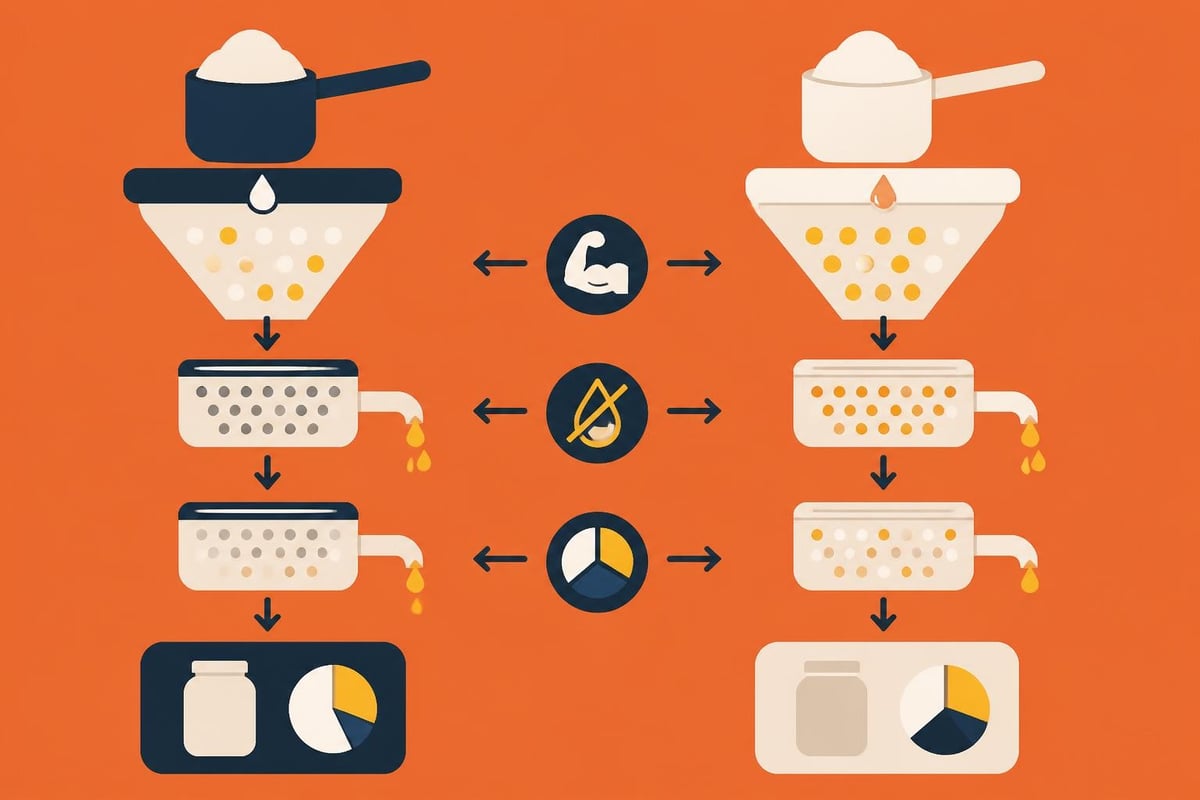
Whey concentrate undergoes basic filtration, resulting in70-80% proteinby weight. The remaining 20-30% consists of lactose, fat, and other milk components.Whey protein isolate uses advanced microfiltration, removing nearly all lactose and fat to achieve90-95% proteinpurity.
For men over 35, this processing difference matters. As we age, lactose intolerance increases. Digestive efficiency decreases. The body becomes less forgiving of unnecessary calories from fat and carbohydrates when you are working to maintain lean mass while managing body composition.
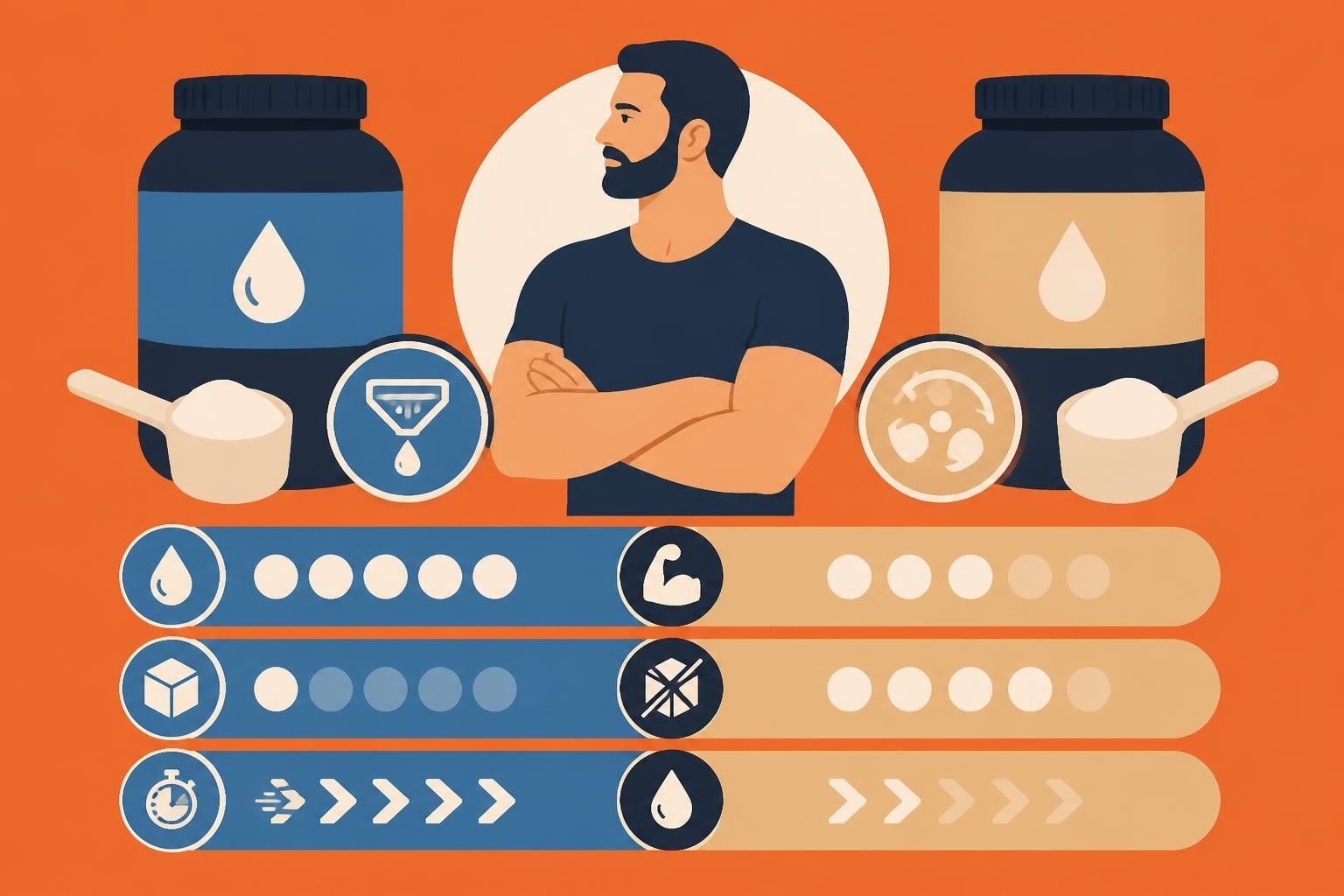
Protein TypeProtein ContentLactoseFatCostConcentrate70-80%3-6%1-3%LowerIsolate90-95%<1%<1%Higher
Absorption Speed and Amino Acid Profile
Both forms deliver complete amino acid profiles, but isolate provides higher leucine concentration per serving due to its purity.Research published on PubMeddemonstrates that whey protein isolate supplementation during resistance training significantly improves strength and muscle hypertrophy in trained individuals.
Concentrate is not inferior for muscle building. It simply requires more volume to match isolate's protein-per-scoop ratio. If you tolerate dairy well and prefer cost efficiency, concentrate works. If you need clean macros, faster digestion, or have lactose sensitivity, isolate is non-negotiable.
2. Protein Requirements and Timing for Men Over 35
Your protein needs do not decrease with age. They increase. Muscle protein synthesis becomes less efficient after 35. You need more dietary protein to maintain what you built in your twenties and thirties.
Daily Protein Targets
Maintenance: 0.8-1.0 grams per pound of body weight
Muscle gain: 1.0-1.2 grams per pound
Fat loss with muscle preservation: 1.2-1.5 grams per pound
A 200-pound man aiming to build muscle requires200-240 grams of protein daily. Meeting this through whole food alone demands planning most men do not execute consistently. Supplementation fills gaps. It does not replace steak, eggs, and fish. It complements them.
Evidence Stack's review of whey isolateconfirms that while the supplement itself is effective, its value depends entirely on whether it helps you hit daily protein targets. Missing your target by 50 grams daily because you relied on willpower instead of systems is a leadership failure, not a nutrition problem.
Post-Workout and Daily Distribution
Distribute protein across 4-5 meals. Aim for30-50 grams per mealto maximize muscle protein synthesis. Post-workout timing matters, but total daily intake matters more.Studies on dietary supplementsshow whey protein isolate supports muscle recovery and immune function, making it valuable beyond just post-training windows.
Morning: whole food protein (eggs, meat)
Mid-morning: shake if needed
Lunch: whole food protein
Post-training: whey protein isolate shake
Dinner: whole food protein
3. Digestive Tolerance and Lactose Sensitivity
Men over 35 experience increased digestive issues. Bloating, gas, and discomfort from dairy are not just inconveniences. They signal your body's reduced capacity to process lactose and certain milk proteins.
When Isolate Becomes Mandatory
If you experience any of the following, whey protein isolate is the only acceptable choice:
Bloating or gas after consuming dairy
Diagnosed lactose intolerance
Cutting phase requiring strict macro adherence
Training while managing inflammation
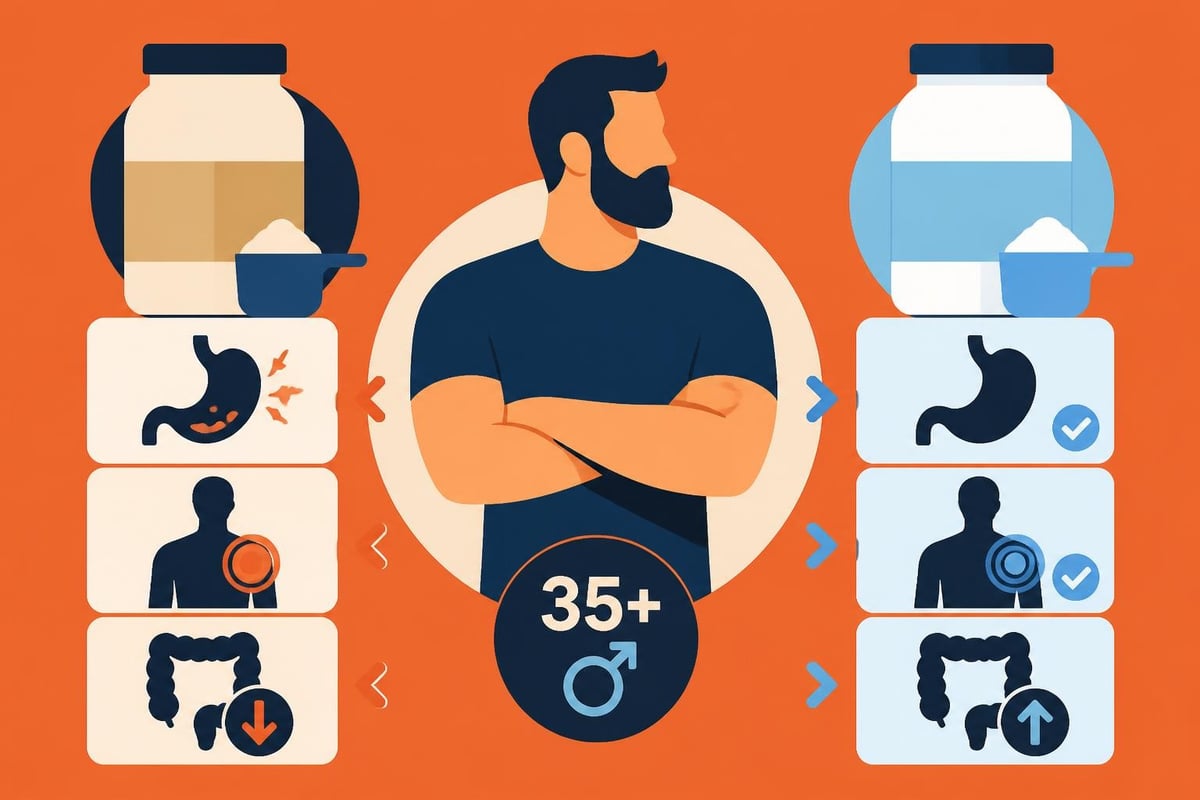
The difference between whey and whey isolateis critical for lactose-intolerant individuals. Isolate contains less than 1% lactose, making it digestible for most men who struggle with concentrate.
Concentrate works when you have no digestive issues, prefer natural ingredients, and want to save money. It is a legitimate choice, not a compromise, if your gut handles it well.
Quality Standards and Purity
Not all isolates are equal.The United States Pharmacopeia standardsoutline purity requirements that legitimate manufacturers follow. Look for third-party testing, NSF certification, or Informed-Sport verification. These are not marketing badges. They confirm what is on the label matches what is in the container.
Your supplement stack should meet the same accountability standard you demand from your training and nutrition. No exceptions for convenience or cost savings that undermine results.
4. Body Composition Goals and Protein Selection
Your current physique goal determines which protein form serves you best. This is not preference. It is strategic alignment between tool and objective.
Cutting Phase: Isolate Wins
When reducing body fat while preserving muscle, every calorie matters. Whey protein isolate delivers25-30 grams of proteinin 110-120 calories with minimal fat and carbs. Concentrate adds130-150 caloriesfor the same protein dose due to residual lactose and fat.
Over 12 weeks of daily use, that difference compounds to several thousand calories. On a cut, those extra calories force you to reduce food elsewhere. Food provides satiety, micronutrients, and training fuel. A shake does not. Choose isolate, eat more real food, stay fuller, recover better.
Bulking Phase: Either Works
When gaining muscle in a caloric surplus, the extra calories in concentrate become irrelevant. Some men prefer concentrate during mass-building phases because the additional carbs and fats support total calorie needs. The cost savings allow budget reallocation to quality whole foods.
GoalBest ChoiceReasonFat lossIsolateMinimal calories, maximum protein, better macrosMuscle gainEitherTotal protein matters more than source purityMaintenanceEitherChoose based on budget and digestive toleranceLactose intoleranceIsolateEliminates digestive distress and inflammation
5. Research-Backed Benefits Specific to Men Over 35
Age changes how your body responds to training, nutrition, and stress. Protein supplementation addresses several physiological shifts that accelerate after 35.
Muscle Protein Synthesis and Anabolic Resistance
Research in the British Journal of Nutritionexamined whey protein isolate's effects on body composition, lipid profiles, and glucose management in overweight individuals. Results showed improvements in lean mass retention and metabolic markers when combined with resistance training.
Your muscles become less responsive to training stimulus as testosterone declines and inflammation increases. Higher protein intake counteracts this anabolic resistance. It does not reverse aging. It maintains the foundation you need to lead physically at home and work.
Immune Function and Recovery
Studies on protein sourcesdemonstrate that whey protein supports immune function through immunoglobulin content and glutathione production. For men juggling training, work stress, and family obligations, immune resilience is not luxury. It is operational readiness.
When you are deliberate about training quality and nutrition, you do not just look different physically. You function as a more capable version of yourself. That capability extends beyond the gym to your role as a father and leader at home, which is whyThe Father Forgebuilds programs integrating both physical and mental resilience.
6. Cost Analysis and Value Assessment
Price matters when you supplement daily for years. Isolate costs 20-40% more than concentrate. That premium buys purity, digestibility, and cleaner macros. Whether that value justifies the cost depends on your situation.
When to Pay More for Isolate
You are lactose intolerant or experience digestive issues with concentrate
You are in a fat loss phase requiring precise macro tracking
You need maximum protein with minimum calories
You value faster digestion and absorption
When Concentrate Is Sufficient
You digest dairy without issues
You are in a caloric surplus for muscle gain
Budget constraints require maximizing protein per dollar
You prefer less processed supplements with natural ingredient profiles
Both forms work if they help you consistently hit protein targets. The best protein powder is the one you actually use daily. Inconsistent use of premium isolate delivers worse results than daily use of quality concentrate. Systems beat intentions.
7. Integration with Whole Food Protein Sources
Supplementation supports your nutrition foundation. It does not replace it. Your primary protein sources should be whole foods: beef, chicken, fish, eggs. These provide nutrients, satiety, and training fuel that powder cannot match.
Use whey protein isolate or concentrate strategically:
Convenience: When whole food preparation is not feasible
Timing: Immediately post-training when solid food is unappealing
Gap filling: When daily intake falls short of targets despite planning
A shake is a tool, not a meal replacement. Men who rely on supplements instead of cooking and meal preparation have an accountability problem, not a protein problem. Fix the root cause. Build systems that ensure whole food consumption. Use supplements to fill genuine gaps, not mask poor planning.
For reliable training equipment that supports your workout quality,Sideline Sport Supplyoffers practical gear designed for consistent performance without unnecessary features or inflated pricing.
8. Selection Criteria and Quality Markers
Not all protein powders meet the standards you should demand. Marketing claims do not equal verified quality. Your selection process must include objective criteria.
Non-Negotiable Quality Markers
Third-party testing: NSF Certified for Sport, Informed-Sport, or USP verification
Transparent labeling: Full ingredient list with no proprietary blends
Minimal additives: Avoid unnecessary fillers, artificial sweeteners, or thickeners
Protein per serving: Minimum 20 grams per scoop for isolate, 18 grams for concentrate
Safety assessments of whey protein isolatesconfirm that quality products from reputable manufacturers pose minimal health risks when used as directed. The risk comes from unverified products with contaminated ingredients or misleading labels.
Reading Labels Correctly
Check the protein-to-calorie ratio. Quality isolate delivers approximately0.25 grams of protein per calorie. If a product claims 25 grams of protein but contains 150+ calories, question what else is in the formula. You are paying for protein, not hidden carbs and fats.
Mental discipline in supplement selection reflects your broader approach to standards. Just asPersonal Mental Akademieteaches mental strength through systematic training, your nutrition choices demonstrate commitment to excellence in all areas.
Choosing between whey protein isolate and concentrate requires understanding your digestive tolerance, training goals, and nutritional needs as a man over 35. Both forms build muscle when used consistently to meet daily protein targets, but isolate offers superior purity and digestibility for men with lactose sensitivity or precise macro requirements. If you need a complete system integrating training, nutrition, and mental resilience tailored to your specific journey as a father and leader,The Father Forgebuilds custom programs that address all aspects of physical and mental development with the accountability and brotherhood required for lasting change.