
When to Take Creatine: Timing for Maximum Results
Creatine supplementation requires clarity, not guesswork. Most men overthink timing when they should focus on consistency. The question of when to take creatine generates endless debate, but the answer is simpler than the supplement industry wants you to believe. Your body requires creatine to produce ATP, the energy currency that fuels muscle contractions during high-intensity work. When you supplement correctly, you saturate muscle creatine stores and unlock better performance. The timing debate matters less than whether you take it at all, but understanding optimal windows helps you maximize return on effort.
Understanding Creatine Saturation and Daily Requirements
Your muscles hold approximately 120-140 grams of creatine at full saturation. Natural production from your liver and kidneys provides about 1-2 grams daily. Dietary sources from meat and fish add another gram if you eat well. That leaves a gap between natural levels and optimal saturation.
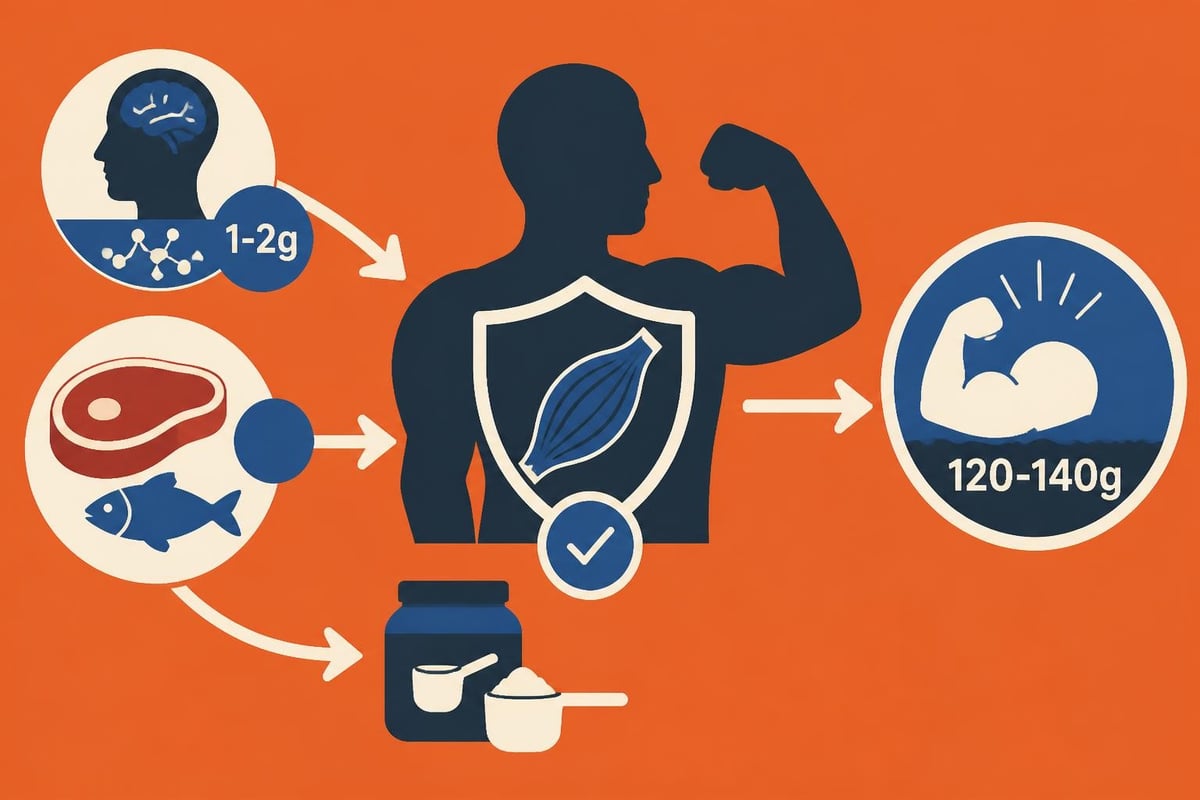
Supplementation fills this gap deliberately. Taking 3-5 grams daily maintains saturation once you reach it. The loading phase, 20 grams split across four doses for 5-7 days, accelerates saturation but isn't mandatory. You reach the same endpoint with consistent daily dosing, it just takes 3-4 weeks instead of one.
Key saturation facts:
Muscle creatine stores max out at predictable levels based on lean mass
Daily turnover requires 1-3 grams to maintain saturation
Loading speeds results but doesn't change final outcome
Missing occasional doses doesn't erase weeks of consistency
The saturation model changes how you think about timing. When to take creatine matters less than taking it every single day. Your muscles store creatine for use when needed, not just in the hours after ingestion. This storage capacity creates flexibility in timing that most men fail to exploit.
Training Day Timing: Pre-Workout vs Post-Workout
Research onoptimal creatine timingshows minimal performance difference between pre and post-workout dosing. Both windows work because creatine's benefits come from chronic saturation, not acute timing. That said, slight advantages exist depending on your training goals.
Pre-Workout Creatine Protocol
Taking creatine 30-60 minutes before training provides readily available substrate for ATP production. This timing makes theoretical sense for maximum output during your session. Some men report better performance, though placebo effects likely explain much of this perception.
Pre-workout advantages:
Immediate availability during high-intensity sets
Mental confidence from knowing you're prepared
Easy to pair with pre-workout caffeine or carbs
Fits naturally into training preparation routine
The practical challenge is consistency. Pre-workout timing requires you to train regularly and remember supplementation before each session. Miss a training day and you might skip your dose entirely.
Post-Workout Creatine Protocol
Taking creatine after trainingcapitalizes on the muscle's heightened nutrient uptake during recovery. Insulin sensitivity peaks post-workout, potentially enhancing creatine transport into muscle cells. Pairing creatine with protein and carbohydrates amplifies this effect.
Post-workout timing offers structural advantages. You're already consuming a meal or shake. Adding creatine becomes automatic. This reliability matters more than marginal uptake differences.
Timing WindowPrimary BenefitPractical ChallengeBest ForPre-WorkoutPeak availability during trainingRequires consistent training scheduleCompetitive athletes, peaking phasesPost-WorkoutEnhanced uptake with nutritionNone if you eat post-trainingMost lifters, general strength buildingMorning (off days)Daily consistency habitRequires separate reminderMaintenance, travel periods
Men training forreal performance gainsshould prioritize the window they'll actually use every day. A post-workout shake you never forget beats a pre-workout dose you skip twice weekly.
Rest Day Protocol and Consistency Standards
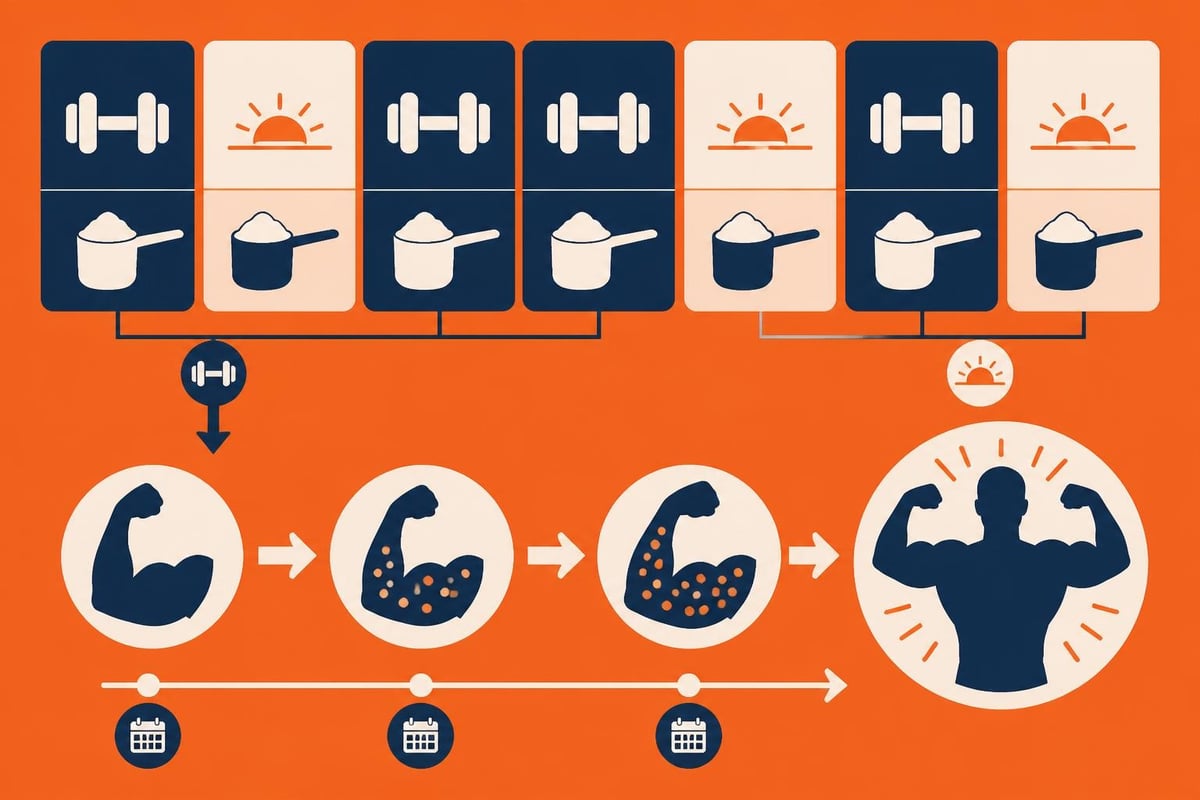
When to take creatine on non-training days confuses most men unnecessarily. Your muscles don't empty creatine stores overnight. Saturation remains stable across rest periods. The requirement is simple: take your standard dose at any consistent time.
Morning dosing works well on rest days. Pair it with breakfast or coffee. Create a visual trigger, like keeping the container next to your coffee maker. This environmental design beats relying on memory or motivation.
Some men worry about wasting creatine without the training stimulus. This thinking is backwards. Rest days allow recovery and adaptation. Maintaining saturation during this period supports the protein synthesis and cellular repair that build strength.Research confirmsthat total daily intake matters far more than timing around workouts.
Rest day best practices:
Take creatine at the same time daily
Pair with a meal containing protein and carbs
Use the same environmental trigger every day
Don't overthink it or skip doses
The Father Forge approach emphasizes habits that survive disruption. Men with demanding jobs and family responsibilities need protocols that work during chaos. A fixed rest day timing habit provides this resilience. When everything else falls apart, that morning dose with breakfast remains stable.
Absorption Enhancement and Co-Supplementation
Creatine absorption improves when paired with insulin-spiking nutrients. Your body transports creatine into muscle cells more efficiently in the presence of insulin. This mechanism explains whytiming creatine with mealsoften produces better results than empty-stomach dosing.
Optimal co-supplementation includes:
Simple carbohydrates(30-50g dextrose, fruit, or white rice)
Protein(20-40g whey or whole food source)
Electrolytes(sodium and potassium for cell volumization)
These additions aren't requirements, but they optimize what you already do. Your post-workout nutrition likely contains these elements already. Adding creatine costs nothing extra and leverages existing meal timing.
Some men ask about taking creatine with coffee or stimulants. Early research suggested caffeine might blunt creatine's effects, butrecent evidenceshows this concern is overblown. The practical impact is negligible. If morning coffee is your consistency trigger, use it.
The Accountability Framework for Supplement Timing
Information about when to take creatine is worthless without execution systems. Most men know they should take creatine daily. Most men don't. The gap isn't knowledge. It's accountability and environmental design.
Build your creatine protocol like a military operation:
Standard Operating Procedure
Define your exact timing.Not "after workouts" but "within 30 minutes of finishing my last set." Not "in the morning" but "when I pour my first coffee." Vague intentions fail under pressure. Specific triggers survive.
Prepare your environment.Place creatine where you'll see it at your chosen time. Next to your protein powder. On your nightstand. In your gym bag. Remove the friction between intention and action.
Track compliance ruthlessly.Use a simple calendar check mark for every dose taken. This visual record creates accountability when motivation fades. Missing one day is a mistake. Missing two is a pattern that requires intervention.
Link to existing habits.The best time to take creatine is attached to something you already do without thinking. Brushing teeth. Making coffee. Eating breakfast. These anchors survive disruption better than new standalone habits.
Men seeking serious results often benefit from structured accountability beyond personal tracking. TheGroup Coaching Communityat The Father Forge provides this through weekly check-ins and brotherhood support. When you commit to other men, supplement consistency becomes non-negotiable.
Common Timing Mistakes and Corrections
Mistake 1: Cycling creatine unnecessarily
Some protocols recommend taking breaks from creatine every 8-12 weeks. No scientific evidence supports this practice. Creatine is safe for continuous use. Cycling forces you to rebuild saturation repeatedly, wasting time and limiting progress. Continuous daily supplementation is the standard.
Mistake 2: Only taking creatine on training days
This approach maintains partial saturation at best. You might reach 70-80% of optimal levels, limiting the performance benefit. Creatine works through sustained saturation, not workout-by-workout dosing. Take it every day or accept compromised results.
Mistake 3: Overthinking timing at the expense of consistency
Men spend more time researching optimal timing than actually taking creatine consistently.The evidence is clear: daily total intake beats timing precision. Take it when you'll actually take it, not when some article says it's 3% more optimal.
Mistake 4: Skipping doses when traveling or schedule changes
Life disrupts routine. That's not an excuse to abandon the protocol. Pack creatine in your travel bag. Take it with airport breakfast. Maintain saturation through chaos. This is where character shows up or doesn't.
Common MistakePerformance CostCorrectionCycling unnecessarilyRepeated saturation lossContinuous daily dosingTraining days only20-30% reduced saturationEvery single day protocolAnalysis paralysisZero benefit from researchPick one time, execute dailyTravel/schedule breaksGradual desaturationPack supplements, protect habits
Long-Term Saturation Management
After 3-4 weeks of consistent supplementation, your muscles reach saturation. This is not the finish line. This is baseline. Maintaining saturation requires the same daily discipline that built it.
The maintenance phase reveals who treats supplementation as a serious commitment versus a casual experiment. Taking creatine when convenient produces inconsistent results. Taking it regardless of circumstances builds the muscle and strength you're after.
Consider your protocol through a twelve-month lens. Will this timing work during:
High-stress work periods
Family vacations
Early morning flights
Late night obligations
Sickness or injury
If the answer is no, adjust now. A good protocol survives real life. An optimal protocol that falls apart under pressure is worthless.Research on long-term supplementationconfirms safety and continued benefits for men who maintain consistency over years, not weeks.
Your body adapts to what you demand from it consistently. Creatine saturation is a demand signal. You're telling your muscles you expect high performance and you're providing the substrate to deliver it. When to take creatine becomes less important than the message your consistency sends: this matters, and I show up.

Building Your Personal Timing Protocol
Design your creatine timing based on three factors:
Your training schedule consistency
Your daily routine anchors
Your history of supplement compliance
Men with fixed training times should use post-workout dosing. The routine is already established. Adding creatine costs nothing extra. Men with variable schedules need a daily anchor independent of training. Morning with breakfast or evening with dinner provides this stability.
Your compliance history matters most. If you've failed with supplements before, the problem isn't the supplement. It's your execution system. Don't repeat failed approaches expecting different results. Build new environmental triggers and accountability structures.
Test your protocol for two weeks. Track every dose. Note any missed days and the circumstances. Adjust the timing or trigger if you miss more than one dose in fourteen days. A protocol you can't maintain is a protocol that doesn't exist.
For men over 35 balancing training withleadership at home, simplicity beats optimization. Take creatine once daily at the most consistent time in your schedule. Stop researching marginal timing differences and start building saturation through relentless daily execution. Your muscles don't care about perfect timing. They respond to consistent availability over months and years.
The timing debate exists because complexity sells supplements and clicks. Simplicity sells nothing but delivers everything. When to take creatine has one right answer: every single day at a time you'll never skip. Everything else is noise.
Creatine timing matters far less than creatine consistency, and consistency requires systems stronger than motivation. The real work isn't finding the optimal hour, it's building the character to show up daily regardless of circumstances. If you're ready to stop researching and start executing,The Father Forgebuilds the accountability structures and brotherhood support that turn good intentions into non-negotiable standards. Your family deserves a man who follows through, and that starts with keeping promises to yourself.