Walking as Serious Fitness: Why It Works
Most men dismiss walking because they confuse movement with accomplishment. They think serious fitness requires barbells, treadmills, or specialized equipment. That mindset costs them results. Walking as serious fitness isn't a consolation prize for people who can't handle real training. It's a deliberate choice backed by physiology, sustainable over decades, and accessible regardless of schedule constraints. The problem isn't whether walking works. The problem is whether you're willing to treat it like it does.
The Physiology Case for Walking as Serious Fitness
Your cardiovascular system doesn't care about your ego. It responds to consistent demand placed on it over time. Walking delivers that demand without the recovery debt that comes from high-impact alternatives.
Research showswalking improves cardiovascular fitness, reduces body fat, and lowers resting blood pressureacross populations. These aren't marginal gains. These are the foundational metrics that determine whether you're capable at 55 or dependent at 55.
Aerobic Capacity Without Recovery Cost
Zone 2 cardio builds aerobic base. Walking keeps most men in Zone 2 without requiring conscious effort. You maintain conversational pace, accumulate volume, and improve mitochondrial density. The adaptation happens because you can repeat the stimulus daily.
High-intensity interval training works. But it extracts a price. You need 48-72 hours between sessions for proper recovery. Walking lets you train six or seven days per week without compromising strength work or family obligations.
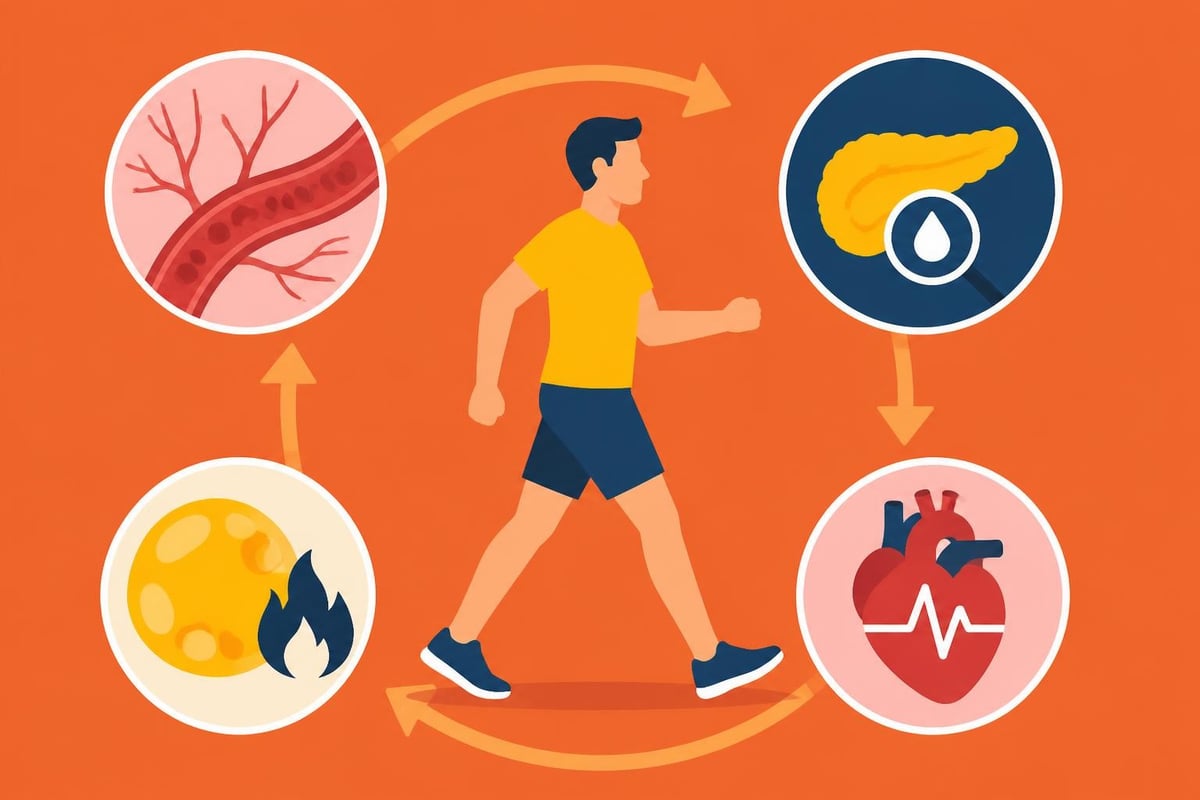
Key physiological adaptations from regular walking:
Increased capillary density in working muscles
Improved insulin sensitivity and glucose metabolism
Enhanced fat oxidation at rest and during activity
Reduced systemic inflammation markers
Strengthened cardiac stroke volume over time
The men who integrate walking as serious fitness into their weekly structure don't replace resistance training. They add sustainable volume that accelerates fat loss and protects joint health as they age.
Programming Walking for Measurable Results
Walking without structure produces aimless results. You need progressive overload just like strength training. That means manipulating variables: duration, intensity, load, terrain, or frequency.
The Four Variables You Control
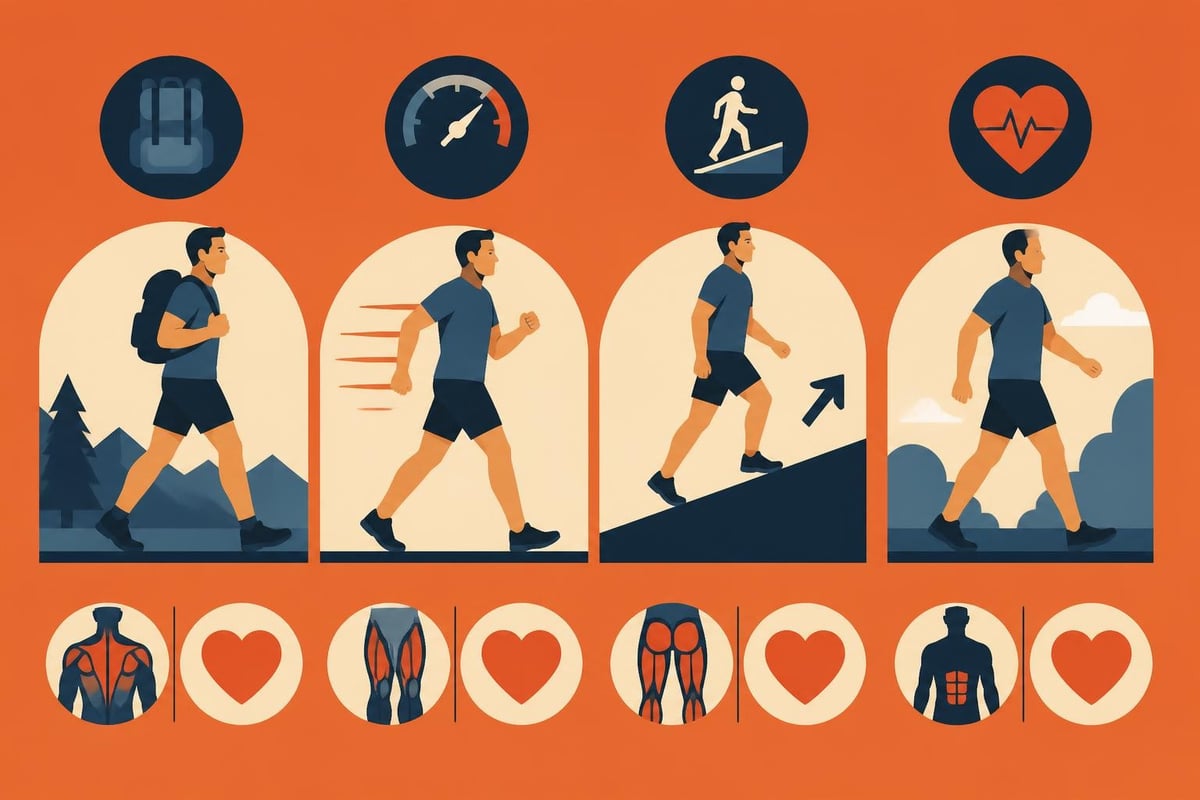
Durationsets the foundation. Start where you are. If that's 15 minutes, that's the baseline. Add five minutes per week until you reach 45-60 minutes per session. Most fathers can sustain 45 minutes of walking four to six times weekly without lifestyle disruption.
Intensitychanges the stimulus. Flat, moderate-pace walking builds base. Adding intervals, hills, or sustained tempo work develops cardiovascular capacity. The3-4-5 walking workout structuredemonstrates how manipulating pace within a session creates meaningful adaptation.
Loadtransforms walking into genuine strength endurance work. Rucking, carrying a weighted vest, or farmer's carries during walking sessions recruit more muscle mass and increase caloric expenditure. Start with 10-15 pounds. Progress by adding 5 pounds every three weeks.
Terraindictates muscular demand. Incline walking activates glutes and hamstrings more than flat ground. Trails require stabilizer engagement that paved surfaces don't. Variety prevents adaptation plateaus and reduces repetitive stress.
VariableBeginner ApproachIntermediate ProgressionAdvanced ImplementationDuration15-20 min, 3x/week30-40 min, 4-5x/week45-60 min, 5-6x/weekIntensityConversational paceAdd 2-3 min tempo burstsSustained tempo or hill workLoadBodyweight only10-20 lb vest/ruck25-40 lb ruck or carriesTerrainFlat, pavedMixed flat and inclineTrail, steep grade, varied
Sample Weekly Framework
Men atThe Father Forgeintegrate walking around resistance training, not instead of it. A typical week might include three strength sessions and four walking sessions, with one rest day.
Monday and Thursday: 45-minute ruck walk with 20-25 pounds
Tuesday and Friday: Strength training
Wednesday: 30-minute tempo walk on incline
Saturday: 60-minute easy pace walk
Sunday: Active recovery or rest
This structure accumulates 3+ hours of aerobic work weekly while maintaining strength progression. The walking sessions don't interfere with recovery from heavy squats or deadlifts because the intensity stays manageable.
Walking Styles That Deliver Specific Outcomes
Walking as serious fitness isn't monolithic. Different approaches serve different goals. Matching the method to your current objective prevents wasted effort.
Rucking for Strength Endurance
Rucking means walking with a loaded backpack. It originated in military training because it builds load-carrying capacity and mental toughness simultaneously. For fathers over 35, it develops posterior chain strength without spinal loading equivalent to heavy barbell work.
Start with 10% of bodyweight in the ruck. A 200-pound man starts with 20 pounds. Walk at a moderate pace for 30-40 minutes. Progress by adding distance before adding weight. Once you can comfortably walk 60 minutes with current load, add five pounds.
Various walking styles including ruckingoffer different benefits depending on your training focus. Rucking stands out because it scales indefinitely and translates to real-world functional capacity.
Tempo Walks for Cardiovascular Threshold
Tempo walking pushes your pace to the edge of comfortable. You can still speak in short sentences, but sustained conversation becomes difficult. Heart rate sits around 75-80% of maximum. This zone improves lactate threshold and cardiovascular efficiency.
Tempo walks work best as 20-30 minute sessions. Use them twice weekly. They create enough stimulus to drive adaptation without requiring the recovery time of running or sprints.
Incline Walking for Lower Body Development
Walking uphill or on a treadmill set to 10-15% grade recruits glutes, hamstrings, and calves significantly more than flat walking. Some men report better glute activation from incline walking than from dedicated glute exercises.
Keep the pace moderate. The grade provides the intensity. Forty-five minutes at 12% incline burns substantial calories and builds muscular endurance in the posterior chain. This matters for fathers who sit at desks most of the day.
The Mental Resilience Component
Physical adaptation is measurable. Mental adaptation matters more. Walking as serious fitness teaches you to show up regardless of conditions. That discipline transfers everywhere.
Non-Negotiable Daily Practice
Brotherhood and accountability happen in group settings. But self-mastery happens alone. Committing to walk every day for 30 days, regardless of weather or schedule, builds a different type of confidence than hitting a PR in the gym.
You learn that discomfort is temporary. You learn that you can execute when you don't feel like it. You prove to yourself that external circumstances don't control your actions. These lessons compound.
Men in theGroup Coaching Communityreport that daily walking practice creates momentum in other areas. They start making better nutrition choices. They communicate more clearly with their wives. They show up more present with their kids. The walking isn't magic. It's proof of capability that radiates outward.
Problem-Solving in Motion
Walking creates mental space that screens don't. You process information differently when moving. Solutions to business problems, family conflicts, or training plateaus often surface during a 45-minute walk that wouldn't emerge during a 45-minute scroll.
This isn't mystical. It's neurological. Bilateral movement activates both hemispheres. Blood flow increases to the prefrontal cortex. Stress hormones decrease. You think more clearly because your biology supports clear thinking.
Preparation and Injury Prevention
Walking seems simple. That's why men skip preparation and pay for it later. Plantar fasciitis, IT band syndrome, and hip flexor pain all stem from doing too much too soon without proper foundation.
Mobility Prerequisites
Before you commit to daily walking, address basic mobility limitations. Tight hip flexors, weak glutes, and poor ankle dorsiflexion all create compensation patterns that become painful under volume.
Essential warm-up movements before walkinginclude hip flexor stretches, glute bridges, and ankle mobility work. Spend five minutes on these before longer sessions. The time investment prevents weeks of forced recovery later.
Footwear and Surface Selection
Shoes matter. Running shoes designed for heel striking won't serve you well for long walking sessions. Look for shoes with firm heel counters, adequate toe box width, and moderate cushioning. Replace them every 400-500 miles.
Surface variety protects joints. Concrete and asphalt create repetitive impact. Grass, dirt trails, and gravel reduce that stress. Mix surfaces throughout the week when possible.
Weekly surface rotation example:
Monday: Paved neighborhood streets (ruck walk)
Wednesday: Treadmill incline (tempo work)
Thursday: Trail or park paths (moderate pace)
Saturday: Mixed terrain (long duration)
Integration with Strength Training
Walking as serious fitness doesn't compete with resistance training. It enhances it. Proper integration means scheduling both without creating excessive fatigue.
Timing Considerations
Walk on strength training days, but separate the sessions by several hours. Morning strength work followed by evening walking allows each session to receive proper focus. Alternatively, walk on non-lifting days as active recovery.
Avoid walking immediately before heavy lower body sessions. Fatigue from a 60-minute ruck walk will compromise squat or deadlift performance. Schedule walking after lifting or on separate days entirely.
Recovery Management
Walking increases total training volume. That means recovery demands increase too. Sleep, nutrition, and stress management all become more critical when you add 3-4 hours of weekly walking to existing strength work.
The benefits of walking for overall healthinclude improved sleep quality and reduced stress markers. But you can't out-walk chronic sleep deprivation or poor nutrition. The walking amplifies good habits. It doesn't compensate for bad ones.
Tracking Progress Beyond Steps
Step counts provide data. But they don't tell you whether you're improving. You need metrics that reflect actual fitness gains over time.
Measurable Performance Indicators
Heart Rate Recoveryshows cardiovascular improvement. Measure your heart rate immediately after finishing a tempo walk. Measure again after two minutes of standing still. The difference indicates recovery efficiency. As fitness improves, this gap widens.
Pace at Perceived Effortreveals aerobic development. Walk the same route monthly at conversational pace. Track your time. As conditioning improves, you'll cover the distance faster while maintaining the same effort level.
Load Capacitydemonstrates strength endurance gains. If you started rucking with 20 pounds for 30 minutes, and you can now ruck 35 pounds for 45 minutes, you've made objective progress.
Resting Heart Ratedecreases as cardiovascular fitness improves. Track it each morning before getting out of bed. A 5-10 beat reduction over 12 weeks indicates meaningful adaptation.
MetricBaseline6 Weeks12 WeeksImprovementRHR (bpm)726864-8 bpm2-mile pace (min)32:0029:3027:45-4:15Ruck weight (lbs)202530+10 lbsHR recovery (bpm)253238+13 bpm
Body Composition Changes
Walking as serious fitness drives fat loss when combined with appropriate nutrition. Don't expect dramatic changes from walking alone. Expect measurable progress when walking supports a caloric deficit and adequate protein intake.
Men who add 200-300 minutes of walking weekly while maintaining strength training typically see 1-2% reduction in body fat per month. That's 6-12 pounds of fat loss over 12 weeks for a 200-pound man. Not explosive. Sustainable.

Common Obstacles and How to Overcome Them
Most men don't fail at walking because it's difficult. They fail because they don't treat it like serious training. Obstacles emerge when commitment wavers.
Schedule Conflicts
"I don't have time" means "I haven't prioritized it." Sixty minutes exists in every day. The question is what currently occupies that hour and whether it serves you better than walking would.
Wake up 45 minutes earlier. Walk during lunch. Walk after dinner instead of watching television. The schedule conflict is a priority conflict. Address the real issue.
Weather Resistance
Rain, cold, heat, and darkness all provide excuses. They're conditions, not barriers. Appropriate clothing solves weather problems. Headlamps solve darkness. Treadmills exist when outdoor conditions genuinely prevent safe training.
The mental benefit of walking in uncomfortable weather exceeds the physical benefit. You prove that external circumstances don't dictate your behavior. That lesson reinforces leadership at home and in business.
Motivation Dependency
Motivation fluctuates. Discipline doesn't. Treating walking as serious fitness means you walk on scheduled days regardless of how you feel. The commitment exists independently of your mood.
Brotherhood creates external accountability when internal discipline weakens. Men in structured programs walk because other men expect them to report results. That social pressure, properly channeled, produces consistency motivation can't sustain.
Long-Term Sustainability and Scaling
Walking as serious fitness works because you can sustain it for decades. Your 25-year-old self might thrive on high-intensity programs that your 45-year-old self can't recover from. Walking scales across lifespan.
Progressive Overload Over Years
Year one might focus on building base volume and establishing daily habits. Year two adds load through rucking or weighted vests. Year three incorporates terrain challenges and tempo work. Year five maintains capacity while supporting other athletic pursuits.
The progression never stops. A 60-year-old man can ruck with 40 pounds for 90 minutes if he's built capacity gradually over years. That same man probably shouldn't start a powerlifting program from scratch. Walking rewards patience and consistency in ways that more aggressive modalities don't.
Adaptation as Fitness Foundation
Walking provides the aerobic base that supports every other physical pursuit. Hunters walk for hours in varied terrain. Martial artists need cardiovascular endurance. Weekend warriors need joint health and movement capacity. Walking builds all of it without the injury risk of running or the equipment requirements of cycling.
As you age, walking becomes increasingly valuable relative to higher-impact alternatives. The 55-year-old father who's walked consistently for 20 years has movement options the 55-year-old who relied solely on gym work doesn't. Joints stay healthy. Cardiovascular function remains strong. Independence persists.
Implementation Starting Monday
Theory without application produces nothing. Walking as serious fitness requires you to start and sustain. Here's the exact protocol for the first four weeks.
Week One Through Four Protocol
Week 1:Walk 20 minutes daily at conversational pace, any route, any time. Build the habit before optimizing the method.
Week 2:Walk 25 minutes daily. Add one incline session (treadmill or hilly route) mid-week.
Week 3:Walk 30 minutes daily. Add a second incline session. Maintain one rest day.
Week 4:Walk 35 minutes five days. Add one 45-minute long walk on the weekend. Add 10-pound ruck or vest to one weekday session.
This progression builds volume conservatively. You establish consistency without creating injury risk from excessive early enthusiasm. After four weeks, you have the foundation to add more sophisticated programming.
Required gear for first month:
Appropriate walking shoes (replaced every 400-500 miles)
Moisture-wicking socks to prevent blisters
Weather-appropriate clothing layers
Optional: 10-20 lb weighted vest or ruck
Optional: fitness tracker for heart rate and distance
The investment is minimal. The return is substantial. Most men spend more on supplements that don't work than on footwear that enables daily training.
Walking as serious fitness delivers measurable cardiovascular improvements, sustainable fat loss, and mental resilience that transfers to leadership at home. The men who commit to daily walking don't just change their bodies - they change their capacity to execute regardless of circumstances. If you're ready to build sustainable fitness alongside mental toughness and accountability,The Father Forgeprovides the structure, brotherhood, and coaching to make it happen. Start walking Monday. Report your progress. Build the life your family deserves.