Vitamin D3 for Men: Why This Matters for Your Health
Most men walking around right now are deficient in vitamin D3 and don't know it. That's not speculation. The data shows roughly 40% of American adults fall below adequate serum levels, and men over 35 carry additional risk factors: indoor work, reduced outdoor recreation, higher body mass, and age-related synthesis decline. This isn't about optimizing performance. This is about correcting a baseline failure that undermines testosterone, bone integrity, immune defense, and mental clarity. Vitamin D3 for men is a leadership obligation, not a supplement trend. You fix the foundation first.
Why Vitamin D3 Matters Specifically for Men
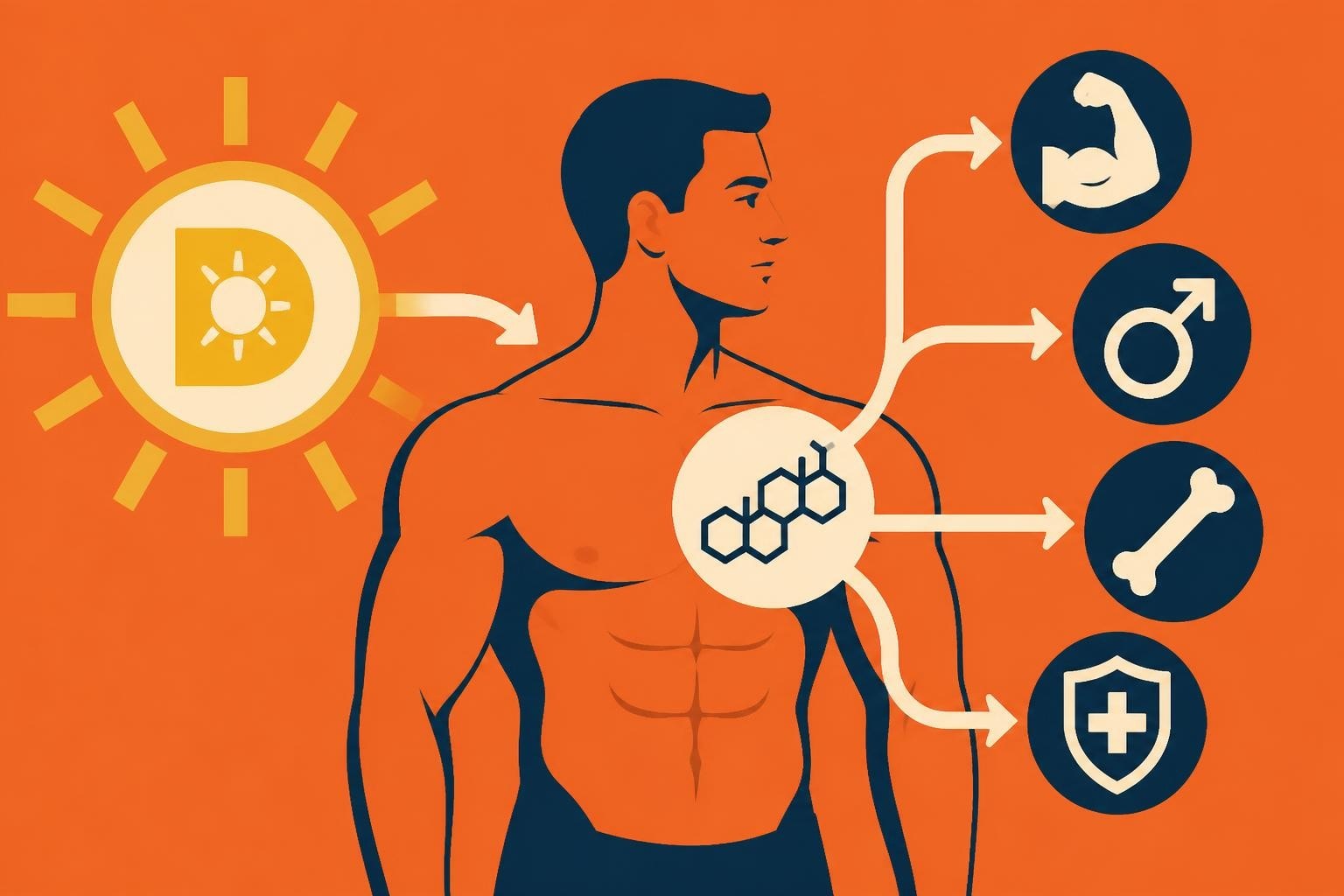
Vitamin D3 operates as a steroid hormone precursor in the male body. It doesn't just support bone health. It directly influences the Leydig cells in your testes, which produce testosterone. A systematic review and meta-analysis of vitamin D3 and androgens in adult males found measurable effects on testosterone levels when deficiency was corrected. That's not marketing. That's endocrine physiology.
Testosterone and Hormonal Balance
Low vitamin D correlates with low testosterone. The mechanism is direct: vitamin D receptors exist throughout the male reproductive system. When serum 25-hydroxyvitamin D drops below 30 ng/mL, testosterone production suffers. Correcting deficiency doesn't turn you into a different person, but it removes a metabolic brake.
Key hormonal effects of adequate vitamin D3 in men:
Supports Leydig cell function and testosterone synthesis
Modulates sex hormone-binding globulin (SHBG)
Influences luteinizing hormone (LH) signaling
Affects sperm motility and overall fertility markers
The National Academies set the Recommended Dietary Allowance (RDA) at 600-800 IU daily for adults, but that level is designed to prevent deficiency, not optimize function. Men training hard, carrying muscle mass, or managing body composition often require significantly more.

Muscle Protein Synthesis and Strength
Vitamin D3 influences muscle tissue directly. Vitamin D receptors (VDR) are present in skeletal muscle cells. When activated, they support protein synthesis, calcium handling, and mitochondrial function. Deficiency leads to measurable reductions in type II muscle fiber performance, the fast-twitch fibers responsible for power and strength.
This matters for men over 35 because sarcopenia (age-related muscle loss) accelerates without intervention. Adequate vitamin D3 won't replace a structured training program, but it creates the metabolic environment where training produces results. If you're following a custom program through The Father Forge, you need your hormonal and metabolic systems functioning at baseline. Vitamin D3 is part of that baseline.
How to Test and Correct Deficiency
You don't guess. You test. The standard blood test is serum 25-hydroxyvitamin D, also called 25(OH)D. This is the storage form your body maintains, and it's the most accurate marker of vitamin D status.
Interpreting Your Levels
Serum 25(OH)D Level | Status | Action Required |
|---|---|---|
Below 20 ng/mL | Deficient | Immediate supplementation, retest in 8-12 weeks |
20-30 ng/mL | Insufficient | Supplementation, dietary adjustment |
30-50 ng/mL | Adequate | Maintain through diet, sun, or low-dose supplement |
50-100 ng/mL | Optimal (for some) | Monitor, avoid megadosing |
Above 100 ng/mL | Risk of toxicity | Reduce intake, retest, consult physician |
Most men walking into a lab for the first time fall between 15 and 25 ng/mL. That's deficiency to insufficiency. The correction protocol is straightforward: supplementation at therapeutic doses until levels normalize, then maintenance.
The Endocrine Society updated their 2024 guidance to recommend the RDA for healthy adults while emphasizing that higher doses should be reserved for documented deficiency and medical supervision. That's sound advice. Megadosing without testing is reckless.
Supplementation Dosing for Vitamin D3 Men
Start with 2,000-4,000 IU daily if you're deficient. Retest after 8-12 weeks. Adjust based on results. Some men require 5,000 IU or more to reach and maintain adequate levels, especially those with higher body mass, darker skin, or limited sun exposure.
Factors increasing vitamin D3 requirements:
Body fat percentage above 20% (vitamin D is fat-soluble and sequesters in adipose tissue)
Minimal UV-B exposure (indoor work, northern latitudes, winter months)
Age over 50 (skin synthesis declines roughly 50% between ages 20 and 70)
Dark skin pigmentation (melanin reduces UV-B penetration)
Certain medications (anticonvulsants, glucocorticoids)
Take vitamin D3 with a meal containing fat. It's a fat-soluble vitamin. Absorption improves significantly when paired with dietary fat.
Food Sources and Sun Exposure
Supplementation is the most reliable correction tool, but understanding natural sources matters. Very few foods contain meaningful vitamin D3. Fatty fish (salmon, mackerel, sardines), cod liver oil, and fortified dairy provide some. Egg yolks contain trace amounts. You will not correct deficiency through food alone unless you're eating wild-caught salmon daily.
Sun Exposure Guidelines
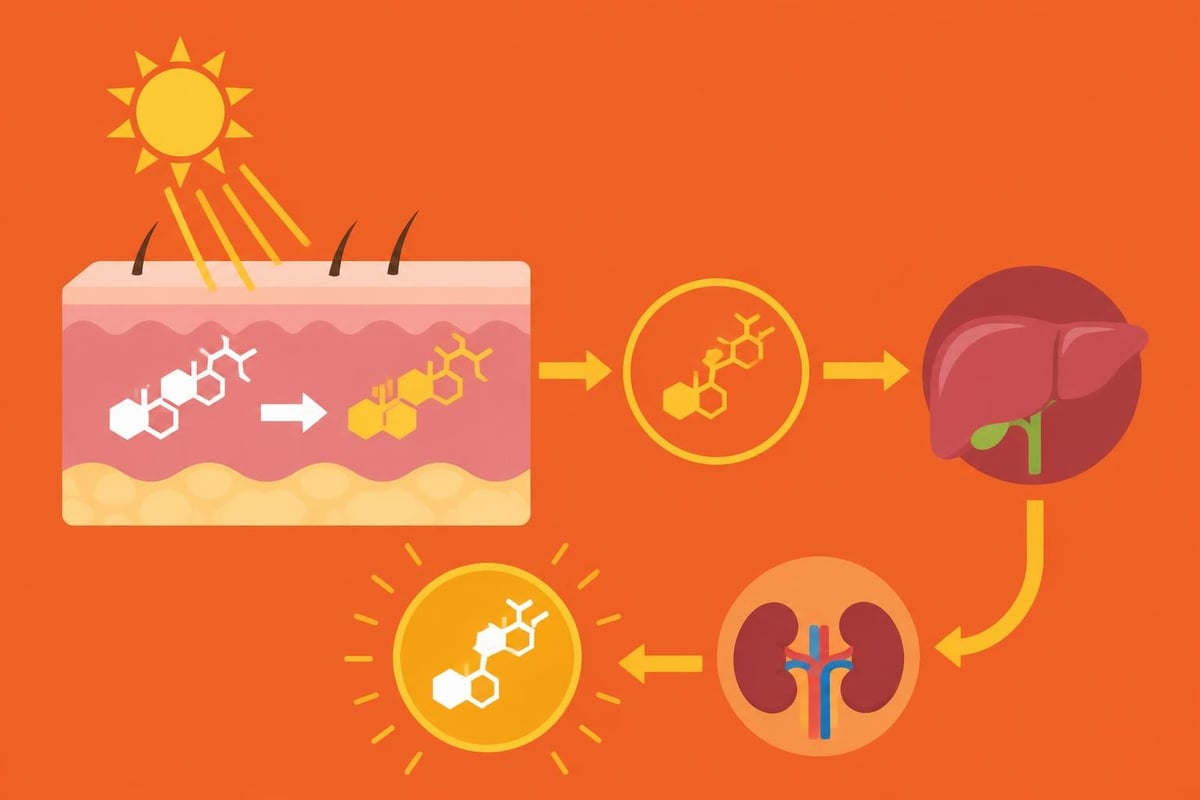
Your skin synthesizes vitamin D3 when exposed to UV-B radiation between 290-315 nanometers. This occurs when the UV index is above 3, typically midday in spring, summer, and early fall at most U.S. latitudes.
Practical sun exposure protocol:
Expose arms, legs, and torso (not just face and hands)
Aim for 10-30 minutes midday, depending on skin tone
No sunscreen during synthesis window (apply after)
Frequency: 3-4 times per week during warm months
This approach works May through September for most of the continental U.S. It fails completely October through April in northern states. Winter supplementation is non-negotiable above the 37th parallel.
For men who work indoors or live in climates with limited UV-B exposure year-round, food and sun will not maintain adequate levels. Supplementation becomes the primary source. That's not a failure. That's adapting to your environment.
Bone Density, Immune Function, and Mental Health
Vitamin D3 for men extends beyond testosterone and muscle. Bone mineral density declines with age. Fracture risk increases. Vitamin D3 regulates calcium absorption and bone remodeling. Deficiency accelerates osteopenia and osteoporosis, conditions most men ignore until a fracture occurs.
Immune and Inflammatory Pathways
Vitamin D modulates both innate and adaptive immunity. It influences macrophage function, T-cell activation, and cytokine production. A Cochrane review of vitamin D supplementation and mortality found modest protective effects, particularly in older adults and those with baseline deficiency. The mechanism involves immune regulation and reduced inflammation.
Men managing chronic stress, insufficient sleep, or high training loads need every immune advantage available. Vitamin D3 is one of those advantages. It doesn't replace sleep or stress management, but it supports the systems those behaviors rely on.
Mental Clarity and Mood Regulation
Vitamin D receptors exist throughout the brain, including regions governing mood and cognition. Low vitamin D correlates with increased depression risk, cognitive decline, and seasonal affective disorder. The relationship is bidirectional: deficiency contributes to poor mental health, and poor mental health often leads to behaviors that worsen deficiency (reduced outdoor activity, poor diet).
Correcting vitamin D3 levels won't solve clinical depression, but it removes a physiological contributor. For fathers managing the mental load of work, marriage, and leadership at home, every marginal gain in mental clarity and emotional regulation matters. Harvard's Nutrition Source provides additional context on the population-level mental health data.
Safety, Toxicity, and Upper Limits
Vitamin D3 toxicity is real but rare. It occurs when serum 25(OH)D exceeds 150 ng/mL, typically from prolonged megadosing above 10,000 IU daily. Symptoms include hypercalcemia (elevated blood calcium), nausea, vomiting, weakness, and kidney damage.
Daily Intake | Risk Level | Context |
|---|---|---|
600-800 IU | Minimal | RDA for deficiency prevention |
2,000-4,000 IU | Low | Common therapeutic dose |
5,000-10,000 IU | Moderate | Requires monitoring |
Above 10,000 IU | High | Medical supervision only |
The tolerable upper intake level set by the National Academies is 4,000 IU daily for adults. That's conservative. Many men safely use 5,000 IU long-term with regular testing. The key is testing. You don't assume. You measure.
If you're working with a coach who understands the metabolic demands of training, body composition, and hormone health, vitamin D3 testing and supplementation should be part of the conversation. When men engage in 1-on-1 coaching that includes nutrition planning and accountability, micronutrient status often surfaces as a limiting factor in progress.
Integrating Vitamin D3 Into Your Routine
Supplementation is simple. The hard part is the decision to test and correct. Most men avoid it because it requires acknowledging that something basic is broken. That's ego, not leadership.
Implementation checklist:
Schedule a 25(OH)D blood test through your physician or direct lab service
Begin supplementation at 2,000-4,000 IU daily with a meal containing fat
Retest after 8-12 weeks to confirm levels are rising
Adjust dose based on results and maintain 30-50 ng/mL year-round
Repeat testing annually or semi-annually
Pair vitamin D3 supplementation with magnesium. Magnesium is required for vitamin D metabolism, and many men are deficient in both. A topical magnesium product like those from Moonglow Minerals can support recovery, sleep, and muscle function while addressing another common deficiency. The combination matters.

Common Mistakes and How to Avoid Them
Men make predictable errors with vitamin D3. The first is assuming that because they spend time outside, they're not deficient. UV-B exposure through car windows, office windows, or while wearing sunscreen doesn't synthesize vitamin D3. The second mistake is taking a random dose without testing, then never retesting to confirm it's working.
Mistake 1: Supplementing Without Testing
You need baseline data. If you're already at 45 ng/mL, you don't need therapeutic dosing. If you're at 12 ng/mL, 1,000 IU won't move the needle. Test first. Dose appropriately. Retest to confirm.
Mistake 2: Ignoring Cofactors
Vitamin D3 works in concert with vitamin K2, magnesium, and calcium. K2 directs calcium into bones rather than soft tissue. Magnesium is required for the enzymes that convert vitamin D into its active form. Supplementing D3 in isolation without addressing these cofactors limits effectiveness and increases cardiovascular calcification risk.
Mistake 3: Relying on Multivitamins
Most multivitamins contain 400-800 IU of vitamin D3. That's insufficient to correct deficiency. If your serum level is 18 ng/mL, the small amount in a multivitamin won't bring you to 35 ng/mL. Use a dedicated D3 supplement at therapeutic doses.
Mistake 4: Stopping Supplementation After Levels Normalize
Vitamin D3 isn't a one-time fix. You reach adequate levels, then maintain them. If you correct deficiency over 12 weeks and stop supplementing, levels will drop again unless you have year-round UV-B exposure or consume significant amounts of fortified foods daily. Maintenance dosing is permanent for most men.
When to Seek Professional Guidance
If you're managing chronic health conditions, taking medications that interact with vitamin D3, or dealing with unexplained fatigue, bone pain, or mood issues, work with a physician. Self-supplementation is safe within reasonable ranges, but some situations require medical oversight.
Clinics like Mountain Health and Performance integrate nutritional guidance with musculoskeletal care, recognizing that vitamin D3 status affects injury recovery, inflammation, and overall performance. If you're dealing with recurring injuries or slow recovery despite solid training and sleep, micronutrient deficiency may be contributing.
For men over 35 juggling training, work, and family leadership, the margin for error is small. You don't have the recovery capacity you had at 25. Every variable matters. Vitamin D3 is one of the easiest to control once you measure it and commit to correction.
Vitamin D3 deficiency is a solvable problem. Test your levels, supplement at appropriate doses, retest to confirm correction, and maintain adequate status year-round. This isn't optional for men serious about strength, hormonal health, and longevity. If you're ready to build a complete system that addresses training, nutrition, and the mental and physical demands of fatherhood and leadership, The Father Forge creates custom programs designed for fathers over 35 who refuse to accept decline as inevitable. Fix the foundation. Lead from the front.