Veteran Transition: Structure After Service | The Father Forge
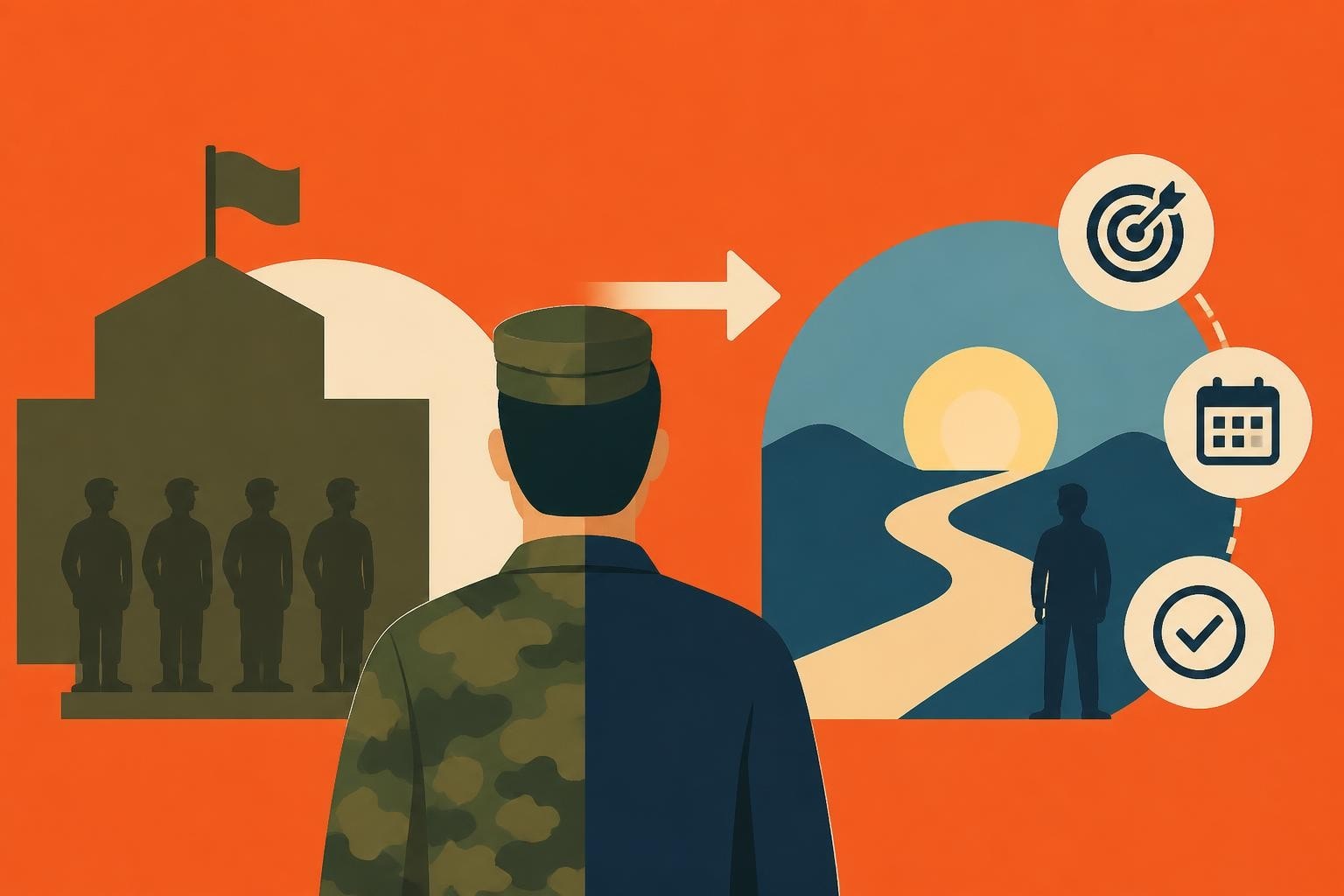
I am going through this transition right now. After 26 years, the uniform comes off. The rank goes away. The structure that defined every morning of my adult life disappears. I built The Father Forge because I watched too many good men lose themselves after they left the service. They gained weight. Their marriages fell apart. They stopped training. Not because they were weak. Because the structure that held them together was gone and nothing replaced it. This article is about what happens when a veteran loses the framework that made him effective, and what you must put in place before it is too late.
The Structure Problem Every Veteran Faces
The military does not train you to function without external accountability. You wake when told. You train when scheduled. You eat what is provided. You perform because the consequences of not performing are immediate and public. This system produces extraordinary results because it removes decision fatigue and replaces it with obligation.
When you transition out, that system vanishes overnight. No formation. No physical training schedule. No one checking if you showed up or did the work. TheVA study on mental health outcomesmakes it clear: smooth military-to-civilian transitions correlate directly with long-term mental health stability. The veterans who struggle are not the ones who faced the hardest combat. They are the ones who failed to rebuild structure in their civilian lives.
What Actually Happens Post-Service
Most veterans believe they will handle the transition fine. They have discipline. They have experience. They know how to work hard. Then six months pass and they realize they have not done a real workout in weeks. They are 20 pounds heavier. They are irritable with their kids. Their wife feels like she is living with a stranger.
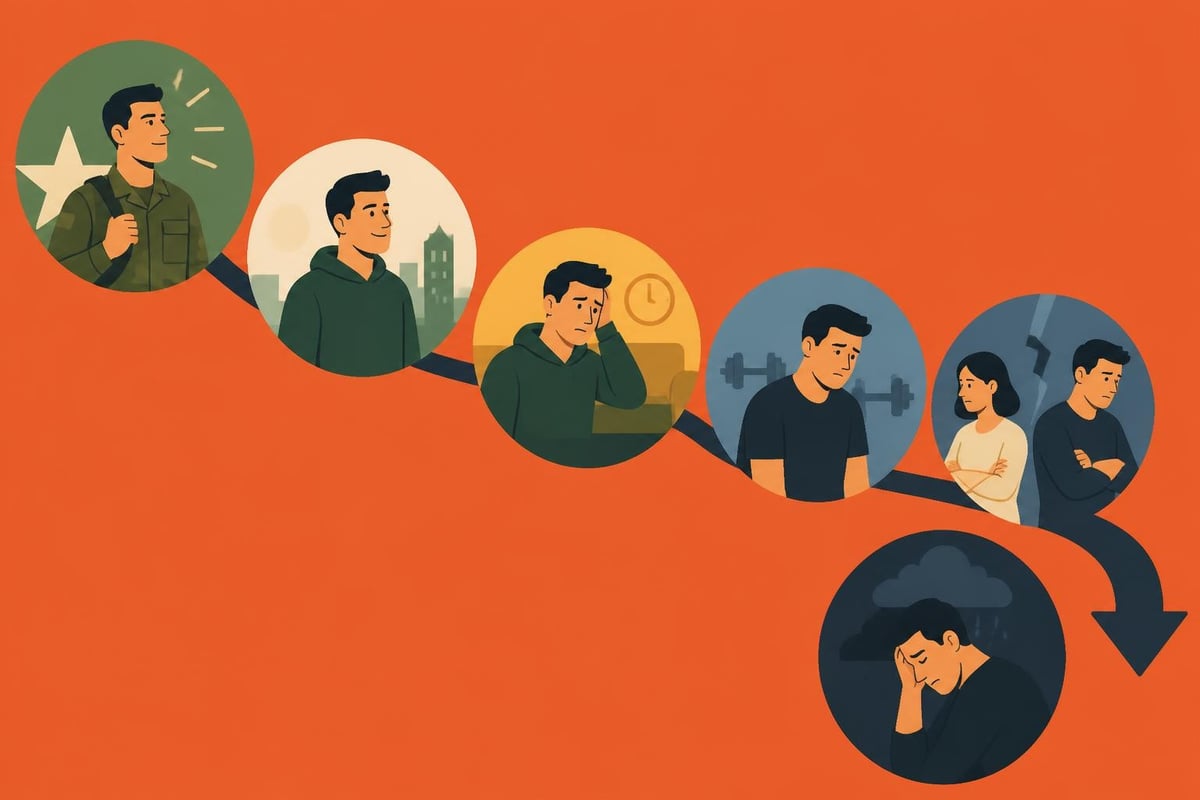
This is not a motivation problem. It is an environment problem. The veteran has not changed. The structure supporting him has disappeared. He keeps waiting to feel motivated the way he did when the Army demanded performance. That feeling never comes because motivation was never the driver. Obligation was.
Three Non-Negotiables Before the Uniform Comes Off
You cannot wait until after transition to figure this out. The time to build your new structure is while you still have the old one. Here is what you put in place before your last day in uniform.
1. Daily Physical Training Standard
Set your physical training schedule and attendance requirement now. Not what you will do. What you are obligated to do. This is not a workout plan. It is a non-negotiable standard that does not change based on how you feel.
Training time: Same time every day, minimum five days per week
Attendance policy: You show up regardless of motivation, soreness, or schedule conflicts
Performance metrics: Measurable standards you track weekly (bodyweight, strength numbers, conditioning benchmarks)
Accountability mechanism: Someone who knows your standard and checks if you met it
Thebenefits and resources available to Army veteransinclude physical fitness programs, but most veterans never use them because there is no formation to attend. You must create your own formation. If you wait until after you transition to start this, you will not start it at all. The gap between intention and execution is where most post-service fitness dies.
I run1-on-1 Men's Coachingspecifically for this reason. Veterans need custom programming and weekly accountability that replicates what the military provided. Not motivation. Structure and obligation.
2. Brotherhood Structure
The military gives you automatic brotherhood. You do not choose your unit. You show up and you belong. Transition takes that away. You must intentionally rebuild it before you need it.
Find three to five men who will hold you accountable every week. Not friends who make you comfortable. Men who will tell you when you are slipping and who expect the same from you. This happens through:
Weekly check-ins: Scheduled calls or meetings where you report what you committed to and what you actually did
Shared standards: Everyone in the group has measurable goals and everyone knows if those goals were met
Consequence for failure: Not punishment, but honest feedback when someone misses their standard
Most veterans think they can maintain discipline alone. They are wrong. The data onmental health services for veteransshows isolation as a primary risk factor. You need men in your life who care enough to challenge you. Build that network before you lose the automatic one the service provided.
Brotherhood ElementMilitary VersionCivilian RequirementDaily interactionAutomatic through unitIntentional scheduling requiredAccountabilityChain of commandPeer commitment groupShared missionUnit objectivesIndividual goals with group supportConsequence for failureUCMJ, counselingHonest feedback, public commitment
3. Family Leadership Framework
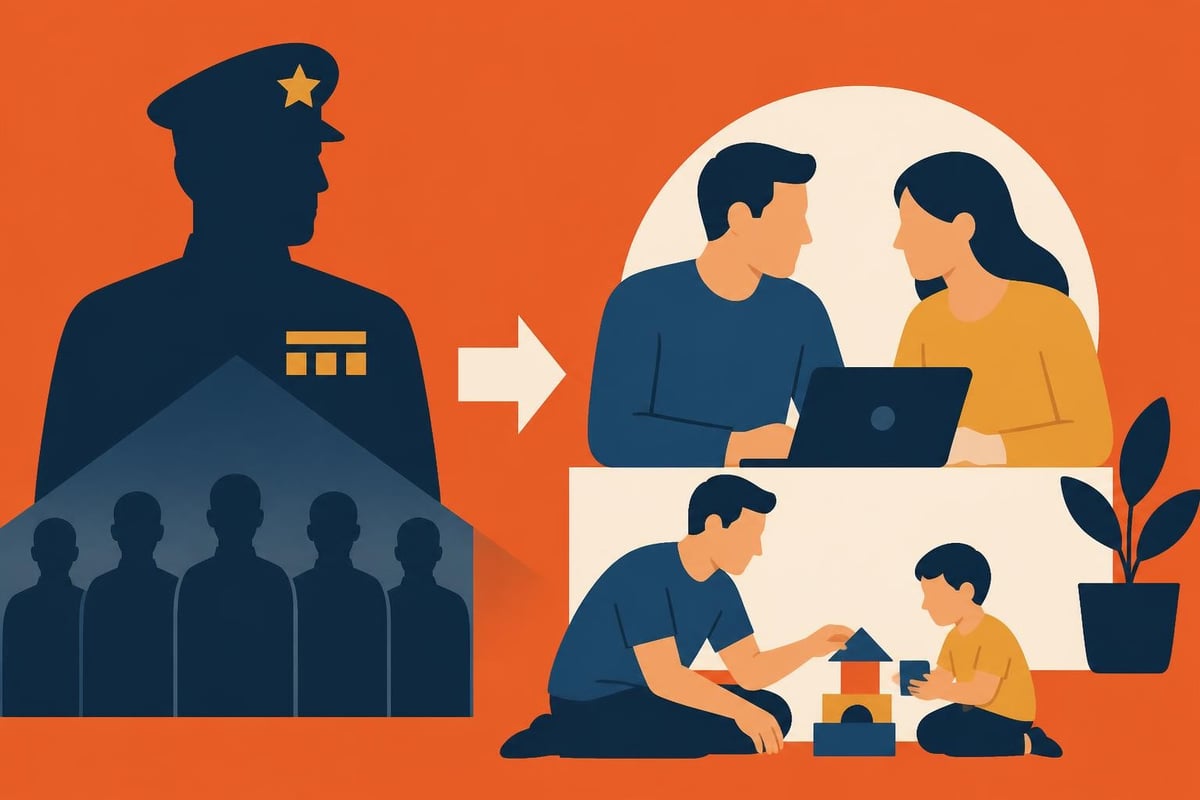
Your family does not need a retired veteran. They need a present father and husband. The rank that gave you authority at work means nothing at home. Leadership in your family requires a different framework, and you must define it before transition stress tests your marriage.
This means answering specific questions now:
What does daily involvement with your kids look like (not what you want, what you will do)?
How do you and your wife make decisions together when you are used to giving orders?
What does your marriage rhythm look like (date nights, conversations, intimacy standards)?
How do you show up when your kids need you and it conflicts with your schedule?
Write down your answers. Share them with your wife. Get her input. Adjust based on what she needs, not what you think should work. Then commit to the standard publicly. Most marriage problems for transitioning veterans come from the gap between the leadership style that worked in uniform and the partnership required at home. Close that gap before transition forces it open. You can learn more about building this framework throughprograms focused on fatherhood and leadership.
The Mental Health Reality No One Tells You
Transition does not cause mental health problems. It reveals them. The structure of military service often masks underlying issues because the external framework compensates for internal struggles. When that framework disappears, what was hidden becomes obvious.
Depression, anxiety, and PTSD do not wait for convenient timing. They surface when your daily routine changes and you have time to think. This is whymental health care services through the VAare critical. But accessing those services requires you to recognize you need them before the crisis hits.
Warning Signs to Watch
You need to know what declining mental health looks like in you specifically. This is not a generic list. This is about self-awareness before things fall apart.
Sleep disruption: Your sleep pattern changes without obvious cause
Avoidance: You start skipping workouts, social events, or family time
Irritability: Small things trigger disproportionate anger
Isolation: You prefer being alone when you used to seek company
Physical neglect: You stop caring about fitness, grooming, or health
If two or more of these show up in the same month, you address it immediately. Not when it gets worse. Not when your wife points it out. When you notice it. Get help through the VA, talk to your brotherhood group, or bring it to a coach who understands veteran transition. Waiting to see if it passes is how good men end up in bad places.
Building Your Post-Service Operating System
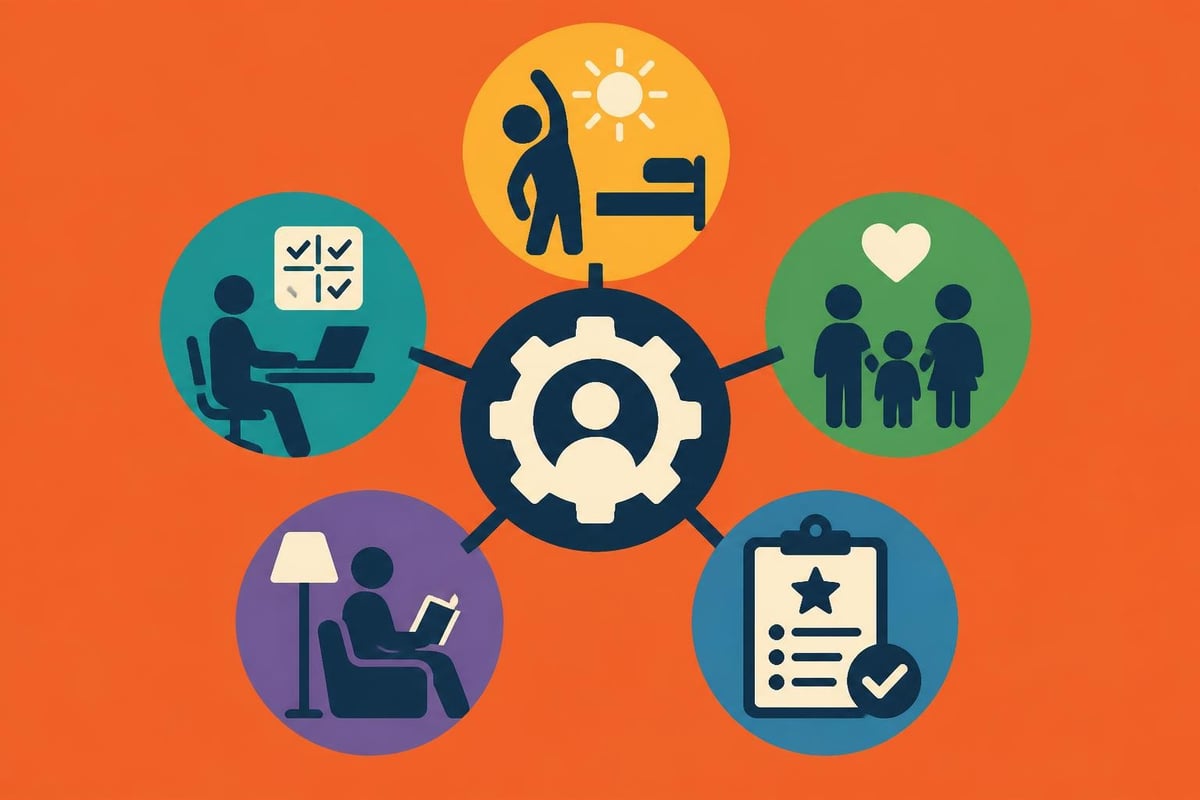
Think of your first year after transition as building a new operating system. The military gave you version 1.0. It worked because it was installed and maintained by the institution. Now you need version 2.0, and you are the only one responsible for building and maintaining it.
This operating system includes:
Morning routine: What happens between waking and starting work (physical training, planning, mental preparation)
Work structure: How you define productivity when no one tells you what to do
Family time: When and how you engage with your wife and kids
Evening shutdown: How you transition from work mode to home mode
Weekly review: When you assess if you met your standards and adjust for next week
None of this happens automatically. You design it, test it, and refine it based on results. Most veterans fail here because they think discipline is enough. Discipline without structure is just intention. You need both.
The Weight and Fitness Trap
Here is what happens to most veterans within 12 months of transition: they gain 15 to 30 pounds. Not because they stop caring. Because the automatic fitness structure disappears and nothing replaces it.
In the military, physical training is built into your schedule. You do not decide if you will work out. You show up to formation and it happens. After transition, working out becomes a choice you make every single day. When life gets busy, when stress increases, when work demands more time, fitness is the first thing that gets pushed aside.
How to Prevent Post-Service Weight Gain
The solution is not motivation. It is rebuilding the non-negotiable structure around training.
Set your training schedule now:
Choose five specific days and times each week
Put them in your calendar as non-negotiable appointments
Tell your family these times are protected
Find a training partner or group who expects you to show up
Define your minimum standard:
What is the absolute minimum training you will do on your worst week?
Set that as your floor, not your goal
On bad weeks, you hit the minimum
On good weeks, you exceed it
Track body composition weekly:
Weigh yourself same day, same time every week
Take progress photos monthly
Measure waist and key body parts quarterly
If numbers trend wrong for two weeks, adjust immediately
The veterans who maintain fitness after transition are not more disciplined than those who do not. They have better structure. Build yours before you need it. You can explore more on maintaining discipline throughsupport resourcesdesigned for this exact challenge.
Leadership After Service: Where It Actually Matters
You led soldiers. Now you need to lead yourself. This is harder because there is no external authority enforcing your standards. The leadership that matters most is the leadership no one sees: how you show up when no one is watching.
This includes:
Training when you do not feel like it: Your body does not care about your feelings, it responds to consistent stimulus
Choosing the hard conversation: Addressing problems with your wife before they become crises
Being present with your kids: Putting the phone down and engaging fully when they need you
Maintaining your standards: Doing what you said you would do even when circumstances change
The rank you wore gave you authority. The discipline you build gives you respect. One is temporary. The other lasts as long as you maintain it.
Military LeadershipPost-Service LeadershipAuthority from rankAuthority from consistencyExternal accountabilitySelf-imposed standardsTeam performanceIndividual and family outcomesMission-focusedRelationship-focusedShort-term objectivesLong-term legacy building
FAQ: Veteran Transition Questions
How long does it take to adjust after military service ends?
The adjustment period varies, but research shows the first 12 to 18 months are critical. This is when you either build sustainable structure or develop patterns that lead to long-term problems. Do not wait to feel adjusted. Build your structure immediately and adjust it based on results. Most veterans who struggle are still struggling three years later because they never built a replacement framework.
What is the biggest mistake veterans make during transition?
Believing discipline alone will carry them through. Discipline is necessary but insufficient. You need structure, accountability, and brotherhood. The veterans who thrive after service rebuild these three elements before the uniform comes off. The ones who struggle wait until they are already in trouble before seeking help.
Should I use VA mental health services even if I feel fine?
Yes. Preventive mental health care is not weakness, it is leadership. The same way you maintain physical fitness before problems develop, you maintain mental health before crises emerge. Establishing a relationship withVA mental health serviceswhile you are stable makes it easier to access care if you need it later. Waiting until you are in crisis makes everything harder.
How do I explain my transition struggles to my wife?
Directly and without excusing your behavior. Tell her what you are experiencing, what you are struggling with, and what you are doing about it. Most wives want to support their veteran husbands but do not know how. Give her specific ways she can help and specific standards you are holding yourself to. Partnership requires honesty about where you are, not pretending everything is fine when it is not.
Is it normal to miss the military even when you wanted to get out?
Completely normal. You are not missing the institution. You are missing the structure, brotherhood, and clear purpose it provided. This is why you must intentionally rebuild those elements in your civilian life. Nostalgia for what was will not help you. Building what comes next will. Focus on creating a civilian life that provides the same depth of purpose and connection the military gave you.
The transition from military to civilian life tests every veteran differently, but the core challenge is the same: rebuilding structure in an environment that provides none. You must design your own accountability, create your own brotherhood, and lead yourself with the same standards you once led others.The Father Forgeexists to provide exactly this: custom fitness programming, mental resilience coaching, and a community of men holding each other to higher standards. If you are transitioning out of service or already struggling post-service, the time to build your structure is now.