
Upper Body Workout: Build Strength That Matters
An upper body workout is not about mirror muscles or social media validation. It is about building functional capacity that serves your life outside the gym. When you strengthen your chest, back, shoulders, and arms with intention, you create a foundation for carrying groceries, lifting your kids, and showing up physically capable in every domain that matters. The problem is not lack of exercise options. The problem is lack of structure, accountability, and understanding why specific movements earn their place in your program. This is about programming that respects your time and delivers measurable results.
Movement Selection Determines Everything
The exercises you choose define your outcomes. An effective upper body workout prioritizes compound movements that engage multiple muscle groups simultaneously. These are not preferences. These are requirements for building strength efficiently when you have limited training time and competing responsibilities.
Primary Compound Movements:
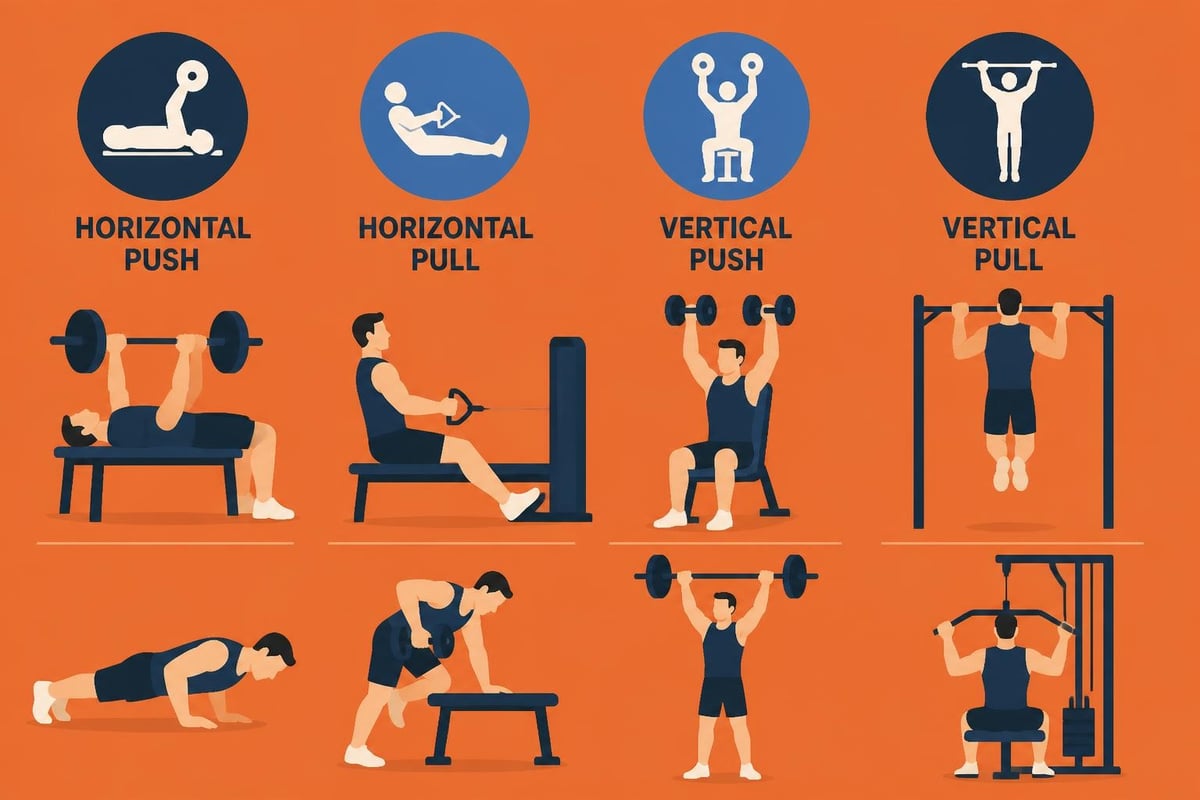
Horizontal push:Bench press variations, push-ups, dumbbell presses
Horizontal pull:Barbell rows, dumbbell rows, cable rows
Vertical push:Overhead press, landmine press, push press
Vertical pull:Pull-ups, chin-ups, lat pulldowns
Each category addresses a fundamental movement pattern. Horizontal pushes develop chest, shoulders, and triceps. Horizontal pulls build back thickness and rear delts. Vertical pushes strengthen overhead capacity and shoulder health. Vertical pulls create back width and bicep strength.
Research onresistance training prescriptionconfirms that movement variety across these patterns produces superior muscle development and functional capacity compared to isolation-focused programs. The science matters because it validates what works in practice.
Isolation Work Fills Gaps
Compound movements build the foundation. Isolation exercises address specific weaknesses and prevent imbalances. Add direct arm work, lateral raises, and rear delt movements after your primary lifts are complete.
Most men skip this work or prioritize it incorrectly. Bicep curls do not belong at the start of your session. They belong at the end, after you have earned them through heavy rowing and pulling.
Programming Structure Creates Progress
A random collection of exercises is not a program. A program has structure, progression, and measurable outcomes. Your upper body workout requires intentional organization across the training week.
Weekly Training Split
Training Day | Focus | Primary Movements | Volume |
|---|---|---|---|
Day 1 | Push | Bench press, overhead press, dips | 12-16 sets |
Day 2 | Pull | Pull-ups, barbell rows, face pulls | 12-16 sets |
Day 3 | Full Body | Compound lifts, lower priority | 8-12 sets upper |
Day 4 | Push/Pull Mix | Accessories, weak points | 10-14 sets |
This split allows adequate recovery between similar movement patterns while maintaining training frequency. You train each major muscle group twice per week through different angles and intensities.
Frequency matters more than single-session volume. Two moderate sessions produce better adaptation than one exhausting workout followed by inadequate recovery. The 2026 position stand from the American College of Sports Medicine confirms thattraining frequency of two to three times per week per muscle groupoptimizes hypertrophy and strength gains.
Set and Rep Frameworks
Different rep ranges serve different purposes. All have value. None should dominate your entire program year-round.
Strength focus (3-6 reps):Build maximum force production, neural efficiency
Hypertrophy focus (8-12 reps):Maximize muscle growth, metabolic stress
Endurance focus (15-20 reps):Improve work capacity, movement quality under fatigue
Rotate emphasis across training blocks. Spend four to six weeks in each zone before progressing to the next. This periodization prevents stagnation and addresses multiple adaptation pathways.
Form Standards Are Not Negotiable
Movement quality determines whether an upper body workout builds you up or breaks you down. Poor form under load creates injury patterns that compound over years. Strict standards protect longevity while maximizing training effect.
Bench Press Execution
The bench press requires full-body tension and controlled movement through complete range of motion. Set your shoulders back and down. Create an arch that maintains contact between your upper back and the bench. Lower the bar to your chest with control. Press through your entire foot.
Studies comparingbench press variations and their biomechanical demandsshow that proper shoulder positioning significantly reduces injury risk while improving force transfer. The difference between safe and dangerous benching is often subtle but always consequential.
Do not bounce the bar off your chest. Do not lift your hips off the bench. Do not flare your elbows excessively on the descent. These compensations feel easier in the moment and cost you later.
Pull-Up Standards
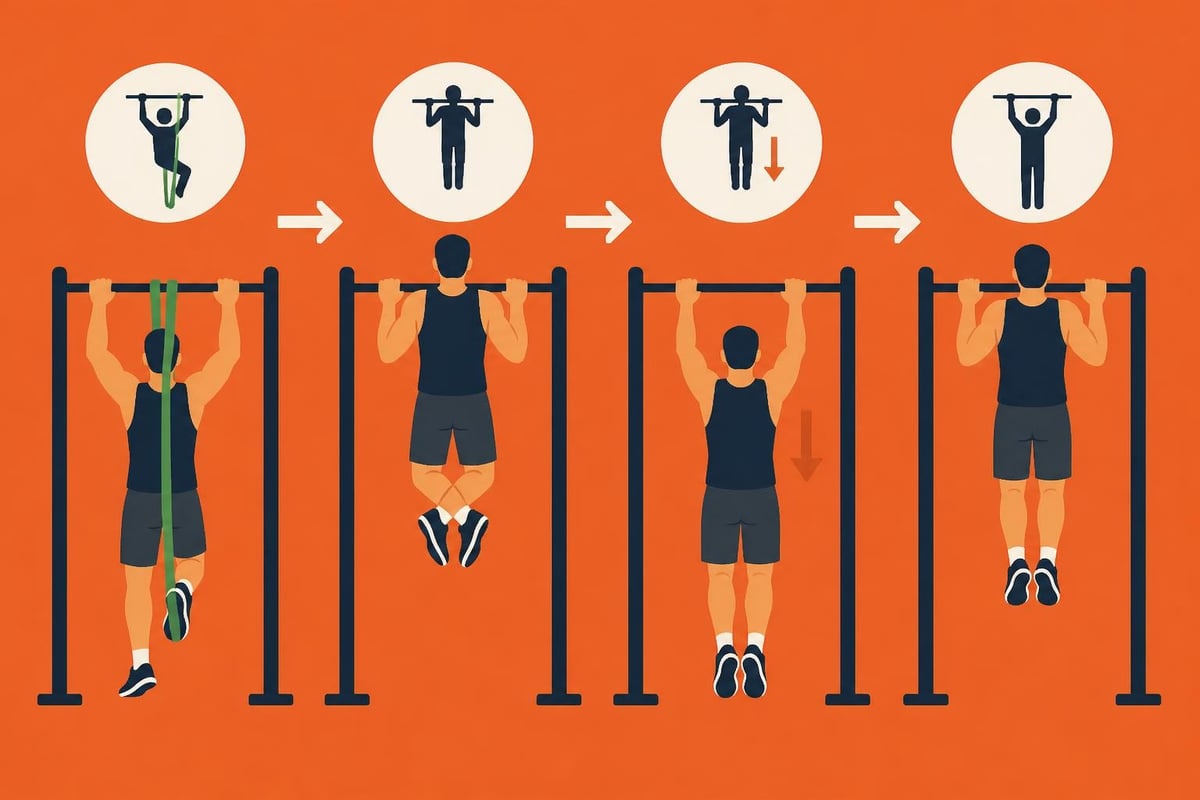
A complete pull-up starts from a dead hang with full elbow extension. Pull your chest to the bar using back muscles, not momentum. Control the descent rather than dropping.
Most men cannot perform a single strict pull-up when they start training seriously. This is not weakness. This is normal. Build capacity through assisted variations, negative repetitions, and horizontal pulling volume. The standard does not change because it is difficult.
Push-Up Form Variables
Recent research onpush-up wrist positioningdemonstrates that neutral wrist alignment reduces elbow and shoulder stress compared to extended wrist positions. Use push-up handles or parallettes if wrist mobility limits your form.
Keep your core braced throughout the movement. Your body should move as a single unit from shoulders to ankles. Sagging hips indicate core weakness that must be addressed separately.
Progressive Overload Drives Adaptation
Your body adapts to imposed demands. If demands remain static, adaptation stops. Progressive overload is the systematic increase of training stress over time. This principle separates programs that work from programs that waste time.
Methods of Progression:
Add weight:Increase load by smallest available increment (2.5-5 lbs)
Add repetitions:Perform more reps at same weight before increasing load
Add sets:Increase total volume at current intensity
Improve tempo:Slow the eccentric phase, pause at stretch, accelerate concentrically
Reduce rest:Maintain performance with less recovery between sets
Select one variable to progress per training block. Attempting to increase everything simultaneously leads to incomplete recovery and stalled progress. The men whowork with personalized coachinglearn which progression method matches their current capacity and recovery status.
Tracking Creates Accountability
You cannot manage what you do not measure. Record every working set: exercise, weight, reps, and perceived difficulty. Review your training log weekly. Identify patterns. Make adjustments based on data rather than feelings.
Most training failures stem from inconsistent effort masked as bad programming. A mediocre program executed with perfect consistency outperforms an optimal program followed randomly.
Recovery Determines Results
The upper body workout creates stimulus. Recovery produces adaptation. These are not separate processes. They are two parts of the same equation. Neglecting recovery nullifies training effort.
Sleep Is Non-Negotiable
Eight hours of quality sleep supports hormonal balance, tissue repair, and neural recovery. Less than seven hours chronically impairs strength gains and increases injury risk. This is not theory. This is measured outcome.
If you train hard but sleep poorly, you are working against yourself. Address sleep before adding training volume. The constraint is not your workout program. The constraint is your recovery capacity.
Nutrition Supports Growth
Muscle requires protein synthesis. Protein synthesis requires adequate amino acids and energy. You need approximately 0.8 to 1 gram of protein per pound of body weight daily when training for muscle growth.
Distribute protein across four to five meals rather than loading it into one or two. Consistent amino acid availability throughout the day optimizes muscle protein synthesis rates.
Meal Timing | Protein Target | Example Sources |
|---|---|---|
Breakfast | 30-40g | Eggs, Greek yogurt, protein shake |
Lunch | 40-50g | Chicken, fish, lean beef |
Dinner | 40-50g | Steak, salmon, turkey |
Pre-bed | 20-30g | Casein shake, cottage cheese |
Total daily calories must support your goal. Building muscle requires a small surplus. Losing fat requires a moderate deficit. Attempting both simultaneously as an experienced lifter is inefficient. Choose one priority per training phase.

Common Execution Failures
The gap between knowing and doing determines outcomes. Most men understand basic training principles. Few apply them consistently. These failures are not knowledge gaps. They are accountability gaps.
Training Without Structure
Random workouts based on how you feel create random results. Motivation fluctuates. Discipline executes regardless. A structured program removes decision fatigue and ensures progressive stimulus even on difficult days.
Write your program in advance. Follow it precisely. Adjust only when objective data shows the need for change. Your feelings about a workout are irrelevant to its effectiveness.
Ignoring Weak Points
You will naturally gravitate toward movements you perform well. This creates and reinforces imbalances. The exercises you avoid are often the ones you need most.
If your rows are weak relative to your bench press, you will develop shoulder issues. If your overhead press stagnates while your bench increases, you create impingement risk. Balance is not optional.
Skipping Warm-Ups
Cold tissues under heavy load tear easily. A proper warm-up increases tissue temperature, lubricates joints, and activates neural pathways. Spend ten minutes preparing your body rather than months recovering from preventable injury.
Dynamic stretching, light cardio, and progressive loading through your working exercises constitute adequate preparation. This is not wasted time. This is injury prevention that allows continued training.
Integration With Total Development
Your upper body workout exists within a complete life that includes lower body training, cardiovascular conditioning, family responsibilities, and professional obligations. Optimization in isolation creates dysfunction in context.
A program that demands six days per week in the gym fails most fathers. A program that ignores progressive overload fails everyone. The answer is not more complexity. The answer is more precise application of fundamental principles within realistic constraints.
Train three to four days per week with focused intensity. Execute movements with strict form. Progress systematically. Recover intentionally. This framework works because it respects both training science and life reality. The men atThe Father Forgeunderstand that sustainable strength requires integration, not isolation.
Mindset Foundations
Physical capacity and mental resilience develop together. The discipline required to complete a difficult upper body workout when you are tired transfers directly to difficult conversations at home, challenging projects at work, and moments requiring leadership.
Training is not separate from life. Training is practice for life. The man who quits on rep seven because it feels hard will quit on other commitments when they feel hard. The man who completes the programmed work regardless of discomfort builds a different identity.
Every set is a decision. Every workout is a vote for the person you are becoming. This is not motivational rhetoric. This is practical reality measured across thousands of training sessions.
Implementation Timeline
Starting an effective upper body workout program requires more than showing up to the gym. It requires systematic progression through learning phases.
Week 1-2: Movement QualityFocus entirely on form. Use light weights. Video your lifts. Identify and correct technical errors. Build movement patterns that will support heavy loading later.
Week 3-4: Capacity BuildingIncrease volume gradually. Add sets and reps while maintaining strict form. Establish work capacity baseline that allows recovery between sessions.
Week 5-8: Progressive LoadingBegin adding weight systematically. Increase load by 5-10 pounds on major lifts each week while maintaining quality. Track all working sets.
Week 9-12: First Testing BlockTest new maximums. Compare against baseline measurements. Adjust programming based on progress rate and recovery response.
This twelve-week framework establishes foundations. Real development happens across years of consistent application. Men who understand this continue training. Men who seek quick fixes cycle through programs without progress.
The upper body workout you need is simpler than marketed programs suggest and harder than casual effort permits. It requires movement quality, progressive overload, adequate recovery, and consistent execution across months and years. These elements combine to build functional strength that serves your life rather than just your appearance.The Father Forgecreates custom fitness and mindset programs that integrate these principles within your actual constraints, building strength and leadership capacity simultaneously through personalized coaching and brotherhood accountability.