TRT Cost: What You'll Pay for Testosterone Therapy in 2026
Every man facing low testosterone arrives at the same crossroads. You've dealt with the fatigue, the declining strength, the mental fog that makes leading your family harder than it should be. You've read about testosterone replacement therapy and its potential to restore what's been slipping away. Then you see the price tags and start wondering what you're actually signing up for. The real question isn't whether TRT works, it's whether you can afford to do it right and sustain it long enough to matter. Understanding trt cost means looking beyond the prescription sticker and accounting for everything the treatment demands over months and years.
What Drives Testosterone Replacement Therapy Expenses
TRT cost depends on three primary factors that determine whether you'll spend $100 per month or $500. The delivery method matters first. Injections, gels, pellets, and patches each carry different price points and frequency requirements. Second, your insurance coverage (or lack of it) creates the largest variable in out-of-pocket expense. Third, the monitoring protocol your provider follows dictates how often you'll pay for lab work and follow-up visits.
Prescription Methods and Their Price Ranges
Injectable testosterone remains the most cost-effective option in 2026. Generic testosterone cypionate or enanthate runs $30 to $100 monthly when paying cash. Insurance coverage can drop that to $10-$50 per month with typical copays. You inject weekly or biweekly, keeping supply costs predictable.
Topical gels cost more. AndroGel, Testim, and similar products range from $300 to $500 monthly without insurance. Generic versions bring the price down to $100-$200, still triple what you'd pay for injections. The convenience of daily application comes at a premium.
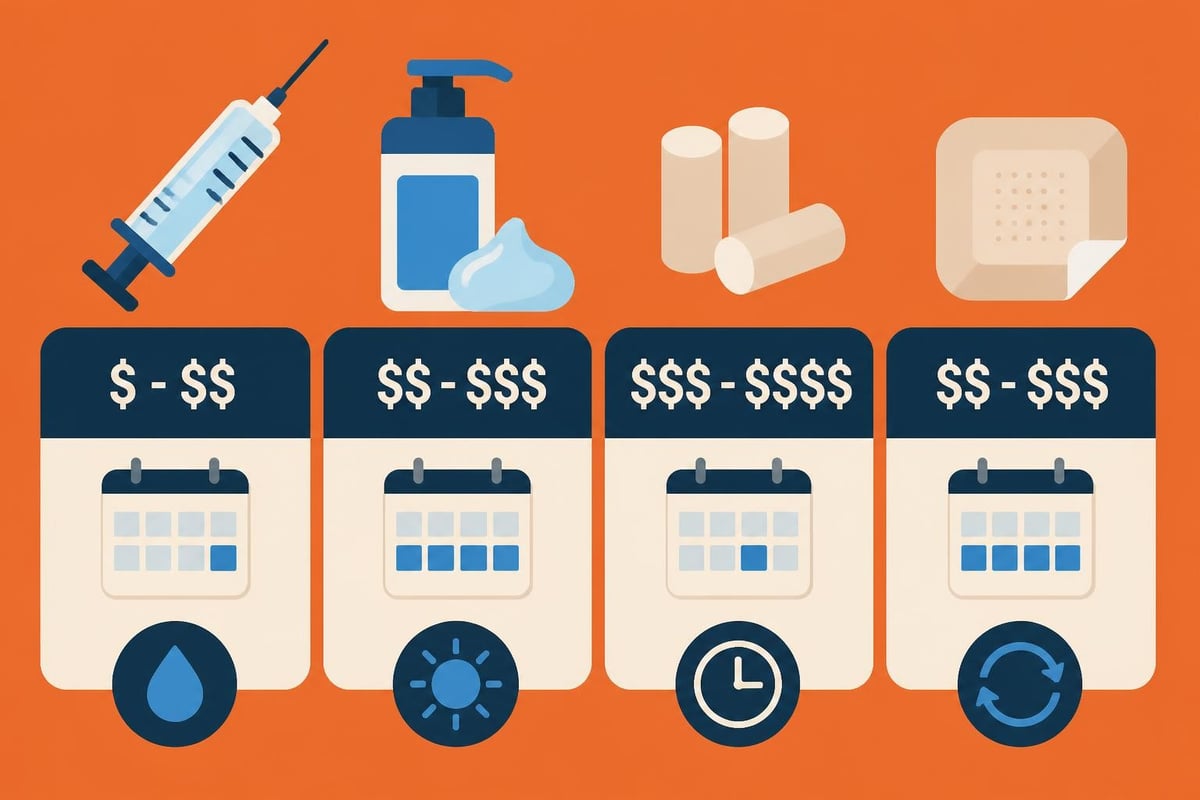
Testosterone pellets represent the highest upfront cost. Insertion procedures run $500 to $1,500 every three to four months. That averages $125 to $500 monthly when spread across the treatment window. Pellets eliminate the need for daily or weekly administration, but the initial investment creates a barrier many men can't clear.
Delivery Method | Monthly Cost (No Insurance) | Monthly Cost (With Insurance) | Administration Frequency |
|---|---|---|---|
Injectable (generic) | $30-$100 | $10-$50 | Weekly/Biweekly |
Topical Gels (brand) | $300-$500 | $50-$150 | Daily |
Topical Gels (generic) | $100-$200 | $30-$80 | Daily |
Pellets | $125-$500 | $100-$300 | Every 3-4 months |
Laboratory Testing Requirements
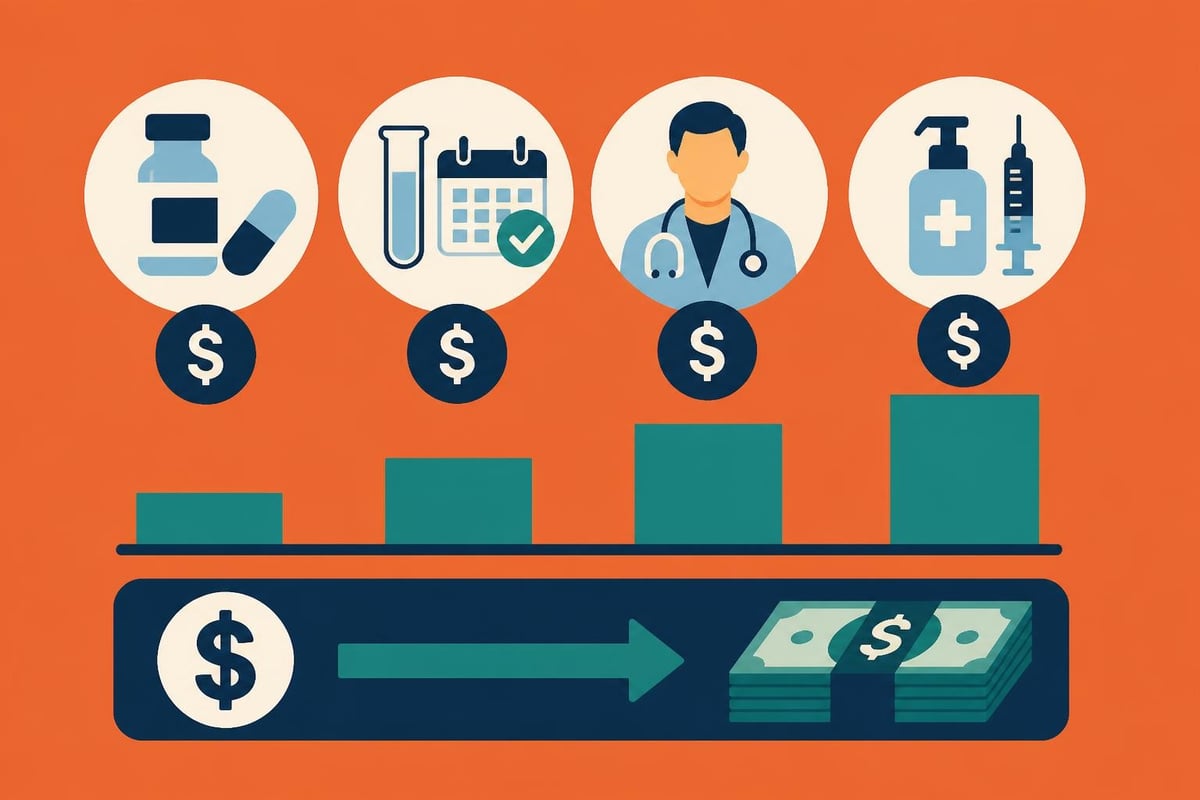
Lab work drives a significant portion of total trt cost that most men overlook during initial consultations. Before starting therapy, you need baseline measurements of total testosterone, free testosterone, complete blood count, comprehensive metabolic panel, lipid panel, PSA, and sometimes estradiol. This initial workup costs $200 to $600 without insurance.
The American Urological Association guidelines on testosterone deficiency recommend specific monitoring intervals that create ongoing expense. At three months, you repeat testosterone levels and hematocrit to ensure dosing is appropriate and you're not developing elevated red blood cell counts. Every six to twelve months, you run the full panel again.
According to Medicare's clinical laboratory fee schedule, individual test costs vary by region and provider. Cash-pay labs often charge less than insurance-billed rates. Quest and LabCorp typically price testosterone tests at $30-$100 each when paying directly. The complete monitoring panel runs $150-$400 depending on which tests your provider orders.
Over a year, budget $600 to $1,600 just for labs if you're following proper protocols. Men who skip monitoring to save money create health risks that cost far more to fix later.
Provider Visits and Consultation Fees
Initial consultations with endocrinologists or urologists range from $150 to $350 without insurance. Primary care physicians usually charge less, $100 to $200 for the first visit. Insurance copays reduce this to $20-$75 depending on your plan and whether you're seeing a specialist.
Follow-up appointments occur every three to six months once therapy is established. Each visit costs $75 to $200 without coverage, $15 to $50 with typical insurance. These visits review lab results, adjust dosing, and monitor for side effects. Skipping them isn't an option if you're doing this responsibly.
Hidden Costs Men Don't Calculate
The advertised trt cost never includes the full picture. Ancillary medications and supplies add up. If you develop elevated estrogen, you might need an aromatase inhibitor like anastrozole, adding $20 to $100 monthly. If red blood cell counts climb too high, therapeutic phlebotomy (blood donation) becomes necessary at $50 to $150 per session.
Injection supplies for self-administration include:
Syringes and needles: $10-$30 monthly
Alcohol swabs: $5-$10 monthly
Sharps container: $10-$20 annually
Bandages: $5 monthly
Men using topical products need to account for application variability. You'll waste some product. You'll need extra if absorption is poor. Budget 10-15% above the stated prescription cost.
Travel to appointments and lab facilities costs money and time. If your provider is 30 miles away and you're going quarterly, that's gas, potentially time off work, and the opportunity cost of hours spent in waiting rooms instead of with your family or building your business.
Insurance Coverage Variables
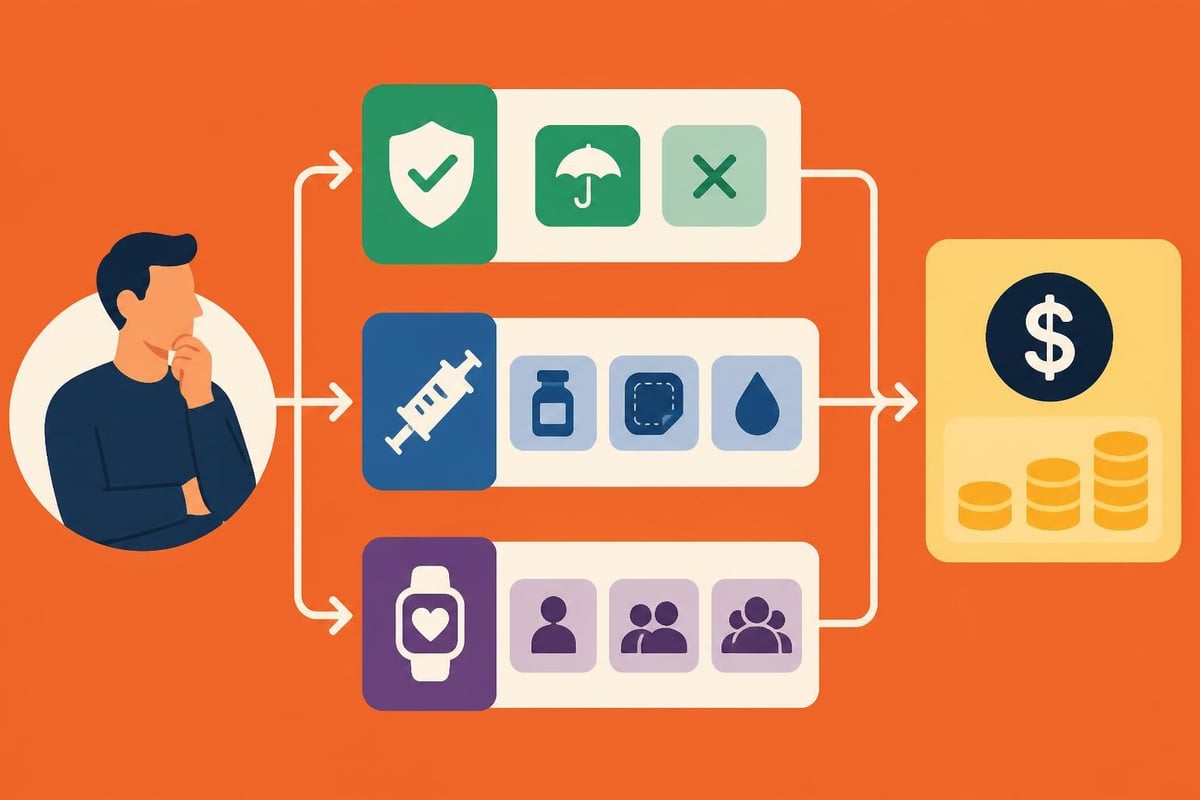
Insurance transforms trt cost from manageable to prohibitive or vice versa. Coverage depends on your diagnosis code, your plan's formulary, and whether your provider documented medical necessity according to payer requirements. Most plans cover TRT when total testosterone is below 300 ng/dL on two morning tests and you have clinical symptoms.
Insurance typically requires:
Documented symptoms (fatigue, decreased libido, erectile dysfunction)
Two low testosterone readings taken before 10 AM
Ruling out secondary causes (obesity, sleep apnea, medications)
Trial documentation showing non-response to lifestyle modifications
The Endocrine Society's clinical practice guidelines outline diagnostic criteria that insurance companies reference when approving or denying coverage. Meeting these standards matters because denial means paying full freight.
Even with coverage, your out-of-pocket depends on deductibles, copays, and coinsurance. High-deductible plans force you to pay full cost until you hit $3,000-$7,000 annually. After that, coinsurance kicks in at 80/20 or 70/30. Do the math before assuming insurance makes it affordable.
Medicare Part B covers testosterone only when diagnosed via specific criteria. Medicare's diagnostic lab coverage rules affect how often you can bill for monitoring without prior authorization. Part D covers prescriptions but formulary restrictions and prior authorization requirements create delays and denials.
Insurance Type | Typical Coverage | Prior Authorization | Monthly Out-of-Pocket |
|---|---|---|---|
Employer PPO | 80% after deductible | Often required | $50-$200 |
Employer HMO | 70-80% with referral | Usually required | $30-$150 |
High-Deductible | 0% until met, then 80% | Sometimes | $100-$500 |
Medicare Part D | Varies by plan | Frequently | $20-$150 |
No Insurance | 0% | N/A | $200-$600+ |
Online Clinics vs Traditional Providers
Telehealth TRT clinics changed the cost landscape in 2024-2026. Companies offering online consultations, home test kits, and mail-order prescriptions advertise all-inclusive pricing at $99 to $300 monthly. This sounds simpler than navigating insurance and specialist referrals. The reality is more complex.
Online clinics often provide convenience at the expense of comprehensive care. They might order fewer baseline tests. Their monitoring protocols may be less rigorous than evidence-based recommendations. You get a prescription and basic oversight, but if complications arise, you're referred back to local providers anyway.
Traditional endocrinology or urology practices cost more upfront but provide deeper expertise. They manage the full spectrum of hormonal issues, adjust for comorbidities, and have protocols for handling side effects. For men with complex health backgrounds or those over 50, this matters.
The actual trt cost difference isn't as large as marketing suggests. Online clinics charging $200 monthly include prescription and limited labs but not comprehensive monitoring. Traditional care with insurance averages $100-$300 monthly when you factor in copays, prescriptions, and quarterly labs. Without insurance, traditional care runs $300-$600 monthly, making online clinics competitive for cash-pay patients.
First-Year Budget Reality
Calculate your first year properly. Month one includes consultation ($100-$350), baseline labs ($200-$600), and first prescription ($30-$500 depending on method). That's $330 to $1,450 before you even start treatment.
Months two through twelve add monthly prescriptions plus follow-up labs at month three ($150-$400), month six visit and labs ($150-$400), and month twelve visit and full panel ($200-$500). Include quarterly provider visits at $75-$200 each.
First-year total cost ranges:
Best case (injectable, insurance, minimal labs): $800-$1,500
Mid-range (injectable, insurance, full monitoring): $2,000-$3,500
High end (pellets, no insurance, comprehensive care): $5,000-$8,000
Online clinic all-inclusive: $1,200-$3,600
These numbers assume no complications. Add aromatase inhibitors, blood donation for polycythemia, or treatment adjustments, and you're looking at another $500-$1,500 annually.
What Gets Ignored in Cost Discussions
Time is a cost. Weekly injections take five minutes once you're proficient. Daily gel application takes two minutes but requires planning around contact with women and children. Quarterly appointments consume half a day when you include travel and wait times. Over a year, that's 20-30 hours minimum.
The cost of doing it wrong exceeds the cost of doing it right. Men who skip monitoring to save $600 annually risk cardiovascular events, severe polycythemia, or prostate issues that cost tens of thousands to address. The systematic cost-effectiveness analysis shows proper monitoring reduces long-term complications and total healthcare spending.
Stopping and restarting therapy costs more than maintaining it. Your natural testosterone production shuts down on TRT. Coming off requires months of post-cycle therapy, additional medications, more labs, and the return of symptoms you were trying to escape. Budget for sustainability, not experimentation.
Making the Investment Decision
TRT cost becomes irrelevant if you can't sustain the treatment long enough to see results. Muscle growth, fat loss, improved mood, and better leadership at home develop over months, not weeks. A three-month trial followed by financial dropout leaves you worse off than never starting. You've suppressed your natural production without reaping the benefits.
The men who succeed with TRT treat it like they treat their mortgage or car payment. It's a non-negotiable line item because the alternative, living at 60% capacity while your family needs you at 100%, costs more in ways that don't show up on a bank statement. That's not motivational talk. That's the diagnostic reality of what untreated low testosterone does to your effectiveness as a father and leader.
For men committed to comprehensive health optimization, TRT is one component of a larger system. The Father Forge builds custom fitness and accountability frameworks that address the training, nutrition, and mindset factors working alongside (or sometimes instead of) hormone therapy. The question isn't just whether you can afford TRT. It's whether you're addressing all the variables that determine your performance and presence at home.
The men who do this right combine medical intervention with training discipline, nutritional precision, and the accountability that prevents backsliding when life gets hard. That's how you turn a monthly expense into a return on investment measured in years added to your life and quality added to your years.
What You Owe Yourself Before Committing
Before spending a dollar on TRT, you owe yourself an honest accounting. Have you fixed sleep? Are you training with actual intensity four days a week? Is your body fat under 20%? Have you eliminated the obvious testosterone suppressors like excessive alcohol, chronic stress, and sedentary living? If not, you're buying a solution to a problem you created and can fix for free.
That said, some men have legitimately low testosterone despite doing everything right. Age, genetics, prior injuries, or medical conditions create deficits that no amount of clean living reverses. For those men, TRT isn't a shortcut. It's a correction that makes hard work actually produce results instead of just preventing further decline.
Before committing to long-term trt cost:
Get two morning testosterone tests separated by at least a week
Document symptoms and their impact on daily function
Calculate total annual cost including worst-case scenarios
Verify insurance coverage and appeal rights if denied
Establish a provider relationship built on monitoring, not just prescribing
Commit to the lab work and follow-up regardless of cost
Plan for at least 12 months before evaluating results
The fathers who succeed don't look for cheap TRT. They look for sustainable protocols they can maintain while meeting every other obligation. They budget properly, choose providers who monitor comprehensively, and accept that doing this right costs money because doing it wrong costs more.
Understanding trt cost means accounting for prescriptions, labs, visits, and the hidden expenses that add up over months. The men who succeed budget for the full protocol and commit to monitoring that prevents complications. The Father Forge builds the training systems, nutritional frameworks, and accountability structures that maximize what testosterone therapy can deliver when you're doing the work that actually matters.