Testosterone Levels by Age: What Men Need to Know
Your body doesn't ask permission before changing. Testosterone levels by age follow a predictable pattern, and knowing where you stand isn't optional if you want to lead at home, perform in the gym, and maintain the edge required for everything you've built. Most men notice the decline but misread what it means. They assume fatigue is just stress, weakened recovery is just aging, and declining performance is just life. That's not accountability. That's surrender dressed up as acceptance.
The Natural Progression of Testosterone
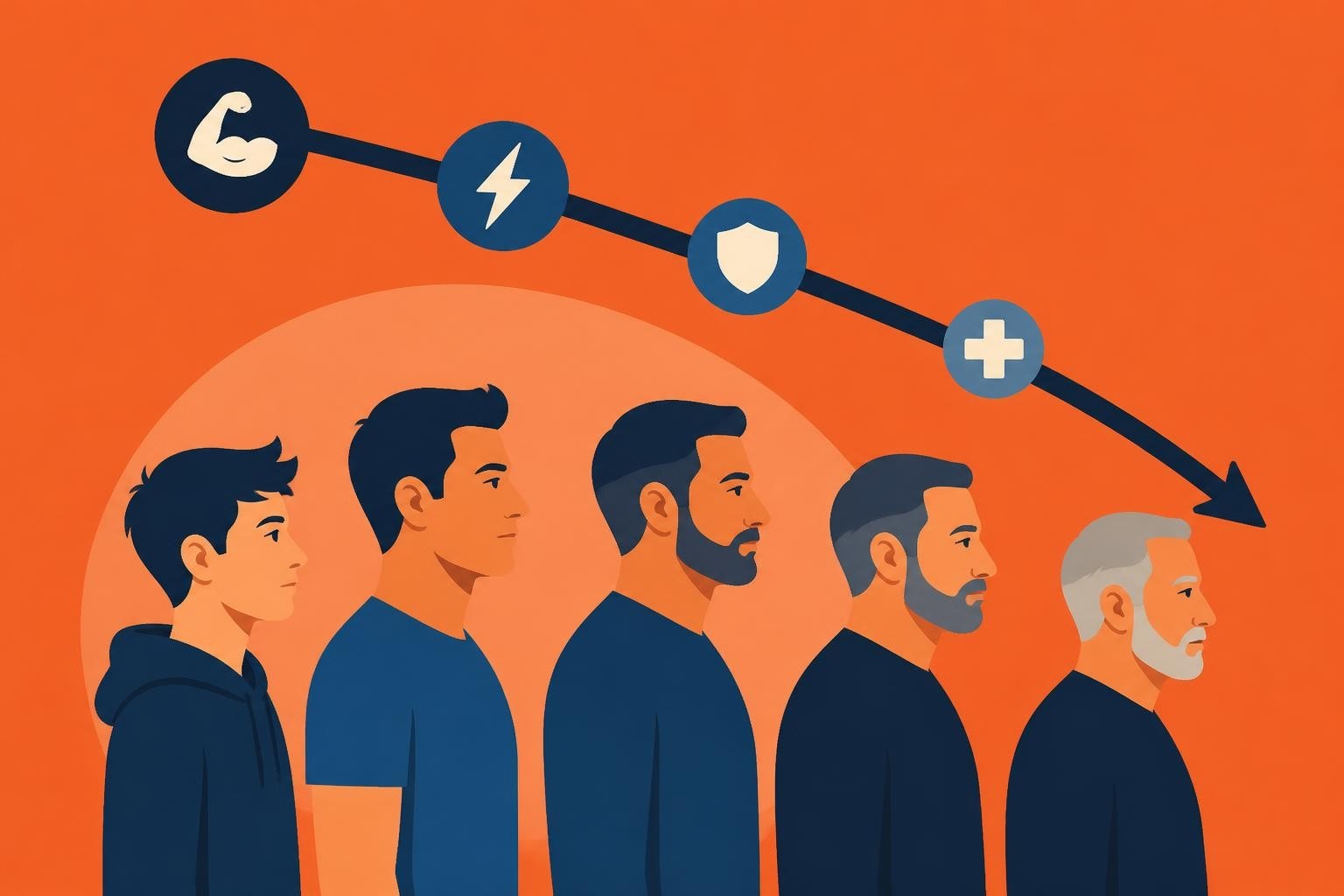
Testosterone peaks in your late teens and early twenties, typically between 300 and 1,000 ng/dL for most men.According to Healthline, levels begin declining around age 30 at roughly 1% per year. That's the baseline. But your individual trajectory depends on factors you control and factors you don't.
The number itself matters less than what it enables. Testosterone drives muscle synthesis, bone density, red blood cell production, fat distribution, and the mental clarity required to make hard decisions under pressure. When it drops, everything downstream suffers.
What Normal Ranges Actually Mean
Lab ranges represent population averages, not optimal function. A 45-year-old man with a total testosterone of 350 ng/dL falls within "normal" but functions nowhere near a man at 650 ng/dL.Medical News Todaybreaks down typical ranges by decade, but those ranges describe what's common, not what's effective.
Key metrics to track:
Total testosterone: The combined measure of bound and free testosterone in your blood
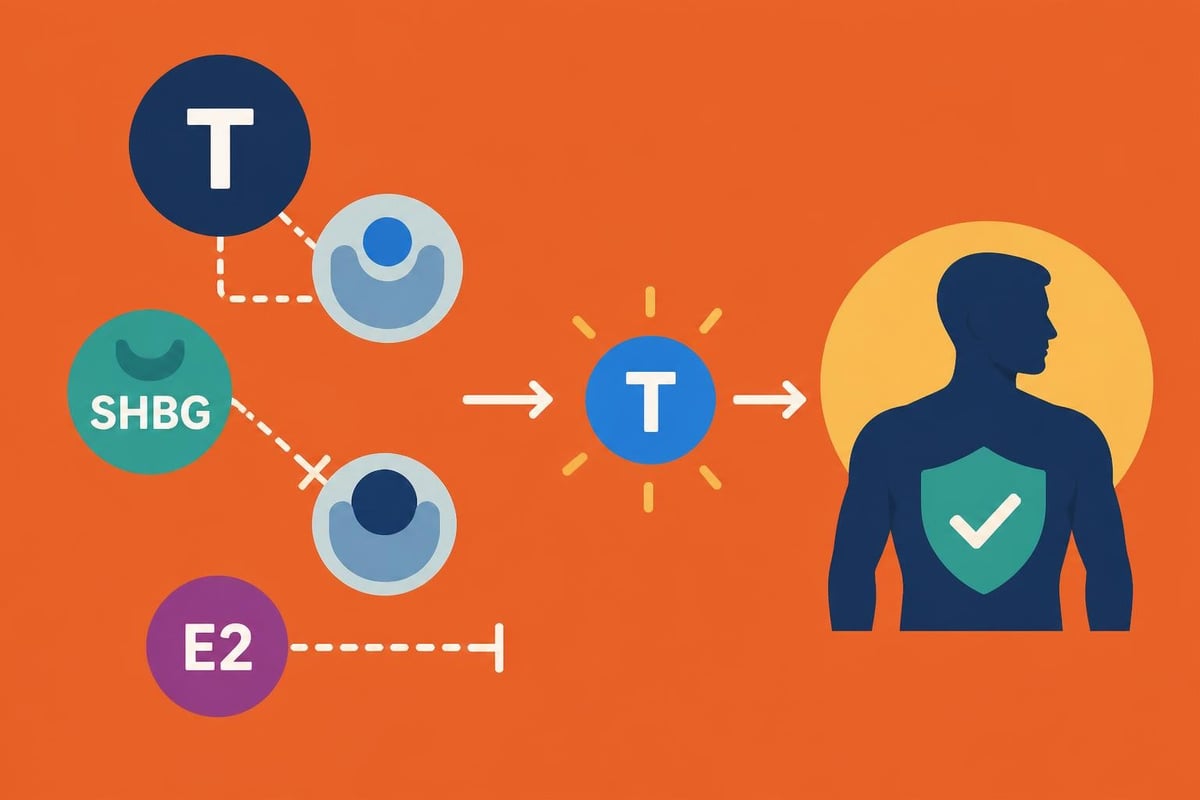
Free testosterone: The unbound portion available for immediate use, typically 2-3% of total
SHBG (sex hormone-binding globulin): The protein that binds testosterone and reduces availability
Estradiol: Converted from testosterone, must stay balanced to avoid gynecomastia and mood issues
Most men only test total testosterone and miss the full picture. Free testosterone often drops faster than total because SHBG increases with age, binding more of what you produce and leaving less available for muscle, energy, and drive.
How Age Affects Production
Testosterone production happens primarily in the Leydig cells of your testes, regulated by the hypothalamic-pituitary-gonadal axis. After 30, this axis becomes less responsive. The signal weakens. Production slows. Your body doesn't prioritize what it did at 20 because survival doesn't require peak performance past reproductive age.
The decline accelerates with poor sleep, chronic stress, metabolic dysfunction, and lack of resistance training. Add deployments, shift work, or repeated injuries, and the damage compounds. Twenty-five years in the Army National Guard, multiple surgeries, and broken sleep for years taught me that testosterone doesn't just decline on a calendar. It responds to how you live.
Age RangeAverage Total Testosterone (ng/dL)Expected Free Testosterone15-20300-1,20050-210 pg/mL20-30300-1,00046-224 pg/mL30-40300-89047-244 pg/mL40-50250-85040-250 pg/mL50-60215-87835-155 pg/mL60+196-85930-135 pg/mL
These ranges come fromEverlywell's analysis, but understand they represent statistical distribution, not performance targets. A man at the low end of "normal" for his age isn't optimized. He's acceptable by population standards but underperforming by individual potential.
Secondary Hypogonadism and External Factors
Primary hypogonadism stems from testicular failure. Secondary hypogonadism results from hypothalamic or pituitary dysfunction. Both produce the same symptom set but require different diagnostic approaches.
Opioids shut down the hypothalamic-pituitary axis almost immediately. After my accident in October 2004, I spent 29 days hospitalized, received eight units of blood, and left with 13 screws holding my pelvis together. Two years on fentanyl patches and OxyContin tanked my testosterone completely. At 22, my levels dropped below 200 ng/dL. That's not aging. That's chemical castration by pharmaceutical intervention.
The research is clear: long-term opioid use suppresses gonadotropin-releasing hormone (GnRH), which signals the pituitary to produce luteinizing hormone (LH) and follicle-stimulating hormone (FSH). Without those signals, your testes stop producing testosterone. Even after discontinuing opioids, recovery isn't guaranteed. Many men never return to baseline.
Recognizing Low Testosterone
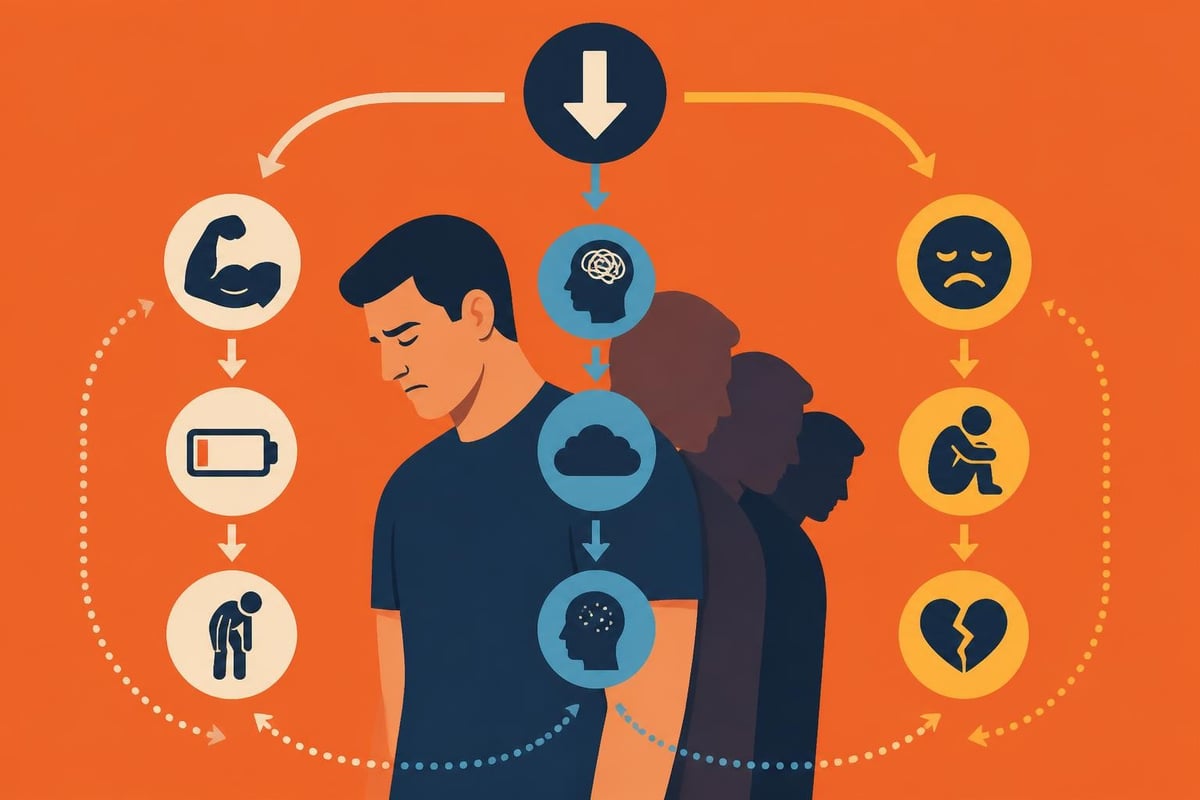
Symptoms don't announce themselves with clarity. They accumulate gradually until you accept diminished capacity as normal.
Physical symptoms include:
Persistent fatigue unresolved by sleep
Loss of muscle mass despite training
Increased body fat, especially visceral
Reduced strength and endurance
Decreased bone density over time
Mental and emotional symptoms include:
Brain fog and difficulty concentrating
Irritability without clear cause
Loss of competitive drive
Flattened mood and reduced motivation
Anxiety that wasn't present before
Fathers often misattribute these to job stress or poor sleep. But when sleep improves and stress remains constant but symptoms worsen, you're looking at a hormone issue.Science Insightsnotes that men with low testosterone also experience reduced libido and erectile dysfunction, but those symptoms rarely appear first. The mental and physical decline precedes sexual dysfunction.
Testing requires more than a single blood draw. Testosterone fluctuates throughout the day, peaking in the morning and declining by evening. A single afternoon test can miss a diagnosis. Proper evaluation includes multiple tests at the same time of day, ideally between 7 and 10 a.m., alongside free testosterone, SHBG, LH, FSH, estradiol, and prolactin.
MedlinePlusprovides a clinical overview of testosterone testing standards, but most primary care providers don't order the full panel. You'll need to request it or find a provider who understands hormone optimization, not just disease management.
Treatment Protocols and My Experience
I've been on testosterone replacement therapy (TRT) since age 22. I've run creams, pills, injections, and pellets. Each method has trade-offs.
Topical creams and gelsabsorb through the skin but transfer easily to partners and children. Application sites must be covered. Levels vary based on absorption rates, skin thickness, and whether you sweat heavily. Compliance is high because it's daily, but consistency is difficult.
Oral testosteronehas poor bioavailability and requires multiple doses daily. It's also harder on the liver. Few providers prescribe it anymore.
Injectionsdominated my protocol for almost 20 years. Weekly or biweekly injections of testosterone cypionate or enanthate provide stable levels when dosed correctly. The downsides accumulate over time:
Peaks and crashes: Even with weekly injections, some men experience mood and energy fluctuations
Hematocrit elevation: Increased red blood cell production can thicken blood and require therapeutic phlebotomy
Injection site issues: Scar tissue, discomfort, and the inconvenience of weekly compliance
Inconsistent absorption: Intramuscular injections depend on muscle depth, fat distribution, and technique
After nearly two decades on injections, my levels stopped holding even on a consistent protocol. Trough levels dropped below therapeutic range, and adjusting the dose or frequency created hematocrit problems.
Pellets changed that.Testosterone pellets are implanted subcutaneously, usually in the upper buttock, every 3-5 months. They release a steady dose over time without the peaks and crashes of injections. You don't think about them. No weekly routine. No site rotation. No compliance issues.
Pellet insertion requires a minor in-office procedure under local anesthetic. A small incision is made, pellets are inserted, and the site is closed with a single stitch or surgical glue. Bruising and soreness last a few days. After that, you forget they're there.
Levels remain stable across the entire dosing period. No fluctuations. No remembering to inject. For men with demanding schedules, families, and leadership responsibilities, that consistency matters.
Safety and Monitoring Requirements
Testosterone replacement isn't risk-free. The cardiovascular findings are mixed but require honest acknowledgment.
Some studies suggest TRT increases the risk of cardiovascular events in older men or those with existing heart disease.Moonshot MDdiscusses the distinction between normal and optimal levels and notes that poorly managed TRT can elevate hematocrit, blood pressure, and LDL cholesterol. Other studies show neutral or even protective effects when levels are maintained within physiological ranges.
Required monitoring includes:
Hematocrit and hemoglobin: Checked every 3-6 months to prevent polycythemia
Lipid panel: TRT can negatively affect cholesterol if not managed
Prostate-specific antigen (PSA): Monitored to rule out prostate issues, though TRT doesn't cause prostate cancer
Estradiol: Can rise with TRT as testosterone aromatizes into estrogen
Liver function: Especially with oral formulations
Men over 40 should also have baseline cardiovascular screening before starting TRT. That includes blood pressure, resting heart rate, and possibly a stress test or calcium score if risk factors exist. You don't start a protocol without knowing where you stand.
I work with fathers over 35 who want accountability and structure, not guesswork. The1-on-1 men's coaching program at The Father Forgeincludes custom fitness programming, nutrition planning, and weekly calls built around individual needs. Hormone optimization is part of that conversation because you can't lead at home or perform under load if your biology is working against you.
When to Act
Heyday MDoutlines when declining testosterone becomes a medical concern worth treating. The standard is symptomatic hypogonadism confirmed by lab work, not just a number below population average.
If you're experiencing multiple symptoms, testing below 300 ng/dL on repeated draws, and lifestyle interventions haven't moved the needle, treatment is justified. But you don't wait until you're nonfunctional. You act when performance declines enough to affect your responsibilities.
Lifestyle interventions to prioritize first:
Resistance training 3-5 days per week with progressive overload
Seven to eight hours of quality sleep nightly
Stress management through structured routines and recovery protocols
Elimination of processed foods, excess sugar, and alcohol
Maintenance of healthy body composition (under 20% body fat for most men)
These aren't optional. They're baseline. If you're overweight, sedentary, and sleep-deprived, fixing your testosterone won't fix your life. You'll just have higher testosterone while remaining overweight, sedentary, and sleep-deprived.

Teenagers and young men experiencing symptoms should also be evaluated, but TRT is rarely the answer for them.Emmadavisbooks.comoffers resources for teens navigating emotional development and self-confidence, which can overlap with low testosterone symptoms but often stem from different causes. Young men need proper diagnosis before jumping to hormone replacement, especially since fertility preservation becomes a concern if starting TRT before fatherhood.
For men experiencing mood and performance issues tied to hormones but unsure whether TRT is the right step, working with a provider who understands both mental health and endocrine function is critical.CopeHouse Collectiveprovides therapy services that address the psychological component of these transitions, because fixing your hormones doesn't automatically fix decision-making, relationships, or emotional regulation.
The Difference Between Normal and Optimal
Lab Test Superstorediscusses how testosterone peaks in late adolescence and declines throughout adulthood. That decline is normal in the statistical sense but not optimal for sustained performance.
A 50-year-old man with testosterone at 400 ng/dL isn't sick. He's average for his age. But he's also not competing at the level he could with levels closer to 700 ng/dL. The question isn't whether the decline is natural. It is. The question is whether you accept natural decline as inevitable or intervene to maintain capacity.
I don't advocate TRT for every man experiencing age-related decline. I advocate accurate testing, honest symptom evaluation, and informed decision-making. If your levels are low, your symptoms are real, and your lifestyle is dialed in, replacement therapy is a tool. It's not a replacement for discipline. It's a force multiplier when discipline is already present.
Some men respond to lifestyle changes alone. Weight loss, sleep improvement, and consistent training can raise testosterone by 100-200 ng/dL or more. That's enough to restore function without medication. But if you've done that work and still test low with persistent symptoms, waiting doesn't make you tougher. It makes you less effective.
Final Considerations for Fathers
Testosterone levels by age matter because they dictate your ability to show up physically, mentally, and emotionally for the people depending on you. Low testosterone doesn't just affect your gym performance. It affects your patience, your decision-making, your resilience under stress, and your ability to model strength for your children.
Fathers over 35 face compounding stressors: careers, marriages, kids, aging parents, financial pressure, and the expectation to lead without faltering. If your biology is compromised, everything else becomes harder. You can push through for a while, but eventually, the body wins.
Testing is straightforward. Treatment options exist. The real barrier is the decision to stop accepting diminished capacity as normal. You don't need motivation. You need accurate information, a clear standard, and accountability to act on both.
Testosterone levels by age decline predictably, but the decision to intervene belongs to you. If you're a father over 35 struggling with energy, recovery, or mental clarity, and you've optimized your training, nutrition, and sleep without results, it's time to evaluate your hormones.The Father Forgebuilds custom fitness and mindset programs that address the full spectrum of performance, not just what happens in the gym. Leadership at home starts with getting your body and mind operating at capacity.