Self-Improvement: Build a Life You Command
Self-improvement fails most men because they approach it as information collection instead of operational execution. You already know what to do. The problem isn't knowledge. The problem is your environment refuses to enforce standards, your peer group accepts mediocrity, and you've never been held accountable to a leadership framework that demands daily action. Realself-improvementbegins when you stop consuming content and start reconstructing the systems that govern your decisions, your energy, and your identity as a father and leader.
The Information Trap Keeps You Stuck
You've read the books. You've listened to the podcasts. You understand caloric deficits, progressive overload, and emotional regulation. Yet nothing changes because knowing doesn't produce doing. Information without environmental pressure is entertainment. Men fail at self-improvement because they've built no cost for quitting and no consequence for breaking standards.
The leadership principle is simple: behavior follows environment, not information. Your current results reflect your current environment. If you're surrounded by men who accept weak bodies, passive fatherhood, and reactive decision-making, you'll mirror those standards no matter how many articles you read. Change the environment or stay the same.
Why Most Self-Improvement Plans Collapse
Traditional approaches fail because they ignore the realities of adult male psychology and operational constraints. Consider why your last attempt didn't stick:
No external accountabilitybeyond your own fluctuating motivation
No cost for failurethat creates genuine consequence
No brotherhood networkholding the standard when you want to quit
No operational frameworkintegrating fitness, fatherhood, and leadership
No daily enforcementof the behaviors you claim matter
This isn't a motivation problem. It's a systems problem. You need structure that survives your worst days, not inspiration that fades by Tuesday.
Self-Improvement Requires Environmental Redesign
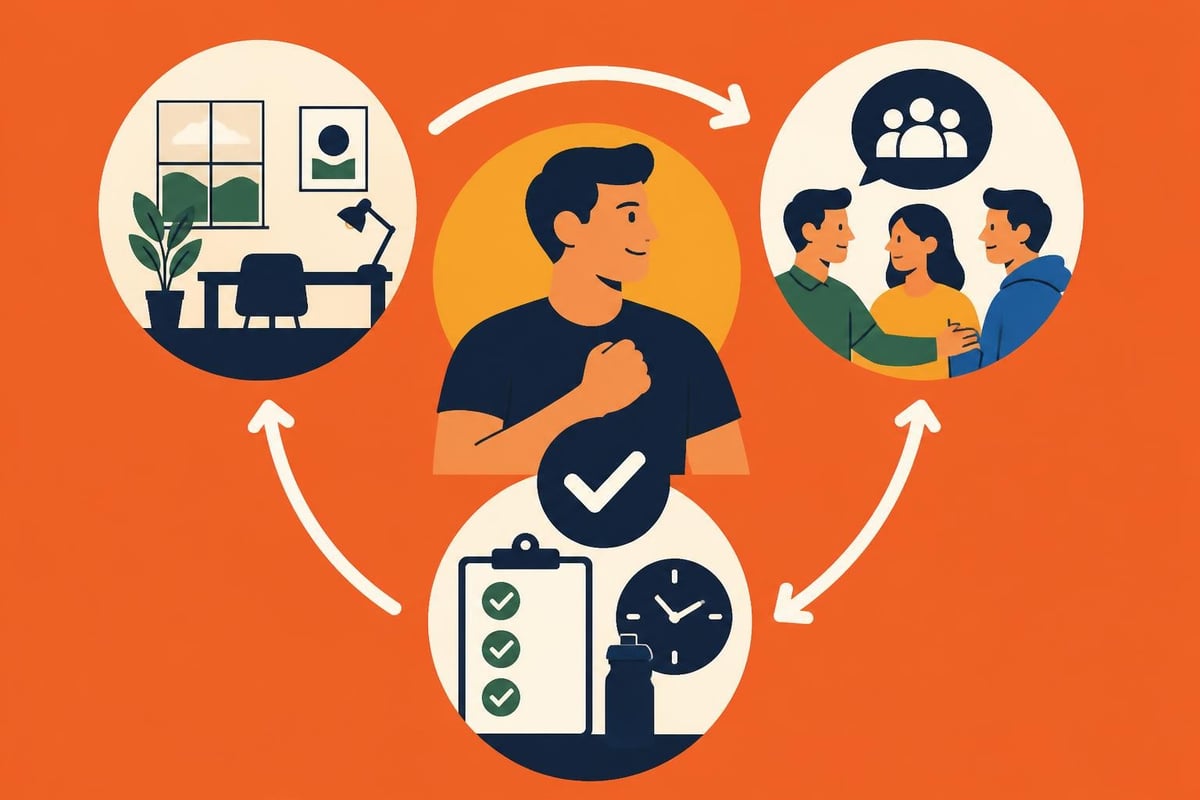
You cannot outperform your environment. Your physical space, social network, and daily rhythms either enforce your standards or erode them. Most men try to improve themselves while living in environments designed for comfort, distraction, and low expectations. That's like trying to get lean while working in a bakery.
Start with your physical environment. What you see shapes what you do. If your home gym is buried in storage boxes, you've already decided fitness doesn't matter. If your phone sits on your nightstand, you've chosen distraction over discipline. If your kitchen is stocked for convenience instead of performance, you're eating like a child, not a leader.
Your social environment matters more than your genetics. Show me your five closest relationships and I'll predict your physical condition, your marriage quality, and your leadership capacity. Men don't drift toward excellence. They drift toward the median of their peer group. If your network accepts obesity, passive parenting, and reactive living, you will too unless you change the network.
Rebuilding Your Operational Space
Environment ElementCurrent State AssessmentRequired StandardTraining spaceAccessible within 60 secondsEquipment visible, ready, non-negotiableKitchen setupStocked for performance nutritionProtein prioritized, temptation removedDigital boundariesPhone controls your attentionYou control notification accessSocial networkFriends accept mediocrityBrotherhood enforces growth standards
The operational question isn't "What should I do?" It's "What does my environment force me to do?" Design spaces that make the right action easier than the wrong one. Put your training gear where you trip over it. Stock only food that serves your mission. Surround yourself with men who won't let you quit.
Brotherhood Over Motivation
Self-improvement doesn't happen in isolation. It happens in the friction between your current performance and another man's refusal to accept it. Motivation is internal and unstable. Accountability is external and permanent. You need men who will call the failure when you miss the standard, not friends who say "it's okay, you'll get it next time."
Most men lack this completely. They have drinking buddies, work acquaintances, and social media connections. They don't have brothers who will show up at 0530 when they don't want to train, who will ask hard questions about their marriage, who will demand better fatherhood than passive presence. Without this, self-improvement becomes another thing you tried and quit.
The military understands this perfectly. You don't improve because you feel motivated. You improve because the man next to you won't tolerate your weakness, and you won't tolerate his. That mutual standard-holding creates reliability that no amount of personal inspiration can match.Building self-esteemisn't about positive affirmations. It's about meeting standards with witnesses who matter.
What Real Accountability Looks Like
Weekly performance reviewswith specific metrics, not feelings discussions
Cost for missed standardsthat creates genuine consequence
Public commitmentto other men who track your execution
Direct confrontationwhen performance drops without excuse
Celebration of winstied to specific actions, not generic encouragement
This isn't harsh. It's respectful. Letting a man fail silently is cruelty disguised as kindness. Demanding his best is love expressed through action. If you want sustainable self-improvement, you need men who care enough to hold the line when you want to drop it.

The Physical Foundation Drives Everything Else
Self-improvement starts with your body because your body is the only asset you can't delegate, outsource, or avoid. Every other area of leadership, from fatherhood to career performance, rests on your physical capacity. A weak body produces weak leadership. Not because muscles equal competence, but because the discipline required to build strength transfers to every other domain.
Men who skip physical training always have the same excuse structure: time, energy, priorities. The real reason is simpler. They don't want to face the gap between who they are and who they claim to be. Training exposes that gap daily. You either hit the numbers or you don't. The barbell doesn't care about your intentions.
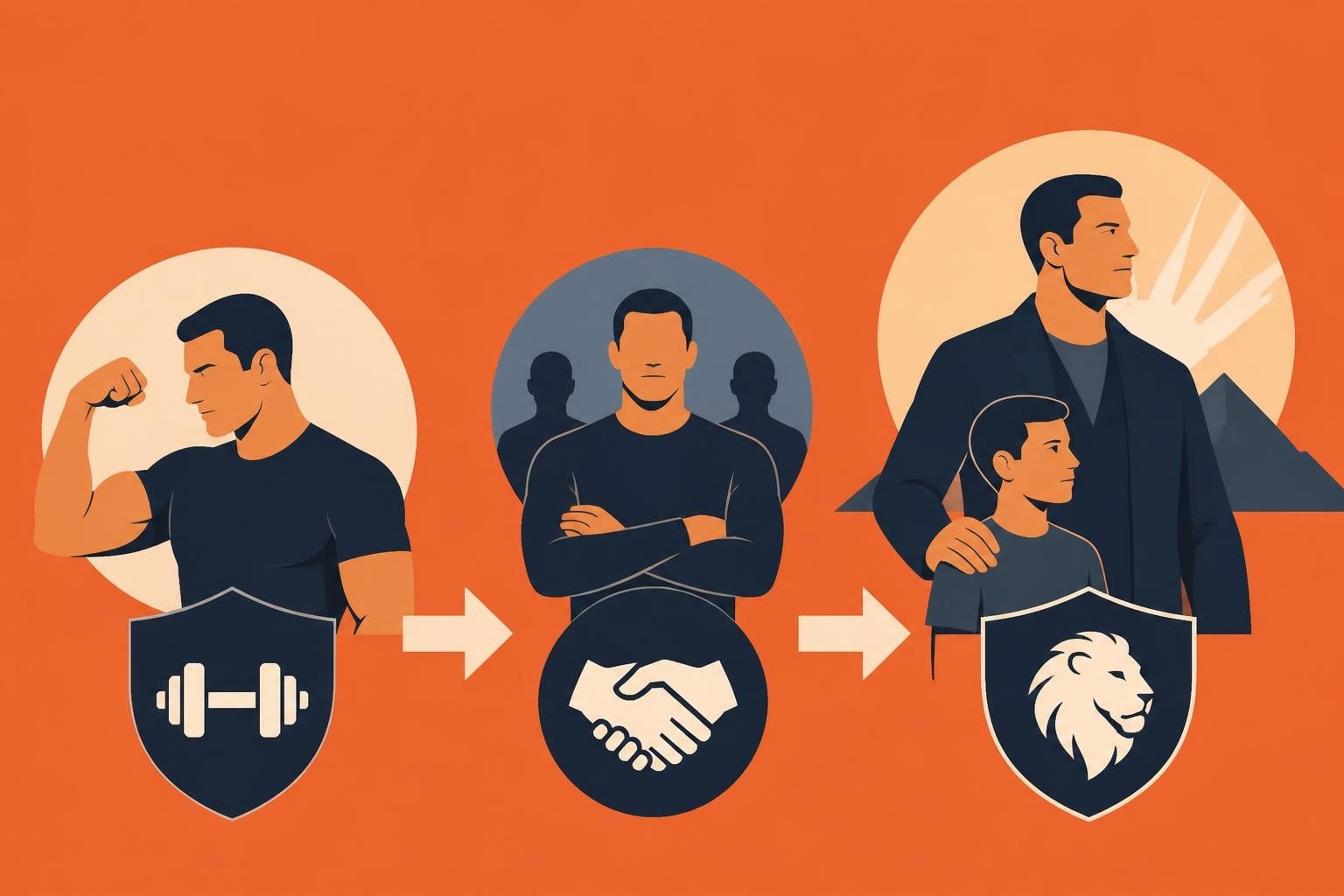
This is why physical fitness is the entry point for all serious self-improvement work. It teaches you that feelings don't matter, only actions do. It shows you that consistency beats intensity. It proves that your body will adapt to demands you place on it, which means your leadership, your marriage, and your fatherhood will too. But only if you actually do the work.
Non-Negotiable Physical Standards for Fathers
MetricMinimum StandardElite TargetPush-ups (continuous)3060+Pull-ups (dead hang)515+Body fat percentageUnder 20%Under 15%Training frequency4 days/week5-6 days/weekDaily steps8,00012,000+
These aren't arbitrary. They represent functional capacity to lead physically demanding lives, play with your children without gasping, and model discipline instead of decline. If you're not meeting these minimums, your self-improvement journey starts here, not with advanced mental frameworks or leadership theory.
Operational Self-Improvement for Fathers Over 35
Your timeline changed when you became a father. You don't have the luxury of six-month transformation plans or the margin to experiment with trendy protocols. You need operational efficiency: maximum return on limited time, minimum complexity, total integration with your actual life responsibilities.
This means your self-improvement framework must account for marriage demands, kid schedules, career obligations, and the reality that you're not 22 anymore. Recovery takes longer. Stress accumulates faster. Sleep gets interrupted. Your program must survive these conditions or it's useless theory.
The men who succeed past 35 don't have more time or better genetics. They have better systems. They train at home in 45-minute blocks instead of commuting to gyms. They batch meal prep instead of deciding nutrition daily. They schedule accountability calls like business meetings because they are business, the business of becoming the father their family needs.
For fathers looking for this level of integration,1-on-1 Men's Coachingprovides custom programming that adapts to your actual constraints while maintaining non-negotiable standards. The framework isn't about finding time. It's about using the time you have with precision that compounds.
Daily Execution Blocks
0500-0545: Physical training before the house wakes
0600-0630: Nutrition prep and planning review
1200-1215: Midday mobility and mental reset
2000-2015: Next-day preparation and accountability check
These blocks don't require motivation. They require decision in advance and environment design that removes friction. Your morning training clothes sit ready the night before. Your meals are prepped Sunday. Your accountability partner expects your check-in. The system runs you through the day.
Mental Resilience Separates Sustainable From Temporary
Self-improvement fails when your mental framework can't process adversity. You'll face setbacks: injuries, work emergencies, family crises, your own failures. Men who rely on motivation collapse when these hit. Men who've built mental resilience adapt and continue.
Resilience isn't positive thinking. It's the operational capacity to execute standards under degraded conditions. When you're sick, you modify training instead of skipping it. When work explodes, you compress your workout instead of abandoning it. When you fail, you analyze the breakdown and adjust the system instead of quitting entirely.

The military builds this through controlled exposure to stress. You don't wait for crisis to test your systems. You create artificial pressure: time constraints, higher volume, public commitments. Your body and mind adapt to performing under pressure, which means when real adversity hits, you have operational capacity instead of panic.
Resilience Training Protocol
Weekly challenge sessions: Deliberately uncomfortable training that tests limits
Monthly failure analysis: Review what broke down and why, adjust systems
Quarterly stress tests: Major physical or mental challenges that require preparation
Annual capability audits: Honest assessment of what you can actually do under pressure
This systematic approach to building mental toughness ensures your self-improvement doesn't collapse the first time life gets hard. And life will get hard. Your preparation determines whether you adapt or quit.
The Leadership Integration Model
Real self-improvement for fathers doesn't separate fitness from fatherhood from marriage leadership. These domains integrate or they all suffer. Your physical discipline models standards for your children. Your emotional regulation shapes your marriage quality. Your growth mindset teaches your family how to approach challenge.
Men who compartmentalize fail because life doesn't respect boundaries. Your stress from work affects your training recovery. Your poor sleep degrades your parenting patience. Your weak physical condition undermines your leadership credibility. Everything connects, which means your improvement framework must address the whole system.
This is why isolated programs fail. A workout plan that ignores your marriage creates conflict. Marriage counseling that ignores your physical decline misses half the problem. Parenting advice that doesn't address your own self-mastery produces hypocrisy. You need integrated development that recognizes you're one man with multiple responsibilities, not separate roles requiring separate solutions.
Integration Checkpoints
Life DomainWeekly StandardMonthly ReviewPhysical training4+ sessions completedBody composition trending correctlyMarriage leadership2+ intentional conversationsRelationship quality improvingFatherhood presenceDaily engaged play timeKids responding to consistencyProfessional performanceCore obligations metCareer advancing or stablePersonal development3+ accountability check-insMeasurable progress in target areas
Track these together because they affect each other. A week of missed training correlates with decreased patience with your kids. Improved physical condition often precedes better marriage communication. The data shows the integration whether you acknowledge it or not.
Building Your 90-Day Operational Plan
Stop planning in years. Start executing in quarters. Ninety days is long enough to produce measurable change and short enough to maintain focus without drift. Your first quarter establishes the systems that make all future quarters possible.
Days 1-30: System Installation
Establish training schedule and complete all sessions
Install meal prep routine and hit protein targets daily
Identify accountability partner and schedule weekly check-ins
Remove environmental obstacles to execution
Track everything: workouts, nutrition, sleep, adherence
Days 31-60: Standard Enforcement
Increase training intensity by 10-15%
Adjust nutrition based on body composition changes
Add one leadership behavior with your children
Schedule monthly marriage leadership conversation
Continue daily tracking, analyze weekly trends
Days 61-90: Capability Expansion
Test new physical capacity benchmarks
Evaluate and adjust all systems based on data
Identify next quarter's primary improvement target
Share results with accountability network
Plan quarter-two progression before quarter-one ends
This isn't motivational. It's operational. You execute the plan because you built environment, accountability, and systems that make execution easier than avoidance. The 90-day cycle becomes your rhythm, replacing the endless cycle of starting and stopping that defines most men's self-improvement attempts.
For men ready to stop cycling and start building,The Father Forgeprovides the complete framework: training programs that fit your actual life, accountability that survives your worst days, and brotherhood that won't let you settle. The question isn't whether you can change. It's whether you'll build the environment that forces it.
Self-improvement isn't a destination you reach through information consumption. It's a system you build through environmental design, brotherhood accountability, and daily execution regardless of how you feel. The fathers who transform their bodies, marriages, and leadership capacity all share one trait: they stopped waiting for motivation and started enforcing standards.The Father Forgeexists to provide that framework, the custom programming, the accountability structure, and the brotherhood network that makes sustainable change possible instead of another thing you tried and quit.