Retatrutide: What It Is and What It Won't Fix
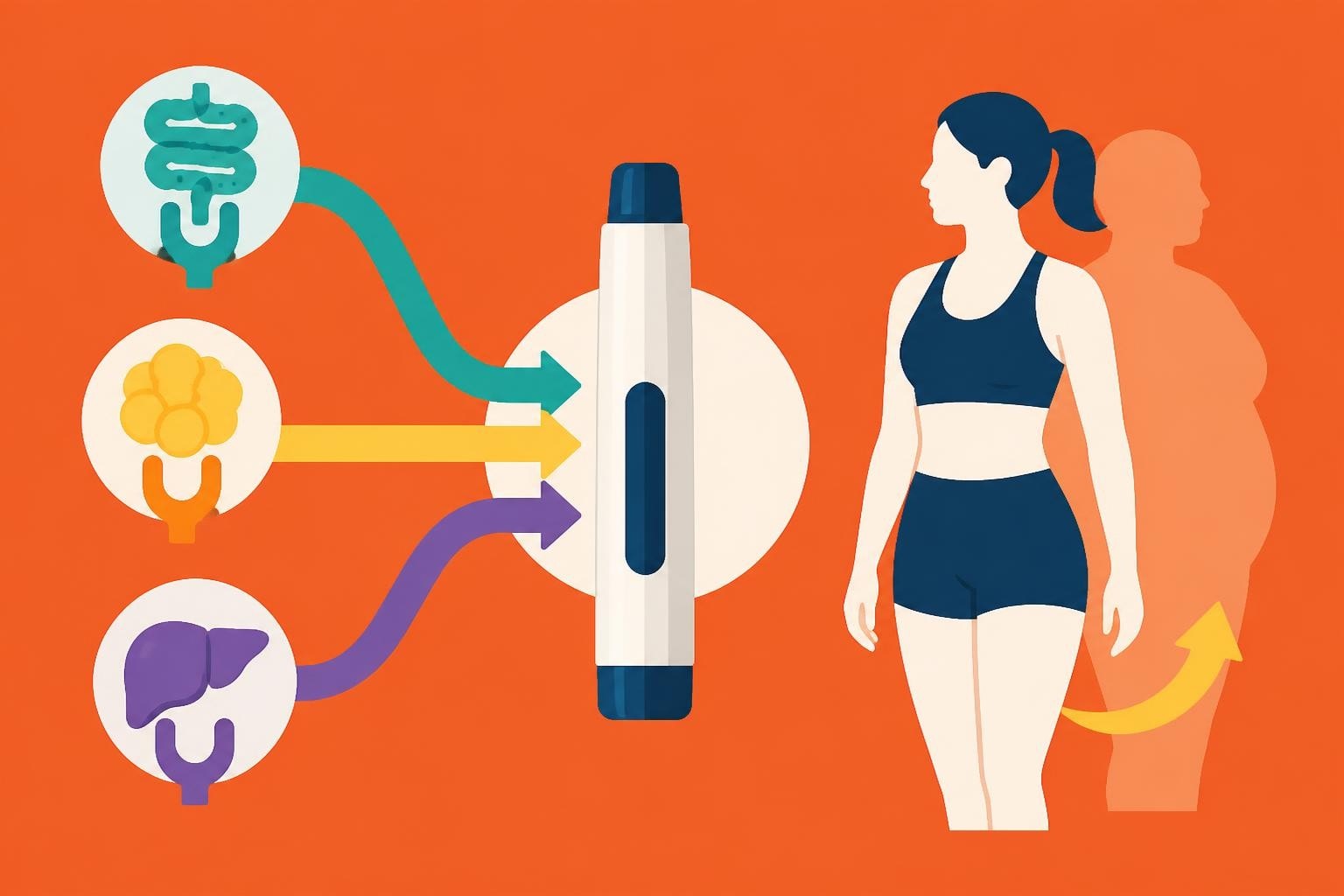
Retatrutide is a triple-agonist injectable medication designed to activate three separate hormone receptors: GLP-1, GIP, and glucagon. Clinical trials show it produces an average body weight reduction of 24.2% at the highest dose over 48 weeks, which makes it the most effective weight loss drug tested to date. I am going to explain how it works, compare it to other options, and be straight about what it does and what it does not do. You deserve accurate information before talking to your doctor.
The fitness and pharmaceutical industries sell hope. They sell the idea that one pill or one injection will solve every problem a man faces when he looks in the mirror. That is not reality. Retatrutide is a tool. A powerful one. But it will not teach you discipline. It will not repair your marriage. It will not make you a better father. What it does is reduce hunger signals, increase feelings of fullness, and shift how your body manages glucose and fat. Those effects create a window of opportunity. What you do with that window is your responsibility.
How Retatrutide Works
Retatrutide functions as a triple receptor agonist, meaning it activates three different hormonal pathways at once.Understanding this mechanismis important because it separates retatrutide from earlier medications.
The first pathway is GLP-1, which stands for glucagon-like peptide-1. This hormone slows digestion and tells your brain you are full. The second pathway is GIP, or glucose-dependent insulinotropic polypeptide, which affects insulin secretion and fat metabolism. The third is glucagon, which traditionally raises blood sugar but when activated alongside GLP-1 and GIP appears to increase energy expenditure and fat burning.
The Science Behind Triple Agonism
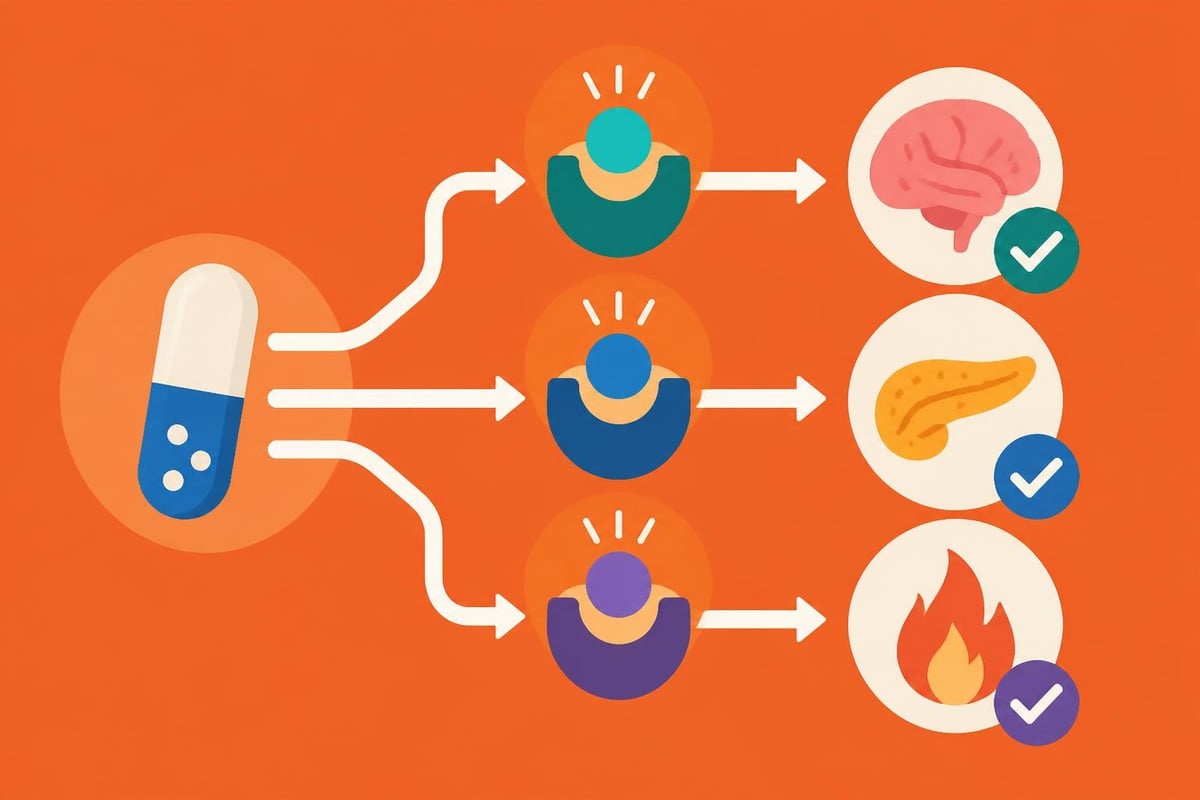
The triple-receptor approachcreates effects that single or dual agonists cannot match. Each receptor handles a different part of metabolic regulation.
GLP-1 activationreduces appetite and slows stomach emptying
GIP activationimproves insulin sensitivity and affects fat storage
Glucagon activationincreases calorie burning and fat breakdown
When all three receptors fire at the same time, the body experiences compounding effects. You eat less because you feel full. Your insulin response improves, which helps prevent fat storage. Your metabolic rate increases, which burns more calories even at rest. This combination explains the significant weight loss observed in clinical trials.
The unbalanced potency across these receptors matters. Retatrutide shows different activation strengths for each receptor, which researchers believe contributes to its effectiveness and side effect profile.The molecular structuredetermines how strongly it binds to each receptor type.
Clinical Trial Results
The phase 2 clinical trial data published in 2023 provides the foundation for understanding retatrutide's effectiveness. These were not small studies with cherry-picked participants. They enrolled adults with obesity or overweight conditions and measured outcomes over 48 weeks.
Dose LevelAverage Weight LossStudy DurationParticipants1 mg8.7%48 weeksApprox. 704 mg17.3%48 weeksApprox. 708 mg22.8%48 weeksApprox. 7012 mg24.2%48 weeksApprox. 70
The highest dose group lost an average of 24.2% of their body weight. For a 250-pound man, that represents about 60 pounds. Some participants lost more, some lost less. Individual response varies based on starting weight, metabolic health, adherence, and factors researchers still do not fully understand.
Clinical trial trackingshows retatrutide is currently in phase 3 trials. This means larger studies across more diverse populations are underway. The FDA has not approved retatrutide for weight loss as of 2026. It remains an investigational drug.
What Trial Results Mean for You
Trial averages do not guarantee individual outcomes. A medication that produces 24% weight loss on average still has a range. Some participants experienced 30% or more reduction. Others saw 15% or less. Genetics, compliance with dosing, dietary habits, and activity levels all influence results.
The trial protocols also included lifestyle counseling. Participants received guidance on nutrition and physical activity. The drug worked alongside behavior change, not instead of it. This point gets lost in headlines. Retatrutide is not a passive solution. It requires action on your part.
Retatrutide vs Semaglutide vs Tirzepatide
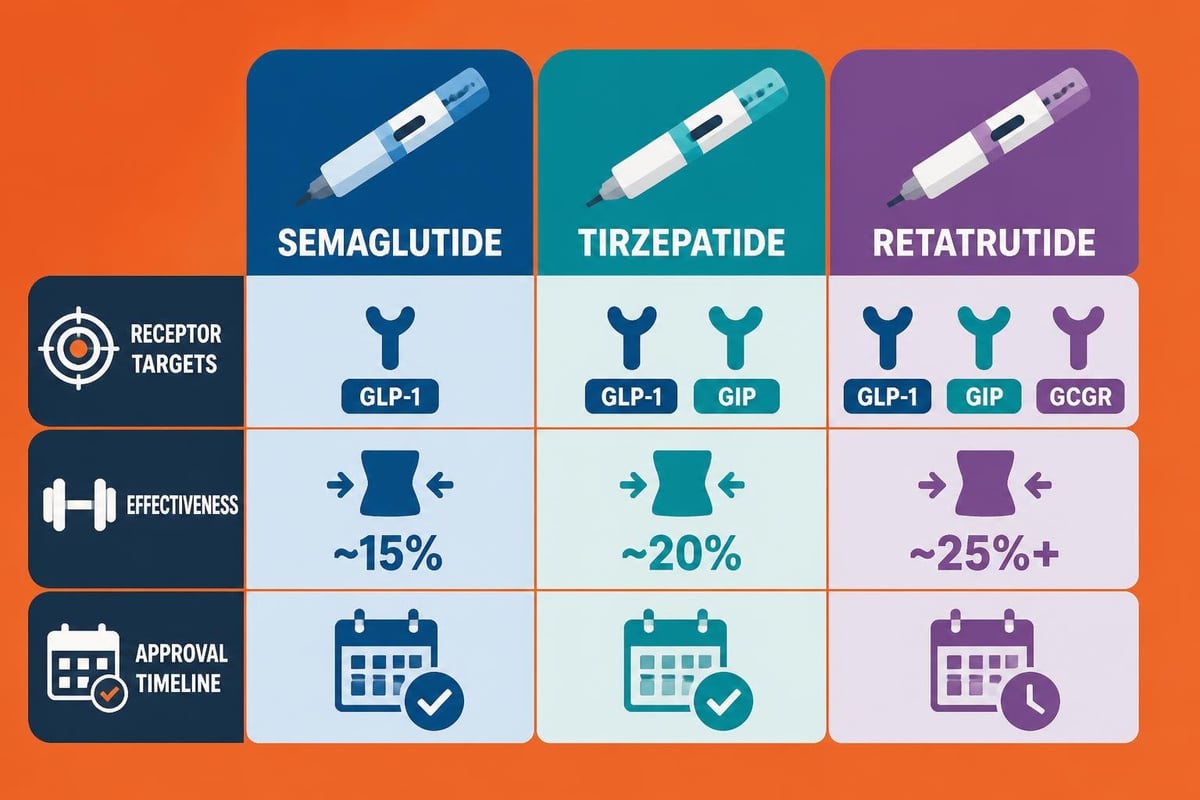
Understanding how retatrutide compares to existing medications helps frame expectations. Semaglutide (sold as Wegovy and Ozempic) was the first major GLP-1 medication for weight loss. Tirzepatide (sold as Mounjaro and Zepbound) added GIP activation to create a dual agonist. Retatrutide adds glucagon to become a triple agonist.
MedicationReceptor TargetsAverage Weight LossFDA Approval StatusSemaglutideGLP-115%Approved 2021TirzepatideGLP-1, GIP21%Approved 2023RetatrutideGLP-1, GIP, Glucagon24.2%Investigational
Each step forward represents more weight loss but also more complexity.The mechanism differencesmatter because they affect how your body responds and what side effects you might experience.
Semaglutide works well for many people. It proved GLP-1 agonists could produce meaningful weight loss. Tirzepatide improved on that foundation with dual action. Retatrutide appears to push results further with triple action. But more is not always better for every individual.
Choosing Between Options
Your doctor should guide this decision based on your health profile. If you have diabetes, one option might offer better glucose control. If you have cardiovascular concerns, research on heart health outcomes differs between medications. If cost matters, older drugs have more insurance coverage and generic competition coming.
I work with fathers who want sustainable results, not quick fixes.At The Father Forge, we build custom programs around what works long-term. Sometimes that includes medication as one tool. Always it includes training, nutrition, and accountability. The drug handles hunger. You handle discipline.
Side Effects and Safety Concerns
Every medication carries risks. Retatrutide is no exception. The most common side effects reported in trials mirror those of other GLP-1 based drugs but sometimes occur at higher rates due to the triple mechanism.
Gastrointestinal effects dominate the side effect profile:
Nausea (most common, especially when starting or increasing dose)
Diarrhea (can be severe enough to cause discontinuation)
Vomiting (less common than nausea but disruptive)
Constipation (paradoxically occurs in some users)
Abdominal pain or discomfort
More serious but less common concerns include:
Gallbladder problems (increased risk of gallstones)
Pancreatitis (inflammation of the pancreas)
Changes in heart rate (some users experience increases)
Potential thyroid effects (seen in animal studies)
Emerging safety datacontinues to develop as larger trials proceed. The long-term effects of triple agonism are not fully known because the drug is new. This is not a reason to avoid it necessarily, but it is a reason to have honest conversations with your physician.
Managing Side Effects
Starting at a low dose and titrating up slowly reduces the intensity of gastrointestinal symptoms. Most protocols begin far below the therapeutic dose and increase every few weeks. This gives your body time to adapt.
Dietary modifications help. Smaller meals, avoiding high-fat foods, and eating slowly all reduce nausea and stomach upset. Some men find they cannot tolerate certain foods anymore. Others discover their relationship with food changes entirely when they are not constantly hungry.
The question is not whether side effects exist. They do. The question is whether the benefits outweigh the costs for your specific situation. A 50-pound weight loss might be worth some nausea. It might not be if you are already lean and chasing the last 10 pounds.
Availability and Cost
Retatrutide is not commercially available as of August 2026. It remains in clinical trials. You cannot walk into a pharmacy and fill a prescription. This will change if phase 3 trials succeed and the FDA grants approval, likely sometime between 2027 and 2029.
What exists now is a gray market. Compounding pharmacies, research chemical suppliers, and online vendors claim to sell retatrutide. Some of these products are legitimate. Many are not. Without FDA oversight, you have no guarantee of purity, dosage accuracy, or safety. The savings are not worth the risk of injecting an unknown substance.
Expected Pricing Structure
When retatrutide reaches market, expect pricing similar to or higher than tirzepatide. Zepbound costs approximately $1,000 to $1,200 per month without insurance. Wegovy runs $1,300 to $1,500. A triple agonist will likely command premium pricing, at least initially.
Insurance coverage will depend on FDA-approved indications and individual policy terms. Medications approved for diabetes get covered more readily than those approved only for weight loss. Prior authorization requirements, step therapy protocols, and BMI thresholds all create barriers to access.
The cost calculation extends beyond the monthly prescription. You need regular medical monitoring, lab work, and doctor visits. These add up. A comprehensive approach that includes proper nutrition and training might cost less than medication alone while building habits that last after you stop injecting.
What Retatrutide Does Not Fix
This is the conversation most physicians and coaches avoid. They focus on what the drug accomplishes and ignore what it leaves untouched. I will not make that mistake.
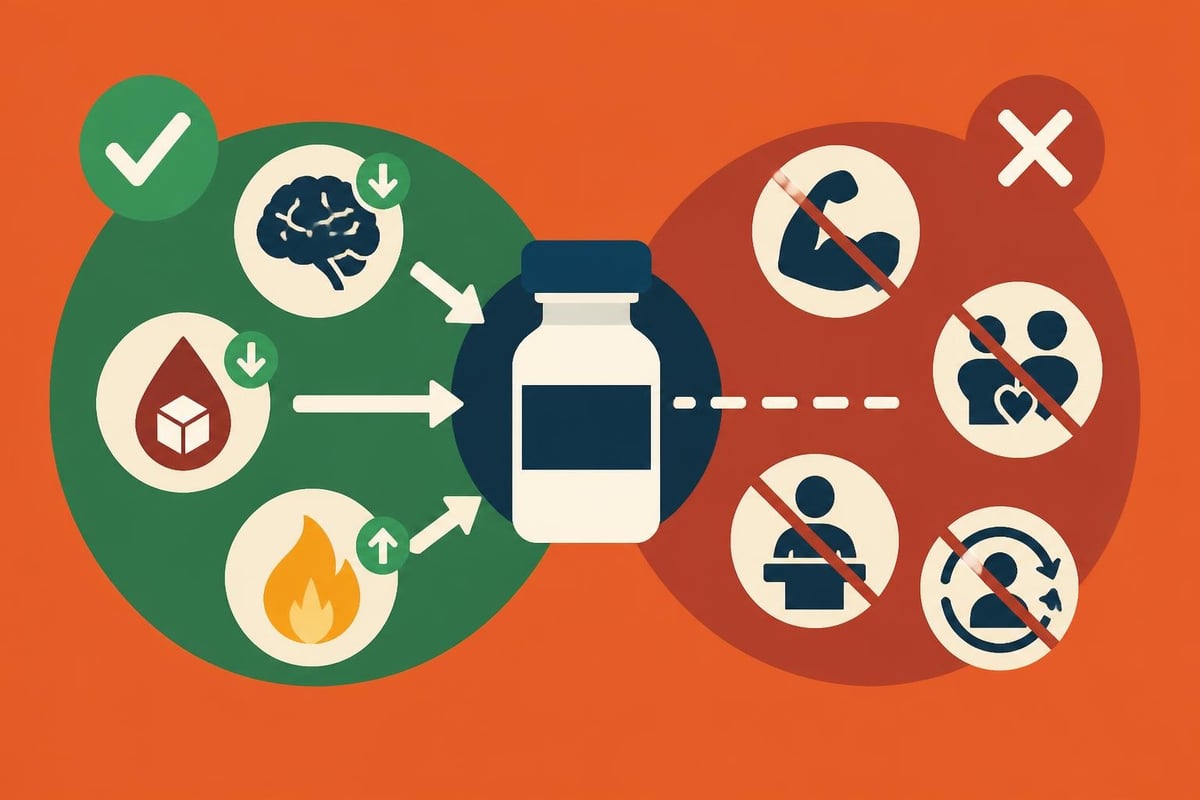
Retatrutide reduces body weight. It does not build discipline. The hunger signals decrease, which makes eating less easier. But easier is not the same as automatic. You still choose what goes in your mouth. You still decide whether to train or sit on the couch. The medication creates favorable conditions. You execute.
Retatrutide will not:
Repair your marriage or improve your relationship with your wife
Make you a better father or more present with your kids
Build the mental resilience required to handle stress
Create the accountability systems you need for long-term success
Develop the leadership skills that make you effective at home and work
Weight loss improves health markers. It can increase energy and confidence. But it does not automatically transform you into the man you want to become. That requires work on your mindset, your habits, and your character.Understanding full mechanismshelps you see what the drug handles biochemically, but biochemistry is only part of the equation.
The Discipline Gap
I have worked with fathers who lost significant weight on GLP-1 medications. Some used that momentum to build better lives. They trained consistently, improved their nutrition beyond just eating less, worked on their marriages, and showed up differently for their kids. The weight loss was the beginning, not the end.
Others relied entirely on the medication. They lost weight but changed nothing else. When they stopped injecting or when their bodies adapted and weight loss plateaued, they had no foundation. The weight came back because the underlying behaviors never changed.
A drug can suppress your appetite. It cannot teach you to cook healthy meals. It cannot make you wake up at 5 AM to train before work. It cannot force you to have hard conversations with your wife or play with your kids instead of scrolling your phone. Those are leadership decisions that no injection will make for you.
Having the Conversation with Your Doctor
You need specific information to have a productive conversation with your physician about retatrutide or any weight loss medication. General questions produce general answers. Specific questions produce useful information.
Bring these questions to your appointment:
Am I a candidate for weight loss medication based on my BMI and health conditions?
What are my options among currently approved medications versus investigational drugs?
How do my existing health conditions (diabetes, heart disease, thyroid issues) affect medication choice?
What monitoring will I need (lab work, follow-up visits, dosage adjustments)?
What does my insurance cover and what will my out-of-pocket costs look like?
Your doctor should explain risks, benefits, alternatives, and what success looks like. If they dismiss your questions or push a specific medication without discussing your full health picture, find another doctor. This is your body. You deserve complete information.
What to Expect from Medical Oversight
Proper medical oversight includes baseline health measurements before starting any GLP-1 or triple agonist medication. Your doctor should check thyroid function, kidney function, liver enzymes, blood sugar levels, and lipid panels. These establish your starting point and help monitor changes.
Follow-up visits typically occur every few weeks initially as dosage increases. Once you reach a maintenance dose, visits space out to monthly or quarterly. The goal is catching side effects early and adjusting treatment as needed.
Some doctors prescribe these medications too casually. They see them as safe because the trials show good results. But trials exclude people with certain conditions and monitor participants closely. Real-world use is messier. You need a physician who takes this seriously and monitors you appropriately.
Frequently Asked Questions
When will retatrutide be available for prescription?
Retatrutide is currently in phase 3 clinical trials and has not received FDA approval. If trials continue successfully, approval could come between 2027 and 2029. Until then, it remains investigational and unavailable through legitimate channels. Avoid gray market sources claiming to sell retatrutide now.
How much weight can I expect to lose on retatrutide?
Clinical trials showed an average weight loss of 24.2% at the highest dose over 48 weeks. Individual results vary significantly based on starting weight, metabolic health, adherence to dosing, diet quality, and activity level. Some people lose more, others lose less. The medication works best when combined with proper nutrition and training.
Is retatrutide better than semaglutide or tirzepatide?
Retatrutide produced greater average weight loss in trials compared to semaglutide (15%) and tirzepatide (21%). However, better is not just about total pounds lost. Side effects, cost, insurance coverage, and how well you tolerate a medication all matter. Your doctor should help determine which option fits your specific health profile and circumstances.
What are the most common side effects of retatrutide?
Nausea, diarrhea, vomiting, constipation, and abdominal pain represent the most frequently reported side effects. These are dose-dependent and typically worse when starting or increasing dosage. More serious but less common risks include gallbladder problems, pancreatitis, and changes in heart rate.Understanding the full mechanismhelps explain why these effects occur.
Can I use retatrutide if I do not have diabetes?
Retatrutide trials enrolled participants with obesity or overweight conditions, not specifically diabetes. When approved, it will likely receive indications for weight management in adults with BMI above certain thresholds, similar to other weight loss medications. Your doctor determines candidacy based on BMI, health conditions, and medical necessity, not diabetes status alone.
Retatrutide represents the leading edge of weight loss pharmacology, but it is still just a tool. The triple agonist mechanism produces significant results, but those results mean nothing without the discipline to maintain them and the character development to become the father and husband your family needs. If you want a comprehensive approach that addresses training, nutrition, mindset, and accountability,The Father Forgebuilds custom programs designed for fathers who understand that real change requires more than an injection.