PT-141: What Fathers Need to Know in 2026
PT-141, clinically known as bremelanotide, represents a specific pharmacological tool approved by the FDA in 2019 for acquired, generalized hypoactive sexual desire disorder in premenopausal women. This isn't a lifestyle supplement. It's a prescription peptide that works through the central nervous system, not vascular pathways. For men building better marriages and leading their families, understanding what pt-141 actually does, what it doesn't do, and where it fits in the broader context of intimate health matters. You are responsible for the environment you create at home, and that includes being informed about tools your spouse might encounter or discuss with her physician.
Understanding PT-141 Mechanism and Approval
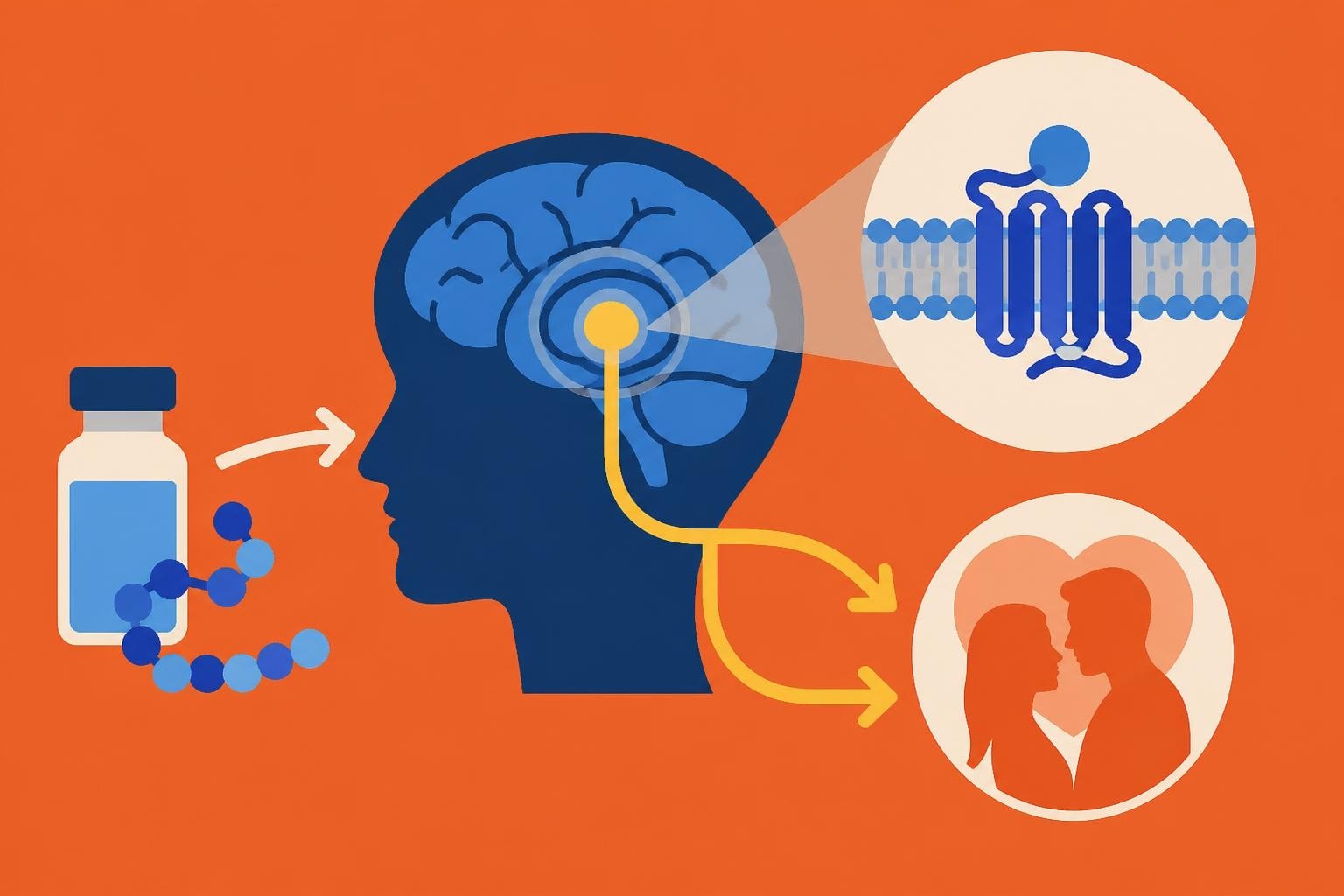
PT-141 functions as a melanocortin receptor agonist. It binds to MC3-R and MC4-R receptors in the hypothalamus and other brain regions involved in sexual arousal. This is fundamentally different from phosphodiesterase-5 inhibitors used for erectile dysfunction. The melanocortin pathway plays multiple roles in human physiology, including appetite regulation, inflammation response, and sexual function.
The Central Nervous System Approach
Where vascular medications work at the tissue level to enable physical response, pt-141 targets desire itself. The compound crosses the blood-brain barrier and influences neural circuits tied to motivation, reward, and arousal. This makes it relevant for conditions where desire, not mechanical function, is the root issue.
The official FDA prescribing information for VYLEESI specifies its indication clearly: hypoactive sexual desire disorder (HSDD) that is not due to a co-existing medical or psychiatric condition, problems within the relationship, or the effects of a medication or other drug substance.
Key distinctions:
Administered as a subcutaneous injection in the abdomen or thigh
Taken at least 45 minutes before anticipated sexual activity
Not designed for daily use
Maximum of one dose in 24 hours, no more than eight doses per month

Feature | PT-141 (Bremelanotide) | PDE5 Inhibitors | Hormonal Therapy |
|---|---|---|---|
Target | CNS melanocortin receptors | Penile blood flow | Systemic hormone levels |
Primary Use | Female HSDD | Erectile dysfunction | Hormone deficiency states |
Route | Subcutaneous injection | Oral tablet | Varies (oral, injection, topical) |
Onset | 45+ minutes | 30-60 minutes | Days to weeks |
Duration | Single event | 4-36 hours (varies by drug) | Continuous with ongoing use |
Clinical Evidence and Real-World Data
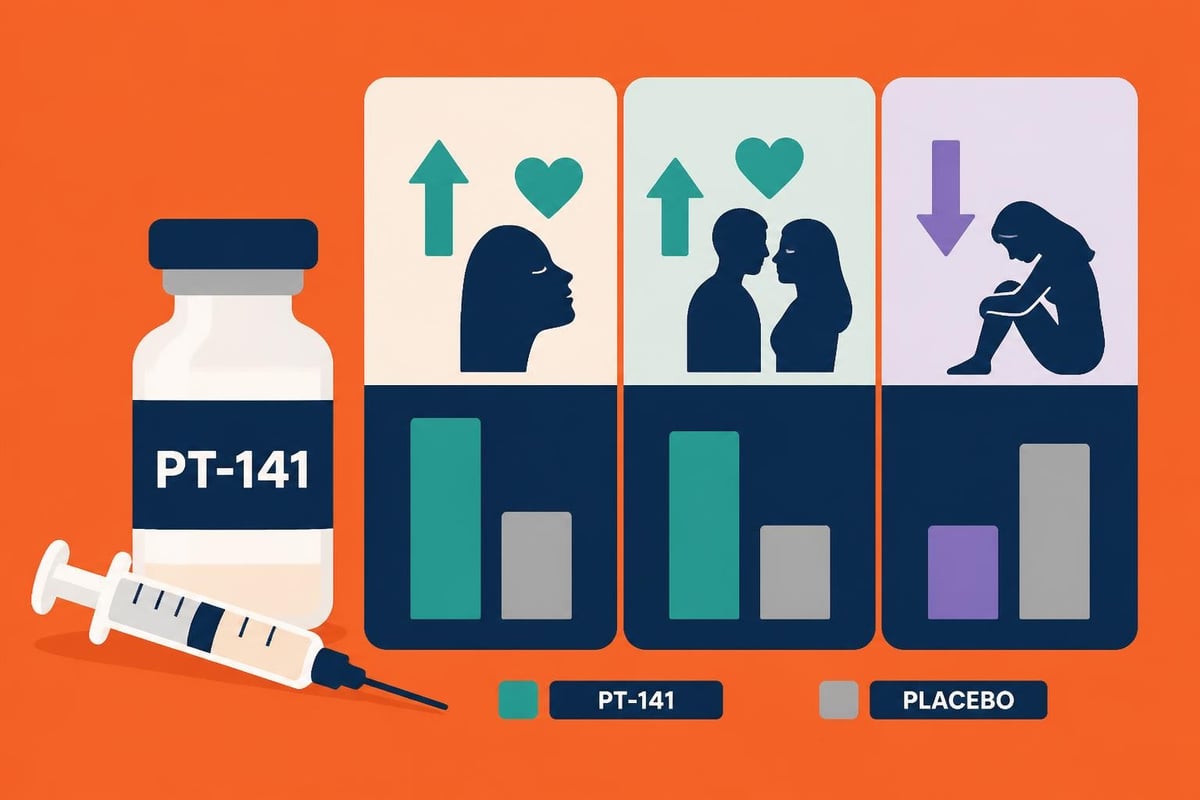
The approval of pt-141 rested on two pivotal Phase 3 trials involving over 1,200 premenopausal women. Research published in peer-reviewed literature demonstrated statistically significant improvements in desire scores and reductions in distress related to low sexual desire compared to placebo.
Effect sizes were moderate. This is not a silver bullet. It's a tool that works for some women in specific contexts. The trials showed that roughly 25% of participants experienced meaningful improvement over placebo, measured through validated instruments like the Female Sexual Function Index.
What the Data Actually Show
Trial participants reported increased satisfying sexual events and higher desire scores. They also reported decreased distress about their level of desire. These are patient-reported outcomes, not objective physiological measures. The subjective nature of sexual desire makes measurement complex, but these instruments are the best available standard.
Adverse events were common enough to matter:
Nausea in approximately 40% of users
Flushing in roughly 20%
Injection site reactions in about 13%
Headache in around 11%
Most side effects were transient and resolved within hours. Discontinuation rates due to adverse events were approximately 18% in clinical trials. That's not trivial. One in five women who started the medication stopped because of how it made them feel.
Safety Profile and Contraindications
PT-141 carries specific warnings that demand attention. The VYLEESI prescribing label includes a boxed warning regarding increases in blood pressure and decreases in heart rate. These cardiovascular effects peak 1-2 hours post-injection and can persist for up to 12 hours.
Absolute contraindications include:
Uncontrolled hypertension or known cardiovascular disease
Use in men (not approved, not studied adequately in this population)
Use in postmenopausal women (indication is specific to premenopausal women)
Transient hyperpigmentation, or darkening of skin and gums, has been reported. This stems from melanocortin receptor activation throughout the body. In most cases, darkening resolved after discontinuation, but monitoring is warranted.
What Physicians Monitor
Baseline blood pressure screening is required before initiation. Women with cardiovascular risk factors need careful evaluation. The medication is not recommended for those with underlying heart conditions.
Safety surveillance data continue to accumulate post-approval. Long-term effects beyond the 52-week trial period remain less characterized. This is the reality with any relatively new pharmaceutical agent.
Where PT-141 Fits in a Broader Strategy
Sexual health in marriage doesn't exist in isolation. It sits downstream of physical health, stress management, emotional connection, and the leadership environment you create at home. No peptide solves those root causes.
When desire issues arise, the first obligation is to eliminate obvious contributors: hormonal imbalances (thyroid, sex hormones), mental health conditions (depression, anxiety), relationship dysfunction, chronic stress, poor sleep, metabolic disease, and medication side effects. That diagnostic process is non-negotiable.
If those factors are addressed and HSDD persists, pt-141 becomes one option among several. For some women, it provides measurable benefit. For others, it doesn't justify the side effect burden. That's a decision made between patient and physician, ideally with input from a spouse in the context of a strong partnership.
The Leadership Piece
Your role as a husband and father includes creating the conditions where your wife feels safe, valued, and connected. That's not negotiable, whether medication enters the picture or not. Low desire often reflects an environment problem, not just a neurochemical one.
Are you carrying your share of cognitive load at home?
Does she have margin in her life, or is she drowning in logistics and emotional labor?
Have you maintained yourself physically, or have you let standards slide?
Is intimacy a mutual priority, or something you demand without building toward it daily?
These questions matter more than any prescription. PT-141 won't compensate for a failing marriage or a husband who has abandoned his obligations.
Men who want support building that foundation at home, including the physical resilience and mental clarity required to lead well, find structure through coaching that addresses the full picture. The Father Forge builds programs around fitness, mindset, and leadership precisely because those domains are inseparable from the quality of your relationships.
Practical Considerations for Couples
If your spouse's physician prescribes pt-141, several practical realities shape how it works in daily life. The injection requirement is straightforward but requires preparation. Auto-injector devices are available, similar to those used for other subcutaneous medications. Timing matters: the 45-minute minimum window before activity means spontaneity takes a hit.
Logistics that affect use:
Refrigeration required for storage (room temperature for up to 7 days once opened)
Pre-planning necessary due to onset time
Dose limit of eight per month shapes frequency of use
Side effects (especially nausea) may affect willingness to use repeatedly
Consideration | Impact |
|---|---|
Injection administration | Learning curve, minor discomfort, requires privacy |
Timing constraint | Reduces spontaneity, requires planning |
Nausea risk | May discourage repeated use if severe |
Monthly dose cap | Limits frequency, forces prioritization |
Cost | High without insurance coverage, varies widely |
Cost is not trivial. Without insurance coverage, pt-141 can run several hundred dollars per dose. Insurance coverage varies significantly by plan and often requires prior authorization. This adds administrative burden and potential out-of-pocket expense that affects accessibility.

Off-Label Use and the Male Context
PT-141 is not FDA-approved for use in men. That hasn't stopped off-label prescribing and use in male populations, often sourced through compounding pharmacies or research chemical suppliers. This is where risk escalates significantly.
Data in men are limited. Early-phase trials explored pt-141 for erectile dysfunction with mixed results. The FDA did not approve it for that indication. Mechanism suggests it might influence desire in men similarly to women, but controlled evidence is sparse.
Why This Matters for Fathers
Men seeking performance enhancement or libido support have multiple evidence-based options: optimizing testosterone (if clinically low), addressing metabolic health, improving body composition, managing stress, and ensuring adequate sleep. These are first-line interventions that carry low risk and high return.
Using unapproved peptides purchased from unregulated sources introduces variables you can't control: purity, dosing accuracy, contamination, and legal risk. You have children depending on you. Taking unnecessary risks with poorly characterized compounds conflicts directly with your obligation to remain healthy and present.
If genuine medical need exists (documented low testosterone, for example), work with a qualified physician. Legitimate medical providers who understand male health can guide appropriate interventions. In cities like Bangkok, facilities such as Healthi Life offer comprehensive testing, physician consultation, and evidence-based protocols for men focused on longevity and performance optimization under medical supervision.
Integration With Holistic Health
PT-141 doesn't replace foundational health practices. It exists as a niche tool for a specific clinical scenario. The men and women who get the most from any intervention, pharmaceutical or otherwise, are those who have their base covered: training, nutrition, sleep, stress management, and relational health.
Sexual function is a marker of overall vitality. When it's compromised, it signals something upstream: hormonal dysregulation, cardiovascular decline, chronic stress, relational breakdown, or mental health struggles. Treating the symptom without diagnosing the cause is medical malpractice applied to your own life.
Hierarchy of interventions for sexual health:
Metabolic health – body composition, insulin sensitivity, cardiovascular fitness
Hormonal optimization – thyroid, sex hormones, cortisol patterns
Sleep quality – duration, consistency, sleep architecture
Stress management – chronic stressors, recovery practices, psychological safety
Relational health – emotional connection, communication, shared priorities
Pharmaceutical tools – only after the above are addressed
This isn't opinion. It's how physiology works. Desire and arousal depend on a nervous system that isn't chronically in threat mode, a body that has adequate energy reserves, and a relational context that feels safe and prioritized.
Men in their 30s, 40s, and 50s face specific pressures: career demands, financial responsibility, parenting small children, aging parents, and the creeping awareness that time is finite. These stressors compound. They erode margin, tank libido, and damage marriages. The answer isn't a peptide. It's rebuilding the structures that create resilience. That's the work The Father Forge is built to support.
The Physician Relationship
Any conversation about pt-141 or similar interventions must start with a qualified physician. Self-diagnosis and self-prescription are failure modes. The manufacturer information on VYLEESI makes clear that this is a prescription medication requiring medical evaluation, baseline health screening, and ongoing monitoring.
A competent provider will:
Conduct a thorough history to rule out secondary causes of low desire
Screen for cardiovascular risk factors before prescribing
Discuss realistic expectations based on trial data
Monitor for adverse effects and efficacy over time
Adjust or discontinue based on patient response
This is standard medical practice. Anything less is negligent. If a provider is willing to prescribe without this level of diligence, find a different provider.
Telemedicine has expanded access but also introduced quality variability. Some platforms prioritize convenience over thoroughness. That's a problem when dealing with medications that carry cardiovascular warnings. Vet your provider the way you'd vet anyone you trust with your health or your family's health.
Moving Forward With Clarity
PT-141 is neither miracle nor menace. It's a tool with a specific indication, a defined mechanism, measurable benefits for some users, and real side effects. Understanding it accurately prevents both over-reliance and uninformed dismissal.
For couples navigating low desire, the obligation is to address root causes first. Hormones, health, stress, and relational environment are not optional. They're the foundation. If those are optimized and a clinical need remains, pt-141 may warrant consideration under medical supervision.
For men tempted by off-label use, the calculus is different. Approved options exist for male sexual health concerns. Chasing unapproved compounds from questionable sources is a poor risk-reward trade when you have people depending on you.
PT-141 is one tool among many in the broader domain of sexual health, and no tool compensates for neglecting the fundamentals. Men who lead their families well address health, fitness, and relational environments with the same discipline they bring to their careers. If you're ready to build that foundation with structure, accountability, and a program tailored to your specific journey, The Father Forge creates custom fitness and mindset coaching designed for fathers who refuse to settle.