Personal Trainer Training: What It Takes to Lead
The fitness industry doesn't need more generalists with weekend certifications. It needs professionals who understand human performance, apply evidence-based programming, and hold themselves to a standard that matches the responsibility they accept when they take a client's trust. Personal trainer training separates those who post motivational quotes from those who deliver measurable outcomes. The difference shows in retention rates, injury prevention, and whether clients build sustainable habits or cycle through another failed attempt. This isn't about passion or inspiration. It's about competence, earned through deliberate preparation and reinforced through continuous application.
Why Personal Trainer Training Standards Matter
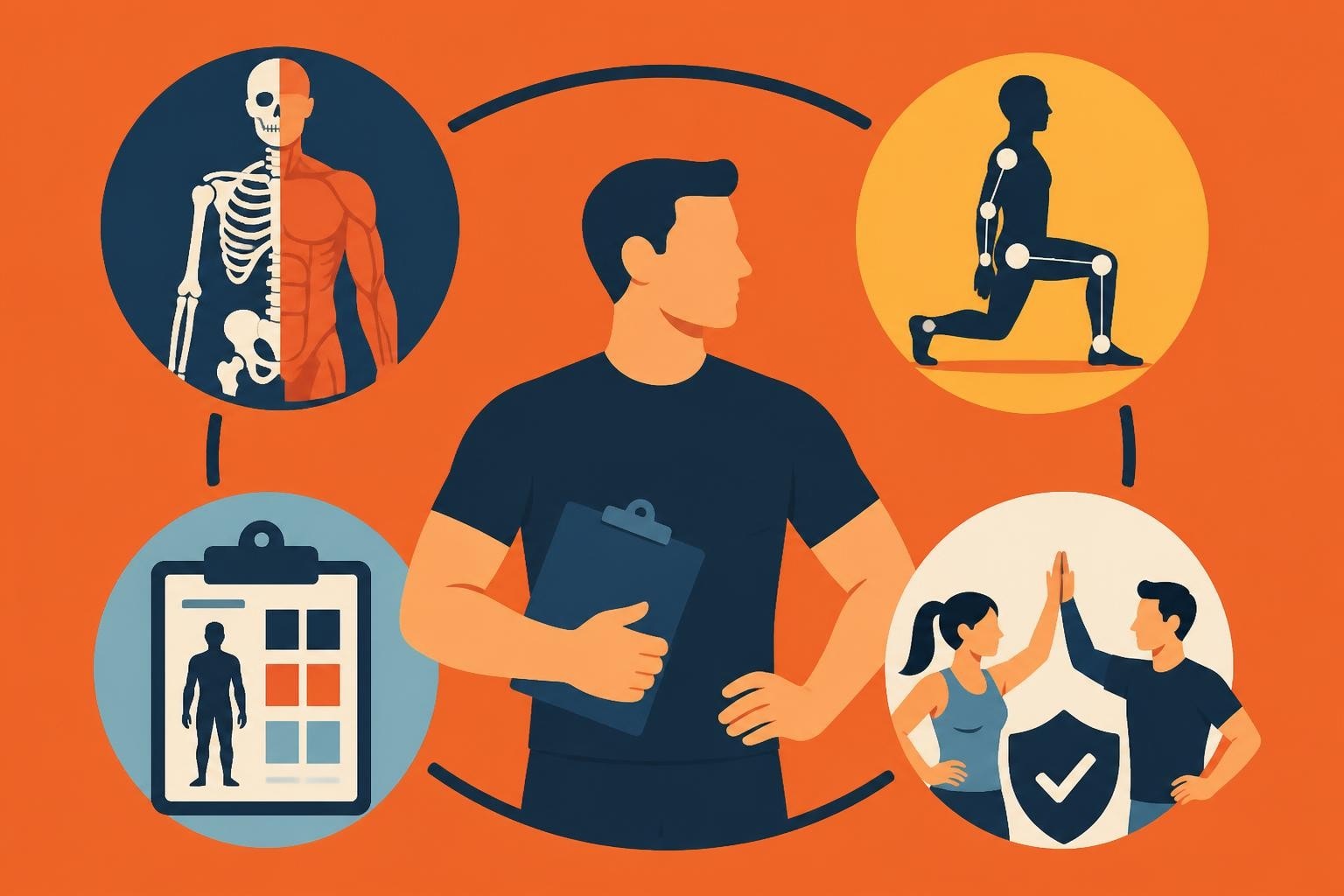
Most people enter personal trainer training believing enthusiasm compensates for knowledge gaps. It doesn't. Clients who hire trainers expect you to understand biomechanics, energy systems, hormonal responses to training stress, and how to modify movements for limitations or injuries. They don't care how many followers you have or what pre-workout you endorse. They need results, and results demand competence built on structured education.
Accredited certification programs exist because standardization prevents harm and establishes baseline credibility. Organizations like theACSMandNSCAmaintain accreditation through the National Commission for Certifying Agencies (NCCA), which ensures certification exams measure actual job competencies, not memorization ability. This accreditation matters when insurance companies assess liability, when facilities vet contractors, and when clients compare credentials.
The Accountability Gap in Entry-Level Training
The problem with many personal trainer training pathways isn't the curriculum. It's the lack of accountability after the exam. A certification proves you passed a test on a specific date. It doesn't prove you can coach a 45-year-old father through a shoulder impingement while programming around lower back sensitivity and managing his expectations about fat loss timelines. That gap between certification and competence creates the industry's credibility problem.
Real personal trainer training continues after the exam. It includes mentorship under experienced coaches, hundreds of hours spent observing movement patterns, studying individual responses to programming variables, and learning when to refer out to physical therapists or registered dietitians. You earn the right to charge for your service by accepting the obligation to stay current, not by printing a certificate.
Choosing the Right Certification Pathway
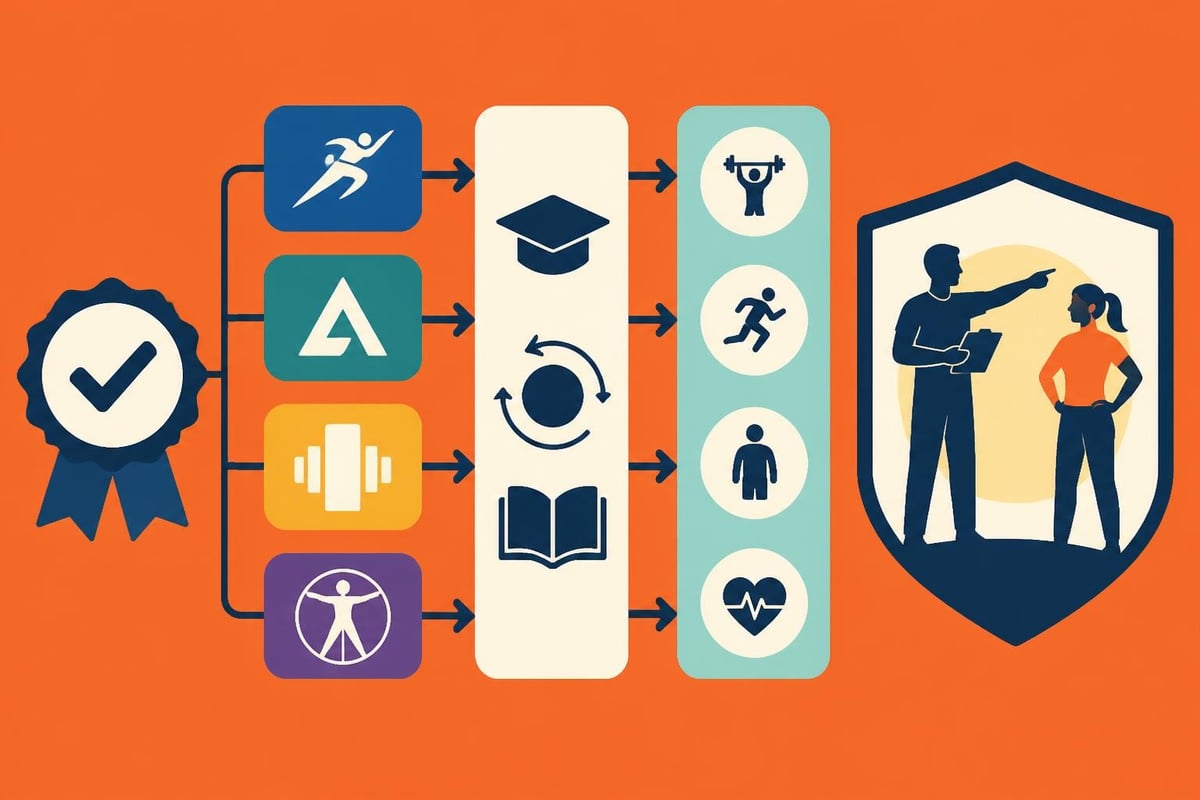
Not all certifications carry equal weight in the marketplace. TheNASM CPT certificationemphasizes corrective exercise and movement assessment, making it valuable for trainers working with clients who have movement dysfunctions or injury histories. The ACE certification focuses on behavior change and client communication, suitable for trainers who work with populations requiring significant lifestyle modification support. The NSCA-CPT builds strength and conditioning expertise, relevant for athletic development and performance training.
Choose based on the population you intend to serve and the gaps in your current knowledge base. If you don't understand periodization models or how to manipulate training variables for specific adaptations, prioritize certifications that drill those fundamentals. If you struggle to communicate programming rationale or motivate adherence, select pathways emphasizing coaching psychology and behavior change frameworks.
What the Exam Actually Tests
Certification exams assess knowledge across several domains:
Exercise science foundations(anatomy, physiology, biomechanics)
Assessment protocols(movement screens, fitness testing, health history evaluation)
Program design(periodization, exercise selection, progression models)
Nutrition basics(macronutrients, energy balance, supplementation within scope)
Professional responsibility(scope of practice, referral protocols, liability management)
Most candidates fail because they underestimate the depth required in exercise science. Knowing muscle names isn't enough. You need to understand force vectors, joint actions, muscle fiber recruitment patterns, and how acute variables (sets, reps, tempo, rest) influence training adaptations. TheNCSF exam policiesoutline these expectations clearly, but many candidates skim study materials instead of mastering foundational concepts.
Building Competence Beyond the Certification
The certification exam is the floor, not the ceiling. Personal trainer training that stops at initial certification produces technicians who recycle generic templates instead of coaches who think critically and adapt to individual contexts. Continuing education separates professionals from hobbyists.
NCCA-accredited certifications require continuing education credits (CECs) to maintain active status. These aren't administrative hurdles. They're professional obligations. The human body's response to training stimulus doesn't change, but research refines our understanding of optimal approaches, identifies previously overlooked variables, and challenges outdated protocols. Trainers who ignorecontinuing education opportunitiesgradually become obsolete, coaching with methods proven less effective than current best practices.
Certification BodyInitial CECs RequiredRenewal PeriodSpecialty Tracks AvailableNASM2.0 CEUs (20 hours)2 yearsCorrective Exercise, Performance Enhancement, NutritionACE2.0 CEUs (20 hours)2 yearsHealth Coach, Group Fitness, Sports PerformanceNSCA6.0 CEUs (60 hours)3 yearsTactical Strength, Special Populations, Sports ScienceACSM4.5 CECs (45 hours)3 yearsClinical Exercise, Cancer Exercise, Youth Fitness
Specialization vs. Generalization
Early-career trainers often chase specialty certifications before mastering fundamentals. This creates superficial expertise without depth. You don't need a kettlebell certification to understand how hip hinge patterns transfer across implement variations. You need biomechanics knowledge and coaching experience observing movement quality under fatigue.
Specialization becomes valuable after you've logged substantial hours coaching diverse populations and identified gaps in your ability to serve specific client needs. If you consistently work with post-rehab clients transitioning from physical therapy, a corrective exercise specialization addresses a real competency gap. If you're chasing certifications to pad your Instagram bio, you're avoiding the harder work of actual skill development.
State Regulations and Professional Standards
Personal trainer training requirements vary significantly by state. While most states don't require licensure for personal trainers, some mandate specific certifications or registrations. Washington D.C., Louisiana, and New Jersey impose regulatory requirements on personal trainers operating within their jurisdictions. Understandingstate-specific requirementsprevents legal complications and ensures you meet local professional standards.
Even in states without licensure requirements, facility insurance policies often dictate acceptable certifications. Most commercial gyms require NCCA-accredited certifications as a condition of employment or contractor agreements. This isn't bureaucratic preference. It's risk management. Facilities carrying liability insurance need assurance that trainers meet recognized professional standards to protect against negligence claims.
Insurance and Liability Considerations
Professional liability insurance is non-negotiable. Personal trainer training should include education on scope of practice boundaries, documentation requirements, and risk management protocols. Most certifying bodies offer liability insurance at reduced rates for active credential holders. This coverage protects you when a client claims injury during training, alleges negligence in program design, or disputes billing practices.
Beyond insurance, document everything: health history questionnaires, informed consent forms, session notes tracking exercises prescribed and client-reported responses, communication logs addressing concerns or modifications. This documentation establishes a pattern of professional conduct and demonstrates adherence to industry standards if disputes arise. It's not paranoia. It's accountability to the profession and protection for your practice.
What Effective Personal Trainer Training Looks Like in Practice
Theory without application produces coaches who know what to do but can't execute under real conditions. Effective personal trainer training integrates classroom learning with supervised practical experience. This means hours spent observing experienced coaches, conducting assessments under mentorship, designing programs for real clients and receiving feedback on exercise selection and progression logic, and managing client conversations about expectations, adherence barriers, and progress plateaus.
Programs offering in-person practicum components, like those through universities such asUNM, provide supervised experience that accelerates competence development. You learn to read movement quality in real time, adjust cues based on individual learning styles, and manage the unpredictability of actual coaching sessions. Online-only certification programs save time and money but skip the critical practice required to translate knowledge into skill.
The Role of Mentorship
No certification replaces time spent learning from coaches who've solved the problems you'll face. Mentorship exposes you to decision-making frameworks that textbooks can't teach: when to push a client harder versus when to scale back, how to address form breakdowns without killing momentum, what to do when a client's expectations conflict with physiological reality.
For fathers looking to build credible coaching practices that extend beyond their own training, understandinghow personalized coaching worksprovides context for what clients actually value. It's not flashy programming or complicated periodization schemes. It's consistent accountability, clear communication, and programming that adapts to real life constraints while still driving measurable progress.
Many trainers underestimate the importance of building resilience in their clients, particularly men over 35 juggling careers, families, and declining recovery capacity. Teaching someone to execute a perfect deadlift matters less than teaching them to stay consistent when life disrupts their routine. That's a coaching skill developed through experience, not certification exams. Resources like those found atEmmadavisbooks.comdemonstrate how structured guidance helps individuals develop confidence and manage challenges, principles that apply equally to fitness coaching and personal development work.
Continuing Education Pathways That Build Real Competence
Not all continuing education carries equal value. Webinars offering CECs for watching recycled content don't develop competence. Courses that challenge your current understanding, introduce evidence-based protocols you haven't applied, or force you to reconsider programming assumptions do. Platforms likeBrok Bushink Instituteoffer deep-dive content on pain science, corrective strategies, and advanced program design that actually improves coaching ability.
Prioritize continuing education that includes practical application components: case study analysis, program design assignments reviewed by instructors, video submission for coaching feedback. Passive consumption doesn't change behavior. Active application under expert review does.
Building a Professional Development Plan
Your personal trainer training doesn't end with certification. It accelerates. Establish annual learning objectives aligned to specific competency gaps:
Identify weak areasthrough honest self-assessment (movement analysis, nutrition coaching, behavior change strategies)
Select targeted educationaddressing those specific gaps, not random popular courses
Apply new knowledge immediatelywith current clients under controlled conditions
Document outcomesto measure whether new approaches improve client results
Seek feedbackfrom mentors or peer coaches reviewing your application
This systematic approach to professional development separates stagnant trainers from those who compound competence over time. The difference compounds annually. After five years, the gap between someone who pursued targeted development and someone who collected random CECs is massive.

The Business Side of Personal Trainer Training
Coaching competence means nothing if you can't build a sustainable practice. Personal trainer training rarely covers business fundamentals: pricing structure, client acquisition, retention strategies, contract negotiation, tax obligations for independent contractors, and marketing without overpromising results.
Most trainers underprice services because they conflate their time investment with their value delivery. Clients don't pay for your hour. They pay for the results your expertise generates and the mistakes your experience helps them avoid. Price based on the transformation you facilitate, not the time you clock. This requires confidence in your competence, which reinforces why thorough personal trainer training matters. You can't charge appropriately if you doubt your ability to deliver.
Client Acquisition Without Compromising Standards
Building a client base tests whether you'll maintain professional standards under financial pressure. Desperate trainers accept clients outside their competence scope, promise unrealistic timelines, or modify programming based on client preferences rather than physiological requirements. All three compromise outcomes and damage long-term reputation.
Sustainable client acquisition comes from consistent demonstration of expertise: publishing educational content that showcases your knowledge, offering free assessments that identify specific client needs you can address, and asking satisfied clients for referrals based on actual results they achieved. This approach builds slowly but creates a practice full of ideal clients who trust your judgment and follow your programming.
For trainers looking to scale their impact while building a community of like-minded professionals, platforms likeViewpalscan help grow your social media presence authentically, expanding your reach to potential clients who value expertise over gimmicks. Similarly, trainers building online businesses can leverage communities likeTalk Shopto connect with ecommerce professionals and learn from established merchants who've solved similar scaling challenges. Understanding how to optimize your online presence through resources likeRankPillensures your expertise reaches the people who need it, without resorting to empty marketing claims.
Common Personal Trainer Training Mistakes
The path from certification to competence includes predictable failures. Recognizing them early prevents years of ineffective practice:
Overcomplicating programming for beginners.New clients need consistency and basic progressive overload, not advanced periodization schemes. Complex programming doesn't demonstrate expertise; it reveals insecurity about fundamentals.
Ignoring nutrition's role in outcomes.You can't out-program a terrible diet. Trainers who refuse to address nutrition within their scope (basic energy balance, macronutrient targets, meal timing around training) limit their effectiveness and blame clients for "not trying hard enough."
Failing to assess before prescribing.Movement screens, health history review, and goal clarification aren't optional steps you skip to start training faster. They're professional obligations that inform appropriate program design.
Confusing client preference with professional judgment.Clients hire you for expertise, not to execute their Pinterest workout. Your job is explaining why their preferred approach won't achieve their stated goals and offering evidence-based alternatives.
Neglecting documentation.Memory fails. Documentation protects you legally and provides objective data tracking client progress, program modifications, and adherence patterns over time.
The Obligation Beyond Certification
Personal trainer training creates a professional obligation that extends beyond individual client relationships. You represent the industry's credibility. Every interaction shapes public perception of whether personal trainers add value or waste money. This obligates you to maintain current knowledge, stay within your scope of practice, refer clients to appropriate specialists when their needs exceed your competence, and demonstrate through outcomes that professional coaching produces results self-directed training doesn't.
This standard isn't negotiable. You either accept it and build a practice worthy of clients' trust and investment, or you contribute to the industry's credibility problem. There's no middle ground. Half-committed trainers who skate by on charisma while delivering mediocre programming harm everyone who takes this profession seriously.
The difference between certified and competent shows in client retention rates. If people train with you for three months then disappear, your programming or coaching failed. If they stay for years and refer friends, you delivered. Personal trainer training prepares you for the former. Continuous professional development and honest self-assessment create the latter.
Personal trainer training establishes baseline knowledge, but competence requires ongoing education, mentorship, and ruthless accountability to professional standards. Most trainers plateau because they stop learning after certification, confuse activity with effectiveness, or prioritize marketing over skill development. The marketplace eventually exposes these gaps through poor retention and stagnant businesses.The Father Forgebuilds custom programs combining fitness expertise with mental resilience and leadership development because sustainable transformation requires more than exercise prescriptions, it demands comprehensive support addressing the complete individual. If you're ready to develop competence that produces real outcomes, not just certifications that pad credentials, start by accepting the obligation that comes with calling yourself a coach.