Peptides for Fitness: What Fathers Need to Know
Peptides for fitness have exploded in popularity among men looking for an edge in muscle building, fat loss, and recovery. These short chains of amino acids promise faster results, better performance, and anti-aging benefits. The problem isn't that peptides don't work. The problem is that most men reaching for them haven't built the foundation that makes anything else worthwhile. You don't fix a broken training program, inconsistent nutrition, or poor sleep with a compound. You fix it with discipline, accountability, and consistent execution. This article breaks down what peptides actually are, what the research shows, and what fathers need to understand before considering them.
What Peptides Actually Are
Peptides are chains of amino acids linked together, essentially fragments of proteins. Your body produces thousands of peptides naturally, signaling everything from hunger to muscle growth to immune response. When we talk about peptides for fitness, we're referring to synthetic versions of these naturally occurring compounds, designed to trigger specific biological responses.
The peptide market includes both FDA-approved medications and research compounds sold in legal gray areas.The distinction matters more than most people realize.FDA-approved peptides like insulin, growth hormone, and GLP-1 receptor agonists undergo rigorous testing for safety and efficacy. Research compounds marketed for performance enhancement often lack the same scrutiny.
Categories of Peptides in Fitness
Different peptides target different pathways. Understanding what they're supposed to do helps you evaluate whether they're solving an actual problem or just filling a gap that discipline would close.
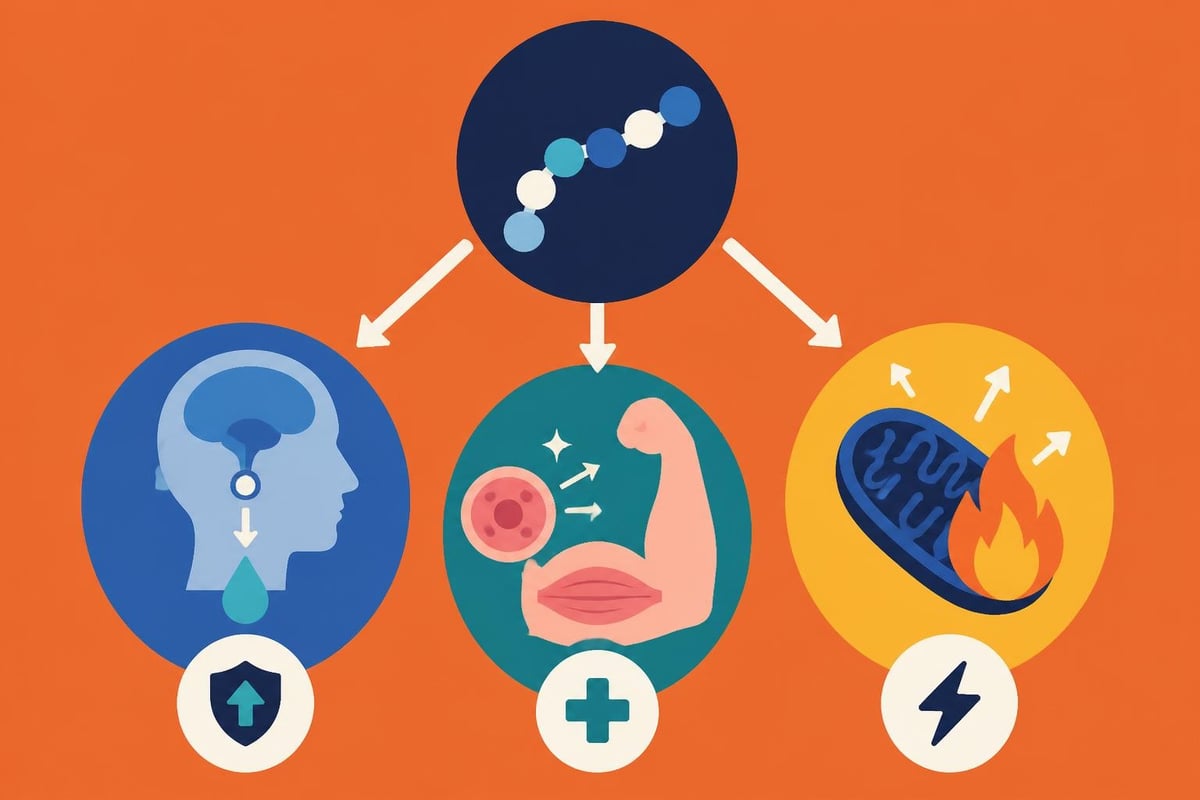
Peptide CategoryPrimary FunctionCommon ExamplesGrowth Hormone SecretagoguesStimulate GH releaseIpamorelin, CJC-1295Growth Hormone Releasing PeptidesTrigger GH pulsesGHRP-2, GHRP-6Melanocortin Receptor AgonistsFat loss, libidoMelanotan II, PT-141Healing PeptidesTissue repair, recoveryBPC-157, TB-500
Each category operates through different mechanisms. Growth hormone secretagogues, for instance, tell your pituitary gland to release more growth hormone. They don't add growth hormone directly. They increase your body's own production, which sounds appealing until you consider that your natural production responds to training, nutrition, and sleep first.
The Research on Peptides for Fitness
The gap between what research shows and what's marketed is substantial. Most studies on peptides examine medical applications in patient populations, not performance enhancement in healthy adults.Peptides used in bodybuildingoften lack robust human trials demonstrating safety and efficacy for that specific purpose.
FDA-approved peptides have clear therapeutic uses backed by clinical data. Semaglutide (Ozempic, Wegovy) demonstrates significant weight loss in obese patients. Growth hormone treats diagnosed deficiencies. Insulin manages diabetes. These compounds work because they're used in populations with actual pathological conditions, not as performance optimizers for otherwise healthy men.
What Studies Actually Show
Research on growth hormone secretagogues shows they can increase GH levels temporarily. What the studies don't show is whether that translates to meaningful muscle gain or fat loss in men who train consistently and eat properly. The American Council on Exercise notes thatpeptides in fitness remain largely unregulated, with most compounds marketed for "research purposes only."
Limited human trialson performance enhancement specifically
Short-term dataon most compounds, with minimal long-term safety studies
Dosing protocolsbased on anecdotal reports rather than clinical guidelines
Individual response variationthat makes predictable outcomes difficult
The healing peptides like BPC-157 and TB-500 have even less human research. Most data comes from animal studies or case reports. That doesn't mean they don't work. It means the safety profile, appropriate dosing, and actual efficacy in humans remain unclear.
Why Most Men Don't Need Peptides for Fitness
The foundation always matters more than the optimization. Peptides become attractive when men hit plateaus or feel progress has stalled. The real issue isn't that their biology needs pharmaceutical intervention. The issue is that their training, nutrition, or recovery has holes large enough to drive a truck through.
I've watched men spend hundreds on peptides while sleeping five hours a night, training without progressive overload, and eating protein once a day. The peptide didn't fail them. They failed the basics. No compound fixes a broken process.
The Hierarchy That Actually Matters
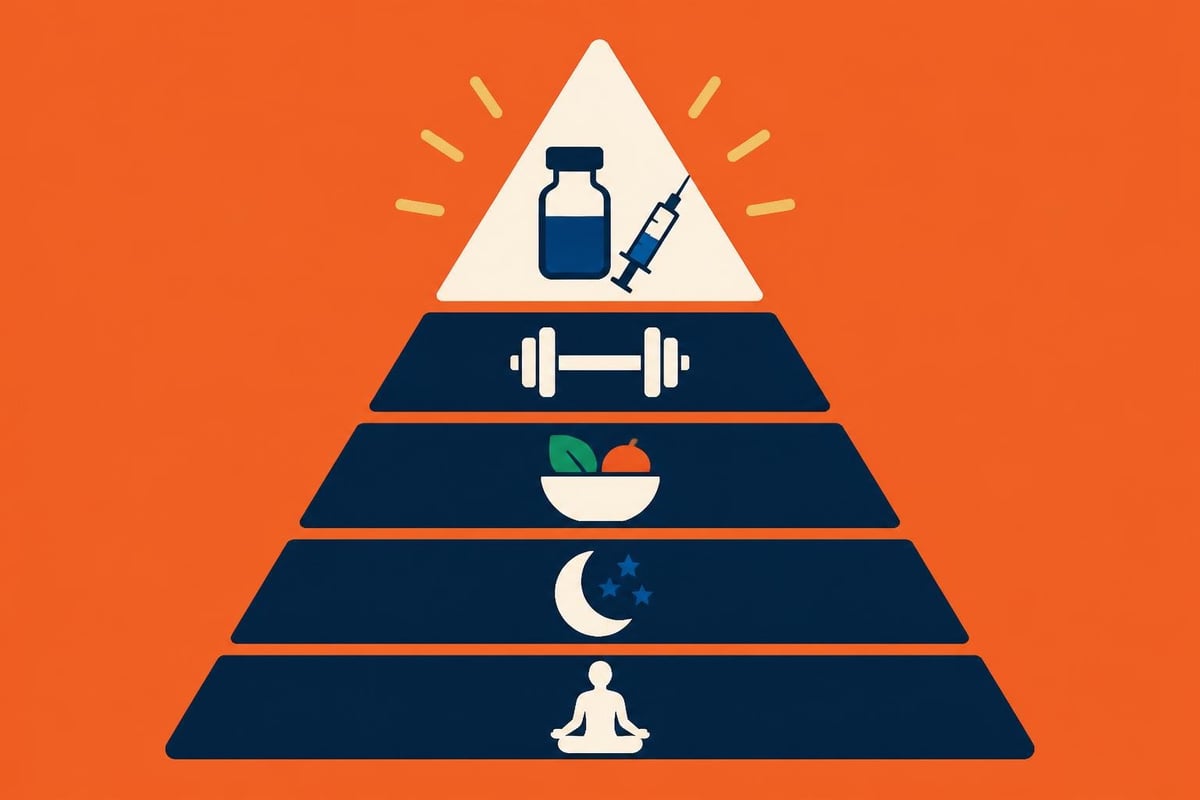
Before any discussion of peptides makes sense, you need these locked in:
Consistent resistance trainingwith progressive overload tracked weekly
Protein intakeat 0.8-1.0 grams per pound of body weight daily
Sleep durationof 7-8 hours with consistent timing
Stress managementthat prevents chronic cortisol elevation
Recovery protocolsappropriate for training volume and intensity
If any of those five areas has gaps, peptides become a distraction from the real work. Men often reach for advanced interventions to avoid addressing the boring fundamentals. The fundamentals deliver 90% of your results. Everything else fights for the remaining 10%.
For fathers over 35 dealing with real constraints on time, energy, and recovery,building a foundation through structured programmingmatters more than any peptide protocol. The Father Forge approach emphasizes the fundamentals that create lasting change, not quick fixes that fade when the compound runs out.
Safety Concerns and Side Effects
The safety conversation around peptides for fitness centers on both known risks and unknown territory.Understanding what peptides are and their potential effectsrequires looking at clinical data where it exists and acknowledging the gaps where it doesn't.
Common side effects vary by peptide class. Growth hormone secretagogues can cause water retention, increased hunger, and insulin resistance with prolonged use. GLP-1 receptor agonists commonly produce nausea, gastrointestinal distress, and appetite suppression. Melanocortin agonists may trigger changes in skin pigmentation, nausea, and cardiovascular effects.
Known Risks by Category
Side Effect CategoryAssociated PeptidesFrequencyInjection site reactionsMost injectable peptidesCommonGastrointestinal distressGLP-1 agonists, GHRP compoundsCommonWater retentionGrowth hormone secretagoguesModerateInsulin resistanceChronic GH elevationLong-term riskCardiovascular effectsMelanocortin agonistsVariable
The more significant concern involveslong-term safety data gaps. Most research compounds haven't been studied for years-long use in healthy populations. We know what happens in 8-12 week trials. We don't know what happens after five years of consistent use.
Contamination and purity represent another risk layer. Unlike pharmaceutical-grade medications, research peptides often come from sources with inconsistent quality control. Impurities, incorrect concentrations, or outright mislabeling create risks beyond the peptide itself.
The Regulatory and Quality Problem
The peptide market operates in legal gray areas. Compounds sold "for research purposes only" sidestep FDA oversight while being marketed directly to consumers for fitness use.Social media promotion of unapproved peptideshas accelerated access without increasing safety awareness.
Most peptides for fitness aren't FDA-approved for the purposes they're used. That means no standardized dosing, no quality requirements, and no post-market surveillance for adverse effects. You're essentially beta testing compounds on yourself.
What Legal Actually Means
FDA-approved peptidesrequire prescriptions and come from regulated pharmacies
Research compoundsare legal to purchase but not approved for human consumption
Compounding pharmaciesmay provide peptides with prescriptions, but quality varies
Underground labsproduce peptides with zero oversight or quality assurance
The distinction between pharmaceutical-grade and research-grade peptides isn't subtle. One comes with batch testing, consistent concentrations, and regulatory accountability. The other comes with whatever the supplier decided to put in the vial.
When Peptides Might Have a Role
There are legitimate medical uses for peptides. Men with diagnosed growth hormone deficiency benefit from GH therapy. Patients with obesity and metabolic disease see meaningful results from GLP-1 agonists. These uses involve medical supervision, appropriate diagnostics, and monitoring for side effects.
Performance enhancement in healthy adults sits in different territory. The risk-benefit calculation changes when you're not treating a pathology. You're accepting unknown long-term risks for marginal improvements that proper training and nutrition would likely deliver anyway.
The Diagnostic Question
Before considering any peptide intervention, you need baseline data:
Hormone panelsshowing actual deficiencies, not just "optimization" targets
Metabolic markersindicating where your physiology actually sits
Training logsdocumenting consistent progressive overload
Nutrition recordsproving protein and calorie targets are met
Sleep dataconfirming adequate recovery time
If those diagnostics show you've maximized the basics and still have specific, measurable deficits, then a medical conversation about peptides makes sense. If they show you're sleeping five hours, skipping leg day, and eating protein once daily, the conversation is over.

Alternative Approaches That Actually Work
The unsexy truth is that most men would get better results from fixing their training split than from any peptide protocol. Progressive overload, proper volume, and consistent execution deliver results. They just require patience and discipline instead of a vial and a syringe.
Nutrition optimization alonesolves most plateaus. Increasing protein to appropriate levels, timing carbohydrates around training, and maintaining a slight surplus for muscle gain or deficit for fat loss creates the conditions for progress.Evidence-based approaches to nutrition and trainingbeat pharmaceutical shortcuts when consistency is the limiting factor.
Recovery protocols matter more than most men acknowledge. Sleep quality, stress management, and deliberate deload weeks prevent overtraining and create adaptation. These aren't sexy interventions. They're effective ones.
What Moves the Needle Without Compounds
Progressive overloadapplied weekly with tracked metrics
Protein distributionacross 3-4 meals hitting leucine thresholds
Sleep hygieneprioritizing 7-8 hours with consistent timing
Stress reductionthrough deliberate practices, not just hoping it improves
Recovery weeksprogrammed every 4-6 weeks to prevent accumulated fatigue
These interventions cost nothing. They require discipline, not dollars. That's precisely why men skip them in favor of compounds that promise results without the work.
Making an Informed Decision
If you're still considering peptides for fitness after understanding the risks, unknowns, and alternatives, make the decision with full information. Work with a physician who understands both the compounds and your health history. Get baseline bloodwork. Monitor markers during use. Have a plan for coming off, not just going on.
Understand that any results you get come with the obligation to maintain the behaviors that support them. Peptides don't replace training. They don't eliminate the need for protein. They don't fix poor sleep. At best, they amplify what you're already doing well. At worst, they become an expensive distraction from the real work.
Questions to Answer Before Starting
Have I maximized training, nutrition, and recovery for at least 12 months consistently?
Do I have objective data showing where my physiology limits progress?
Am I willing to accept unknown long-term risks for marginal short-term gains?
Do I have medical supervision and monitoring planned?
What's my plan when I stop, since most gains from exogenous interventions fade?
If you can't answer those questions clearly, you're not ready for peptides. You're looking for a shortcut around discipline. That approach doesn't build muscle, lose fat, or create lasting change. It creates dependency on external factors instead of mastery of internal ones.
The path forward for most fathers doesn't run through peptides. It runs throughaccountability, structure, and consistent execution of fundamentals. That's not the exciting answer. It's the honest one.
Peptides for fitness promise faster results but deliver complications most men don't need. The foundation of training, nutrition, sleep, and recovery creates lasting change without pharmaceutical intervention or unknown risks. For fathers ready to build strength, lose fat, and lead at home through proven principles rather than experimental compounds,The Father Forgeprovides the structure, accountability, and brotherhood that actually moves the needle. The work is simple. It's just not easy.