One and Done Workout: Build Strength Without the Burnout
You don't have time for three-hour gym sessions. You don't need them, either. The obsession with volume, frequency, and complexity has created a generation of overtrained, underperforming men chasing programs they can't sustain. The one and done workout isn't a gimmick or shortcut. It's a return to principle: hit your body hard, hit it intelligently, and get back to your family. This approach demands precision, not hours. It requires you to think like a leader, not a fitness enthusiast scrolling for the next dopamine hit from a workout app.
What Makes a One and Done Workout Different
The one and done workout operates on a singular commitment: complete everything your body needs in one training session. No splits. No second sessions. No "I'll hit legs tomorrow" negotiations with yourself.
This isn't about cramming chaos into 60 minutes. It's about structural integrity. You train the full body with purpose, balancing push and pull, upper and lower, strength and conditioning. The session ends when the work is complete, not when you feel motivated to continue.
The Core Structure That Works
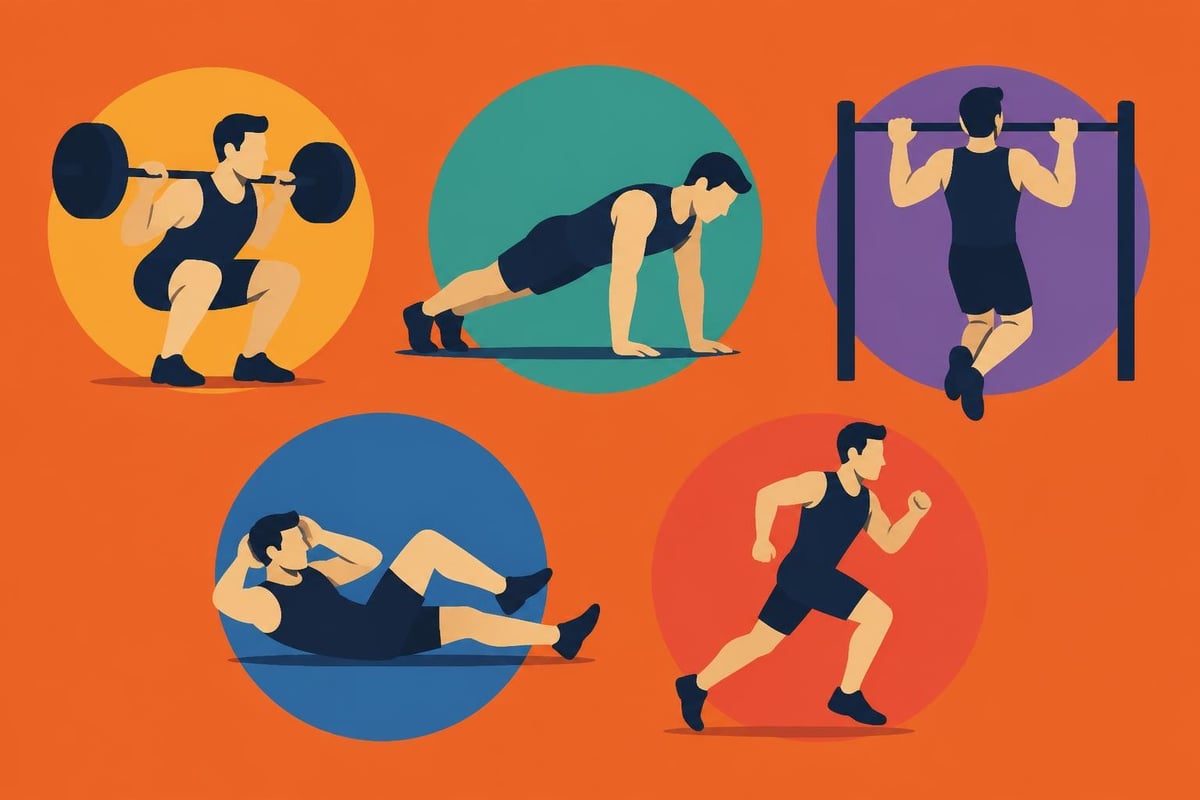
A proper one and done workout addresses five physical domains without negotiation:
Lower body strength(squat or hinge pattern)
Upper body push(pressing movement)
Upper body pull(rowing or pulling movement)
Core stability(anti-rotation or anti-extension)
Metabolic conditioning(brief, intense cardiovascular stimulus)
Each domain receives focused attention. You don't sprinkle exercises randomly hoping for results. You execute a structured attack that leaves nothing untrained.
The time investment ranges from 45 to 75 minutes depending on your training age and recovery capacity. Beginners complete quality work in 45 minutes. Advanced lifters with heavier loads and longer rest intervals need more time. Neither group needs a second session that day.
Why Most Men Fail With Traditional Programs
Traditional bodybuilding splits fail fathers because they require compliance you can't deliver. Life doesn't care about your chest-and-triceps day. Your kid gets sick. Work explodes. Your wife needs you present, not depleted from your second gym session.
The failure isn't your discipline. It's the program design. Splitting body parts across multiple sessions creates dependencies. Miss one day, and the whole week collapses. You either train incomplete or double up sessions, which creates the exact overtraining you're trying to avoid.
Traditional Split Problem | One and Done Solution |
|---|---|
Requires 4-6 sessions weekly | Single daily session |
Missing one day breaks sequence | Each session stands alone |
Recovery scattered across week | Full recovery between sessions |
Complex scheduling dependencies | Simple daily execution |
The one and done workout eliminates scheduling fragility. Each session is complete. Tomorrow's session doesn't depend on today's compliance. You train, you recover, you repeat. The simplicity creates consistency, and consistency creates results.
The Information Trap
You don't lack workout knowledge. You're drowning in it. Every coach, influencer, and app promises the "optimal" program. The real problem is environmental: you lack the structure to execute consistently in your actual life.
The Father Forgebuilt its coaching model on this reality. Programs mean nothing without environmental support, accountability, and the brotherhood to sustain execution when motivation fails.
Building Your First One and Done Workout
Start with movement patterns, not muscle groups. Your body doesn't operate in isolation. It works as a system. Training that system requires compound movements that demand coordination, not machines that eliminate it.
The Foundation Template
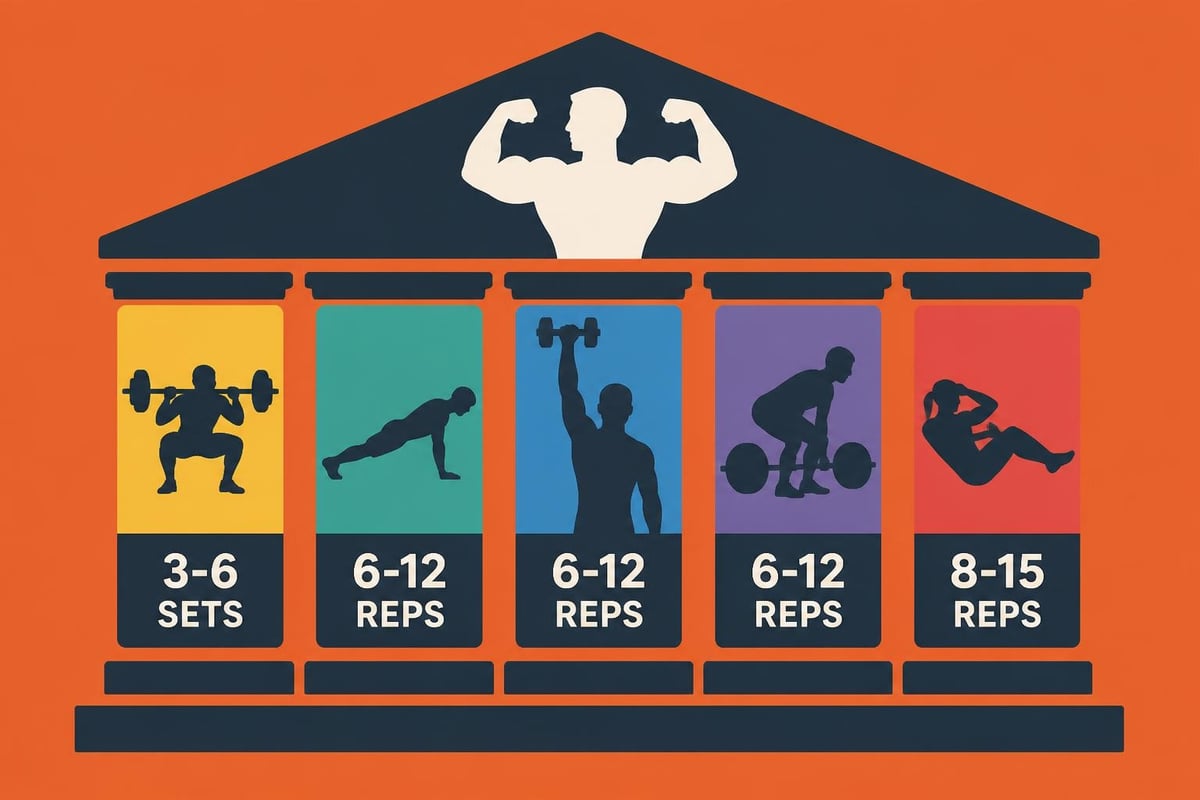
Lower Body:Choose one primary movement.
Back squat, front squat, trap bar deadlift, or conventional deadlift
3-4 sets of 4-8 reps
Focus on progressive overload, adding weight or reps weekly
Upper Push:Press something heavy overhead or horizontally.
Barbell press, dumbbell bench press, or push-up variation
3-4 sets of 6-10 reps
Maintain strict form, no ego lifting
Upper Pull:Balance the push with equal pulling volume.
Pull-ups, rows, or lat pulldowns
3-4 sets of 6-10 reps
Squeeze at the top, control the negative
Core Work:Build stability, not six-pack chasing.
Dead bug variations, Pallof press, or loaded carries
2-3 sets of 30-60 seconds
Focus on zero movement in the spine
Conditioning:Brief, intense work.
Assault bike, rowing, or kettlebell swings
5-10 minutes of intervals or steady effort
Hard enough to challenge, not destroy
This template handles everything. Adjust loading and exercise selection based on your training age, but the structure remains constant.
Progressive Overload Without Program Hopping
The one and done workout succeeds or fails on a single principle: are you getting stronger? Not more tired. Not more sore. Stronger.
Track three metrics with zero negotiation:
Weight liftedfor each primary movement
Reps completedat that weight
Session completion(did you finish or quit early)
Every week, one of those numbers must increase. Add five pounds to the bar. Complete one more rep. Finish the session when last week you cut it short. Progress compounds, but only if you measure it.
The Anti-Fragility Protocol
You will miss workouts. Life guarantees it. The one and done workout handles missed sessions better than splits because each session stands alone. Miss Monday, train Tuesday. No cascade failure. No week-long abandonment because you "already messed up the program."
When you return from missed sessions, reduce volume by 20-30% for that first session back. Drop one set from each movement. Maintain intensity (weight on the bar) but reduce total work. This prevents injury and rebuilds confidence. The second session back, return to full volume.
Common Execution Failures and Fixes
Most men fail the one and done workout not from the program but from self-deception. They claim they're training but they're performing activity. The difference matters.
Failure Point One: Insufficient Intensity
You must lift weights that challenge you within the prescribed rep range. If the program calls for 6-8 reps and you can complete 15, you're not training. You're wasting time. Add weight until rep eight is genuinely difficult.
The mental comfort of "finishing the workout" with light weights creates zero adaptation. Your body changes only when forced to. Provide that force or accept stagnation.
Failure Point Two: Excessive Volume Addition
The template works. Don't improve it. Every man thinks adding three more exercises will accelerate results. It won't. It creates fatigue that masquerades as productivity.
Stick to the five domains. Execute them with precision. Adding arm curls and calf raises doesn't make you more committed. It makes you distracted. Save the extra work for when the foundation movements plateau after months of consistent execution.
Failure Point Three: Inconsistent Session Timing
Training at random times throughout the week destroys recovery patterns. Your body adapts to consistent stress applied at consistent intervals. Training Monday, Wednesday, Friday works. Training Monday, Thursday, Saturday, then Tuesday creates chaos your nervous system can't predict.
Pick three or four days. Same days each week. Non-negotiable. Your body will learn the pattern and optimize recovery accordingly. Random scheduling produces random results.
The Mental Resilience Component
The one and done workout builds more than muscle. It constructs the mental framework required for fatherhood and leadership. Each session presents a choice: execute the plan or negotiate with comfort.
Choosing execution over comfort builds the mental calluses required for every hard conversation, difficult decision, and moment when your family needs you uncomfortable and present.
Physical Demand | Mental Transfer |
|---|---|
Completing heavy sets when tired | Leading when exhausted |
Showing up after missed sessions | Rebuilding after failure |
Adding weight despite fear | Taking calculated risks |
Finishing prescribed work | Following through on commitments |
This isn't metaphorical. The discipline to complete a hard workout transfers directly to the discipline required to have the marriage conversation you've been avoiding. The confidence from progressive strength gains shows up in how you lead your kids through their struggles.

Nutrition That Supports Single-Session Training
The one and done workout demands proper fueling. You can't ask your body to perform five domains of work on inadequate nutrition and expect results. This isn't complicated, but it is non-negotiable.
Protein:0.8-1.0 grams per pound of bodyweight daily. Chicken, beef, fish, eggs. Real food. Consistent intake. Every single day. Protein builds and repairs the muscle you break down in training. Shortchange this, and you're training for nothing.
Carbohydrates:Enough to fuel performance, not so much you gain fat. Most men over 35 need 150-250 grams daily depending on size and activity. Front-load carbs around training. Rice, potatoes, oats. Simple, dense, effective.
Fats:20-30% of total calories. Support hormone production and nutrient absorption. Whole eggs, fatty fish, olive oil, nuts. Don't fear fat. Fear the processed garbage marketed as healthy.
Hydration:Half your bodyweight in ounces minimum. 200-pound man needs 100 ounces of water daily. More on training days. Dehydration kills performance and recovery. Drink water like your results depend on it, because they do.
Recovery: The Half of Training You Ignore
Training is the stimulus. Recovery is the adaptation. The one and done workout creates significant stress. Your body must recover from that stress to grow stronger. Skip recovery, and you accumulate fatigue without progress.
Sleep Non-Negotiables
Seven hours minimum. Eight preferred. Quality matters more than quantity. Your bedroom should be dark, cool, and free from screens. The TV doesn't belong in your sleep environment. Neither does your phone unless it's in airplane mode.
Poor sleep destroys testosterone, increases cortisol, and sabotages every training adaptation you're chasing. You cannot out-train bad sleep. Stop trying.
Active Recovery Days
The days between training sessions aren't rest days. They're recovery days. Move your body with low-intensity activity that promotes blood flow without creating new stress. Walk. Swim. Light bike ride. Stretch. Mobility work.
Sitting on the couch between training days is a choice to recover slower. Movement helps. Use it.
When to Add Volume or Frequency
The one and done workout sustains progress for months, sometimes years. Eventually, you'll need more stimulus. That time arrives when you've plateaued on all primary lifts for 3-4 consecutive weeks despite proper sleep, nutrition, and recovery.
When that happens, you have two options:
Option One:Add a second weekly session focusing on weaknesses. If your squat is progressing but your press has stalled, add a second pressing-focused session. Keep the main one and done workout as your foundation. The second session addresses specific limitations.
Option Two:Increase volume within the single session. Add one set to each movement. This increases total work without fragmenting your week across multiple sessions. Monitor recovery carefully. If sleep quality drops or morning readiness decreases, you've added too much.
Both options work. Choose based on your schedule and recovery capacity. If you have the time and can manage two sessions weekly, option one provides more flexibility. If your schedule barely accommodates one session, option two keeps things simple.
Programming for Fathers Over 35
Recovery capacity changes with age. The one and done workout remains effective, but the execution requires adjustment. You can't train like you're 25 and expect 25-year-old recovery.
Increase warm-up time. Your joints need more preparation. Five minutes of general movement followed by specific warm-up sets for each primary lift. No negotiation. Skipping warm-ups to "save time" creates injuries that cost months.
Reduce training frequency if necessary. Three sessions weekly might be your optimal dose. Trying to force four or five because some 22-year-old influencer does it creates overtraining, not results. Listen to your body's recovery signals. Morning heart rate, sleep quality, and session performance tell you everything you need to know.
Prioritize recovery interventions. Massage, sauna, cold exposure, and mobility work matter more now than they did at 25. These aren't luxuries. They're maintenance requirements for sustained performance.
The one and done workout cuts through the noise and delivers what you actually need: a complete training system that fits your life. It builds strength, burns fat, and develops the mental resilience required for leadership at home. The template is simple, the execution is hard, and the results compound over time when you stay consistent. If you need structure, accountability, and a program built for your actual life as a father,The Father Forgecreates custom fitness and mindset programming that integrates seamlessly with the demands of marriage, fatherhood, and leadership.