What Manhood Actually Means: Lessons From Deployment
Manhood is not inherited. It is not a title conferred at eighteen or twenty-one. Thehistorical meaning of manhoodevolved from simple adulthood into something deeper: the qualities that define a complete man. But in 2026, many men have access to every piece of information about fitness, finance, leadership, and faith, yet still drift through years without direction. The problem is not information. The problem is environment. During Operation Spartan Shield in 2018-2019, serving as Operations NCO for the 65th Field Artillery Brigade headquarters, I watched deployment strip men down to their actual habits. Some filled empty hours with nothing. I started a men's group instead. That group clarified what manhood actually requires.
Deployment Reveals What Information Cannot Fix
Deployment creates a unique laboratory. Remove distractions. Remove the daily rhythm of civilian life. Place men in an environment where time stretches and comfortable excuses disappear. What remains is the truth of their habits.
Some men filled their hours with screens, junk food, and complaint. They had the same access to gyms, the same internet connection, the same twenty-four hours as everyone else. They were not lacking information about fitness or self-improvement. They were lacking accountability and standards enforced by their environment.
The men's group I built was never just about lifting weights.We established physical standards, but also worked on finances, faith, marriages back home, reading habits, and discipline in the small details. Continuous self-improvement became the standard, not a motivational phase. Men showed up because the group expected something from them. That expectation created the environment information alone could never build.
The Core Elements We Trained
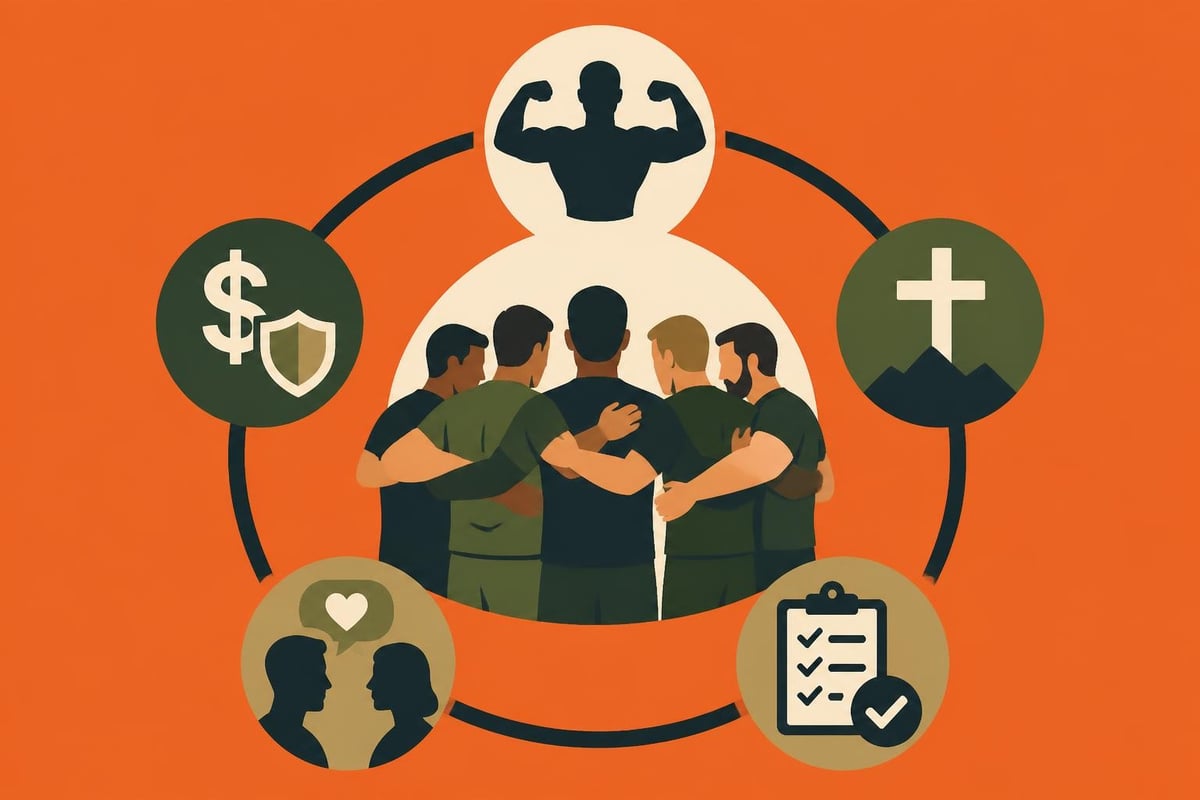
The group operated on specific pillars. Each man participated in all areas. No one got to cherry-pick the comfortable topics.
Physical training: Programmed workouts, tracked progress, zero tolerance for skipped sessions without cause
Financial discipline: Debt elimination plans, budget reviews, Financial Peace University principles applied
Faith development: Reading plans, discussion of principles, application to leadership roles
Marriage strengthening: Communication practices, intentional connection despite distance, preparation for reintegration
Reading commitment: Books completed, concepts discussed, ideas applied to actual decisions
This structure forced men to confront weak areas. A man strong in physical training but failing his marriage could not hide behind his squat numbers. A man with solid finances but no physical discipline faced that gap plainly. The group made weakness visible and provided the accountability to address it.
What Men Actually Need Beyond Information
In 2026, every man can access workout programs, nutrition guides, marriage advice, and financial planning tools within seconds.Research on masculinity and health behaviorsshows that societal expectations shape how men engage with health. But expectations without enforcement are just suggestions. Men need three things information cannot provide.
First, men need accountability that costs something.The men's group required showing up. Missing a session meant explaining why to men who knew your schedule. No anonymous lurking. No consuming content without contributing effort. Accountability worked because the group mattered to each man, and letting the group down carried weight.
Second, men need standards enforced by their environment.Willpower is not the answer. A man who relies on willpower to train, eat well, manage money, and lead his family will fail when stress increases. Environment design wins. The deployment group created an environment where the default action was improvement. Showing up was normal. Doing the work was expected. Sitting out required justification.
Third, men need brotherhood, not networking.Brotherhood means men who will tell you the truth about your weak areas and help you fix them. Networking means connections that benefit you. The men in that group did not show up for benefits. They showed up because they committed to the standard, and the standard required presence, effort, and honesty.
What Information ProvidesWhat Environment ProvidesWhat Brotherhood ProvidesKnowledge of what to doDefault actions that serve youTruth about your blind spotsAwareness of standardsEnforcement of those standardsSupport to meet those standardsMotivation from contentStructure that removes willpowerAccountability that costs something
Many men today consume endless content about self-improvement yet make no measurable progress. They lack the environment and brotherhood that make information actionable.Studies on masculinity and workplace physical activitydemonstrate that perceptions of masculinity influence whether men engage in health behaviors. Perception is shaped by environment. Weak environments produce weak perceptions and weak results.

The Brotherhood Standard From Operations NCO to First Sergeant
After that deployment, I served as First Sergeant of C Battery from 2019 to 2022. I ran Financial Peace University sessions with my Soldiers. Multiple men cleared significant debt. Several finished degrees they had started years earlier. These outcomes did not result from new information. Every one of those Soldiers had access to debt elimination strategies and degree programs before I arrived. They lacked the accountability and the expectation that their leader cared about the whole man, not just the uniform.
Caring for men is shown through action, not words.I did not tell Soldiers I cared. I built structures that enforced standards in their lives. I made their financial health, their education, their family stability part of the unit's culture. When a Soldier showed up to formation but was failing at home, that became my problem to address, not ignore.
The same principle applies to fathers today. A man might know he should train consistently, eat to support his goals, manage his money well, and lead his family with intention. Knowing changes nothing. The question is whether his environment enforces those standards or undermines them.
Building Your Own Accountability Structure
Most men will not deploy. Most will not have a First Sergeant enforcing standards. But every man can build the environment he needs. The deployment men's group succeeded because of specific structural choices.
Set a recurring meeting time that does not move.The group met at the same time, same place, every session. No voting on convenience. No rescheduling for comfort.
Require all members to participate in all areas.No specialists. Everyone trained physically, reviewed finances, engaged with faith and marriage topics, and reported on reading.
Make absence require explanation to the group.Missing a session meant facing the men who showed up and explaining why you did not. Social cost enforced attendance.
Track measurable progress in every pillar.Weight lifted, debt reduced, books finished, days without conflict at home. Numbers prevent lies.
Establish the expectation that the group exists to make you better, not comfortable.Men who wanted comfort left. Men who wanted growth stayed.
These principles work in 2026 as effectively as they worked in 2018. Men today face the same core challenge: building an environment that enforces the standards they claim to value. For fathers over thirty-five who want that structure and accountability, theGroup Coaching Communityprovides weekly coaching calls, brotherhood accountability, and a men's community built for fathers who need more than another app.
Physical Standards as the Foundation
Manhood requires a functional body. A man who cannot carry his child, move furniture, or maintain physical capability into his fifties is failing a basic standard. The deployment group started with physical training because the body is the most visible, measurable area of discipline.
Every man in the group followed a programmed training plan.No random workouts. No skipping legs because they are hard. The program prescribed exercises, sets, reps, and progression. Men tracked their numbers. Progress was visible. Stagnation was visible.
Physical training also revealed character. The man who complained about soreness but never missed a session showed resilience. The man who skipped when tired showed weakness that would appear in other areas. The body does not lie. How a man trains reflects how he approaches difficulty.
Fitness is not vanity.Research on manhood and healthshows that how men define manhood influences their self-rated health. A man who defines manhood as enduring pain without care will ignore injuries until they become chronic. A man who defines manhood as maintaining capability will address issues early. Physical standards must include both strength and sustainability. A destroyed body at fifty is not a trophy.
For men recovering from injury, the standard adjusts but does not disappear. I was hit by a drunk driver in 2004. My pelvis was rebuilt with thirteen screws. I spent two years on fentanyl and OxyContin, walked with a cane, then came off the opioids to deploy to Iraq in 2007. The injury changed my training, but it did not eliminate the requirement to train. Manhood adapts to conditions, but it does not surrender to them. Integrating your training with professional support from providers likeIgnite Chiropractic and Wellnesscan help address the root causes of pain and dysfunction, not just mask symptoms.
Financial Discipline as Leadership Responsibility
A man who cannot manage his money cannot lead his family. Financial chaos creates stress that poisons every relationship. The deployment men's group addressed finances directly because debt and poor money habits were destroying marriages and limiting futures.
We used Financial Peace University principles.Men listed every debt. They created budgets. They tracked spending. They reported progress to the group. The accountability was not optional. Financial irresponsibility became a visible failure, not a private struggle.
Several men eliminated thousands in debt during the deployment. Not because they suddenly earned more. Because the environment demanded they face their spending, cut waste, and apply discipline. The group made financial laziness unacceptable.
Financial discipline connects directly to manhood because it reflects whether a man controls his impulses or allows his impulses to control him. A man who cannot delay gratification in spending will fail to delay gratification in training, eating, and leading. The same weakness appears across every domain.
Faith and Purpose Beyond the Physical
The men's group included faith development because physical strength without purpose produces nothing of lasting value. We read, discussed principles, and applied them to leadership decisions. Faith provided the framework for why we were improving ourselves at all.
Men need a reason beyond appearance or personal satisfaction.A man training only to look better will quit when results slow. A man training to maintain capability for his family, to model discipline for his sons, to lead from a position of strength rather than weakness has a foundation that survives difficulty.
Faith also addressed the deployment's hardest element: distance from family. Men struggled with maintaining marriages across time zones, with being present for their wives and children despite the separation. Faith practices helped men stay connected to their purpose and their families. Prayer, reading, and discussion kept perspective when isolation and boredom tempted men toward apathy.
This is not about religion as performance. This is about anchoring manhood to something beyond the self.Early perspectives on manhood and matingrecognized that responsible choice requires clear knowledge and purpose. A man without a framework for making decisions will default to comfort, convenience, and impulse. Faith provides that framework.
The Marriage Connection Men Avoid
Deployment exposed which marriages were strong and which were failing. Distance does not create marriage problems. It reveals them. The men's group forced men to address their marriages intentionally, even from thousands of miles away.
We discussed communication frequency, content, and quality.How often did you talk to your wife this week? What did you discuss beyond logistics? Did you listen to her concerns, or just report your day? The group made these questions regular and required honest answers.
Men resist this topic because it is uncomfortable. Admitting your marriage is struggling feels like admitting failure. But a struggling marriage is failing whether you admit it or not. The group created space to address marriage challenges plainly, get advice from other men, and apply solutions before returning home.
Manhood includes being a husband. A man who leads well at work but fails at home is not successful. He is fragmented. The deployment group held the standard that marriage was part of the man's responsibility, not a separate category his wife managed alone. Many men today need that same accountability to prioritize their marriages alongside their fitness and careers. Building that holistic approach requires guidance, which is why personalized coaching addresses fitness, marriage, and leadership together atThe Father Forge.
What Manhood Requires in 2026
The deployment men's group clarified manhood through action, not theory. Manhood is not a feeling. It is not confidence or self-esteem. Manhood is the sustained execution of standards across every area of life, enforced by accountability and brotherhood.
Modern men have access to unlimited information but live in environments designed to make them weak.Comfort is the default. Discipline requires intentional design. The men who succeed in 2026 are the men who build environments that enforce their standards and surround themselves with brothers who will not let them quit.
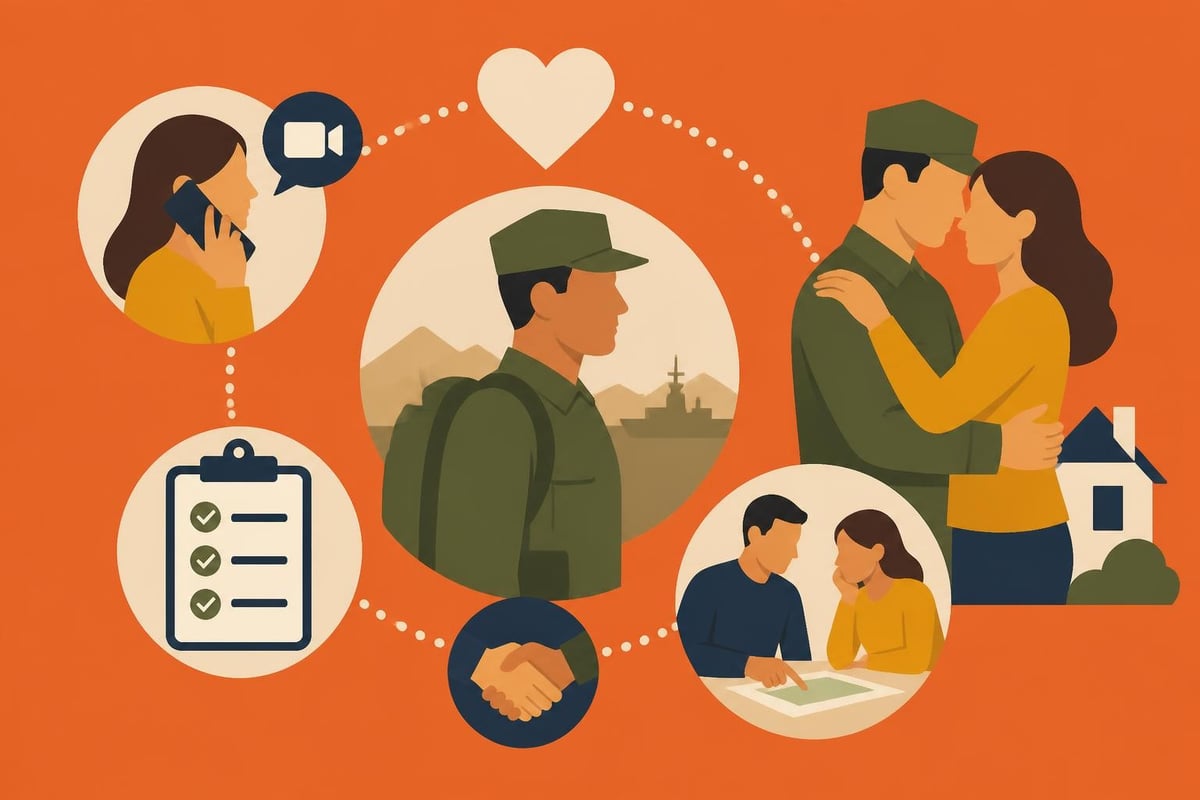
Manhood requires:
Physical capability maintained through programmed training and sustainable habits
Financial discipline that eliminates chaos and creates margin
Faith that anchors decisions to purpose beyond self
Marriage investment that treats your wife as a priority, not an afterthought
Brotherhood that provides accountability, truth, and support when motivation fades
These requirements do not change based on circumstances. Deployment did not create these standards. It revealed them. The absence of distraction made visible what mattered and what did not. Men who filled empty hours with waste showed their actual priorities. Men who built themselves showed theirs.
The Environmental Design Men Ignore
Most men fail not because they lack knowledge but because they lack environmental structure. A man who keeps junk food in his house will eat it. A man who trains alone will skip sessions when tired. A man who avoids financial accountability will drift into debt. Environment wins over willpower every time.
The deployment men's group succeeded because the environment enforced the standard.The gym was available. The group met at set times. Absence required explanation. Progress was tracked publicly. Weakness was visible. Support was immediate. The structure removed the need for constant motivation.
Men today must build similar structures intentionally. This means:
Scheduling training sessions like mandatory meetings, not optional activities
Removing temptations from the home rather than relying on willpower to resist them
Joining or creating a men's group that enforces standards, not just discusses them
Tracking measurable progress in fitness, finances, and family connection
Making accountability automatic through regular check-ins with other men
Environmental design is not a life hack. It is the recognition that you are not strong enough to succeed alone against an environment optimized for your failure. Modern life is designed to keep you comfortable, distracted, and weak. Reversing that requires intentional, structural changes.
If you need support for physical recovery or performance optimization as part of that environmental design, working with clinics likeMountain Health and Performancecan provide the chiropractic, physiotherapy, and specialized treatments that address root issues rather than temporary symptoms.
Why Most Men's Groups Fail
Many men try to start men's groups. Most fail within months. They fail because they lack structure, standards, and consequences. A men's group that exists for encouragement alone produces nothing. Men need accountability, not cheerleading.
The deployment group worked because we established clear expectations from the start. This was not a social club. This was a commitment to continuous improvement across all pillars of manhood. Men who wanted casual conversation left. Men who wanted to be pushed stayed.
Successful men's groups require:
ElementWhy It MattersHow to ImplementRecurring scheduleRemoves negotiation about when to meetSame day, same time, no exceptionsMandatory participationPrevents passive membershipTrack attendance, require explanations for absencesProgress trackingMakes improvement visible and weakness undeniableUse spreadsheets, apps, or journals shared with the groupDifficult conversationsAddresses real problems, not surface issuesSet ground rules that honesty is required, comfort is notConsequences for failureEnforces accountability beyond good intentionsPublic acknowledgment of missed commitments, group pressure
Men today often want the benefits of brotherhood without the cost. They want support but resist being challenged. They want encouragement but avoid hard truths. That approach builds nothing. Brotherhood that matters requires men willing to enforce standards on each other, even when it is uncomfortable.
The Obligation You Cannot Delegate
Manhood is not something you achieve and then maintain passively. It is a standard you either meet today or fail today. Every day presents the same choice: execute the standard or rationalize its absence.
You cannot delegate this responsibility.No coach, no program, no app will build your manhood for you. External support provides structure and accountability, but you must show up and do the work. The deployment men's group did not make men better by giving them secrets. It made men better by refusing to let them quit.
Many fathers today feel the weight of this responsibility but do not know where to start. They see the gap between the man they are and the man their family needs. Information has not closed that gap. What closes it is environment, accountability, and brotherhood. What closes it is the decision to stop consuming content about improvement and start executing a plan with men who will hold you to it.
For men serious about that commitment, particularly fathers over thirty-five who recognize they need more than information, support exists. But support only helps men who are ready to work. No one can want your improvement more than you do. No one can execute your standards for you.
If you are ready to build the environment and accountability your manhood requires, if you recognize that information alone has not and will not produce the change you need, then the choice is simple. Start today. Find or build the brotherhood that will enforce your standards. Track your progress across every pillar. Face your weak areas plainly and address them with the same discipline you apply to your strengths.
Manhood is not complex. It is difficult. There is a difference. Complexity requires intelligence. Difficulty requires commitment. You already know what to do. The question is whether you will build the environment and accountability to ensure you do it, or whether you will drift through another year hoping motivation appears.
Manhood is built through sustained execution of standards across physical capability, financial discipline, faith, marriage, and brotherhood. It requires environment and accountability, not just information.The Father Forgeprovides custom fitness and mindset programs for fathers who are ready to build muscle, lose fat, and lead at home through structure, accountability, and mental resilience. If you are done consuming content and ready to execute a plan with men who will hold you to the standard, the work starts now.