Male Loneliness Epidemic: Why Men Are Isolated
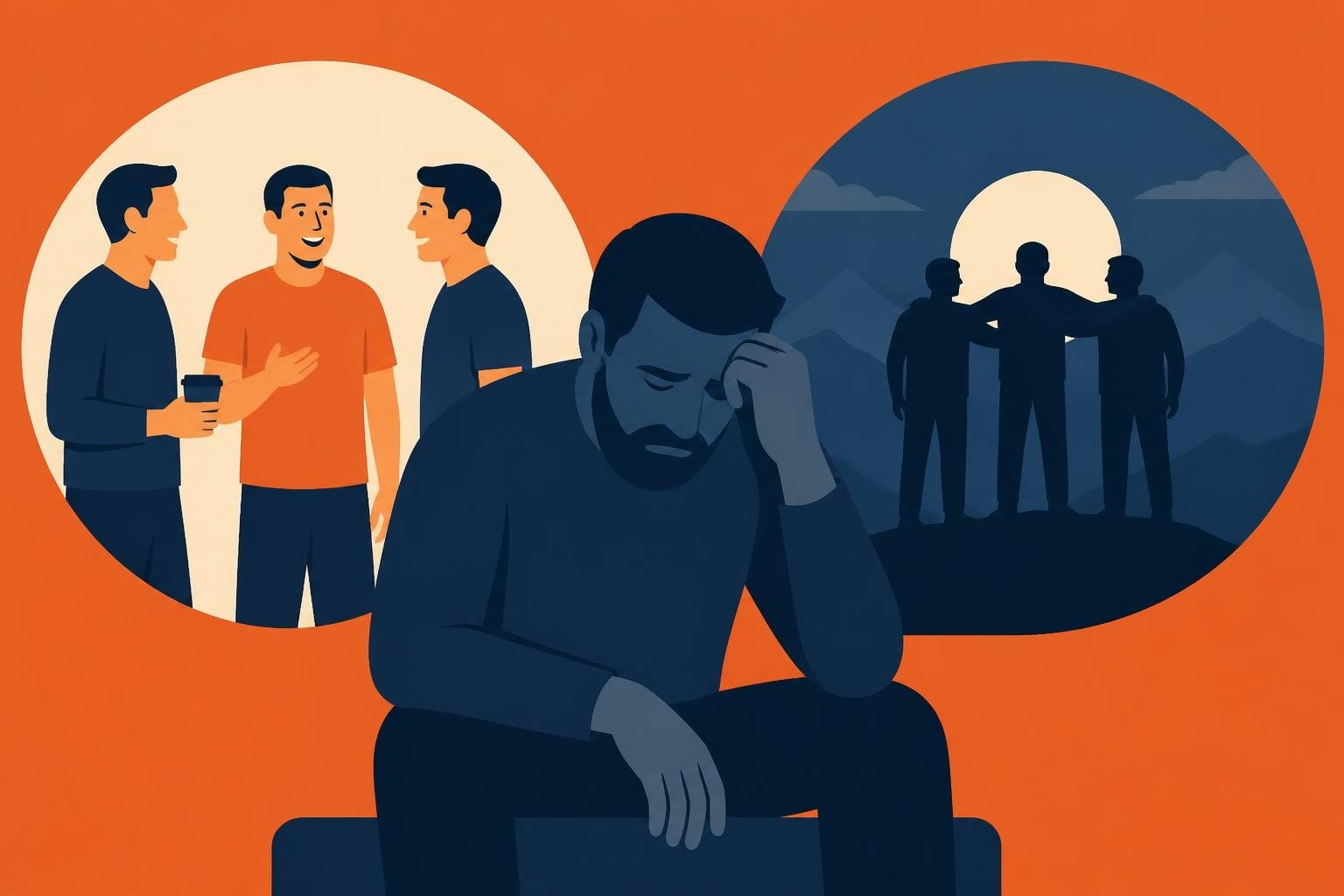
The male loneliness epidemic is not a theory or a trending topic for discussion panels. It is a measurable reality affecting men across demographics, income levels, and life stages. Men over 35, particularly fathers, face systematic isolation created by collapsing social infrastructure, role confusion, and the absence of structured accountability. The consequences show up in mental health statistics, divorce rates, health outcomes, and the erosion of leadership capacity at home. This is not about feelings. This is about function. Isolated men cannot lead effectively, cannot model resilience for their children, and cannot sustain the relational bonds their families require. The solution is not more information or awareness campaigns. The solution is rebuilt structures that create connection through shared purpose, recurring accountability, and earned trust.
The Structural Collapse Behind Male Isolation
Themale loneliness epidemicexists because the traditional structures that connected men have collapsed or been abandoned. Churches, civic organizations, workplace communities, and neighborhood networks no longer function as relational anchors for most men. These were not perfect systems, but they provided recurring contact, shared purpose, and accountability frameworks.
What replaced them? Nothing of equal structural strength. Digital platforms promised connection but delivered performance anxiety and passive consumption. Social media metrics replaced real friendship. Men scroll, compare, and withdraw further into isolation masked as "connectivity."
The Activity Deficit
Men connect through doing, not just talking.Research on male social patternsshows that men form bonds through recurring activity-based groups, not emotional disclosure sessions. The absence of structured, repeating activities leaves men without natural connection points.
Consider what has been lost:
Weekly sports leaguesthat created recurring contact and shared physical challenge
Trade unions and professional guildsthat built identity and peer accountability
Service organizationsthat provided purpose-driven collaboration
Faith communitieswith weekly gatherings and service roles
When these structures disappeared, they took the relational infrastructure with them. Men did not suddenly become more isolated by choice. The environment changed, and most men lack the skill set to rebuild connection without structure.

Why Fathers Over 35 Face Compounding Isolation
The male loneliness epidemic hits fathers over 35 with particular force. This demographic faces time compression, role confusion, and social drift simultaneously. Career demands, family responsibilities, and physical changes collide during the same life stage when previous friendship structures naturally fade.
Most men in this bracket cannot name three people they could call at 2 AM for real help. That is not a personality flaw. That is an environmental failure. The structures that would have maintained those relationships no longer exist, and the new demands of fatherhood leave no margin for relationship maintenance without intentional design.
The Time Compression Trap
Life DemandWeekly HoursRelationship MarginCareer/Commute50-60MinimalFamily Care30-40Task-focusedSleep/Recovery49-56NoneAvailable Margin5-15Insufficient
These numbers reveal the structural problem. Even men who recognize their isolation cannot solve it through individual effort alone. They need structured environments that integrate connection with existing demands, not additional obligations that compete with family time.
The fathers who understand this recognize that fighting the male loneliness epidemic requires systems that work with their schedule constraints, not against them.Group accountability structuresthat combine fitness training, leadership development, and brotherhood into a single time block solve the integration problem that isolated attempts cannot address.
The Performance Mask Men Wear
Men underreport loneliness because the cultural scripts around masculinity penalize admission of isolation. This is not toxic masculinity. This is rational response to real social consequences. Men who openly discuss loneliness face skepticism, mockery, or dismissal. The safest play is performance. Act connected. Maintain surface relationships. Never reveal the depth of isolation.
This performance creates a secondary problem: other men cannot identify who else is struggling. Everyone assumes they are the only one failing at connection while everyone else has it figured out. The male loneliness epidemic persists partly because the men experiencing it cannot see each other clearly enough to recognize the shared condition.
The Under-Reporting Problem
Research consistently shows men under-report feelings of isolation and loneliness. The gap between actual experience and reported experience creates measurement problems, but more critically, it prevents men from seeking or building solutions. You cannot solve a problem you refuse to name.
The performance continues until it breaks down. Health crisis. Divorce. Career collapse. At that point, the absence of genuine connection compounds the original crisis. Men facing their hardest moments discover they have no relational reserves to draw from. The isolation they performed through suddenly becomes catastrophically real.

The Emotional Labor Imbalance
The male loneliness epidemic creates an unrecognized burden on women in relationships. When men lack external social infrastructure, they unconsciously outsource all emotional and social management to their partners. This dynamic, sometimes called"mankeeping,"places responsibility for a man's entire social life on his spouse.
Women end up managing:
Their husband's friendships and social calendar
All family social connections and obligations
Emotional processing and mental health support
Extended family relationship maintenance
This is not partnership. This is dependency disguised as marriage. Men who operate this way become relational liabilities, not assets. Their isolation becomes their wife's problem to solve, creating resentment and exhaustion that poison the relationship from within.
The Digital Illusion of Connection
Social media platforms intensify lonelinessrather than solve it. Men who spend more time on visual-sharing, messaging, and networking platforms report higher loneliness levels, not lower. The platforms create an illusion of connection while delivering performance pressure and comparison anxiety.
The mechanism is straightforward. Social platforms reward presentation, not authenticity. Men curate highlight reels, not real life. Everyone consumes everyone else's edited reality and measures their actual experience against others' performance. The gap between curated presentation and lived reality creates shame, which drives further withdrawal.
Why Digital Cannot Replace Physical
Digital InteractionPhysical InteractionAsynchronousReal-timeCuratedUnfilteredPerformance-drivenPresence-drivenLow commitmentHigh commitmentEasy exitSustained accountability
The comparison shows why digital platforms cannot solve the male loneliness epidemic. They lack the core elements that create genuine connection: shared physical challenge, unfiltered presence, and sustained accountability. Men do not need more followers. They need fewer, deeper relationships built through shared action and mutual investment.
The Physical Component Missing From Most Solutions
The male loneliness epidemic will not be solved through talk therapy groups or emotional processing circles. Those approaches ignore how men actually form and maintain bonds. Men connect through shared physical challenge and competence development. Remove the physical component, and you remove the primary connection mechanism.
This is whyfitness-based communitiescreate stronger male bonds than discussion groups. Shared workouts, physical accountability, and visible progress create trust faster than conversation. Men learn to trust each other by showing up consistently, pushing through difficulty together, and witnessing each other's commitment under stress.
The physical component serves multiple functions:
Filters commitment:Talking is easy. Showing up to train requires investment.
Creates visible progress:Measurable improvement builds confidence and credibility.
Produces shared suffering:Difficult workouts create bonding through mutual challenge.
Demonstrates reliability:Consistent presence builds trust more effectively than words.
Programs that separate fitness from community miss the integration point. The workout is not separate from connection. The workout is the vehicle for connection. Men who train together, hold each other accountable on performance, and witness each other's consistency build the foundation for deeper trust that extends beyond the gym.

The Brotherhood Gap
Most men over 35 lack genuine brotherhood. They have work colleagues, neighbors they wave to, and maybe old friends they text twice a year. None of these relationships provide real accountability, genuine challenge, or sustained support. Brotherhood requires more than friendly association. It requires commitment, confrontation when necessary, and investment beyond convenience.
The absence of brotherhood shows up in critical moments. Men facing marriage struggles have no one to talk to who will tell them hard truths. Men considering major career changes have no council to pressure-test their thinking. Men struggling with their health have no accountability structure to prevent backsliding. The male loneliness epidemic is not just about feeling alone. It is about operating without the peer accountability that prevents catastrophic decisions and sustains difficult commitments.
What Real Brotherhood Requires
Real brotherhood is built on:
Recurring contact:Weekly minimum, not occasional when convenient
Mutual investment:Both parties committed to each other's success
Honest confrontation:Willingness to speak hard truths when necessary
Shared standards:Agreement on what excellence looks like
Demonstrated reliability:Consistent follow-through over extended time
These requirements explain why most men lack brotherhood. Building it requires intentional structure, not casual friendship. It requires commitment that survives inconvenience, awkwardness, and conflict. Most men never learned how to build or sustain relationships at this level because the traditional structures that taught these skills no longer exist.
The Leadership Deficit at Home
The male loneliness epidemic undermines leadership capacity at home. Isolated men lack external accountability, peer challenge, and model examples of effective leadership. Without these inputs, men default to either authoritarian control or passive abdication. Neither approach serves their families.
Effective leadership requires external calibration. Men need other men who will challenge their thinking, confront their blind spots, and hold them accountable to higher standards. Without that external pressure, men drift toward comfort, rationalization, and self-justification. They become unable to see their own failures clearly or make necessary corrections.
Consider the father who struggles with anger. Without brotherhood, he has no one to confront the pattern, no accountability to drive change, and no model of different responses. He may recognize the problem intellectually, but intellectual recognition without external accountability rarely produces behavior change. He needs men who will ask hard questions, check his progress, and refuse to accept excuses.
The Path Forward Requires Built Environments
Solving the male loneliness epidemic requires building new structures, not better awareness campaigns. Men need environments that create connection through shared purpose, recurring accountability, and physical challenge. These environments must integrate with existing life demands rather than compete with them.
The solution framework includes several non-negotiable elements. First, recurring weekly contact built around physical training or skill development. Second, explicit accountability structures where men track and report progress. Third, clear standards and shared values that define the group. Fourth, leadership that refuses to accept excuses or performance masking.
Implementation Steps
For men ready to address their own isolation:
Identify or create a structured groupwith weekly commitment
Build it around physical challengethat creates shared difficulty
Establish explicit accountabilitywith tracking and reporting
Commit for minimum six monthsto allow trust to develop
Invite confrontationand refuse to perform or hide
For men starting from complete isolation, the first step is not finding the perfect community. The first step is showing up somewhere consistently. Imperfect commitment beats perfect planning. Men who wait for ideal conditions never start. Men who start with available options can adjust and improve over time.
Programs likeThe Father Forge's group coaching communityprovide the structural framework many men need. Weekly calls, brotherhood accountability, and integrated fitness programming solve the time compression problem while building genuine connection. The structure removes the burden of building everything from scratch while maintaining the core elements that create real bonds.
Why This Is Not a Personal Failure
The male loneliness epidemic is not primarily a personal failure. It is an environmental failure. The structures that historically connected men collapsed, and no equivalent replacement emerged. Blaming individual men for failing to maintain friendships in an environment designed to prevent friendship is diagnostic misdirection.
This does not remove personal responsibility. Men still must take action to build connection. But recognizing the structural problem helps direct that action effectively. Men need to build or join structured environments, not try harder at individual relationship maintenance. The focus shifts from "I need to be better at keeping in touch" to "I need to find or create recurring accountability structures."
Understanding this distinction prevents wasted effort and misplaced guilt. Men who blame themselves for isolation often respond by withdrawing further or making surface-level changes that fail to address root causes. Men who recognize the structural problem can focus energy on building or joining effective environments rather than fighting individual symptoms.
The Health Consequences Demand Response
The health impacts of the male loneliness epidemic are not theoretical concerns. Sustained isolation increases mortality risk, cardiovascular disease, depression, and cognitive decline.Research on loneliness and healthshows effects comparable to smoking fifteen cigarettes per day.
Isolated men face:
Higher rates of depression and anxiety
Increased cardiovascular disease risk
Faster cognitive decline with age
Weaker immune system function
Higher suicide rates
These outcomes make addressing isolation a practical health imperative, not a social preference. Men who want to be present for their children's entire lives must address their isolation with the same urgency they would address diagnosed disease. The mortality impact justifies aggressive intervention.
The Accountability Requirement
Breaking the male loneliness epidemic requires external accountability that most men lack. Self-directed improvement sounds appealing but rarely succeeds at scale. Men need other men who will check their progress, confront their excuses, and refuse to accept performance masking.
Accountability works when it includes:
ElementFunctionRegular check-insWeekly minimum prevents driftMeasurable standardsClear targets eliminate ambiguityConsequence for failureStakes create urgencyPeer challengeOthers question thinking and excusesLong-term commitmentShort sprints allow avoidance
This level of accountability cannot be self-generated. It requires joining or building structured groups with explicit expectations and mutual investment. Men who attempt solo solutions consistently underperform men who embed themselves in accountable communities.
For men serious aboutaddressing isolation while building physical capacity and leadership skills, integration is key. Trying to solve isolation separately from fitness and family leadership creates competing priorities. Solving all three through a single structured program eliminates the false choice and creates momentum across all domains simultaneously.
The male loneliness epidemic will not be solved by awareness or individual willpower alone. It requires men to recognize the environmental failure, reject the performance masks, and commit to structured communities built on physical challenge and mutual accountability. Men who address their isolation strengthen their leadership capacity at home, improve their health outcomes, and model genuine connection for their children.The Father Forgebuilds the accountability structures, brotherhood, and integrated programming that fathers need to break isolation while developing physical capacity and leadership presence. The path forward exists for men ready to commit to something harder than comfortable isolation.