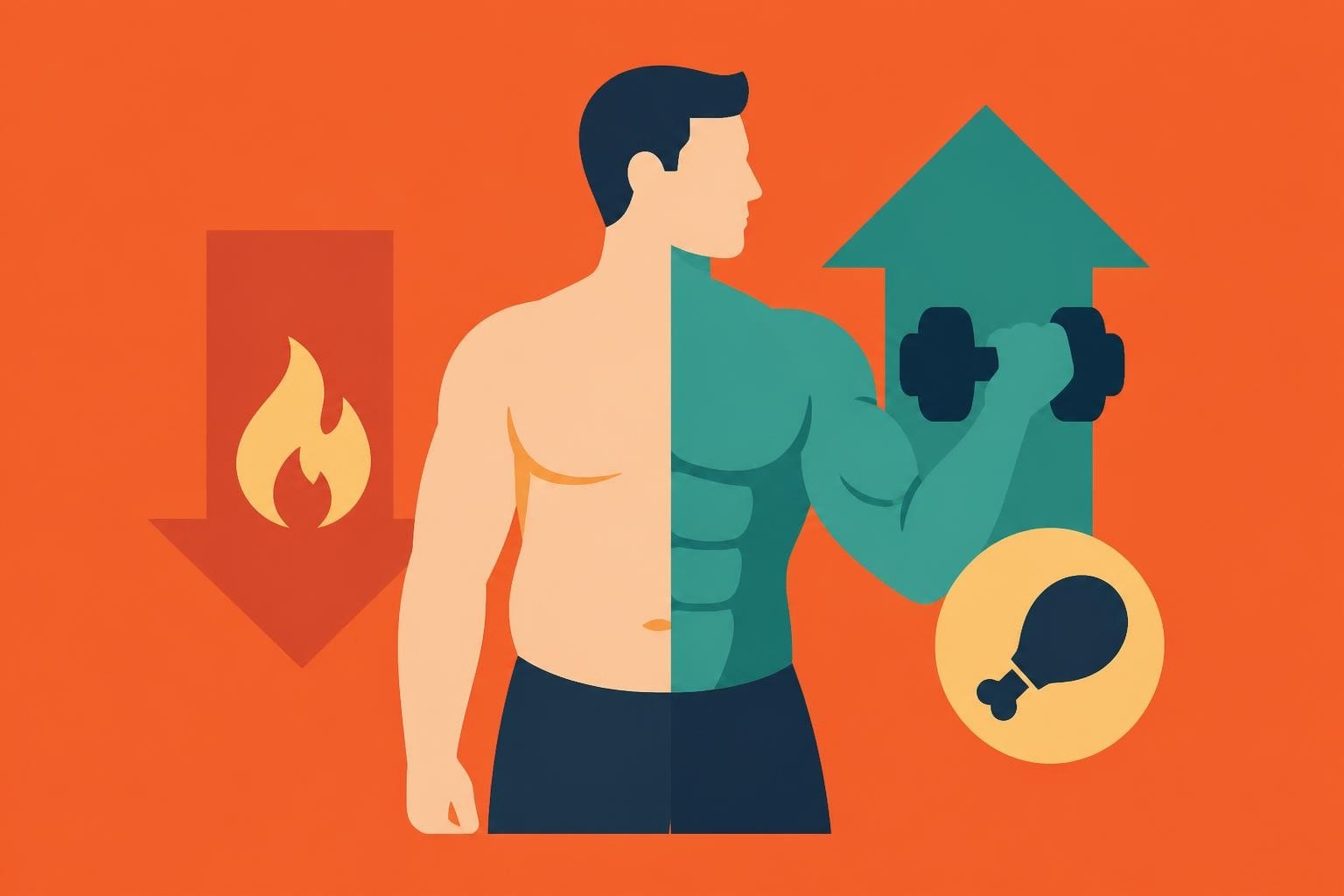
Lose Fat Gain Muscle: The Brotherhood Blueprint
Most men want the same outcome: visible muscle, less gut, strength that carries into real life. Yet they chase contradictory advice, spin their wheels, and lose momentum. The goal to lose fat gain muscle isn't complicated, but it requires understanding what most programs ignore: you're not fighting your body, you're aligning systems. This isn't about motivation. It's about building an environment where muscle growth and fat loss happen because you've removed the barriers. You need structure, accountability, and the discipline to execute basics without exception.
The Reality Behind Body Recomposition
Body recomposition is the simultaneous reduction of body fat and increase in lean muscle mass. Most training programs frame these as separate phases because it's easier to sell simplicity than teach systems thinking.Research on body recompositionshows it's not only possible but optimal for most men, especially those carrying excess fat or returning to training after time away.
The catch is this: recomposition requires precision where bulk-cut cycles allow sloppiness. You cannot outwork a broken nutrition plan. You cannot out-eat a training program with no progressive overload. The men who lose fat gain muscle consistently are the ones who treat their program like a non-negotiable duty, not a preference.
Who Can Achieve Simultaneous Fat Loss and Muscle Gain
Beginners see the fastest results because their bodies respond aggressively to new stimulus. Detrained lifters, those who've taken months or years off, regain muscle quickly through muscle memory pathways. Individuals carrying significant body fat have the metabolic advantage of stored energy reserves that fuel muscle growth even in a deficit.
Advanced lifters face the hardest battle. Their bodies adapted long ago, and margins for error shrink. But even here, proper periodization and nutrition timing allow for slow, steady recomposition. The variable isn't your training age. It's whether you're willing to execute with precision.
The Training Protocol That Drives Muscle Growth
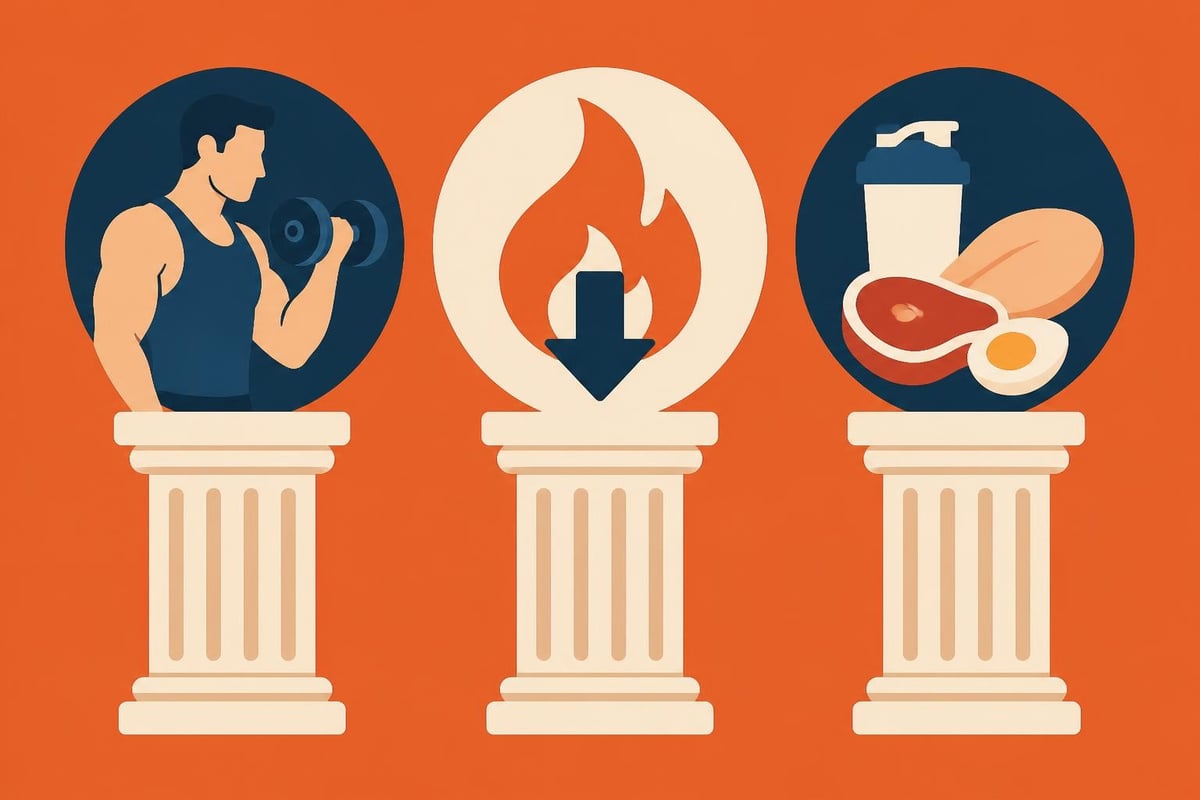
Resistance training with progressive overload is the only non-negotiable. You must consistently demand more from your muscles: more weight, more reps, more volume, or more intensity.Building muscle while losing fatrequires your body to prioritize muscle preservation and growth, which only happens when training sends a clear signal.
Three to five sessions per week works for most men. Full-body programs three times weekly provide adequate stimulus for beginners. Upper-lower splits four days weekly allow for higher volume per muscle group. Push-pull-legs programs work when recovery is managed properly.
Movement Selection and Volume Distribution
Compound movements form the foundation because they recruit the most muscle mass and create the highest metabolic demand:
Squat variationsfor lower body development and core stability
Deadlift patternsfor posterior chain strength and total-body tension
Pressing movements(bench, overhead, dips) for upper body pushing strength
Pulling movements(rows, pull-ups, lat work) for back development and shoulder health
Carry and loaded movementfor functional strength and work capacity
Volume should sit between 10-20 sets per muscle group weekly, distributed across your training frequency. More isn't better when you're in a deficit. Recovery capacity drops when calories are restricted. Push volume too high and you'll spin your wheels or regress.
Training ExperienceWeekly Sets Per MuscleSession FrequencyRest Between SetsBeginner (0-1 year)10-12 sets3 full-body90-120 secondsIntermediate (1-3 years)12-16 sets4-5 split60-90 secondsAdvanced (3+ years)15-20 sets4-6 split45-90 seconds
Nutrition Structure for Simultaneous Fat Loss and Muscle Gain
To lose fat gain muscle, you need a moderate caloric deficit paired with high protein intake. A deficit of 300-500 calories daily allows for fat loss while preserving the energy needed for training intensity and recovery. Aggressive cuts sacrifice muscle tissue and kill performance.
Protein becomes the priority macronutrient. Aim for 0.8 to 1 gram per pound of body weight daily. This provides the amino acids necessary for muscle protein synthesis while also increasing satiety and supporting metabolic rate.Harvard's guidance on fat lossemphasizes the role of muscle mass in boosting metabolism, and protein is the raw material.
Macronutrient Distribution and Timing
After protein, distribute remaining calories between carbohydrates and fats based on training volume and personal response. Men training four or more times weekly need adequate carbohydrates to fuel performance and replenish glycogen. Those with lower training frequency can afford higher fat intake for hormonal health and satiety.
Daily macro targets for a 200-pound man aiming to lose fat gain muscle:
Protein: 160-200 grams (640-800 calories)
Carbohydrates: 150-200 grams (600-800 calories)
Fats: 60-80 grams (540-720 calories)
Total: 1,780-2,320 calories
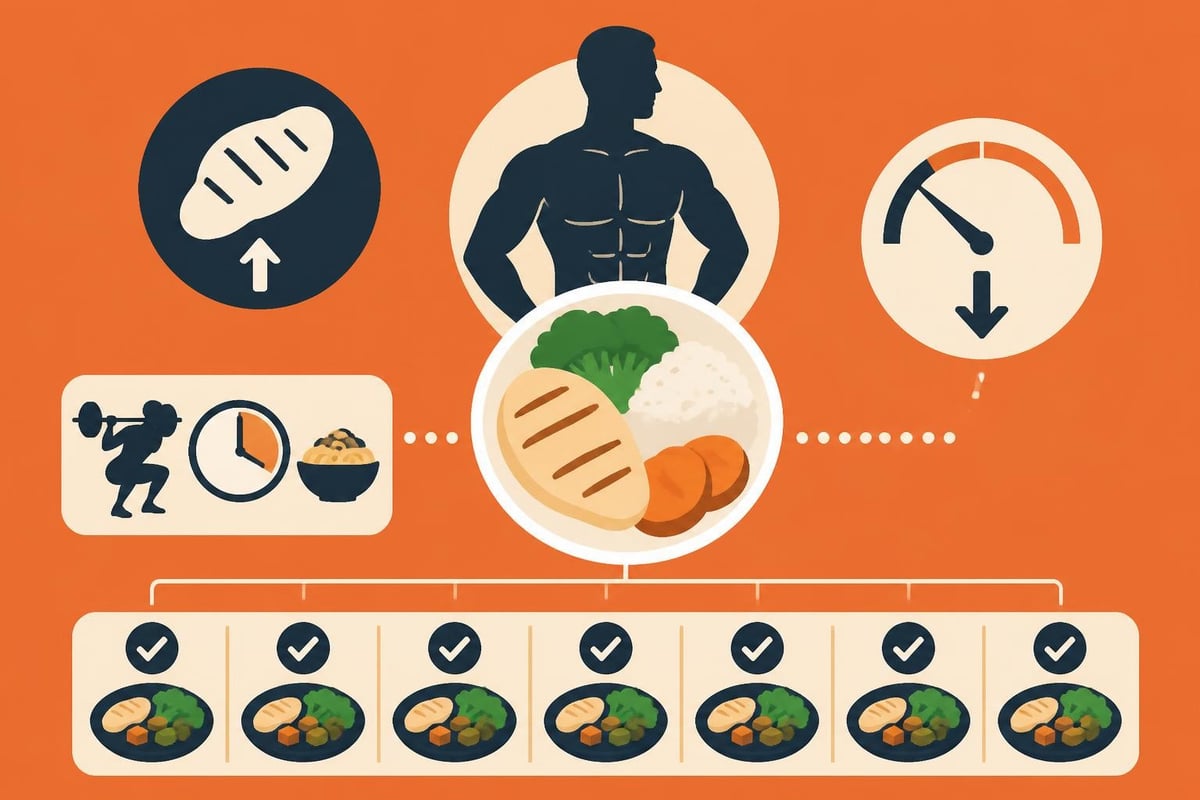
Nutrient timing matters less than total daily intake, but strategic placement improves performance. Consume 30-40 grams of protein within two hours post-training. Include carbohydrates around training sessions to support performance and recovery. Spread protein across four to five meals to optimize muscle protein synthesis throughout the day.
The Recovery Factor Most Programs Ignore
Sleep deprivation destroys your ability to lose fat gain muscle. Less than seven hours nightly elevates cortisol, reduces testosterone, impairs insulin sensitivity, and increases hunger signaling.Evidence on body recompositionconsistently shows that inadequate sleep undermines both fat loss and muscle growth regardless of training and nutrition quality.
Seven to nine hours of quality sleep nightly is the standard. Not the goal. The standard. If you're not hitting this consistently, fix your sleep before adding another training session or supplement. Create a dark, cool environment. Eliminate screens an hour before bed. Establish a consistent sleep and wake time, even on weekends.
Stress Management and Hormonal Health
Chronic stress elevates cortisol, which directly opposes your goal to lose fat gain muscle by promoting fat storage and inhibiting muscle protein synthesis. Men juggling careers, families, and training face this constantly. The answer isn't eliminating stress but managing your response and creating recovery windows.
Daily non-negotiables that support recovery:
Morning sunlight exposureto regulate circadian rhythm
Structured training timesto prevent decision fatigue
Planned rest dayswithout guilt or second-guessing
Breathing or meditation practicefor nervous system regulation
Weekly check-insto assess recovery markers and adjust volume
If you're a father over 35 navigating these pressures while trying to improve your body and leadership, structured accountability makes the difference. Working with experienced coaches who understand the unique demands on men in this season, like those offeringpersonalized guidance through The Father Forge, removes the guesswork and keeps you accountable when life gets chaotic.
The Measurement System That Drives Progress
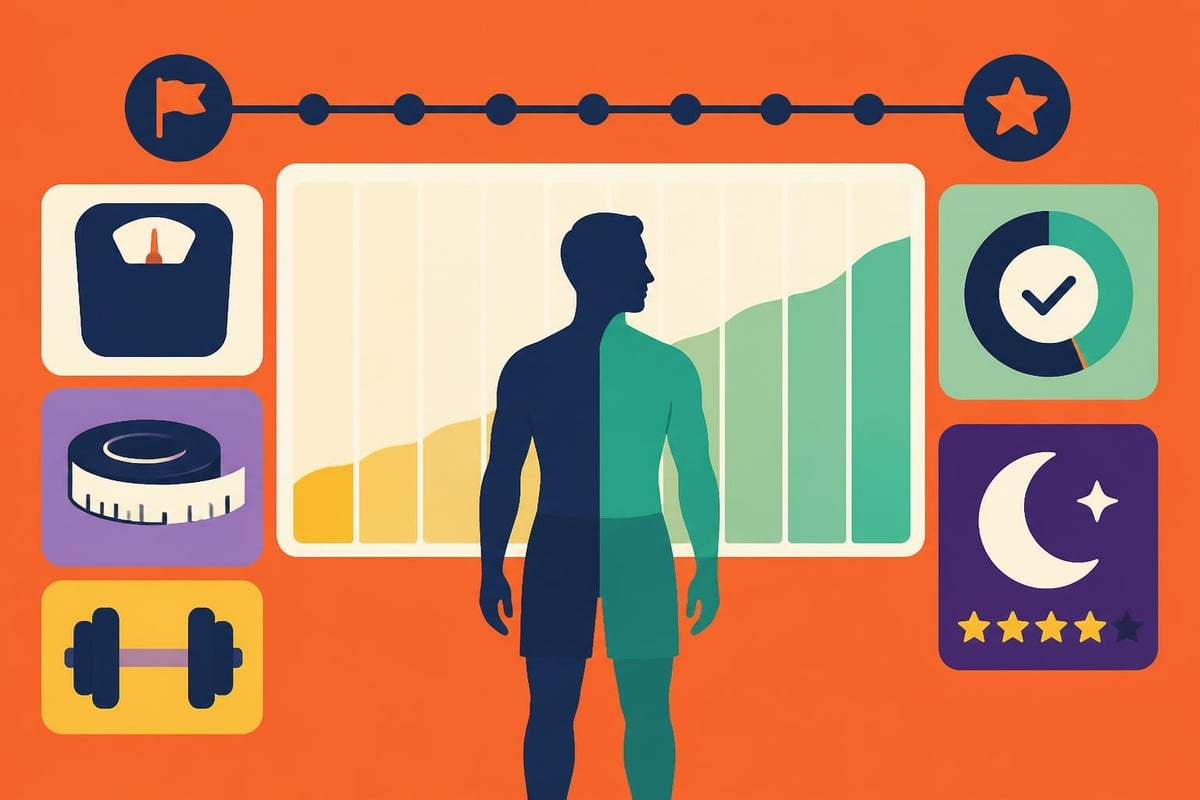
What gets measured gets managed. Track body weight daily, first thing after waking and using the bathroom. Calculate weekly averages to account for normal fluctuations from water, sodium, and digestion. A weekly average decline of 0.5-1% body weight indicates appropriate fat loss that preserves muscle.
Circumference measurements provide additional data. Measure waist at belly button, chest at nipple line, arms at mid-bicep, and thighs at mid-quad. Take measurements every two weeks under identical conditions. Waist declining while other measurements hold steady or increase confirms you're achieving body recomposition.
Performance Metrics and Strength Tracking
Strength progression validates that muscle tissue is maintained or growing.Understanding the difference between fat and muscleprevents the common mistake of thinking weight loss alone equals success. Log every working set: exercise, weight, reps, and perceived difficulty.
WeekSquat (lbs x reps)Bench Press (lbs x reps)Deadlift (lbs x reps)Body Weight (avg)1225 x 5185 x 6275 x 5210 lbs4235 x 5190 x 6285 x 5207 lbs8245 x 5195 x 7295 x 5204 lbs12255 x 5200 x 7305 x 5201 lbs
If strength stalls or declines, you're either underrecovering or pushing the deficit too hard. Adjust calories up by 100-200 daily and reassess after two weeks. If strength continues progressing while body weight decreases, you're on track.
Common Failures and How to Prevent Them
The biggest mistake is impatience. Men expect dramatic weekly changes because social media sells transformation timelines that ignore reality.Expert perspectives on losing fat while gaining muscleconfirm that visible recomposition takes months, not weeks. Set your expectations to 12-16 week blocks minimum.
Program hopping kills progress. Switching routines every few weeks prevents adaptation and eliminates the progressive overload necessary for growth. Commit to a structured program for at least eight weeks before evaluating results. If you're executing the basics correctly and not seeing progress, the problem is execution, not the program.
The Protein and Consistency Gap
Most men drastically underestimate protein intake and overestimate training consistency. Track everything for two weeks without changing behavior. You'll likely discover you're eating 60-70% of target protein and missing 20-30% of planned training sessions. These gaps compound over time and explain stalled progress.
Fix the consistency gap first:
Schedule training sessions like non-negotiable meetings
Prep protein sources in advance for the entire week
Build backup plans for disrupted schedules (home workouts, meal replacements)
Track adherence percentage weekly and address patterns
Accountability structures prevent these gaps. Whether through coaching, training partners, or community support found atThe Father Forge, external accountability forces honesty about execution.
The Mindset That Separates Results From Excuses
You either execute or you don't. There's no middle ground when the goal is to lose fat gain muscle. This isn't about motivation, which is emotional and unreliable. It's about duty to the standard you set for yourself. Every father understands duty in other contexts: showing up for your kids, fulfilling work obligations, maintaining your home. Apply that same frame to your physical development.
The men who succeed build environments that make execution easier than excuses. They prep meals on Sundays. They train at the same time daily. They go to bed at a set hour. They remove decision points that create friction.Cleveland Clinic's explanation of body recompositionemphasizes lifestyle consistency as the foundation for sustainable change.
Building the Brotherhood Environment
Isolation breeds excuses. Surrounding yourself with men pursuing similar standards creates pressure to maintain yours. This isn't about cheerleading or motivation. It's about normalizing the hard work and honest feedback that drives improvement.
Find or build a group where:
Standards are clear and non-negotiable
Feedback is direct and action-oriented
Success is measured in execution, not feelings
Accountability is mutual and consistent
This structure exists in military units, high-performing teams, and intentional communities.Men's Health research on simultaneous fat loss and muscle gainhighlights the role of social support in long-term adherence to training and nutrition protocols.
Adjusting the Program Based on Real Data
Every four weeks, assess three markers: body weight trend, strength progression, and circumference changes. If all three are moving in the right direction (weight down, strength up or stable, waist decreasing while other measurements hold), continue the current approach.
When progress stalls, identify the limiting factor systematically:
Strength declining, weight dropping fastindicates excessive deficit or insufficient protein
Weight stable, strength stable, no measurement changessuggests calories at maintenance (need slight deficit)
Weight increasing, strength progressing, waist increasingmeans surplus is too large
Fatigue high, recovery poor, performance decliningsignals overtraining or life stress overload
Make one adjustment at a time and allow two weeks for adaptation before changing again. Increase protein by 20-30 grams daily. Add or subtract 100-200 calories. Reduce training volume by 10-15%. Improve sleep consistency. Single-variable changes allow you to identify what works.
Issue IdentifiedFirst AdjustmentSecond Adjustment (if needed)Excessive fatigueAdd rest dayReduce volume 15%Strength declineIncrease calories 200Increase protein 30gNo fat lossDecrease calories 200Increase daily steps 2000Poor recoveryAdd 30min sleepReduce training frequency
The Long Game: Sustainable Body Composition
The goal isn't a 12-week transformation photo. It's building a body and lifestyle that serves your leadership, longevity, and capacity as a father. Quick fixes create rebound. Sustainable systems create permanent change. When you learn to lose fat gain muscle through disciplined execution rather than extreme measures, you develop skills that compound over decades.
Think in yearly blocks, not monthly sprints. Year one builds the foundation: consistent training, dialed nutrition, reliable sleep. Year two refines technique and pushes intensity. Year three optimizes based on how your body responds. By year five, you're operating at a level most men never reach because you stayed consistent while they chased trends.
Research from Live Science on fat loss and muscle gainconfirms that the most successful individuals treat body composition as a lifestyle component, not a temporary project. Your training becomes part of your identity, like being a father or professional. It's not something you do when motivated. It's who you are.
The ability to lose fat gain muscle simultaneously isn't genetic luck or secret programming. It's the outcome of precise execution across training, nutrition, recovery, and accountability. You need progressive resistance training, adequate protein in a moderate deficit, quality sleep, and honest tracking. Most importantly, you need an environment that holds you to the standard when excuses feel easier than execution.The Father Forgebuilds that environment through custom programming and structured accountability, designed specifically for fathers who lead at home and refuse to accept mediocrity in their physical development. The question isn't whether you can achieve body recomposition. It's whether you'll build the systems and accountability to make it inevitable.