
IGF-1 LR3: What Leaders Need to Know Before Use
IGF-1 lr3 is a synthetic analog of insulin-like growth factor-1 designed for research purposes, not human performance enhancement. Despite this, men over 35 looking for rapid muscle gain and fat loss frequently encounter igf-1 lr3 in online communities and underground markets. The compound's promise of amplified growth signaling without the short half-life of natural IGF-1 sounds compelling. The reality is that no regulatory body has approved igf-1 lr3 for human use, and the actual evidence base consists almost entirely of cell-culture studies and animal models. This article addresses what igf-1 lr3 is, how it differs from endogenous IGF-1, the mechanisms that make it attractive yet dangerous, and why choosing this compound reflects a leadership failure, not a tactical advantage. Leaders build sustainable strength through accountability and structure, not research chemicals with unknown long-term consequences.
What IGF-1 LR3 Is and How It Differs from Natural IGF-1
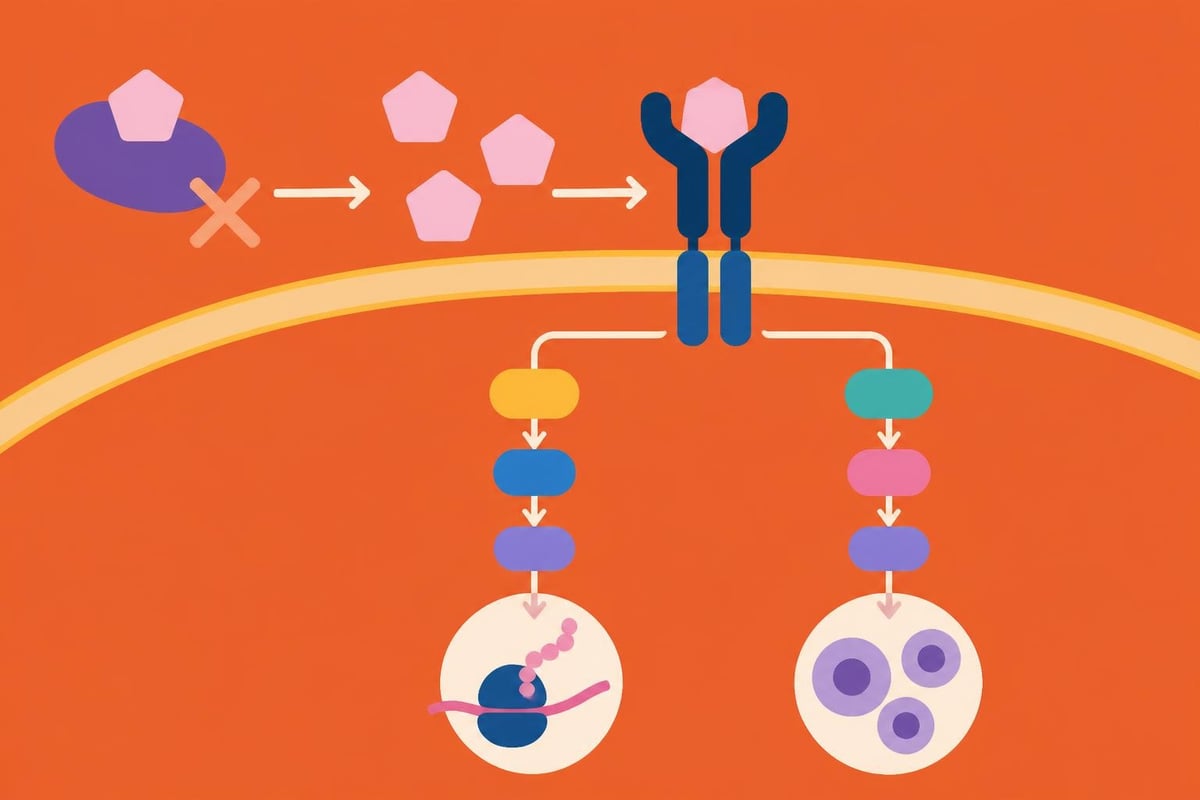
Natural IGF-1 is a peptide hormone produced primarily in the liver in response to growth hormone stimulation. It plays a central role in childhood growth, adult tissue repair, and anabolic signaling in muscle. IGF-1 circulates bound to carrier proteins called IGF-binding proteins (IGFBPs), which regulate its bioavailability and extend its half-life to approximately 12-15 hours. The IGF-1 signaling pathway involves receptor tyrosine kinases that trigger downstream cascades controlling protein synthesis, cell division, and glucose metabolism.
IGF-1 lr3 is a synthetic variant with three key modifications. First, an arginine-to-glutamic acid substitution at position three reduces binding affinity to IGFBPs by roughly 90%. Second, a 13-amino-acid N-terminal extension further blocks IGFBP interaction. Third, these changes extend the serum half-life to approximately 20-30 hours and increase potency at the IGF-1 receptor. The result is a peptide that remains unbound in circulation longer and exerts stronger anabolic effects per unit dose than endogenous IGF-1.
Why the Modifications Matter
Reduced IGFBP binding means:
Longer active circulation time without degradation
Higher free IGF-1 concentration at target tissues
Greater receptor occupancy and downstream signaling
Unpredictable accumulation with repeated dosing
The extended half-life is not a feature when dealing with a compound that has no established safe dose range in humans. You cannot titrate effectively when the pharmacokinetics are guesswork. Fathers over 35 often face this compound after exhausting patience with slower natural methods, but impatience is not a strategy. It is an abdication of the discipline required to build anything lasting.
Claimed Mechanisms and Laboratory Evidence
The primary appeal of igf-1 lr3 is its potent anabolic signaling. In cell culture and animal studies, the peptide has demonstrated increased protein synthesis, enhanced glucose uptake, and reduced protein breakdown in muscle cells. Research applications in bioprocessing confirm that LONG R3 IGF-I (the trade name for igf-1 lr3) effectively stimulates cell proliferation and productivity in mammalian cell lines, which is why it appears in bioreactor protocols. These findings are relevant to industrial biotechnology, not human performance.
Animal models show igf-1 lr3 increases lean mass and reduces fat mass when administered alongside training stimulus. Rodent studies document improved muscle fiber cross-sectional area, satellite cell activation, and faster recovery from induced muscle injury. None of these studies involved oral dosing, long-term safety monitoring, or endpoints relevant to mid-life men balancing family leadership and career demands.
Evidence Type | Key Findings | Applicability to Humans |
|---|---|---|
Cell culture | Increased protein synthesis, glucose uptake | No pharmacokinetic or toxicity data |
Rodent models | Enhanced lean mass, reduced adiposity | Dose extrapolation unreliable |
Bioprocessing | Improved cell line productivity | Industrial use, not clinical |
Human trials | None published | Zero approved indications |
The absence of human clinical trials is not an oversight. It is a data point. The regulatory pathway for peptide therapeutics requires multi-phase trials addressing safety, dosing, adverse events, and long-term outcomes. IGF-1 lr3 has never entered that pipeline because the risk-benefit calculation does not support it.
Why Men Seek IGF-1 LR3 and What It Reveals
Men in their late 30s and 40s face real physiological changes. Testosterone declines approximately 1-2% annually after age 30. Recovery slows. Fat accumulates despite consistent effort. Sleep quality degrades. The temptation to accelerate results through exogenous compounds is understandable. It is also a symptom of a deeper problem.
The decision to use igf-1 lr3 reveals a breakdown in several areas:
Absence of structured programming: Random workouts and inconsistent nutrition create the illusion that biology is the limiting factor when execution is the actual problem.
Lack of accountability: Without external structure or coaching, it becomes easy to rationalize shortcuts as efficiency rather than avoidance.
Misunderstanding of leadership: Fathers model decision-making for their children. Choosing research chemicals over disciplined effort teaches the wrong lesson.
The Father Forge exists because most men do not lack information. They lack structure, accountability, and a framework that integrates fitness with the broader responsibilities of fatherhood and leadership. Programs built on sustainable habits outperform shortcuts every time because they compound rather than collapse.
The Environment Problem
If you are considering igf-1 lr3, the information environment has failed you. Online forums and social media accounts present anecdotal logs as evidence, dosing protocols as safe, and risk disclaimers as formalities. The compound is framed as a tactical edge, not an unregulated research chemical with no human safety data.
Common claims you will encounter:
"IGF-1 lr3 is safer than traditional growth hormone because it targets muscle specifically."
"Low doses (20-40 mcg per day) minimize side effects while maximizing gains."
"Post-workout injection timing optimizes nutrient partitioning and recovery."
"Cycling 4 weeks on, 4 weeks off prevents receptor downregulation."
None of these claims are supported by peer-reviewed human studies. They are extrapolations from animal data, cell culture experiments, and user reports with no controlled variables. You are not a bioreactor. You are a father with responsibilities that extend beyond your physique.
Actual Risks and Regulatory Status
The performance-enhancing peptide review summarizes the regulatory context clearly: igf-1 lr3 is classified as a research chemical without approved human use. In the United States, it is not a controlled substance under the Controlled Substances Act, but it is illegal to market or distribute for human consumption. Possession for personal use exists in a legal gray zone that varies by jurisdiction.
Documented and Theoretical Risks
Immediate risks include:
Hypoglycemia due to enhanced insulin sensitivity
Edema and joint pain from fluid retention
Injection site reactions and infection risk
Tachyphylaxis (diminished response with repeated use)
Long-term and theoretical risks include:
Accelerated growth of existing tumors or pre-cancerous cells
Organ hypertrophy (heart, kidneys, intestines)
Insulin resistance paradoxically worsening with chronic use
Unknown cardiovascular effects over years of exposure
The pharmacology monograph notes that while short-term animal studies show anabolic benefits, no data exist on multi-year safety in humans. The IGF-1 receptor is ubiquitous. Stimulating it system-wide with a peptide engineered to evade normal regulatory mechanisms is not precision medicine. It is broad-spectrum intervention with unknown consequences.

Sourcing, Purity, and Practical Realities
IGF-1 lr3 is not available through legitimate pharmaceutical channels. Men source it from peptide suppliers operating in regulatory gaps, often based overseas. Technical specifications describe storage requirements (frozen, protected from light) and purity benchmarks (≥95% by HPLC), but consumer-facing suppliers rarely provide independent third-party testing.
Practical problems with unregulated sourcing:
No guarantee of compound identity or purity
Contamination with bacterial endotoxins or heavy metals
Mislabeling of concentration leading to overdosing
Inconsistent potency between batches or suppliers
Even assuming perfect purity, dosing igf-1 lr3 is guesswork. Animal studies use doses scaled to body weight, but interspecies pharmacokinetic differences make direct extrapolation unreliable. Online protocols recommend 20-100 mcg per day, but these figures are user-derived, not clinically validated. You are conducting an uncontrolled experiment on yourself with a peptide that has no established therapeutic window.
The logistical burden is also non-trivial. IGF-1 lr3 requires reconstitution with bacteriostatic water, refrigerated storage, subcutaneous or intramuscular injection, and rotation of injection sites to minimize scarring. This is not a supplement you add to your morning routine. It is a daily medical procedure performed without medical oversight.
What the Research Actually Says
The compiled research bibliography includes dozens of citations, nearly all focused on cell culture or animal models. The original Long-R3 IGF-I development aimed to improve cell culture media for biopharmaceutical production, not human therapy. Subsequent studies explored its effects on muscle, bone, and metabolic tissues in rodents, often in the context of disease models like diabetes or muscle wasting.
Key findings from the actual literature:
IGF-1 lr3 increases muscle protein synthesis and reduces protein degradation in cultured myoblasts and myotubes.
Rodent models show increased muscle mass and decreased fat mass with multi-week administration.
Glucose uptake in muscle and adipose tissue is enhanced, sometimes leading to hypoglycemia.
No published human trials exist in PubMed, ClinicalTrials.gov, or equivalent registries as of 2026.
The technical article on LR3 design traces the structural modifications back to Francis and colleagues in the early 1990s. The goal was creating a peptide that did not require IGFBPs for activity in serum-free culture. Success in that context does not imply safety or efficacy in living humans with complex endocrine feedback loops.
Why the Evidence Gap Matters
Leaders operate from data, not hope. When the evidence base consists of cell dishes and mice, extending the logic to a 40-year-old father with a mortgage and kids is professional negligence. You would not run a business based on assumptions unsupported by your market. You would not lead a team without understanding the systems you are modifying. The same standard applies to your biology.

Alternatives That Actually Build Long-Term Capacity
If you are considering igf-1 lr3 because progress has stalled, the real issue is not your IGF-1 levels. It is your programming, recovery, nutrition consistency, or accountability structure. These are solvable without research chemicals.
Evidence-based interventions for men over 35:
Progressive overload with compound movements: Squats, deadlifts, presses, and rows drive natural growth hormone and IGF-1 release when performed with adequate volume and intensity.
Protein intake at 1.6-2.2 g/kg body weight: Leucine-rich meals every 4-5 hours maximize muscle protein synthesis without exogenous peptides.
Sleep optimization to 7-9 hours nightly: Growth hormone pulses during deep sleep. Chronic sleep debt suppresses anabolic signaling more than any peptide can overcome.
Stress management and cortisol control: Elevated cortisol antagonizes IGF-1 signaling. Meditation, breath work, and scheduled recovery are non-negotiable.
For men seeking structured guidance without guesswork, 1-on-1 men's coaching provides personalized programming, nutrition planning, and weekly accountability with an experienced leader who has built systems for sustainable results. When you hire a coach, you are not paying for information. You are paying for the environment and accountability that compel execution.
Why Leadership Means Choosing the Hard Path
Choosing igf-1 lr3 is choosing to optimize for the next 12 weeks at the expense of the next 12 years. It prioritizes appearance over capacity, shortcuts over systems, and immediate validation over long-term health. That is not leadership.
Your children watch how you handle difficulty. They notice when you take the easy route and rationalize it. They internalize the message that results matter more than process, that the end justifies the means, that discipline is optional when things get hard. If you want to raise resilient, accountable children, you model those traits in every decision, including how you approach your own fitness.
Fathers over 35 carry unique responsibilities. You cannot afford extended recovery from an adverse event caused by an unregulated peptide. You cannot afford the cognitive dissonance of teaching your kids to avoid shortcuts while you experiment with research chemicals. You cannot lead from a place of compromised integrity.
Building Systems That Compound
The alternative to igf-1 lr3 is not settling for mediocrity. It is building systems that compound over years instead of collapsing after months. It is choosing the structure that produces results without creating dependency or risk. It is accepting that sustainable transformation requires time, accountability, and leadership, not chemicals.
Tracking platforms like Trimy can help optimize your digital marketing efforts if you're building a personal brand around your fitness journey, turning consistency into measurable growth signals. Similarly, businesses scaling their reach rely on infrastructure from MDO Digital to remove chaos and create structured growth. These are frameworks built for long-term performance, not quick fixes.
The parallel to fitness is direct. Systems that remove chaos and protect progress are worth more than any peptide. You need programming that accounts for your schedule, recovery capacity, and training age. You need nutrition that fits your lifestyle without requiring perfection. You need accountability that keeps you consistent when motivation fades. That infrastructure is what separates men who look good for a season from men who build strength that lasts.
IGF-1 lr3 is a research peptide with no approved human use, significant unknown risks, and an evidence base limited to laboratory models. The appeal is understandable, but the decision reflects a failure of structure and accountability, not a tactical advantage. Sustainable strength is built through disciplined execution, not shortcuts. If you are ready to build capacity that compounds over years instead of collapsing after months, The Father Forge offers the structure, accountability, and leadership required to transform not just your physique, but your ability to lead at home.