Gym Workouts That Build Strength and Leadership
Most men walk into the gym without a plan. They drift between machines, copy what they saw online, or repeat the same comfortable routines they've done for years. The problem isn't effort. It's the absence of structure, accountability, and a clear understanding of what effective gym workouts actually require. Training without a plan is hope disguised as work. You deserve better than that. Your family deserves a father who understands that the discipline you build under the bar translates directly to how you lead at home. Gym workouts are not just about aesthetics or performance. They are a laboratory for self-mastery, mental resilience, and the kind of consistency that defines real leadership.
Why Most Gym Workouts Fail Before They Start
The fitness industry sells convenience and quick fixes. Apps promise results in eight weeks. Influencers post highlight reels. Men absorb this noise and conclude that more information equals better results. It doesn't. The American College of Sports Medicine has published comprehensive resistance training guidelines for decades, yet gyms remain full of men who train hard but see minimal progress. The gap is not knowledge. It's the environment you create and the accountability structures you build around your training.
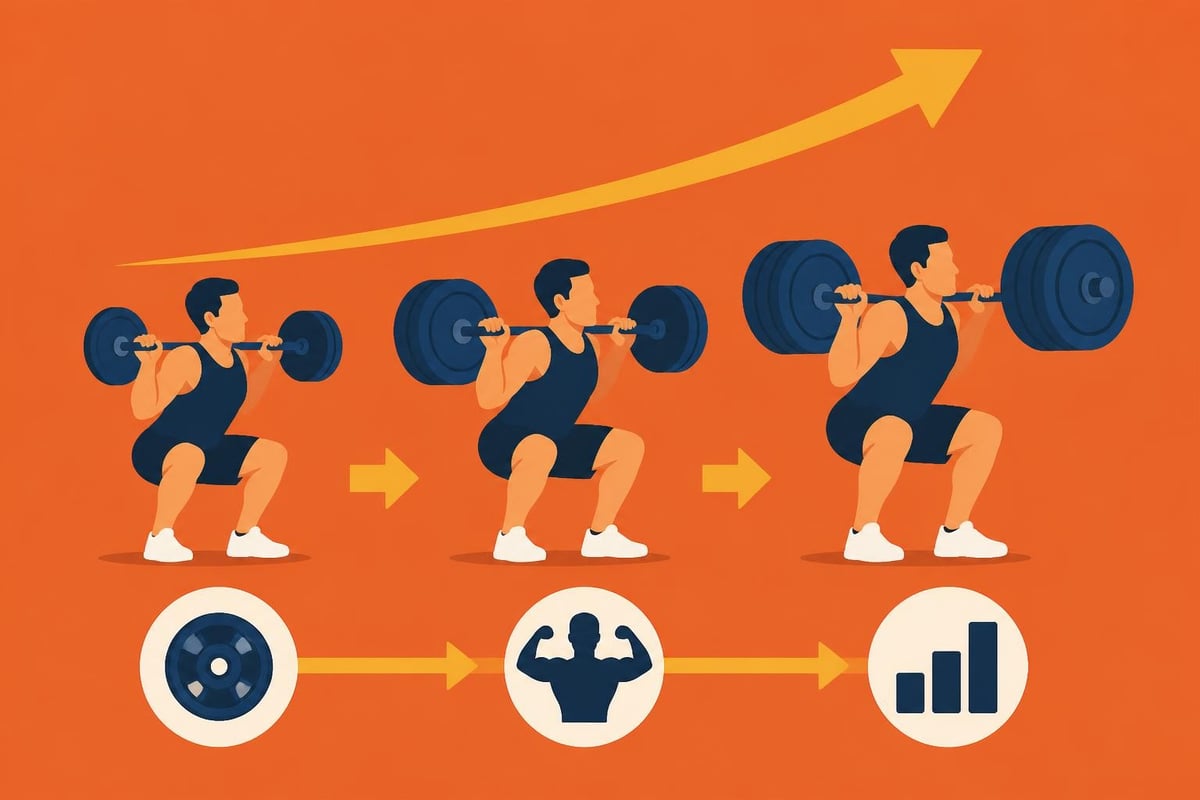
Effective gym workouts require three non-negotiable elements: progressive overload, intentional programming, and consistent execution. Progressive overload means you add stress over time in a measurable way. Weight, reps, sets, or tempo must increase. Programming means your workouts follow a logical sequence that balances volume, intensity, and recovery. Execution means you show up and do the work even when motivation is absent. Most men violate at least one of these principles every week, then wonder why their bench press hasn't moved in two years.
You also train in an environment filled with distractions. Phones, mirrors, conversations, and the urge to look busy instead of working hard. Leadership starts with eliminating what doesn't serve the mission. Every set should have a purpose. Every rep should be controlled and intentional. If you can't explain why you're doing an exercise or what adaptation you're chasing, you're wasting time.
The Foundation: Compound Movements and Primary Patterns
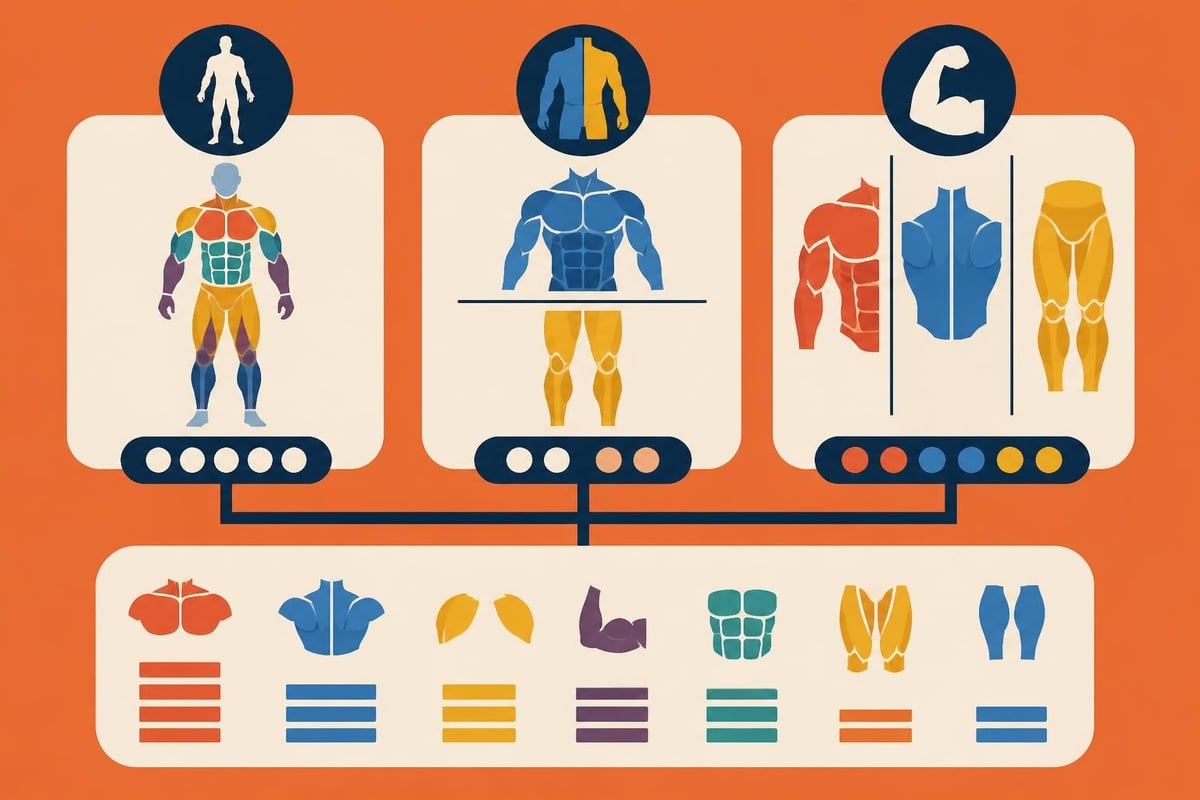
Gym workouts must prioritize compound movements. These exercises recruit multiple muscle groups, create systemic fatigue, and build functional strength that transfers outside the gym. The World Health Organization recommends muscle-strengthening activities at least twice per week for adults, but the type of activity matters. Isolation work has its place, but your foundation should be built on the following primary movement patterns:
Squat (bilateral lower body push)
Hinge (hip-dominant pull)
Horizontal press (bench press variations)
Vertical press (overhead press variations)
Horizontal pull (rows)
Vertical pull (pull-ups, lat pulldowns)
Carry (loaded carries, farmer walks)
These patterns address every major muscle group and movement plane. A well-designed program cycles through them with enough frequency to drive adaptation without causing injury. Frequency, volume, and intensity must be calibrated to your recovery capacity, training age, and life stress. A father working sixty hours a week with young children at home cannot train like a twenty-two-year-old college athlete. The goal is not to survive your workouts. It's to improve steadily while maintaining the energy and focus required to lead your family.
Volume and Intensity Guidelines
The 2026 ACSM position stand on resistance training provides clear recommendations for volume and intensity. For hypertrophy and strength, most men should target 10-20 sets per muscle group per week, spread across 2-4 sessions. Intensity should range from 60-85% of one-rep max for most working sets, with occasional exposure to heavier loads (85-95%) and lighter, higher-rep work (50-70%). Rest intervals should be 2-3 minutes for heavy compound lifts and 60-90 seconds for accessory work.
Training Goal | Sets Per Week | Intensity (% 1RM) | Rep Range | Rest Interval |
|---|---|---|---|---|
Strength | 12-20 | 80-95% | 1-6 | 3-5 min |
Hypertrophy | 10-20 | 60-80% | 6-12 | 60-90 sec |
Endurance | 8-15 | 50-70% | 12-20+ | 30-60 sec |
These are starting points, not rigid prescriptions. Individual response varies. Some men grow best with higher volume and moderate intensity. Others thrive on lower volume and heavier loads. The principle remains: track your work, apply progressive overload, and adjust based on results. Guessing is not a strategy.
Structuring Your Weekly Training Split
Gym workouts must fit into your life without dominating it. Three to five sessions per week is realistic for most fathers. Anything less makes it difficult to accumulate enough volume. Anything more often exceeds recovery capacity when you account for work stress, sleep disruption, and family obligations. Training splits organize your weekly volume by movement pattern or muscle group.
Full-body splits train all major patterns in each session. They work well for beginners and men who can only train three days per week. Volume per muscle group is lower per session but accumulates across the week. Recovery between sessions is easier to manage.
Upper/lower splits divide training into upper-body and lower-body days. Four sessions per week (two upper, two lower) is common. This allows higher volume per muscle group while maintaining adequate frequency. It's a balanced approach for intermediate lifters.
Push/pull/legs splits separate pushing movements (chest, shoulders, triceps), pulling movements (back, biceps), and lower body. Six sessions per week is typical, though you can run it over five days with rotating schedules. Volume and frequency are both high, making it suitable for advanced lifters with good recovery capacity.
Choose the split that fits your schedule and recovery. Consistency over intensity is the rule. A full-body plan executed three times per week for a year will deliver better results than an aggressive six-day split you abandon after two months. At The Father Forge, we build programs around your life, not the other way around, because sustainable progress requires alignment between your training and your actual responsibilities.
Sample Four-Day Upper/Lower Template
Here's a practical template for men who can train four days per week:
Day 1: Upper (Horizontal Focus)
Barbell bench press: 4 sets x 6-8 reps
Barbell row: 4 sets x 8-10 reps
Incline dumbbell press: 3 sets x 10-12 reps
Cable row variation: 3 sets x 12-15 reps
Dumbbell lateral raise: 3 sets x 12-15 reps
Tricep pushdown: 3 sets x 12-15 reps
Day 2: Lower (Squat Focus)
Back squat: 4 sets x 6-8 reps
Romanian deadlift: 3 sets x 8-10 reps
Walking lunges: 3 sets x 10 reps per leg
Leg curl: 3 sets x 12-15 reps
Calf raise: 4 sets x 15-20 reps
Day 3: Upper (Vertical Focus)
Overhead press: 4 sets x 6-8 reps
Pull-ups: 4 sets x max reps
Dumbbell bench press: 3 sets x 10-12 reps
Lat pulldown: 3 sets x 12-15 reps
Face pull: 3 sets x 15-20 reps
Barbell curl: 3 sets x 10-12 reps
Day 4: Lower (Hinge Focus)
Conventional deadlift: 4 sets x 5-6 reps
Front squat or goblet squat: 3 sets x 8-10 reps
Bulgarian split squat: 3 sets x 10 reps per leg
Leg extension: 3 sets x 12-15 reps
Farmer carry: 3 sets x 40 meters
This template balances volume across patterns, provides enough frequency (each muscle group trained twice per week), and allows modification based on equipment and individual needs. Progression comes from adding weight, reps, or sets every 1-2 weeks.
Conditioning and Cardiovascular Work
Gym workouts for strength are foundational, but conditioning matters for health, performance, and body composition. Research comparing HIIT and moderate-intensity training shows both are effective for fat loss and cardiovascular fitness, with HIIT offering time efficiency and metabolic benefits. The Physical Activity Guidelines for Americans recommend 150-300 minutes of moderate-intensity or 75-150 minutes of vigorous-intensity aerobic activity per week, in addition to muscle-strengthening work.
For most men, 2-3 conditioning sessions per week is sufficient. These can be:
Low-intensity steady state (LISS): 30-45 minutes at a conversational pace. Walking, cycling, rowing. Builds aerobic base, aids recovery, minimal interference with strength training.
High-intensity interval training (HIIT): 15-25 minutes of work/rest intervals. Sprint variations, bike intervals, rowing sprints. Improves VO2 max, burns calories, time-efficient.
Circuit conditioning: 20-30 minutes of mixed movements. Kettlebell swings, battle ropes, sled pushes. Combines strength endurance and cardiovascular stress.
Conditioning should support your strength work, not sabotage it. Excessive volume or poorly timed sessions can interfere with recovery and limit muscle growth. Place high-intensity conditioning at least 6-8 hours away from heavy lower-body sessions. Use lower-intensity work on rest days or after upper-body training.
Nutrition: The Non-Negotiable Partner to Training
No amount of gym workouts will overcome poor nutrition. Muscle growth requires a caloric surplus or maintenance with adequate protein. Fat loss requires a caloric deficit with high protein to preserve muscle. Harvard Health emphasizes that strength training combined with proper nutrition helps ward off chronic disease, improve metabolic health, and maintain functional capacity as you age.
Your protein target should be 1.6-2.2 grams per kilogram of body weight per day. For a 200-pound man, that's roughly 145-200 grams daily. Distribute it across 3-5 meals to optimize muscle protein synthesis. Carbohydrates fuel performance and recovery. Fats support hormone production and overall health. Total calories depend on your goal: surplus for muscle gain, deficit for fat loss, maintenance for recomposition.
Men often undereat protein and overestimate their calorie needs. Track intake for two weeks to establish a baseline. Adjust based on results. If strength is stalling and body weight is dropping, you're undereating. If body fat is climbing without strength gains, you're overeating or protein is too low. Precision matters.
Supplementation can fill gaps but never replaces food. Creatine monohydrate (5 grams daily) is evidence-backed for strength and muscle gain. Protein powder is a convenient protein source, not a magic formula. If you're evaluating supplements, platforms like DoseRank offer evidence-based rankings to help you identify products with proper dosing and reliable formulations. Omega-3s support inflammation management. Vitamin D if you're deficient. Everything else is optional.
Recovery: The Unsexy Truth About Progress
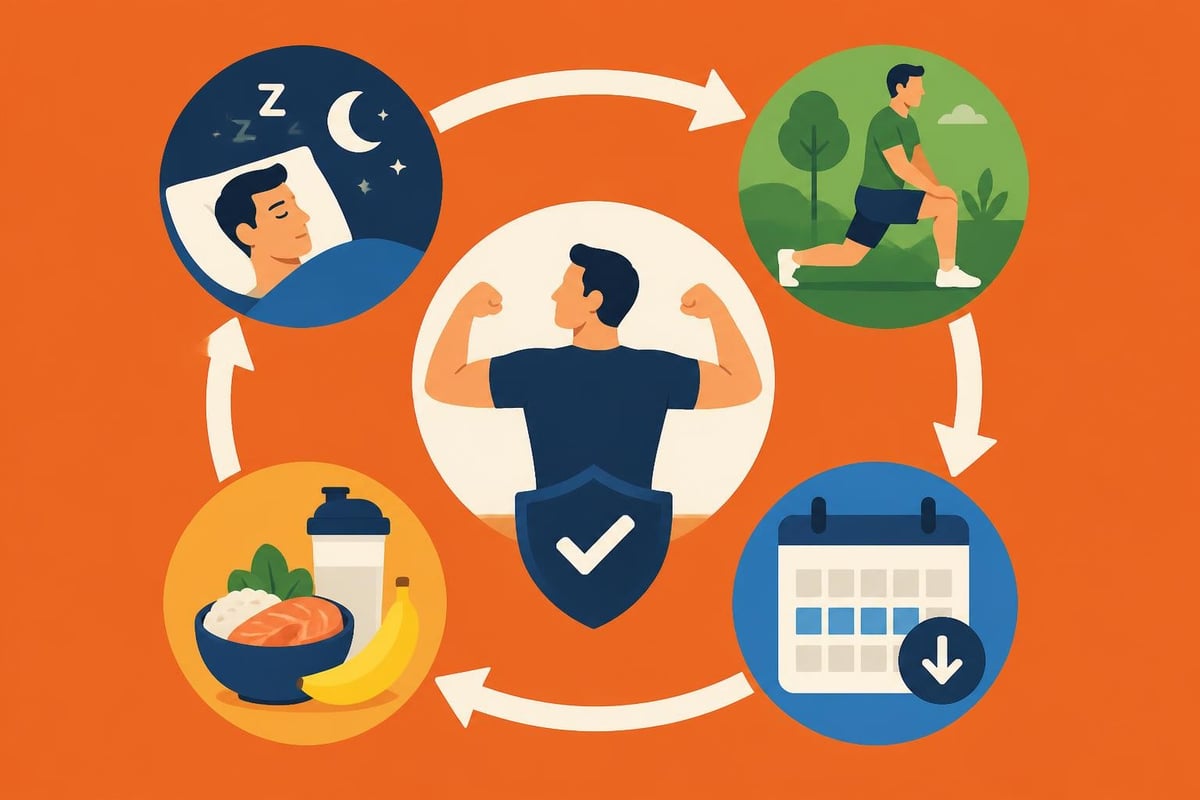
Adaptation happens during recovery, not during training. Gym workouts create stress. Sleep, nutrition, and rest turn that stress into strength, muscle, and improved performance. Most men neglect recovery because it feels passive. It's not. Recovery is active leadership over your biology.
Sleep is the primary recovery tool. Aim for 7-9 hours per night. Poor sleep disrupts hormone production, impairs recovery, and limits performance. If you're training hard but sleeping poorly, your results will plateau. Control what you can: consistent bedtime, dark room, limit screens before bed, manage stress.
Active recovery includes movement that promotes blood flow without adding stress. Walking, light stretching, mobility work. These sessions aid recovery and maintain movement quality. They're not optional on rest days if you're serious about long-term progress.
Deload weeks are planned reductions in volume or intensity every 4-6 weeks. They allow accumulated fatigue to dissipate and prepare your body for the next training block. Cut volume by 40-50% or reduce intensity while maintaining frequency. Your body will respond with renewed strength and better performance.
The Value of an Online Trainer and Structured Plan
Getting on a plan that works changes everything. Most men waste months or years cycling through random workouts, guessing at progression, and hoping effort alone will deliver results. It won't. Hiring an online trainer eliminates guesswork and provides the accountability structure most men lack when training alone. A qualified coach builds a program tailored to your schedule, equipment, and goals. They track your progress, adjust variables based on your response, and keep you moving forward when motivation fades.
The right coach also teaches you how to train, not just what to do. You learn movement mechanics, programming logic, and how to troubleshoot plateaus. This education compounds over time. You become a better athlete and a more disciplined leader. The investment in 1-on-1 men's coaching is not an expense. It's leverage. You trade a small financial cost for years of wasted effort avoided and faster progress toward becoming the man your family needs.
Coaching also builds brotherhood and accountability. Training alone is hard. Training with others who share your mission makes the work easier and the results more sustainable. Group coaching environments provide peer accountability, shared standards, and a culture that reinforces consistency. When you see other fathers showing up and doing the work, you show up too. It's not motivation. It's obligation to a standard you agreed to uphold.
Equipment and Training Environment
The gym you choose shapes your results. Commercial gyms work if they have the right equipment: barbells, racks, benches, dumbbells, and enough space to train without interruption. Avoid facilities that prioritize aesthetics over function or crowd the floor with machines and mirrors. You need weight, open floor space, and an environment that supports focused work.
Home gyms are a viable alternative for men who value control and convenience. A barbell, rack, bench, and adjustable dumbbells are enough to run effective gym workouts for years. Add a pull-up bar, plates, and resistance bands, and you have everything needed for full-body training. The upfront cost is higher, but the long-term ROI is undeniable. No commute, no waiting for equipment, and complete control over your environment. If you're building a home setup, Sideline Sport Supply provides reliable, affordable training essentials designed for athletes and coaches who prioritize function over flash.
Whether you train at a commercial gym or home, the environment must reinforce discipline. Remove distractions. Set your phone aside. Train with intent. Every session is an opportunity to build the mental resilience that defines leadership.
Tracking Progress and Adjusting Variables
You cannot manage what you do not measure. Gym workouts require a training log. Record exercises, sets, reps, weight, and how each session felt. Review your log weekly to identify trends. Are you adding weight or reps? Are certain lifts stalling? Is fatigue accumulating faster than usual? This data informs decisions.
When progress stalls, adjust one variable at a time. Add volume (sets or reps), increase intensity (weight or proximity to failure), improve technique, or add frequency. Do not change everything at once. You need to isolate what drives adaptation for your body. Most plateaus are caused by insufficient volume, poor recovery, or inconsistent execution, not the need for a new program.
Body composition and performance metrics matter more than scale weight. Take measurements, progress photos, and track strength benchmarks every 4-6 weeks. A 200-pound man who squats 315 for reps and has visible abs is not the same as a 200-pound man who struggles with 225 and carries excess body fat. The scale is a data point, not the outcome.
Mental Resilience and the Leadership Connection
Gym workouts build more than muscle. They build the capacity to endure discomfort, delay gratification, and execute a plan even when you don't feel like it. These are the same skills required to lead a family, manage a career, and show up as the man others depend on. The weight room is a laboratory for self-mastery. Every hard set is a test of your willingness to do what's required when it's required.
This mindset extends beyond training. Fathers who train consistently show their children what discipline looks like. They demonstrate that commitments are kept, that hard things are worth doing, and that excellence is the result of repeated, intentional effort. Leadership is not a speech. It's behavior over time. Your children watch how you show up, not what you say about showing up.
The Cochrane evidence on resistance training for older adults confirms that progressive resistance training improves physical function, independence, and quality of life well into later years. The work you do now doesn't just serve your present goals. It builds the foundation for decades of health, capability, and leadership. You owe it to yourself and your family to train like it matters, because it does.
Common Mistakes and How to Avoid Them
Men make predictable mistakes in the gym. Identifying and correcting them accelerates progress.
Chasing soreness instead of progression. Soreness is not an indicator of a good workout. Progressive overload is. If you're sore but not getting stronger, you're accumulating fatigue without adaptation.
Ignoring rest intervals. Rest too little and you can't recover between sets. Rest too long and session efficiency drops. Stick to the prescribed intervals. They matter.
Ego lifting. Using weight you can't control with good form to impress yourself or others. This leads to injury and limits muscle recruitment. Check your ego. Control the weight.
Program hopping. Switching programs every few weeks because you saw something new online. Consistency over time is what drives results, not variety.
Neglecting mobility and warm-up. Skipping warm-up sets or ignoring tight hips, shoulders, or ankles. Mobility work prevents injury and improves performance. Ten minutes before each session is non-negotiable.
Overcomplicating programming. Adding unnecessary exercises, supersets, or advanced techniques when basic progression would work. Simple plans executed well beat complex plans executed poorly.
Effective gym workouts require structure, accountability, and a commitment to consistent execution over time. They are not a distraction from your responsibilities as a father and leader. They are preparation for them. The Father Forge builds custom fitness and mindset programs designed around your life, your goals, and the leadership role you hold at home. If you're ready to stop guessing and start progressing, apply for coaching and build the strength, discipline, and resilience your family deserves.