Dumbbell Workouts: Build Real Strength at Home
You don't need a fully equipped gym to build real strength. Two dumbbells and a commitment to showing up are enough. The problem isn't access to equipment. The problem is men waiting for perfect conditions before they start. Dumbbell workouts strip away every excuse and force you to confront whether you're serious about getting stronger or just thinking about it.
Why Dumbbells Work When Other Equipment Doesn't
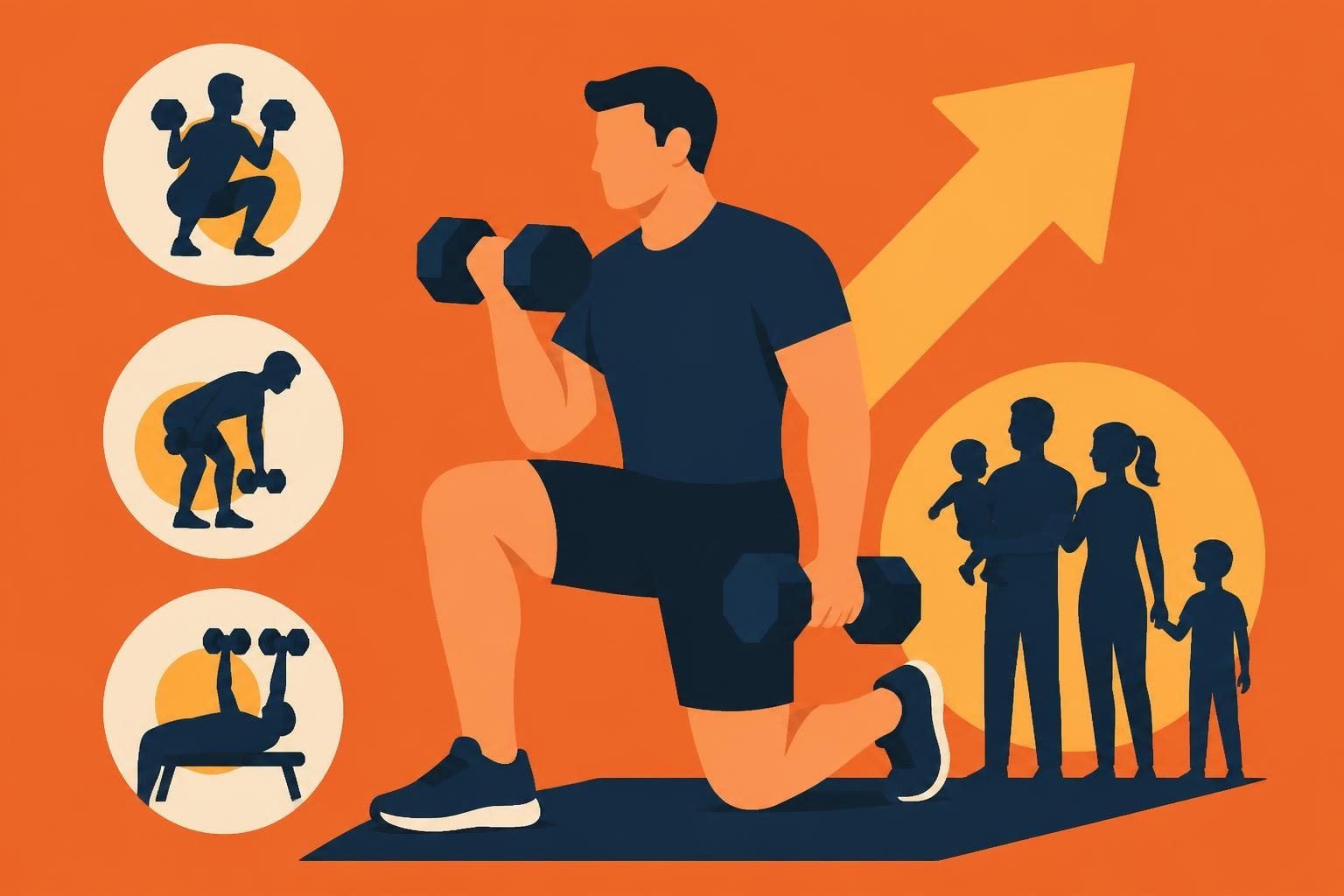
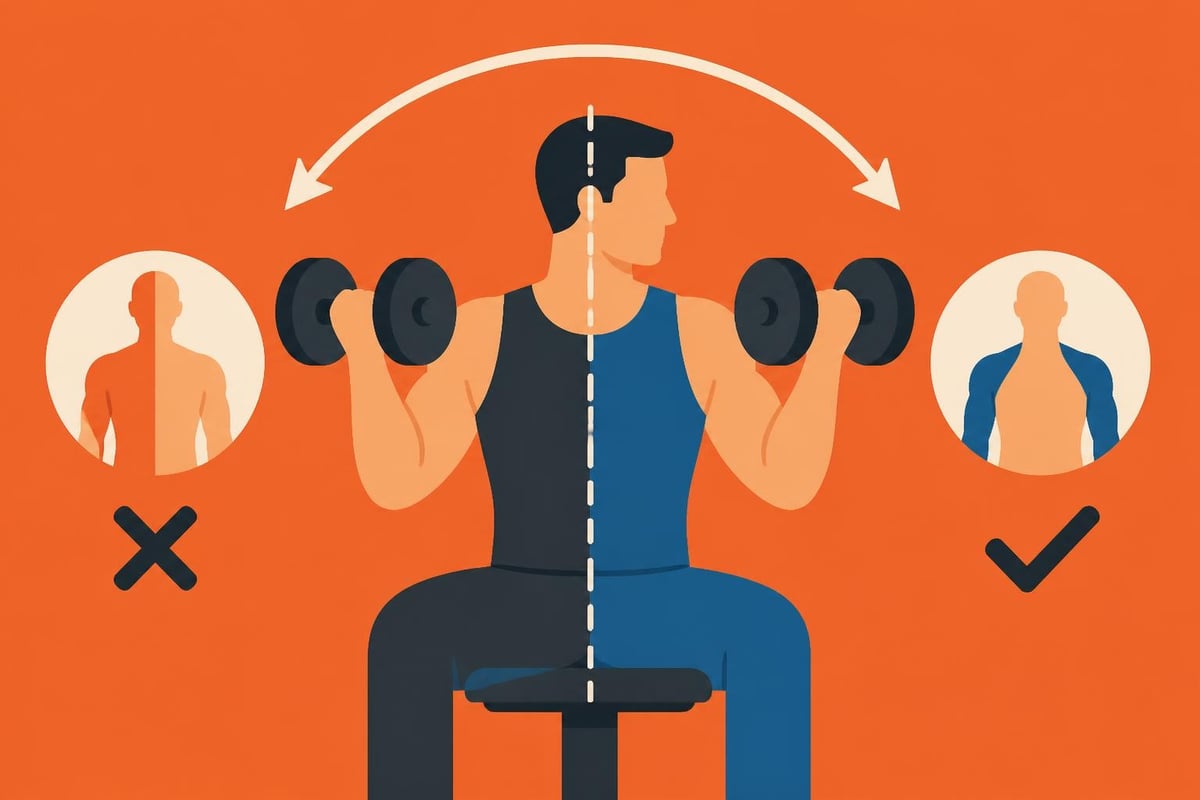
Dumbbells expose weaknesses that barbells hide. When you press a barbell, your dominant side compensates for your weak side. You can't cheat with dumbbells. Each arm carries its own load, which means muscle imbalances surface immediately.
The advantages compound quickly:
Unilateral training forces both sides to develop equally
Greater range of motion than barbells in most pressing movements
Stabilizer muscles activate harder to control independent weights
Space efficiency matters when you train in a garage or basement
Cost barrier drops to a few hundred dollars instead of thousands
Thebenefits of using dumbbellsextend beyond muscle building into cardiovascular health and metabolic improvement. This isn't about aesthetics. It's about building a body that serves you in every domain of life.
The Mental Discipline Component
Training with limited equipment builds resourcefulness. You can't hop between machines looking for novelty. You have one tool, which means you focus on mastering fundamentals instead of chasing variety. This mirrors leadership. Constraints force creativity and depth.
Essential Movement Patterns You Must Master
Every effective dumbbell program builds around six core patterns. Master these before adding complexity. Complexity without foundation is ego, not progress.
Movement PatternPrimary MusclesExample ExerciseCommon ErrorHorizontal PushChest, Triceps, ShouldersDumbbell Bench PressFlaring elbows excessivelyHorizontal PullBack, Biceps, Rear DeltsDumbbell RowUsing momentum instead of controlVertical PushShoulders, Triceps, Upper ChestOverhead PressArching lower backVertical PullLats, Biceps, Upper BackPulloverLimited by grip before back fatiguesHip HingeGlutes, Hamstrings, Lower BackRomanian DeadliftRounding the spineSquatQuads, Glutes, CoreGoblet SquatKnees caving inward
These patterns form the foundation of human strength. Everything else is variation. When you can execute all six patterns with control and full range of motion, you have a base worth building on.
Programming Around Limited Weight
Eventually, your dumbbells will feel light. This is where weak men buy more equipment and strong men get creative with programming. You don't need heavier weights immediately. You need to extract more stimulus from what you have.
Progression methods that work:
Increase time under tension with slower eccentrics (4-second lowering phase)
Add pauses at the most difficult position in each rep
Increase total volume through additional sets or reps
Decrease rest periods to elevate metabolic stress
Use unilateral variations to double the work per limb
Thecomprehensive dumbbell exercise guidecovers proper technique and training cues that separate effective training from wasted effort. Technique matters more as weights get lighter relative to your strength. Perfect reps build more muscle than sloppy heavy lifting.
Building Your Weekly Training Structure
Structure eliminates decision fatigue. You don't walk into your garage wondering what to do. You execute the plan. This requires thinking once per week, not every session.
A four-day split works for most fathers. Two upper body sessions, two lower body sessions, three rest days spread throughout. This provides adequate frequency without grinding you down when work and family already demand energy.
Upper Body Session A: Push Emphasis
Dumbbell Bench Press: 4 sets x 8-10 reps
Overhead Press: 3 sets x 10-12 reps
Incline Dumbbell Press: 3 sets x 12-15 reps
Lateral Raise: 3 sets x 15-20 reps
Tricep Extension: 3 sets x 12-15 reps
Rest 90-120 seconds between sets. Focus on control, not speed. Each rep should look identical to the previous one.
Lower Body Session A: Quad Dominant
Goblet Squat: 4 sets x 10-12 reps
Bulgarian Split Squat: 3 sets x 10-12 reps per leg
Dumbbell Step-Up: 3 sets x 12-15 reps per leg
Calf Raise (holding dumbbells): 4 sets x 15-20 reps
The burn in your legs will question your commitment. That's the point. Growth happens in discomfort.

Upper Body Session B: Pull Emphasis
Dumbbell Row: 4 sets x 8-10 reps per arm
Floor Press: 3 sets x 10-12 reps
Reverse Fly: 3 sets x 12-15 reps
Hammer Curl: 3 sets x 12-15 reps
Face Pull (using resistance band if available): 3 sets x 15-20 reps
Pull movements get neglected because they're less satisfying than pressing. This creates shoulder problems and postural dysfunction. Balance your training or pay the price later.
Lower Body Session B: Hip Dominant
Romanian Deadlift: 4 sets x 10-12 reps
Dumbbell Sumo Squat: 3 sets x 12-15 reps
Single-Leg Romanian Deadlift: 3 sets x 10-12 reps per leg
Glute Bridge (dumbbells on hips): 3 sets x 15-20 reps
Hip strength translates to real-world power. Picking up your kids, moving furniture, yard work. Train movements that matter outside the gym.
Progressive Overload Without Adding Weight
When your dumbbells max out, most men stall. They think progression requires heavier weights. This reveals a fundamental misunderstanding of adaptation. Muscles respond to mechanical tension, metabolic stress, and muscle damage. Weight is one variable among many.
Thestructured dumbbell workout programsdemonstrate how to continue progressing through volume and intensity techniques even with fixed loads. Your body doesn't know the number on the dumbbell. It knows the stimulus you create.
Progression MethodImplementationDifficulty RatingAdd RepsIncrease 1-2 reps per set weeklyEasyAdd SetsInclude one additional set monthlyEasyTempo Manipulation3-1-3-1 cadence (eccentric-pause-concentric-pause)ModerateDrop SetsImmediately reduce weight 20-30% at failureHardRest-Pause Sets15-second rest intervals within a single setHardIsometric Holds30-60 second holds at end of each setVery Hard
Rotate through these methods every 4-6 weeks. Your body adapts to consistent stimuli. Variation prevents adaptation while maintaining focus on core movements.
The Recovery Obligation
Training breaks down muscle. Recovery builds it back stronger. Men who ignore recovery obligations underperform men who honor them. This isn't optional.
Non-negotiable recovery elements:
Seven to eight hours of sleep nightly
Protein intake of 0.8-1.0 grams per pound of bodyweight
Strategic rest days that include light movement
Hydration at minimum half your bodyweight in ounces daily
Stress management through deliberate practice
Sleep deprivation tanks testosterone and growth hormone production. You can't out-train poor sleep. If you're choosing between an extra training session and an extra hour of sleep, choose sleep every time.
Common Execution Failures and Corrections
Most dumbbell workouts fail because of execution problems, not program design. The information exists. The accountability doesn't. You can watch perfect form videos all day and still perform terrible reps when no one's watching.
Form Breakdown Under Fatigue
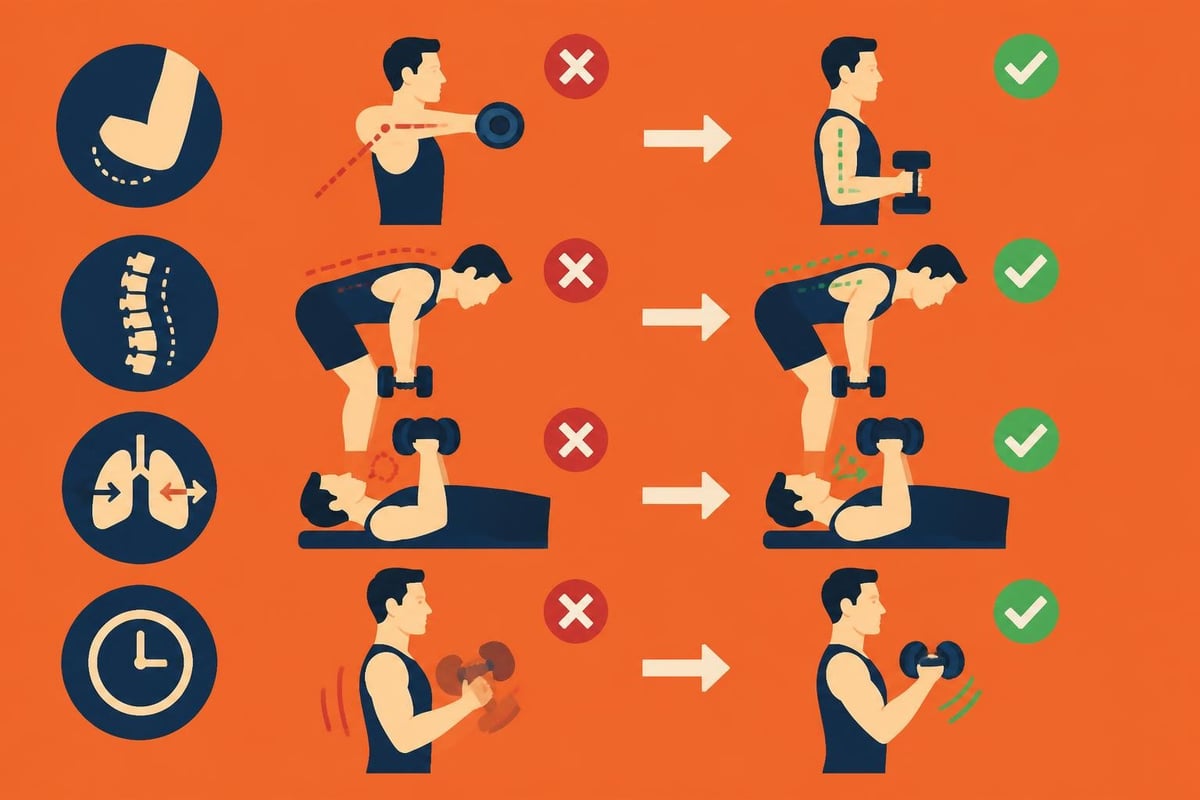
Form degrades fastest when fatigue sets in during the final reps of a set. This is precisely when injury risk peaks and muscle recruitment patterns break down. The solution isn't reducing weight. It's developing the discipline to stop one rep before form breaks.
Record your sets periodically. Watch them immediately after. You'll notice compensations you don't feel during execution. Your right shoulder hikes up. Your torso rotates to assist. Your tempo accelerates on rep eight compared to rep two.
Fix these or they become permanent movement patterns. Bad patterns under light weight become dangerous patterns under heavy weight.
Breathing Dysfunction
Men hold their breath during difficult reps. This creates dangerous blood pressure spikes and reduces power output. The pattern is simple: breathe in during the eccentric (lowering) phase, breathe out during the concentric (lifting) phase.
Your breath controls your nervous system. Controlled breathing keeps you in a state where you can generate maximum force safely. Erratic breathing signals stress and reduces performance.
Building Around Family Responsibilities
Theory means nothing without implementation. You have limited time, unpredictable schedules, and competing priorities. Your training must accommodate reality or it won't happen.
The Minimum Effective Dose
Twenty minutes of focused work beats sixty minutes of distracted effort. When time collapses, execute a condensed protocol. Three exercises, three sets each, minimal rest. Full-body compound movements only.
Emergency Protocol (under 20 minutes):
Goblet Squat: 3 sets x 12-15 reps
Dumbbell Row: 3 sets x 10-12 reps per arm
Floor Press: 3 sets x 12-15 reps
This maintains the training stimulus when life intervenes. It's not optimal, but it's infinitely better than skipping entirely. Consistency beats perfection.
Many fathers find structure and accountability throughThe Father Forge's group coaching community, which provides weekly calls and brotherhood support designed for men over thirty-five who need systems rather than motivation.
Training in Fifteen-Minute Blocks
Your training doesn't require continuous sixty-minute blocks. Three fifteen-minute sessions throughout the day accumulate the same volume. Morning session before kids wake. Lunch break session. Evening session after dinner.
This approach requires more discipline, not less. It's easier to carve out one hour than to show up three separate times. But when one hour doesn't exist, three fifteen-minute blocks do.
Advanced Dumbbell Techniques for Experienced Lifters
Once you've built a foundation, these techniques create new adaptation stimuli. Don't attempt them as a beginner. Master the basics first.
Mechanical Drop Sets
Execute exercises in order of difficulty without rest. Start with the hardest variation, move to easier variations as fatigue accumulates. Example for shoulders: overhead press to high pull to lateral raise. One continuous set, three exercises, dumbbells never touch the ground.
This creates intense metabolic stress and extreme muscle fatigue. Use sparingly, typically as a final set after standard working sets.
Compound Sets for Time Efficiency
Pair two non-competing exercises back-to-back. Upper and lower body, or push and pull movements. Rest only after completing both exercises. This doubles your work capacity in the same timeframe.
Example pairing: Dumbbell row immediately followed by goblet squat. The exercises don't interfere with each other's performance because they target different muscle groups and movement patterns.
Thedetailed home dumbbell workout protocolsdesigned for strength athletes demonstrate how to maintain and build capacity with minimal equipment. These aren't fitness model routines. They're designed for men who understand training as a long-term practice.
Nutrition Integration for Muscle Development
Training provides the stimulus. Nutrition provides the building materials. You can't build a house without lumber regardless of how good your blueprint is. Same principle applies to muscle.
MacronutrientTarget RangePrimary SourcesTiming ConsiderationsProtein0.8-1.0g per lb bodyweightChicken, beef, eggs, fishDistribute evenly across 3-4 mealsCarbohydrates1.5-2.5g per lb bodyweightRice, potatoes, oats, fruitPrioritize around training sessionsFats0.3-0.5g per lb bodyweightOlive oil, nuts, avocado, butterLimit pre-training, include with other meals
These ranges support muscle growth while maintaining energy for life outside the gym. Adjust based on response. Some men require more carbohydrates for recovery. Others function better with higher fat intake.
The Protein Distribution Reality
Spreading protein across multiple meals optimizes muscle protein synthesis better than consuming it all at once. Four meals with thirty to forty grams each beats two meals with seventy grams each. Your body has a ceiling for protein utilization per meal.
This doesn't mean you need complex meal timing protocols. It means eating regular meals instead of fasting until dinner then gorging. Consistency in meal patterns supports consistent recovery and growth.
Tracking Progress Without Obsession
Data serves training. Training doesn't serve data. Track what matters: weight used, reps completed, how you felt during execution. Ignore what doesn't: daily weight fluctuations, muscle pump size, social media validation.
Minimal viable tracking:
Exercise name
Sets completed
Reps per set
Weight used
Brief performance notes
Review weekly to identify trends. Monthly to adjust programming. This takes three minutes after training. Anything more elaborate is procrastination disguised as productivity.
Strength Markers to Monitor
Track specific benchmark exercises monthly. These provide objective progress indicators beyond subjective feelings. Dumbbell bench press max reps with a specific weight. Goblet squat depth with a standard load. These numbers either improve or they don't.
When numbers stagnate for six to eight weeks despite proper execution, change something. Adjust volume, modify exercise selection, or address recovery deficits. Stagnation reveals a problem requiring correction.
Equipment Selection and Home Gym Setup
Quality matters more than quantity. Two pairs of adjustable dumbbells covering a range from five to fifty pounds per hand serve most men for years. Thecomprehensive approach to effective dumbbell movementsworks with minimal equipment when exercise selection and programming are sound.
Adjustable vs Fixed Weight
Adjustable dumbbells save space and money. Fixed weight dumbbells feel better and allow faster weight changes. Neither choice is wrong. Both work if you use them consistently.
For home gyms with space constraints, adjustable dumbbells are the practical choice. For dedicated training spaces with room to expand, gradually building a fixed weight collection makes sense.
Additional useful equipment that enhances dumbbell training: adjustable bench for incline and decline work, pull-up bar for vertical pulling, resistance bands for assistance and variety. Total investment under one thousand dollars for a complete setup.
Dumbbell workouts deliver results when executed with consistency and proper programming. The equipment is simple, the movements are fundamental, and the barrier to starting is minimal. What separates men who build strength from men who talk about it is accountability and action.The Father Forgeprovides custom fitness programming and mindset coaching designed specifically for fathers who refuse to accept decline as inevitable, building not just muscle but leadership capacity that transforms every area of life.