Core Workouts: Build Strength and Leadership From the Center
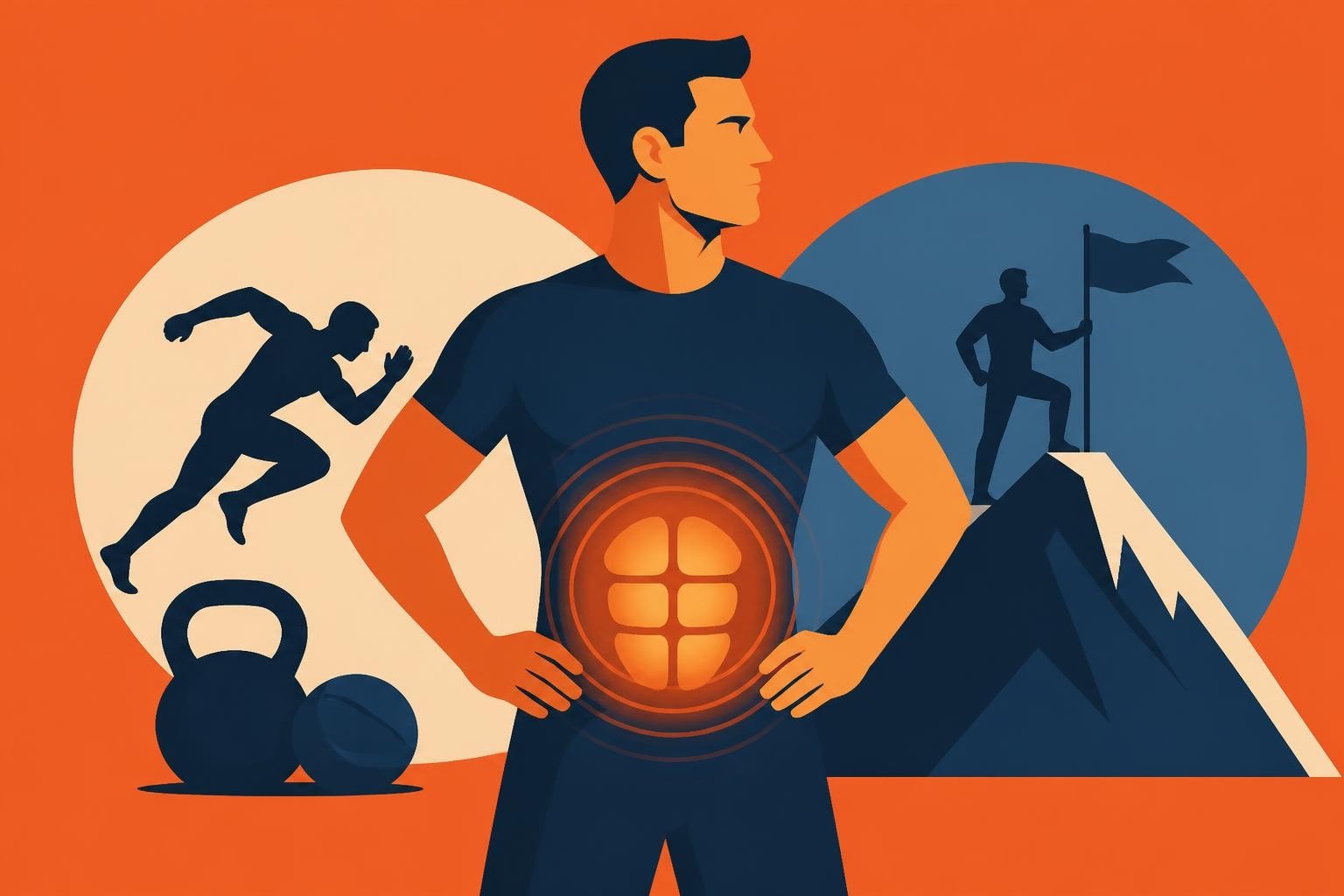
Core workouts are not optional maintenance for men who lead. They are foundational training for physical capacity, injury resilience, and long-term mobility. Yet most men treat them as an afterthought, tacked onto the end of a session when energy and focus are depleted. That is a symptom of misunderstanding what the core actually does. It is not a six-pack. It is the structural center that transfers force, protects the spine, and enables every movement from lifting a barbell to carrying a child. When you neglect this system, you compromise everything built on top of it. Training the core is an obligation, not a preference, and it requires the same strategic planning as any other performance goal.
What the Core Actually Does
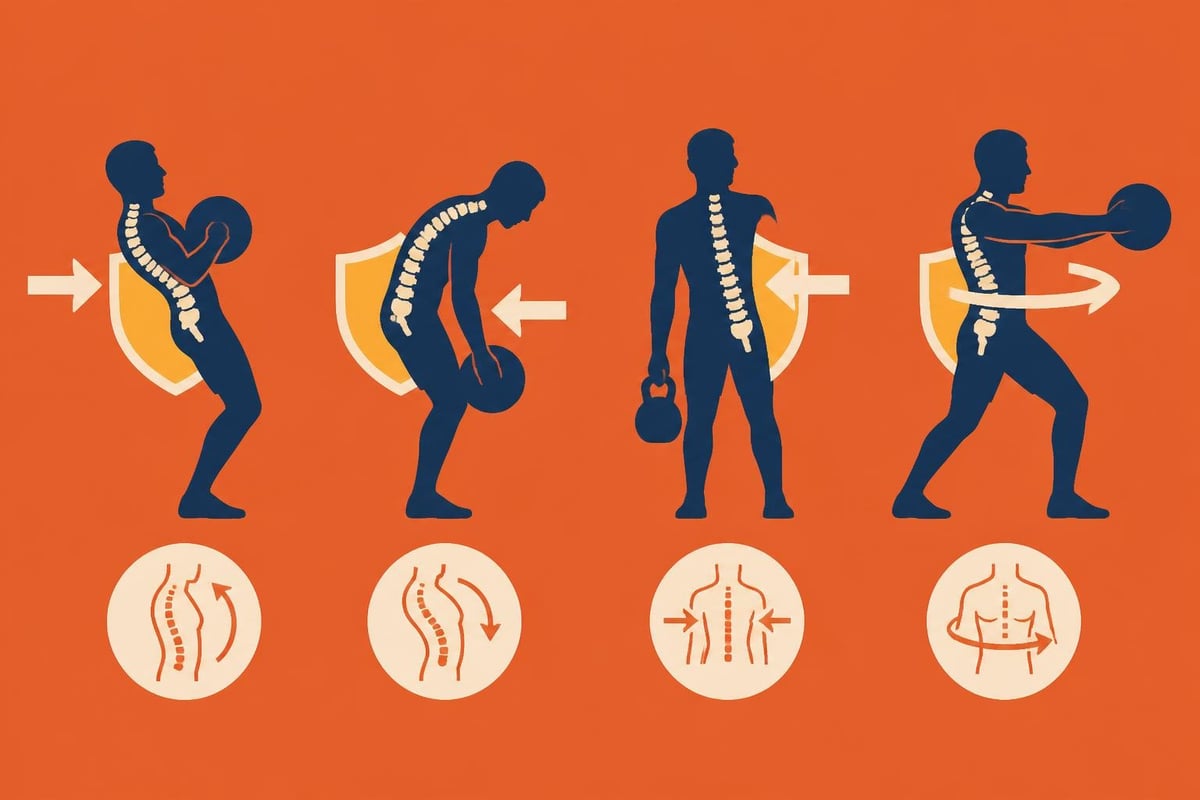
The core is not your abs. It is a three-dimensional system of muscles that stabilize the spine, pelvis, and ribcage during movement. This includes the rectus abdominis, obliques, transverse abdominis, erector spinae, quadratus lumborum, pelvic floor, and diaphragm. These muscles work together to resist unwanted motion, transfer force between upper and lower body, and maintain spinal position under load.
Understanding function changes programming. If you think the core exists to flex the trunk, you will do endless crunches and wonder why your lower back still fails under a heavy deadlift. The truth is that most core muscle activation occurs during anti-movement tasks, resisting flexion, extension, lateral bending, and rotation. A plank trains more relevant strength than a sit-up because it builds the endurance to maintain neutral spine position, which is what you need in real life and real training.
Primary Functions of Core Stability
Anti-extension: Resisting lumbar hyperextension during overhead pressing, running, or anterior load carries
Anti-flexion: Maintaining spinal position under posterior chain load like deadlifts and back squats
Anti-lateral flexion: Preventing side-to-side collapse during single-leg movements or unilateral carries
Anti-rotation: Resisting rotational forces during throws, swings, or asymmetric loading
Force transfer: Linking lower body power generation to upper body application in athletic movements
The core does not generate movement as much as it controls the platform from which movement happens. That is why structured core training consistently shows benefit for chronic low back pain, not because it makes your abs stronger, but because it teaches your nervous system to stabilize under varied loads and positions.
Programming Principles for Core Development
Core workouts should follow the same programming logic as any strength training block. That means progressive overload, exercise variety, adequate volume, and appropriate recovery. The mistake most men make is treating core work as punishment or filler, grinding through high-rep burnout sets with no plan for progression.
Start with the baseline question: can you hold a plank with good position for 60 seconds? Can you perform a dead bug without your lower back arching off the floor? Can you carry half your bodyweight in one hand for 40 yards without leaning? These are not advanced tests. They are minimum standards. If you cannot pass them, your core is a structural liability, and every heavy lift or sprint carries unnecessary risk.
Building a Balanced Core Program
A complete program addresses all planes of motion and all anti-movement patterns. Here is a framework used in performance-focused clinical protocols:
Training Category | Example Exercises | Primary Function | Sets x Reps/Time |
|---|---|---|---|
Anti-Extension | Plank, ab wheel rollout, dead bug | Resist lumbar hyperextension | 3-4 x 30-60s or 8-12 reps |
Anti-Flexion | Bird dog, back extension, Superman hold | Maintain neutral spine under posterior load | 3-4 x 30-45s or 10-15 reps |
Anti-Lateral Flexion | Side plank, suitcase carry, single-arm overhead carry | Prevent lateral collapse | 3-4 x 20-40s per side |
Anti-Rotation | Pallof press, half-kneeling chop, single-arm row | Resist rotational torque | 3-4 x 8-12 reps per side |
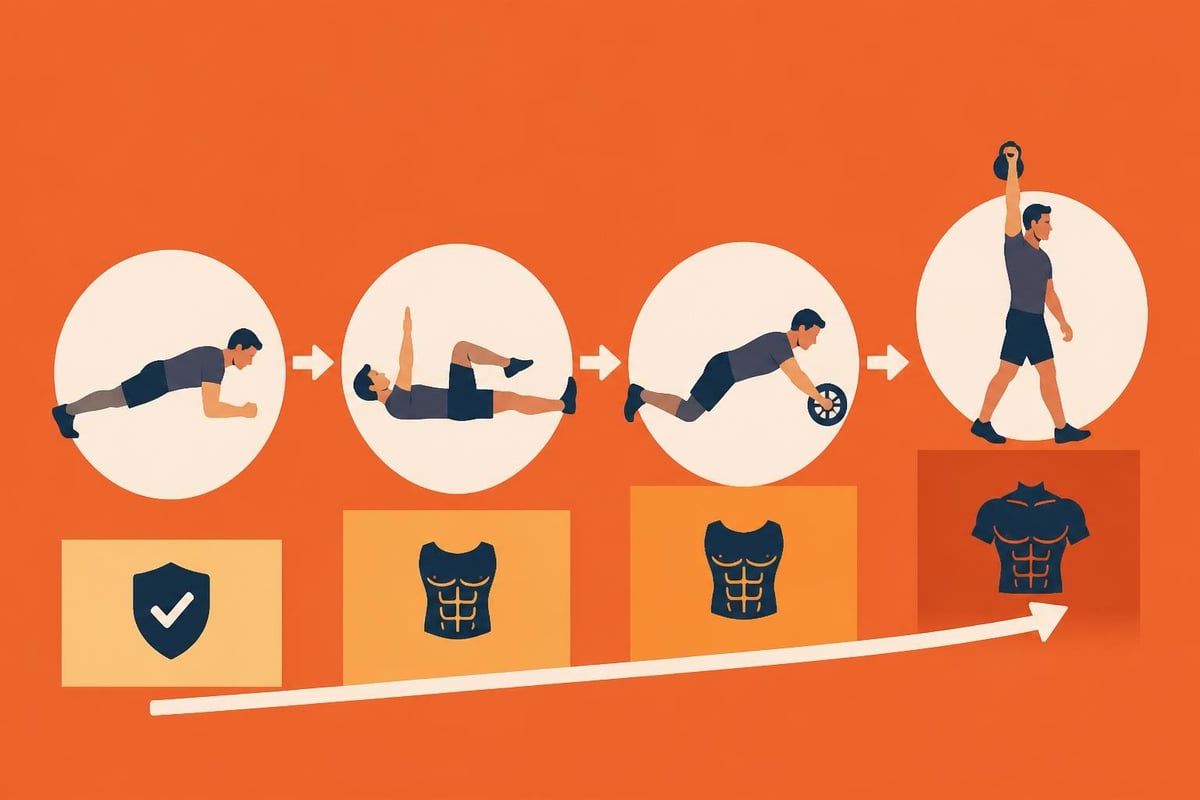
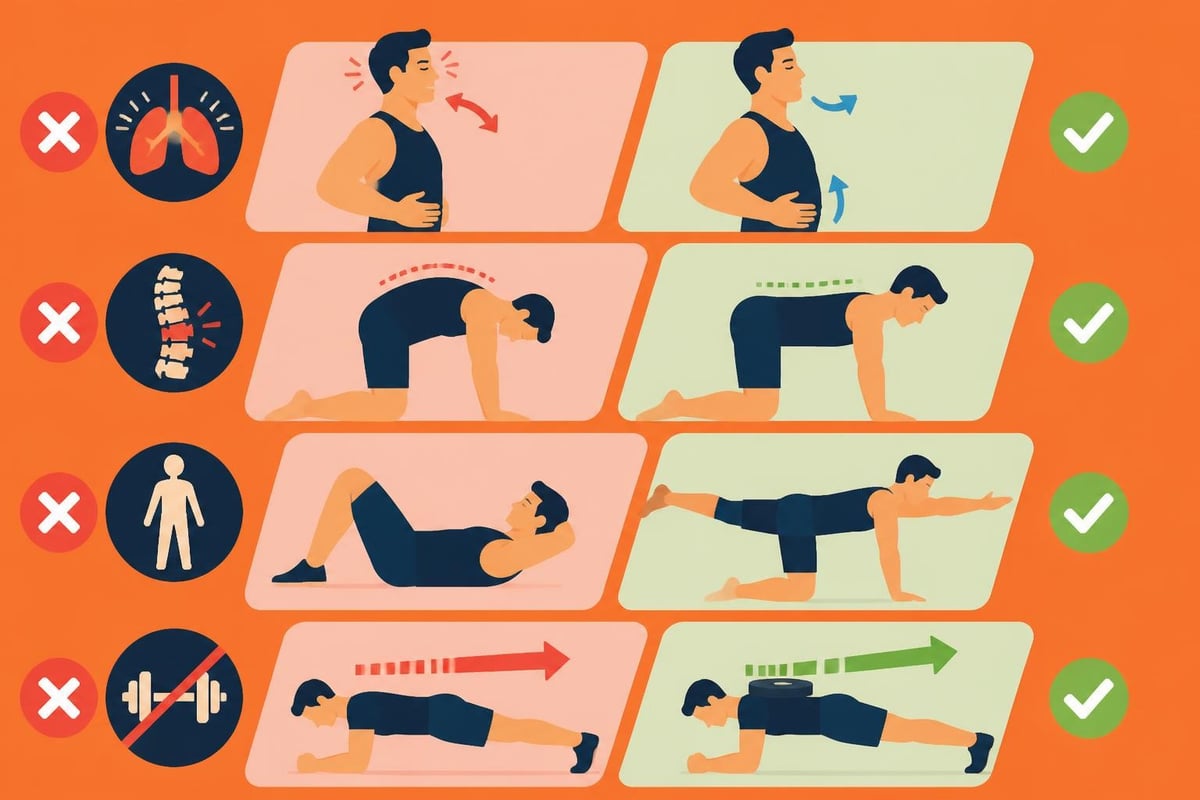
Progression is not adding reps indefinitely. It is increasing time under tension, reducing stability, or adding external load. A plank progresses to a plank with arm reach, then to a plank on a stability ball, then to a loaded plank with a weight vest. A Pallof press progresses by increasing band tension, moving farther from the anchor, or performing it in a split stance instead of half-kneeling.
Frequency matters. Core muscles recover quickly because they are postural muscles designed for sustained low-level activation throughout the day. Training them 3-4 times per week is appropriate for most men. Volume should be distributed across sessions, not crammed into one brutal Friday finisher that leaves you unable to brace properly for the next three days.
Exercise Selection and Execution Standards
Not all core exercises are created equal. Some build transferable strength. Others just make you tired. The difference is whether the movement pattern resembles the demands you face under load or in life. Crunches do not transfer to a safer deadlift. Planks and carries do.
High-Value Core Exercises
Dead Bug: Lie on your back, arms extended toward the ceiling, knees bent at 90 degrees. Lower opposite arm and leg toward the floor while maintaining lower back contact with the ground. This trains coordinated anti-extension and teaches the core to stabilize while limbs move independently. Common error is allowing the lower back to arch. The fix is slowing down and reducing range of motion until you can control the position.
Pallof Press: Anchor a resistance band at chest height. Stand perpendicular to the anchor, hold the band with both hands at your chest, and press straight out. The band tries to rotate your torso toward the anchor. You resist. This is pure anti-rotation work. Progress by stepping farther from the anchor or using a heavier band. Do not let your shoulders shrug or your hips rotate. The torso stays square.
Farmer Carry: Pick up heavy dumbbells or kettlebells and walk. This trains anti-lateral flexion and anti-rotation simultaneously while building grip strength and work capacity. The load tries to pull you sideways. You stay upright. Use enough weight that the challenge is genuine but not so much that you cannot maintain posture. A common standard is half bodyweight per hand for 40 yards without leaning.
Ab Wheel Rollout: Kneel on a pad with an ab wheel in front of you. Roll forward, extending your arms while keeping your hips extended and core braced. This is advanced anti-extension. Most men collapse into lumbar hyperextension halfway through the rep. If you cannot complete a rep from your knees with a neutral spine, regress to planks or dead bugs until you build the prerequisite strength.
Quality beats volume. One perfect rep with full tension and controlled breathing is worth more than ten sloppy reps where your lower back sags and your shoulders hunch. The core's job is to create and maintain tension. If you cannot feel that tension throughout the exercise, you are training the wrong thing.
Integration With Compound Lifts
Core workouts do not exist in isolation. They support and are supported by your primary strength work. A weak core limits your squat and deadlift. A strong squat and deadlift build core strength. The relationship is bidirectional, and smart programming leverages both directions.
Every heavy compound lift is a core exercise. A back squat with 80% of your one-rep max requires significant anti-flexion and anti-extension to keep your torso upright and your spine neutral under load. A deadlift demands the same. Overhead pressing trains anti-extension as you resist lumbar hyperextension with a load overhead. These lifts are not enough by themselves because they do not systematically address anti-rotation or anti-lateral flexion, but they are the foundation.
The integration happens in two ways. First, dedicated core work prepares you to handle heavier loads in compound movements by improving your ability to brace and maintain position. Second, compound movements reinforce core strength by demanding high levels of stabilization under significant load. One feeds the other.
Sample Weekly Core Integration
Monday (Lower Body Day): 3 sets of planks (45-60s), 3 sets of dead bugs (10 per side) before squats
Tuesday (Upper Body Day): 3 sets of Pallof press (10 per side), 3 sets of side planks (30s per side) before bench press
Thursday (Lower Body Day): 3 sets of farmer carries (40 yards), 3 sets of bird dogs (10 per side) before deadlifts
Friday (Upper Body Day): 3 sets of ab wheel rollouts (8-12 reps), 3 sets of suitcase carries (40 yards per side) before overhead press
Notice the core work comes before the primary lift, not after. This is deliberate. You are priming the system, activating the muscles that will stabilize the heavier movement. It is also a diagnostic. If you cannot hold a solid plank, you should not be squatting heavy that day. Your core is not ready.
Men over 35 especially need this integration. Recovery is slower. Injury risk is higher. The margin for error is smaller. You do not have the luxury of sloppy movement patterns or structural weaknesses. Structured exercise programs that include core stability work show consistent benefits for both performance and injury prevention, which matters when you have a family depending on your physical capacity.
Common Errors and Corrections
Most core training fails because men rush through exercises with poor form, chasing fatigue instead of adaptation. Fatigue is not the goal. Strength, endurance, and neuromuscular control are the goals. Fatigue is just a byproduct, and often a misleading one.
Error: Breath Holding During Isometric Holds
Holding your breath during a plank or dead bug creates intra-abdominal pressure, which feels like core engagement but is actually compensation. You cannot sustain it, and it does not train the muscles to stabilize during dynamic movement when breathing is required. The fix is simple: breathe. Inhale through your nose, exhale through your mouth, maintain tension throughout both phases. If you cannot hold the position while breathing normally, reduce the difficulty until you can.
Error: Excessive Spinal Flexion in "Core" Movements
Sit-ups, crunches, and toe touches train spinal flexion, which is a movement the core exists to resist in most real-world contexts. Repeated flexion under load is a primary mechanism for disc injury. The correction is shifting to anti-movement exercises that train the core in its primary function. Replace crunches with planks. Replace sit-ups with dead bugs. Train the system as it will be used.
Error: Ignoring Single-Leg and Unilateral Demands
Most life and sport happen on one leg or with asymmetric loads. Your core must stabilize in those contexts. If your program is only bilateral exercises (planks, crunches, back extensions), you are under-prepared. Add single-leg exercises, unilateral carries, and anti-rotation work. These expose weaknesses that bilateral movements hide.
Common Error | Why It Fails | Correction |
|---|---|---|
Breath holding during holds | Creates false sense of stability; does not transfer to dynamic movement | Breathe normally throughout; reduce difficulty if needed |
Excessive spinal flexion | Trains movement the core should resist; increases injury risk | Replace with anti-flexion and anti-extension exercises |
Only bilateral exercises | Misses unilateral and rotational demands of real movement | Add single-leg work, carries, and anti-rotation exercises |
No progressive overload | Stagnates adaptation; core stays weak despite high volume | Increase time, reduce stability, or add load systematically |
Core work only at end of session | Done when fatigued; poor quality; skipped when time is short | Program core work early or as standalone sessions |
The Father Forge approach in our Group Coaching Community emphasizes these corrections because we train men to lead, and leadership starts with self-discipline in the details. Sloppy form is sloppy thinking. If you will not hold yourself to a standard in training, you will not hold yourself to one at home.
Assessment and Benchmarks
You cannot improve what you do not measure. Core strength and endurance have objective benchmarks. Test yourself. Record the numbers. Program to improve them. Retest every 4-6 weeks. This is accountability applied to training.
Minimum Standards for Functional Core Strength
Plank Hold: 60 seconds with neutral spine, no sagging hips, breathing normally
Side Plank Hold: 30 seconds per side, hips stacked, top arm extended overhead
Dead Bug: 10 controlled reps per side, lower back maintains contact with floor throughout
Bird Dog: 10 controlled reps per side, no rotation in hips or shoulders, 2-second hold at extension
Farmer Carry: 40 yards per hand with 50% bodyweight, no leaning, normal gait
These are not elite numbers. They are baseline competency. If you cannot hit them, your core is a limiting factor in everything else you do. Program specifically to improve these numbers before adding complexity or load.
Advanced benchmarks include 90-second planks, 60-second side planks, ab wheel rollouts from the feet, and farmer carries with bodyweight per hand. These represent high functional capacity and transfer to heavy lifting, athletic performance, and real-world physical demands.
Breathing and Bracing Mechanics
Core strength is inseparable from bracing technique. Bracing is how you create and sustain intra-abdominal pressure to stabilize the spine under load. Poor bracing turns a strong core into a weak link. Proper bracing maximizes the system's protective and force-transfer capacity.
The sequence is simple but must be practiced. Before lifting, stand tall, take a deep breath into your belly (not your chest), then tighten your abs as if bracing for a punch. This creates 360-degree tension around your midsection. Hold that tension throughout the lift. Exhale at the top or during the easiest part of the movement, never during peak load.
Bracing Drill for Heavy Lifts
Stand with feet shoulder-width apart
Place one hand on your chest, one on your belly
Inhale deeply, expanding your belly (the hand on your belly should move, not the one on your chest)
Tighten your core muscles, creating tension in all directions
Hold your breath or breathe shallowly while maintaining tension
Perform the lift
Exhale and reset
This is a skill, not a trick. It requires practice and conscious attention until it becomes automatic. Exercise prescription guidelines emphasize proper breathing mechanics as foundational for safe training, especially under heavy loads or during high-intensity effort. Men who skip this step are leaving performance on the table and accepting unnecessary injury risk.
Long-Term Development and Adaptation
Core strength is not built in six weeks. It is built over months and years of consistent, progressive training. The adaptations are neurological as much as muscular. Your nervous system learns to coordinate the muscles, distribute tension efficiently, and maintain position under fatigue. That learning takes time and repetition.
The program evolves as you do. Beginners need basic stability and anti-movement patterns. Intermediate lifters need increased time under tension and reduced stability. Advanced athletes need loaded carries, dynamic stability challenges, and sport-specific core demands. The progression is not linear. It is cyclical, with phases of accumulation, intensification, and recovery.
Your core capacity at 40 can exceed what it was at 25 if you train it intelligently. Age reduces recovery speed and increases injury risk, but it does not eliminate adaptation. It demands better programming, more attention to form, and ruthless elimination of junk volume. Quality over quantity becomes non-negotiable.
Men who build strong cores build resilient bodies. They lift heavier, move better, and stay healthier longer. They show up for their families without limitations. That is the point. Core workouts are not about aesthetics or Instagram posts. They are about capacity, durability, and the obligation to remain physically capable for the people who depend on you. Train accordingly.
Core workouts build the foundation for every movement pattern, every heavy lift, and every physical demand you face as a man and a father. The center must be strong, stable, and trained with the same discipline you bring to leadership at home. The Father Forge builds custom fitness and mindset programs that integrate core strength into comprehensive training plans designed for men over 35 who refuse to accept decline. If you are ready to train with purpose and accountability, start at The Father Forge.