
CJC-1295: What Every Father Should Know About This Peptide
The conversation around performance optimization has shifted from simple supplements to peptide protocols. CJC-1295 sits at the center of that discussion, particularly among men over 35 facing natural declines in growth hormone production. This is not a magic solution. It is a research compound with specific mechanisms, documented risks, and limited human data. Fathers looking to maintain strength, recovery, and body composition into their forties and beyond need the full context, not just the marketing promises. Understanding what cjc-1295 actually does, how it functions, and where the evidence stands allows informed decision-making rather than chasing trends.
Understanding CJC-1295 Mechanism and Function
CJC-1295 operates as a growth hormone-releasing hormone (GHRH) analog. The compound binds to GHRH receptors in the pituitary gland, triggering endogenous growth hormone release. This differs fundamentally from exogenous growth hormone administration. The body still controls the release pattern. The peptide simply amplifies the signal.
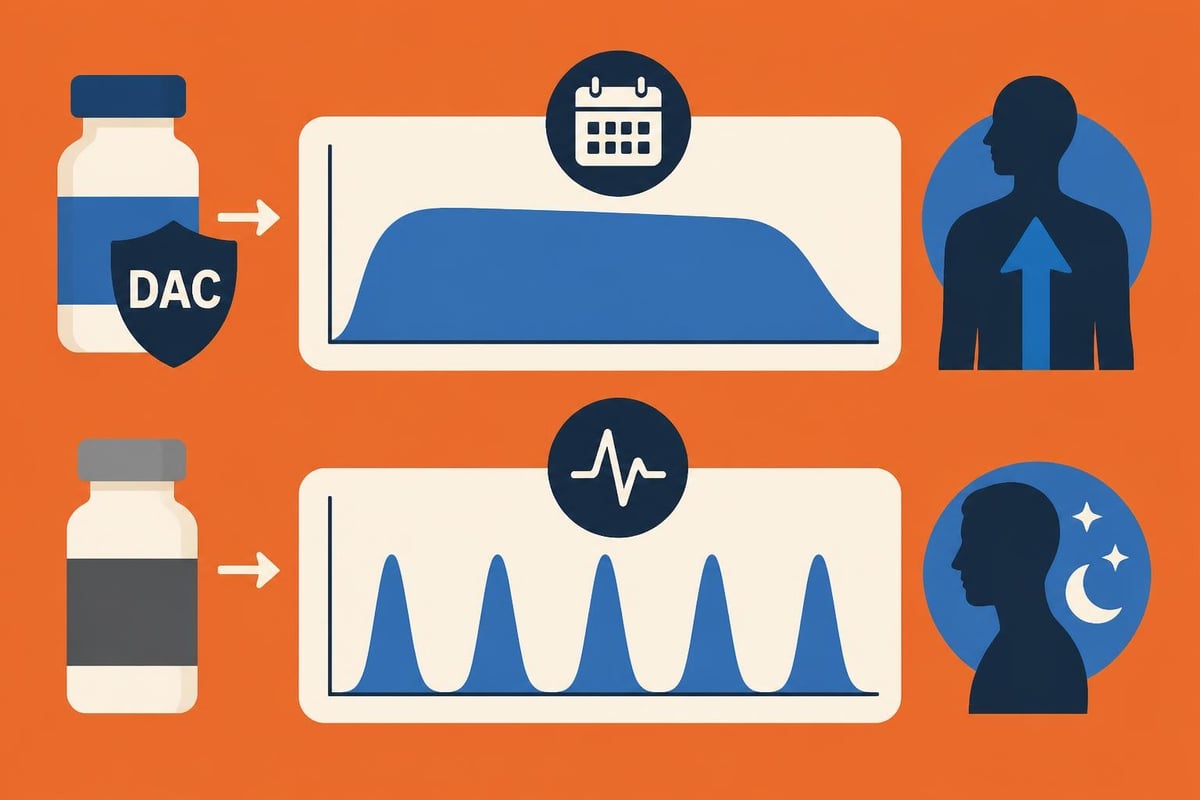
Two distinct forms exist, and the difference matters. CJC-1295 with DAC (Drug Affinity Complex) extends half-life to approximately one week through albumin binding.CJC-1295 without DAC, often called Modified GRF 1-29, clears within 30 minutes but produces more pronounced pulsatile release. The pharmacokinetic profiles are not just different, they are opposites.
The DAC Distinction
The DAC modification creates sustained elevation rather than sharp peaks. This matches neither natural growth hormone patterns nor the research showing pulsatile release optimizes receptor sensitivity. Most human data involves the DAC version, yet most current protocols favor the non-DAC form for its alignment with physiological patterns.
Key mechanism components:
GHRH receptor agonism in anterior pituitary
Stimulation of somatotroph cells
Pulsatile or sustained GH elevation depending on formulation
Preservation of negative feedback loops
Potential for receptor downregulation with constant elevation
Themechanism of CJC-1295does not override natural regulation entirely. Somatostatin still exerts inhibitory control. Feedback mechanisms remain active. This creates both limitation and safety margin compared to direct hormone replacement.
Clinical Evidence and Research Status
The human evidence base is thin. One published randomized controlled trial examined CJC-1295 with DAC in healthy adults. Participants showed dose-dependent increases in growth hormone and IGF-1 levels sustained over weeks. No serious adverse events occurred in that controlled setting. That single study represents the entirety of published human RCT data.
Evidence TierCJC-1295 StatusNotesPhase 3 TrialsNoneDevelopment halted before completionPhase 2 TrialsLimitedSingle published RCT with small samplePhase 1 SafetyMinimalBasic pharmacokinetics establishedLong-term DataAbsentNo studies beyond 90 daysRegulatory ApprovalNoneNot FDA-approved for any indication
Thepeer-reviewed literature on CJC-1295highlights this gap plainly. Animal models show predictable GH elevation. Biomarker changes in humans follow expected patterns. But outcome data, safety profiles beyond 12 weeks, and controlled comparisons remain unavailable.
What the Limited Data Shows
Short-term administration increases IGF-1 levels predictably. Growth hormone pulses amplify in frequency and magnitude. Body composition markers shift favorably in preliminary observations. These are mechanism confirmations, not outcome validations.
The compound was originally developed for growth hormone deficiency and wasting conditions. Clinical development stopped before approval. The reasons for discontinuation were never publicly detailed. That context matters when evaluating risk.
Research limitations include:
No published data in populations over 65
Absence of cancer surveillance in long-term use
Unknown interaction effects with common medications
Lack of standardized dosing protocols validated in trials
No head-to-head comparisons with approved therapies
Current regulatory statusclassifies cjc-1295 as a research compound, not approved for human consumption outside clinical trials. This creates sourcing issues, quality control concerns, and legal ambiguity.
Dosing Protocols and Administration Context
The most common non-DAC protocol involves 100mcg doses administered 1-3 times daily, typically before bed and post-workout. The DAC version uses 1-2mg once or twice weekly. These protocols derive from community practice and theoretical optimization, not validated clinical guidelines.
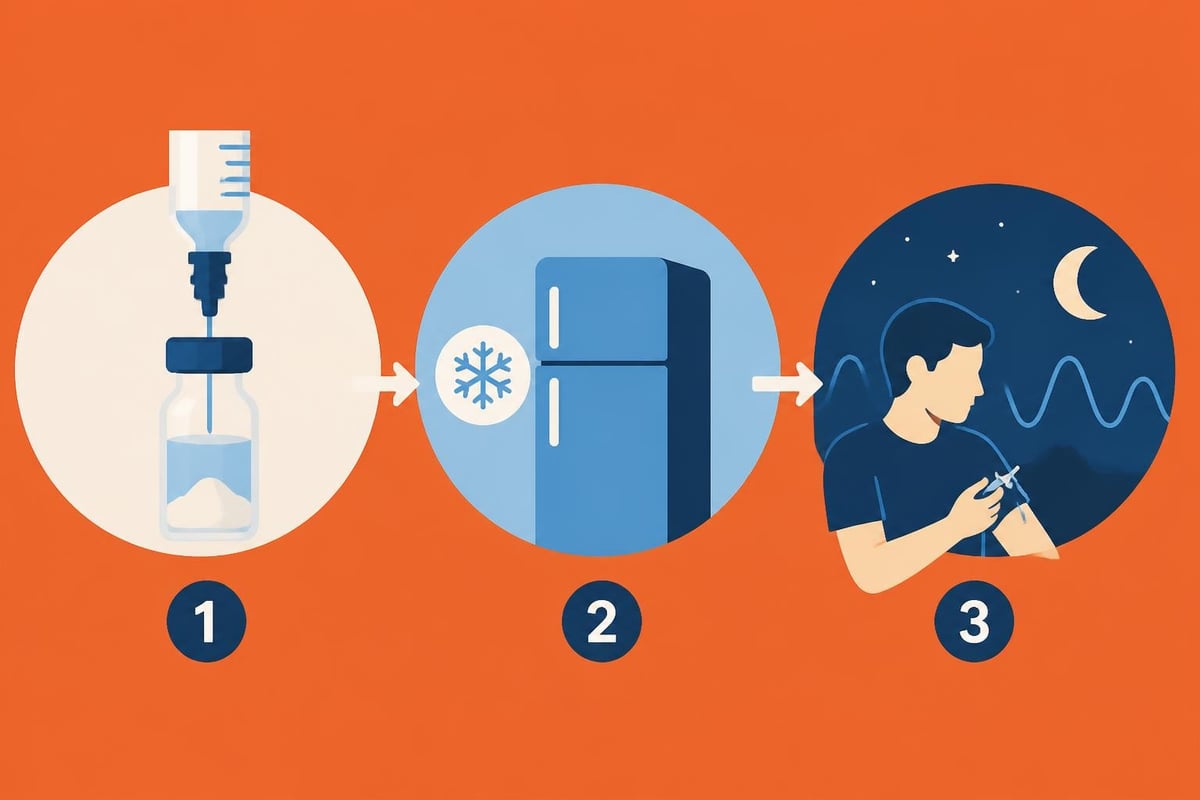
Subcutaneous injection remains the standard route. Reconstitution from lyophilized powder requires bacteriostatic water. Storage demands refrigeration.Proper injection techniqueand sterile practice are not optional, they prevent infection and ensure bioavailability.
Timing and Stacking Considerations
Most protocols stack cjc-1295 with ipamorelin or other growth hormone secretagogues. The theory holds that combining GHRH analogs with ghrelin mimetics creates synergistic release. Limited data supports this approach, though the logic aligns with receptor biology.
Timing around fasting states and training windows attempts to maximize natural GH pulses. Pre-sleep dosing leverages the largest natural release period. Post-training administration targets the recovery window. These practices follow physiological reasoning rather than demonstrated superiority.
Reconstitution: Add bacteriostatic water slowly along vial wall
Storage: Refrigerate reconstituted solution, use within 30 days
Injection site rotation: Abdomen, thighs, avoiding same location
Timing: Consistent daily schedule for non-DAC, weekly for DAC
Documentation: Track doses, responses, side effects systematically
Thedetailed protocols availablevary significantly across sources. This inconsistency reflects the research status. No medical consensus exists because insufficient evidence supports specific recommendations.
Side Effect Profile and Risk Assessment
Common reported effects include injection site reactions, water retention, and transient numbness in extremities. These typically resolve with continued use or dose adjustment. More concerning possibilities include increased cancer risk through IGF-1 elevation, though no long-term data confirms or refutes this.
The theoretical risk framework centers on growth factor promotion. Elevated IGF-1 may accelerate existing malignancies. It may promote insulin resistance with chronic elevation. These remain theoretical in the context of cjc-1295 specifically, yet evidence from growth hormone studies suggests caution.
Documented side effects:
Injection site irritation and redness
Fluid retention and mild edema
Carpal tunnel-like symptoms
Headaches and fatigue in initial weeks
Potential blood glucose disruption
Thesafety profile discussionacknowledges the data limitation plainly. Absence of evidence is not evidence of safety. The compound has not undergone the scrutiny required for medical approval. Users accept undefined long-term risk.
Contraindications and Monitoring
Active cancer represents an absolute contraindication. Family history of hormone-sensitive malignancies demands serious consideration. Diabetes complicates use through potential glucose effects. Pre-existing pituitary conditions create unpredictable responses.
Baseline and ongoing bloodwork should include IGF-1 levels, comprehensive metabolic panel, and glucose markers. Many using these compounds skip this step. That choice increases risk unnecessarily. Monitoring allows early detection of adverse trends.
Monitoring MarkerBaselineFollow-up FrequencyRed FlagsIGF-1RequiredEvery 8-12 weeks>300 ng/mL sustainedFasting GlucoseRequiredEvery 12 weeks>100 mg/dL trendHbA1cRecommendedEvery 6 months>5.7% or rising trendComprehensive MetabolicRequiredEvery 12 weeksLiver enzyme elevationLipid PanelRecommendedEvery 6 monthsTriglyceride elevation
Men working withpersonalized coaching programscan integrate proper monitoring protocols and medical oversight rather than operating in isolation. Accountability extends beyond training and nutrition into medical decision-making.
Practical Application for Fathers Over 35
The context that matters: natural growth hormone production declines approximately 15% per decade after 30. Recovery capacity decreases. Body composition shifts unfavorably despite consistent training. These changes are measurable and significant.
CJC-1295 represents one potential intervention in a larger optimization framework. It is not foundational. Training consistency, sleep adequacy, stress management, and nutritional discipline create the environment where any intervention can function. Without that foundation, peptide use addresses symptoms while ignoring root causes.
The Decision Framework
Consider why growth hormone support appeals. If recovery from training has genuinely declined despite optimized sleep and nutrition, the conversation has merit. If the goal is bypassing fundamentals, the answer is no.
Evaluate access to medical oversight. Working with a physician who monitors bloodwork and adjusts protocols based on response is not optional for responsible use. Underground sourcing and self-administration increase risk substantially.
Before considering cjc-1295:
Verify sleep averages 7-8 hours nightly for minimum 90 days
Confirm protein intake meets 0.8-1g per pound bodyweight consistently
Establish training program followed without missed sessions for 6+ months
Document actual recovery metrics, not subjective feelings
Secure medical provider willing to monitor and advise
Thecomprehensive bibliography on CJC-1295provides the academic foundation for informed discussion with medical providers. Come prepared with questions grounded in evidence rather than forum anecdotes.

Integration with Comprehensive Health Strategy
Peptides do not replace leadership. A father injecting cjc-1295 while sleeping five hours nightly and skipping meals has missed the point entirely. The compound might elevate IGF-1 markers while the man continues declining in the metrics that actually matter.
Real optimization starts with non-negotiables. Sleep becomes protected time, not something sacrificed for television or scrolling. Training sessions appear on the calendar and get defended like business meetings. Nutrition follows a structured plan rather than reactive choices. These create the environment where hormonal support can contribute.
The men who benefit from advanced interventions are those who have exhausted conventional optimization. They have tracked their training, measured their recovery, documented their sleep, and still face measurable decline. For them, cjc-1295 might offer marginal gains that compound over years.
The Brotherhood Standard
Operating in isolation increases risk. Men hide peptide use from spouses, skip medical monitoring, and make protocol adjustments based on YouTube videos. This approach guarantees suboptimal outcomes and elevated danger.
Accountability means discussing these decisions with trusted brothers who will challenge rationalizations. It means working with medical providers rather than internet suppliers. It means tracking actual outcomes rather than assumed benefits. Thefull research recordshows how much remains unknown. Acknowledging that uncertainty is not weakness, it is wisdom.
Men seeking that level of structured support and accountability find it within coaching frameworks that prioritize medical oversight alongside training and nutrition guidance. The work extends beyond workouts into comprehensive health optimization grounded in evidence rather than trends.
Source Quality and Supply Chain Reality
The regulatory status creates a supply problem. CJC-1295 is not FDA-approved, meaning legitimate pharmaceutical manufacturing does not exist. Every source operates in regulatory grey zones or outright black markets.
Third-party testing provides some quality assurance. Labs analyze peptide purity, concentration accuracy, and contamination presence. But this testing is voluntary and inconsistent. Many suppliers skip it entirely. Users inject compounds of unknown composition and purity.
Red flags in peptide sourcing:
No third-party testing certificates provided
Prices significantly below market average
No reconstitution or storage guidance included
Claims of FDA approval or medical endorsement
Domestic production claims without facility details
Theanalytical literature on CJC-1295demonstrates the compound's chemical structure and expected purity standards. Legitimate suppliers should meet those standards and prove it with independent verification.
Cost-Benefit Assessment
Monthly costs range from $100-300 depending on dosing protocol and source quality. This represents ongoing expense without endpoint. Combined with monitoring bloodwork, medical consultations, and injection supplies, the financial commitment becomes substantial.
Compare this investment to training optimization, nutrition coaching, and sleep improvement interventions. The latter provide proven returns with minimal risk. Peptides offer marginal additional benefit in best-case scenarios, significant harm in worst-case outcomes.
The economic calculation matters less than the priority question: Has every high-return, low-risk intervention been maximized first? Most men answer no if honest. The appeal of peptides often reflects avoidance of harder foundational work.
CJC-1295 offers a specific mechanism with documented short-term effects and substantial long-term unknowns. The decision to use it belongs to informed adults working with medical oversight, not isolated men chasing shortcuts. For fathers committed to building strength, maintaining performance, and leading families well into later decades,The Father Forgeprovides the structure, accountability, and comprehensive approach that creates sustainable results without depending on compounds with limited human evidence.