Chest and Tricep Workout: Build Strength and Leadership
A chest and tricep workout is not about aesthetics. It is about functional upper-body strength, structural balance, and the discipline to execute consistently. Too many men chase volume without understanding progression, or they follow programs built for someone else's body and goals. The result is stalled progress, shoulder pain, and wasted time. This article lays out the principles, exercise selection, programming structure, and accountability framework you need to build strength in your chest and triceps while protecting your joints and supporting long-term performance. The Father Forge approach starts with clarity: know why you are training, then build the plan that serves that mission.
Why Pair Chest and Triceps
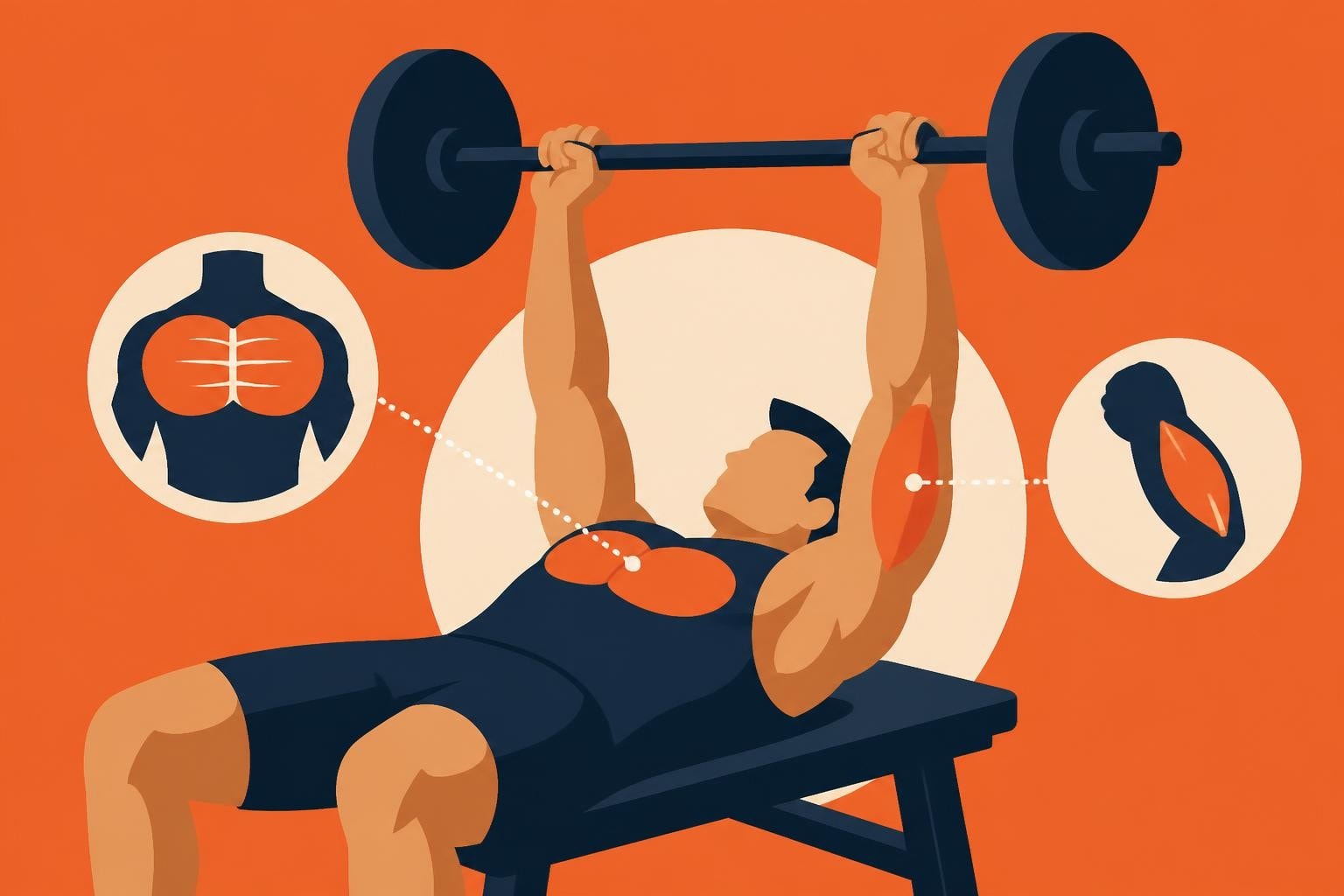
The chest and triceps share mechanical functions in every pressing movement. When you bench press, dip, or push overhead, both muscle groups contract to extend the elbow and move the load. Training them together respects this natural synergy and allows you to maximize intensity without redundant sessions.
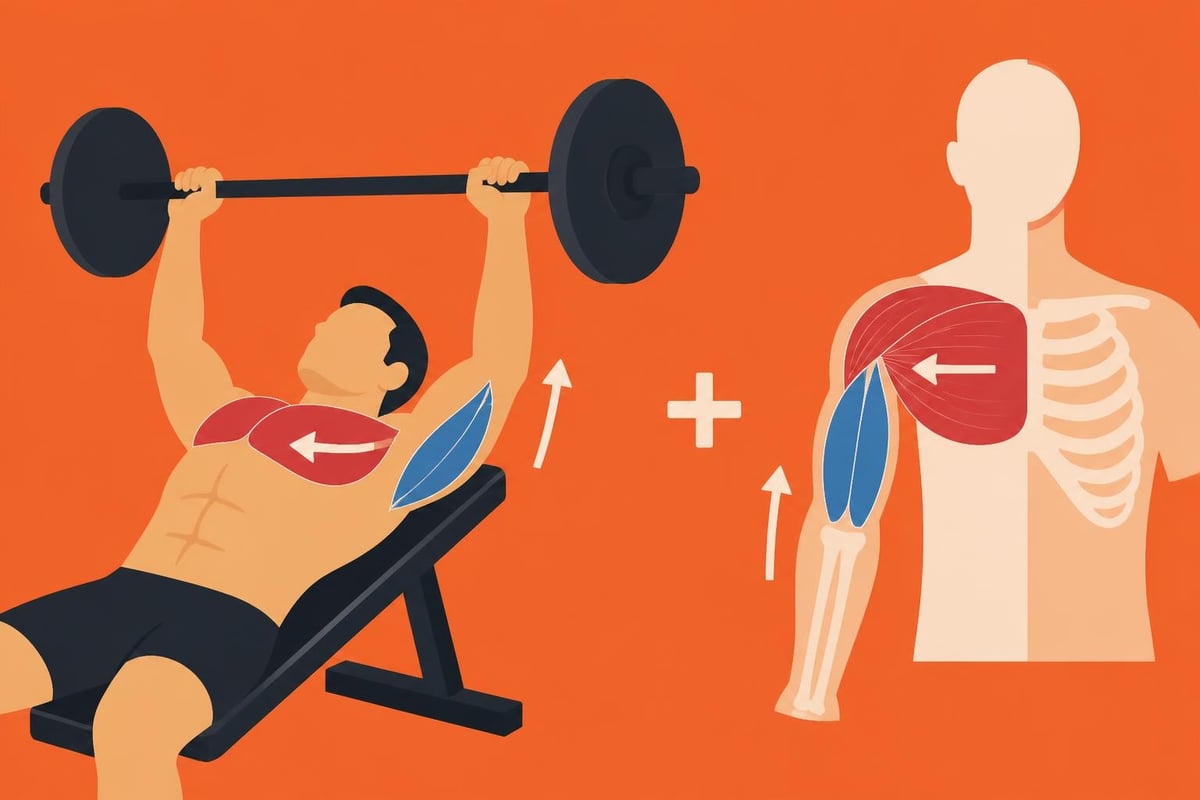
Splitting them into separate days forces you to tax the triceps twice in one week, once as a primary mover and again as a secondary muscle during chest work. That approach increases injury risk and limits recovery. A well-designed chest and tricep workout consolidates the stimulus, then gives both muscle groups adequate rest before the next upper-body session.
Mechanical Efficiency
Every horizontal press, incline press, and dip requires forceful triceps contraction at lockout. The triceps brachii contributes to the final third of the range of motion in most pressing patterns. Isolating the triceps after compound chest work allows you to exhaust the muscle when it is already fatigued, driving adaptation without requiring maximal loads that strain connective tissue.
This is not theory. Research on resistance training progression models confirms that exercise order, volume, and intensity interact to determine hypertrophy and strength outcomes. Compound movements first, isolation work second. Heavy loads early in the session, moderate to high-rep finishers at the end. The chest and tricep workout respects these principles by design.
Exercise Selection: Compound Movements First
Your session begins with compound presses. These recruit the most muscle mass, allow the heaviest loads, and create the greatest systemic demand. The barbell bench press, dumbbell press variations, and dips form the foundation. Everything else is accessory work.
Barbell Bench Press
The barbell bench press remains the standard for horizontal pressing strength. Set your feet flat, retract your shoulder blades, maintain a neutral spine, and press the bar in a slight arc from mid-chest to lockout. Control the eccentric, pause briefly at the chest, then drive explosively.
Common errors include flaring the elbows excessively, bouncing the bar off the chest, and losing scapular retraction. Each of these increases shoulder impingement risk and reduces force transfer. If you experience anterior shoulder pain, assess your bar path, elbow angle, and grip width before adding weight.
Dumbbell Press Variations
Dumbbells allow greater range of motion and independent arm movement. Flat, incline, and decline angles shift emphasis across the clavicular, sternal, and costal heads of the pectoralis major. Incline presses (30 to 45 degrees) target the upper chest and anterior deltoid. Flat presses distribute load more evenly. Decline presses reduce shoulder strain but limit carryover to other movements.
Rotate angles every four to six weeks to prevent accommodation. The goal is not to exhaust every angle in one session. The goal is progressive overload on the angles that matter most to your structure and performance.
Press Variation | Primary Emphasis | Best Use Case |
|---|---|---|
Flat Barbell Bench | Overall chest, triceps lockout | Strength progression, maximal loads |
Incline Dumbbell Press | Upper chest, anterior deltoid | Structural balance, unilateral control |
Decline Barbell Press | Lower/mid chest | Reduce shoulder stress, secondary movement |
Dips (chest-focused) | Lower chest, triceps, anterior deltoid | Bodyweight progression, lockout strength |
Dips
Dips are a bodyweight staple that scales with added load. Lean forward slightly to emphasize the chest. Stay upright to shift demand to the triceps. Full range of motion is non-negotiable: descend until your upper arms are parallel to the floor, then press to lockout without shrugging.
If you cannot perform bodyweight dips with control, use an assisted dip machine or band. If bodyweight dips are too easy, add a weight vest or dip belt. Progression is the obligation.
Triceps Isolation: Targeted Volume After Compound Work
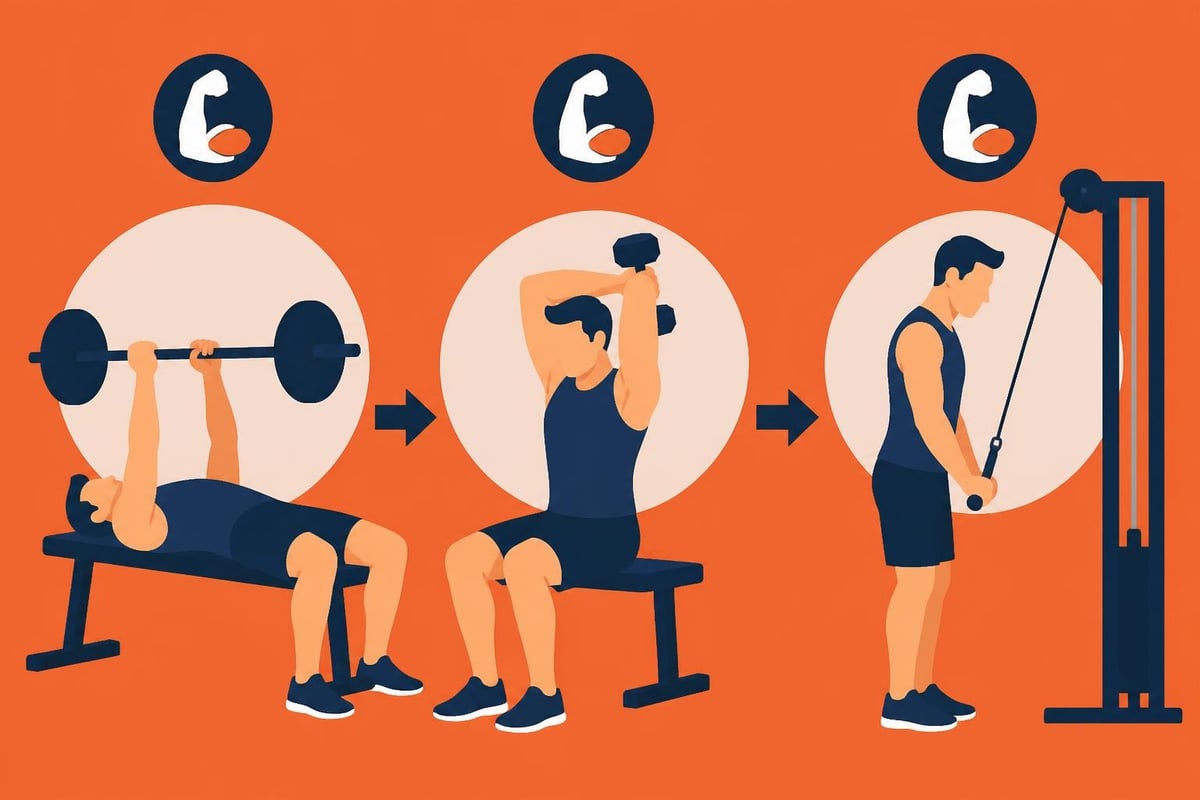
After compound presses, your triceps are fatigued but not fully exhausted. Isolation exercises allow you to accumulate additional volume without the systemic fatigue of heavy pressing. Close-grip bench press, overhead triceps extensions, and cable pushdowns are the primary tools.
Close-Grip Bench Press
Narrowing your grip to shoulder width shifts emphasis from the chest to the triceps while maintaining compound loading. This movement allows heavier weight than pure isolation exercises and builds lockout strength that carries over to all pressing patterns.
Keep your elbows tucked, lower the bar to your lower chest or upper abdomen, and press explosively. Do not let your elbows flare or your wrists hyperextend. Three to four sets of six to ten reps is sufficient after your primary pressing work.
Overhead Triceps Extensions
Overhead extensions (dumbbell, barbell, or cable) stretch the long head of the triceps and allow a full contraction at the top. This exercise requires strict form. Any momentum or excessive arching reduces tension and increases elbow strain.
Dumbbell variation: Hold one dumbbell overhead with both hands, lower it behind your head, then extend.
Cable variation: Attach a rope to a high pulley, turn away, and extend overhead.
Barbell variation: Use an EZ-curl bar to reduce wrist strain.
Three sets of ten to fifteen reps. Control the eccentric, pause at full stretch, contract hard at lockout.
Cable Pushdowns
Cable pushdowns isolate the lateral and medial heads of the triceps with constant tension. Use a rope, straight bar, or V-bar attachment. Keep your elbows pinned to your sides, extend fully, and squeeze at the bottom for one second before returning.
High-rep sets (twelve to twenty reps) work well here. The goal is metabolic stress and pump, not maximal load. This is a finisher, not a strength builder.
Programming Structure: Volume, Intensity, and Frequency
A chest and tricep workout should occur once or twice per week depending on your overall split and recovery capacity. Once per week is sufficient if you train with enough volume and intensity. Twice per week allows you to split volume across sessions and may accelerate hypertrophy, but only if recovery supports it.
Sample Once-Per-Week Template
Exercise | Sets | Reps | Load/Intensity |
|---|---|---|---|
Barbell Bench Press | 4 | 4-6 | 80-85% 1RM |
Incline Dumbbell Press | 3 | 8-10 | Moderate-heavy |
Dips (weighted if able) | 3 | 8-12 | Bodyweight or added load |
Close-Grip Bench Press | 3 | 6-8 | 70-75% 1RM |
Overhead Dumbbell Extension | 3 | 10-12 | Controlled tempo |
Cable Rope Pushdown | 3 | 12-15 | Constant tension |
Total working sets: 19. Total session time: 60 to 75 minutes including warm-up. Rest periods: three to four minutes after compound presses, ninety seconds to two minutes after isolation work.
Progression Strategy
Add weight when you can complete all prescribed reps with one rep in reserve. Do not jump more than five pounds on dumbbells or ten pounds on barbells. If you stall for two consecutive sessions, reduce load by ten percent, increase reps by two, then rebuild. Evidence on resistance-training variables shows that progressive overload, not program variety, drives strength and hypertrophy.
Track every session. Write down sets, reps, load, and how the movement felt. If you do not track, you cannot diagnose stalls or identify patterns. Accountability starts with data.
Injury Prevention and Shoulder Health
Pressing-heavy programs create shoulder stress. Shoulder impingement occurs when the rotator cuff tendons compress against the acromion during overhead or horizontal pressing. Symptoms include anterior shoulder pain, limited range of motion, and weakness during external rotation.
Prevent impingement by balancing pressing volume with pulling volume. For every set of chest and tricep work, perform an equal or greater volume of rows, pull-ups, and face pulls. Strengthen the rotator cuff with band external rotations and Y-raises. Maintain scapular mobility through daily shoulder dislocations and wall slides.
Warm-Up Protocol
Before heavy pressing, complete:
Five minutes of light cardio to raise core temperature.
Dynamic shoulder stretches (arm circles, band pull-aparts).
Activation work (push-ups, band external rotations).
Ramp sets (two to three sets at 40%, 60%, and 80% of working weight).
Do not skip the warm-up. It is not optional. It is preparation for performance.
Integrating Cardiovascular Considerations
Resistance training improves cardiovascular health when performed consistently. The American Heart Association's guidance on resistance exercise confirms that two to three sessions per week reduce blood pressure, improve lipid profiles, and support metabolic health.
For fathers over 35, especially those with cardiovascular risk factors, monitor exertion during heavy compound sets. If you experience chest discomfort, dizziness, or unusual shortness of breath, stop immediately and consult a physician. Strength training is medicine when dosed correctly. It is risk when ego overrides judgment.
Accountability and Long-Term Adherence
Programs fail when men train alone without structure or feedback. You need accountability, whether through a training partner, a coach, or a community that expects your presence. The Father Forge's Group Coaching Community provides weekly calls, brotherhood accountability, and access to men who share your mission. Built for fathers over 35, it delivers structure without requiring another app or algorithm.

Accountability is not motivation. Accountability is the external structure that compensates for internal variability. You will not always feel motivated. You will always have the choice to execute or quit. Men who succeed build systems that remove the choice.
Tracking and Adaptation
Every four weeks, assess your progress:
Strength: Did your working weights increase on primary lifts?
Volume: Are you recovering adequately between sessions?
Injury status: Any persistent pain or movement restrictions?
Adherence: Did you complete at least 90% of planned sessions?
If strength is stalling, reduce volume or increase rest days. If you are recovering well and progressing, consider adding one working set per exercise every eight weeks. The Physical Activity Guidelines Advisory Committee report recommends muscle-strengthening activities on two or more days per week for general health. Fathers with performance goals should exceed that baseline.
Advanced Techniques: When and How to Use Them
Drop sets, supersets, and rest-pause techniques have a place, but only after you have exhausted linear progression. Most men waste intensity techniques before building a base. Do not complicate the plan until the simple plan stops working.
Drop Sets
After your final working set of an isolation exercise, reduce the weight by 20 to 30 percent and perform as many reps as possible. Rest ten seconds, then repeat. Use this sparingly on cable pushdowns or dumbbell extensions, not on compound presses.
Supersets
Pairing chest and triceps exercises back-to-back increases density and metabolic demand but reduces the load you can handle. Use supersets for accessory work (incline dumbbell press with overhead extension), not for primary strength movements.
Rest-Pause
After reaching failure on a set, rest 15 seconds, then perform additional reps to failure. Repeat two to three times. This extends time under tension and recruits additional motor units. Reserve rest-pause for the final set of your final exercise when accumulated fatigue is already high.
Nutritional Support for Recovery
Training stimulates growth. Nutrition funds it. Protein intake of 1.6 to 2.2 grams per kilogram of bodyweight supports muscle protein synthesis. Spread intake across four to five meals. Prioritize whole foods: eggs, lean beef, chicken, fish, Greek yogurt.
Carbohydrates replenish glycogen and support training intensity. Time the majority of your carbohydrate intake around your workout window. Fats support hormone production. Do not eliminate them in pursuit of leanness.
Hydration is non-negotiable. Dehydration reduces force production and increases injury risk. Drink water consistently throughout the day, not just during training.
Building Leadership Through Discipline
Your chest and tricep workout is a microcosm of your leadership. You show up when you do not feel like it. You track your work when no one is watching. You push through discomfort without quitting. Your children see this. Your wife sees this. The men around you see this.
Strength is not built in single sessions. Strength is built in the decision to return, session after session, year after year. That is the obligation.
A chest and tricep workout built on compound movements, progressive overload, and disciplined tracking will deliver strength and size if you execute consistently. The variables are simple: exercise selection, volume, intensity, and recovery. The Father Forge creates custom fitness and mindset programs tailored to your structure, goals, and season of life, integrating strength work with the leadership principles that matter at home. Build the plan, track the work, and hold yourself accountable at The Father Forge.