Build Muscle and Lose Fat: A Battle-Tested Strategy
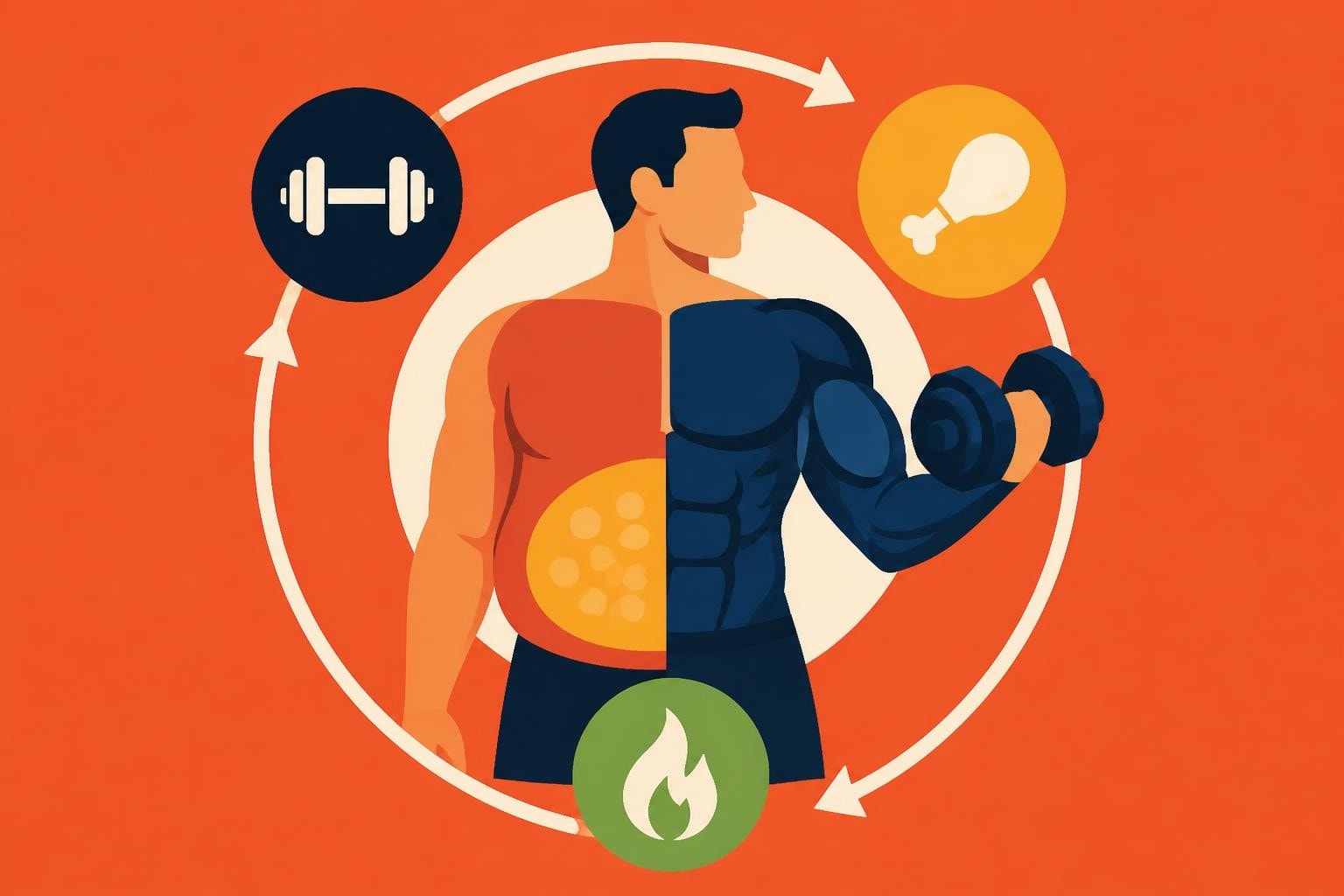
Most men waste years chasing the wrong fight. They yo-yo between bulking phases where they gain muscle buried under fat, then cutting phases where they lose the muscle they worked to build. This approach fails because it treats body composition like a light switch. You are not a light switch. Your body responds to consistent pressure applied with precision. The goal is not to bulk then cut. The goal is to build muscle and lose fat at the same time, a process called body recomposition. This is not theory. This is physiology married to discipline.
The Biology of Building While Burning
Your body does not care about your timeline. It responds to stimuli and resources. When you lift heavy weights, you create micro-tears in muscle tissue. When you eat adequate protein and rest properly, your body repairs those tears stronger than before. When you maintain a moderate caloric deficit while training, your body pulls energy from fat stores to fuel daily function while directing protein toward muscle repair. This is how youbuild muscle and lose fat simultaneously.
The process demands precision. You cannot starve yourself into body recomposition. Harvard Health research confirms thatextreme caloric restriction destroys muscle tissuealong with fat. Your body will sacrifice muscle before fat when resources run low because muscle is metabolically expensive to maintain. You must provide enough fuel to preserve and build muscle while creating a deficit small enough to tap fat stores.
The Protein Non-Negotiable
Protein is not optional. It is operational necessity. Set your daily protein target at one gram per pound of target body weight. A man aiming for 190 pounds needs 190 grams of protein daily, spread across four to five meals. This constant supply gives your body the building blocks for muscle repair throughout the day.
Protein timing matters:
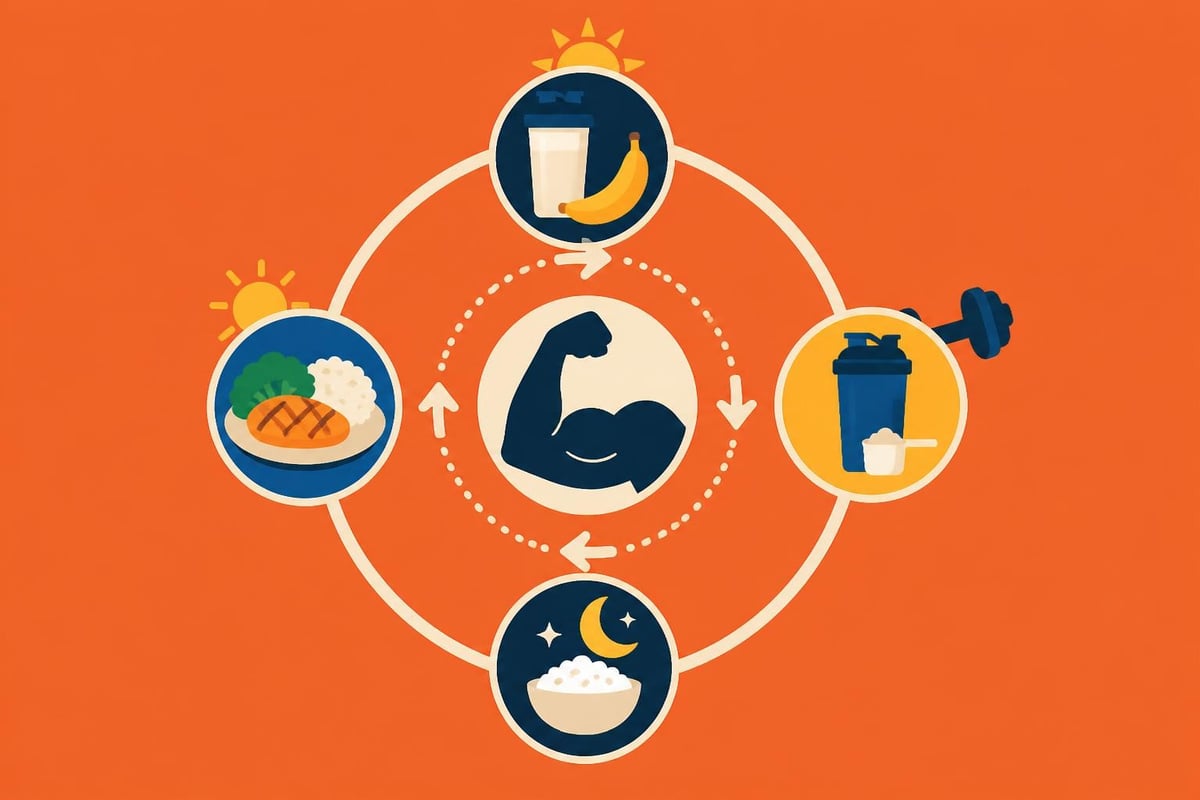
Pre-workout: 20-30 grams to prime amino acid availability
Post-workout: 30-40 grams within two hours to maximize recovery
Before bed: 30 grams of slow-digesting casein to prevent overnight muscle breakdown
Remaining meals: Distribute evenly to maintain positive nitrogen balance
Most men fail here because they rely on guesswork. Track your intake for 14 days. Not forever. Just long enough to calibrate your instincts. You will discover you are eating half the protein you think you are.
Training That Builds While You Burn
Body recomposition requires progressive overload in the gym. Your training splits must prioritize compound movements that recruit maximum muscle mass. Squats, deadlifts, bench press, overhead press, rows. These are not suggestions. These are the foundation.
The Four-Day Split That Works
Training DayFocusKey MovementsRep RangesDay 1Lower PowerSquat, Romanian Deadlift, Leg Press4-6 repsDay 2Upper PowerBench Press, Barbell Row, Overhead Press4-6 repsDay 3Lower HypertrophyFront Squat, Lunges, Leg Curls8-12 repsDay 4Upper HypertrophyIncline Press, Pull-ups, Dumbbell Work8-12 reps
Each session lasts 45 to 60 minutes. No more. You are not paid by the hour in the gym. You are paid by intensity and recovery. Rest periods matter. For power days, rest three to four minutes between sets. For hypertrophy days, rest 90 seconds to two minutes. This is not arbitrary. Shorter rest maintains metabolic stress while longer rest allows maximum force production.
Progressive overload means adding weight or reps every week. If you squatted 225 for five reps last week, you squat 230 for five reps this week or 225 for six reps. The load must increase. The body adapts to stress, not to repetition of the same stress.
The Caloric Window for Recomposition
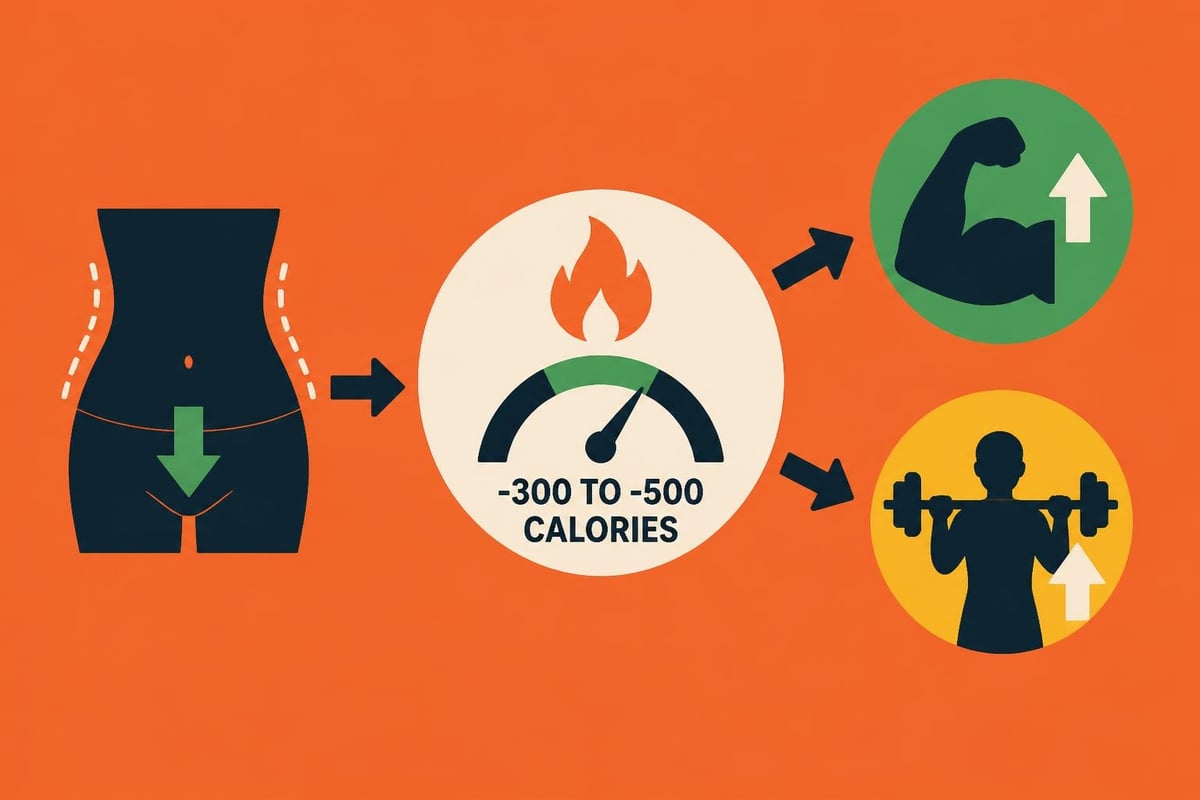
You cannot build muscle and lose fat in a severe deficit. WebMD research shows thatmuscle building requires available energy, and fat loss requires a deficit. The solution is a moderate deficit of 300 to 500 calories below maintenance. This window provides enough resources for muscle protein synthesis while forcing your body to mobilize fat for the energy gap.
Calculate your maintenance calories using the following formula:
Bodyweight in pounds × 15 = baseline calories
Add 200-300 calories for training days
Subtract 300-500 calories for your deficit
A 200-pound man has a baseline of 3,000 calories. On training days, maintenance sits around 3,250 calories. His recomposition target is 2,800 to 2,950 calories on training days, slightly lower on rest days.
Macronutrient targets for a 200-pound man:
Protein: 200 grams (800 calories)
Fats: 70-80 grams (630-720 calories)
Carbohydrates: Fill remaining calories (approximately 300-350 grams)
Carbohydrates fuel your training. Do not fear them. Time them around your workouts. Men over 35 often fall for low-carb marketing because it promises quick results. It delivers quick water loss, not sustainable body recomposition.Nerd Fitness breaks down why simultaneous gains require adequate carbohydratesto fuel the training that triggers muscle growth.
Sleep and Recovery: The Forgotten Battlefield
You do not build muscle in the gym. You damage muscle in the gym. You build muscle during recovery. Most men sacrifice sleep for productivity, then wonder why their body composition stalls. Sleep is when growth hormone peaks. Sleep is when muscle protein synthesis accelerates. Sleep is when cortisol drops and testosterone rises.
Seven hours minimum. Eight hours optimal. Non-negotiable for men serious about body recomposition. Harvard research demonstrates thatreducing belly fat requires quality sleepbecause poor sleep elevates cortisol and increases fat storage around the midsection.
Recovery Checklist
Sleep: 7-8 hours nightly in a cool, dark room
Hydration: Half your bodyweight in ounces daily minimum
Active recovery: 20-30 minute walks on rest days to promote blood flow
Stress management: 10 minutes of controlled breathing or meditation daily
Mobility work: 15 minutes of stretching or yoga three times weekly
Recovery is not passive. Recovery is strategic. The man who trains hard but recovers poorly gets injured. The man who trains moderately but recovers excellently transforms his body.
Who Can Actually Build Muscle and Lose Fat
Not everyone starts from the same position. Three groups respond exceptionally well to body recomposition: beginners who have never trained seriously, detrained individuals returning after time off, and men carrying significant body fat.Built Lean's research confirmsthese populations have the physiological runway to add muscle while shedding fat.
Advanced lifters near their genetic potential face harder constraints. A man who has trained consistently for five years and sits at 12% body fat will find simultaneous gains slower than a beginner at 25% body fat. This is not failure. This is biology. Advanced lifters benefit from maintenance phases where they build muscle and lose fat over longer timeframes, accepting slower progress as the price of being closer to their ceiling.
Fathers over 35 occupy a unique position. Testosterone declines approximately one percent per year after age 30. This does not disqualify you from body recomposition. It changes the variables. You must be more precise with protein, more consistent with sleep, more strategic with training volume.The Father Forgebuilds programs that account for these realities, not generic plans written for 22-year-old athletes.
Tracking Progress Without Losing Your Mind
The scale is one data point, not the whole story. Your bodyweight will fluctuate two to four pounds daily based on water retention, sodium intake, carbohydrate timing, and digestive contents. Weigh yourself weekly under identical conditions: same day, same time, same hydration state. Track the trend over four weeks, not the daily noise.
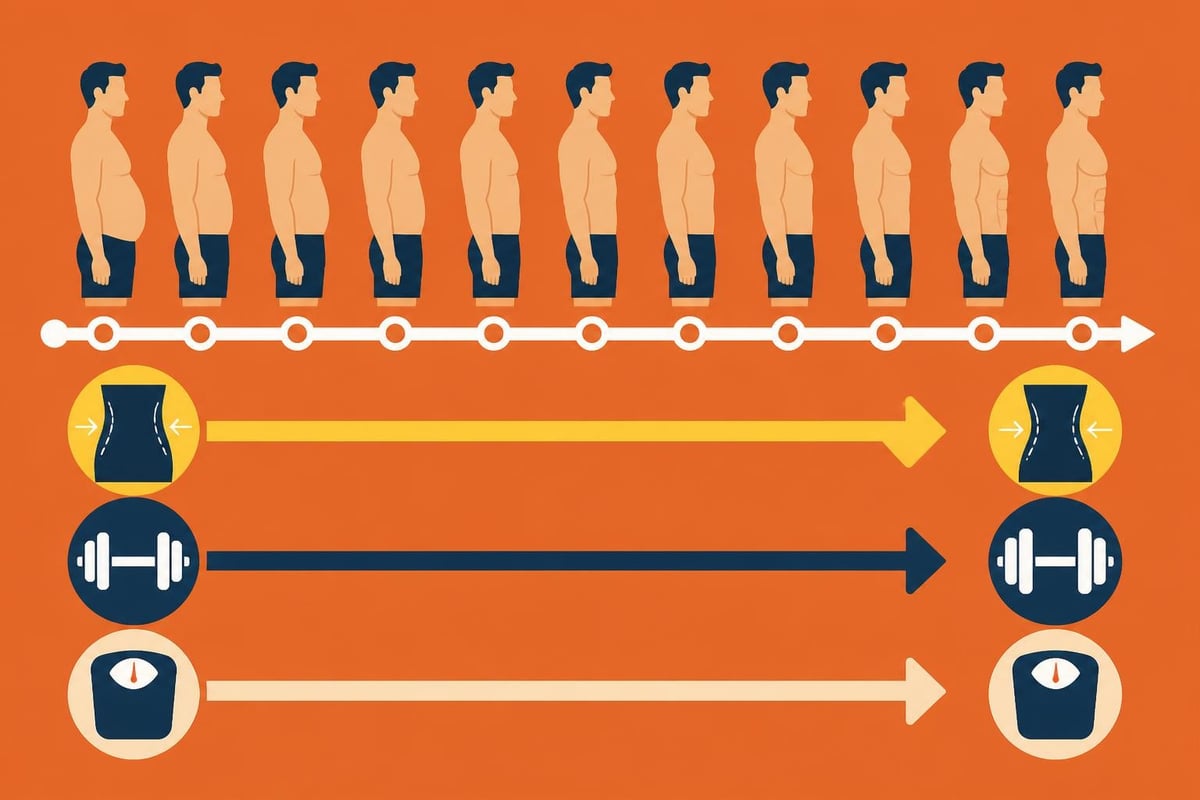
WeekScale WeightWaist MeasurementStrength BenchmarkVisual Assessment1205 lbs38 inchesSquat: 275 × 5Baseline photos4203 lbs36.5 inchesSquat: 285 × 5Progress photos8201 lbs35 inchesSquat: 295 × 5Progress photos12200 lbs34 inchesSquat: 305 × 5Final comparison
Notice the scale moved only five pounds over 12 weeks, but waist circumference dropped four inches and squat strength increased 30 pounds. That is successful body recomposition. You built muscle, you lost fat, you got stronger.
Measurement Protocol
Weekly measurements:
Bodyweight (same day, same conditions)
Waist circumference (at navel, relaxed)
Key lifts (track working sets, not max attempts)
Monthly assessments:
Progress photos (same lighting, same angles, same time of day)
Body fat estimate (calipers or visual comparison, not obsessively accurate)
Energy levels and recovery quality (subjective but valuable)
The data serves you. You do not serve the data. If the measurements show progress but you feel defeated, the problem is not the data. The problem is expectations divorced from reality.
The Mindset That Sustains Transformation
Body recomposition takes months, not weeks. This is a test of your ability to show up when results are invisible. Most men quit after six weeks because the scale barely moved. They expected 20 pounds lost and got three pounds of recomposition instead. They see stagnation. The reality is they added muscle while losing fat, a process that masks itself on the scale.
You must decide what you are building. Are you building a temporary physique for a beach vacation? Or are you building a sustainable approach to fitness that serves you for the next 20 years? The answer determines your timeline and your methods.
The recomposition mindset:
Consistency over intensity: Four good workouts weekly beat seven chaotic sessions
Process over outcome: Focus on hitting protein targets and progressive overload, not abs
Patience over panic: Trust 12-week blocks, not daily fluctuations
Identity over motivation: You train because you are a man who trains, not because you feel like it
Motivation is weather. Identity is climate. Build your identity as a man who lifts, who eats to fuel performance, who sleeps to recover. Everything else becomes downstream decisions that do not require daily negotiation.
Nutrition Timing for Maximum Effect
When you eat matters almost as much as what you eat. Your body is more insulin sensitive after training, meaning it shuttles nutrients toward muscle glycogen replenishment rather than fat storage. This is your window to consume the majority of your daily carbohydrates.
Post-workout meal structure:
40 grams fast-digesting protein (whey isolate or lean meat)
60-80 grams high-glycemic carbohydrates (white rice, potatoes, fruit)
Minimal fat to avoid slowing digestion
This is not broscience. This is nutrient timing based on insulin sensitivity and muscle glycogen depletion.T Nation's research on simultaneous muscle gain and fat lossemphasizes the importance of strategic carbohydrate placement around training.
Pre-workout nutrition is equally critical. Consume 30-40 grams of protein and 40-50 grams of carbohydrates 90 minutes before training. This provides amino acids in your bloodstream during the workout and glucose to fuel high-intensity sets. Training fasted sounds hardcore. Training fasted is leaving performance on the table.
Common Failures and How to Avoid Them
Most men fail to build muscle and lose fat because they violate one of three principles: insufficient protein, inadequate training stimulus, or excessive caloric deficit. These are not minor errors. These are structural failures that guarantee stagnation.
Failure point one: Inconsistent protein intake. You cannot eat 150 grams of protein Monday through Friday, then eat 80 grams on weekends and expect results. Your body does not average weekly intake. It responds to daily signals. Fix this by meal prepping Sundays and Wednesdays. Prepare protein sources in bulk. Remove the decision-making from the moment.
Failure point two: Program hopping. You do not need a new program every month. You need to execute the same program with increasing intensity for 12 weeks minimum. Progressive overload requires consistency. Switching programs weekly is self-sabotage disguised as optimization. Pick a four-day split, commit for three months, track every lift.
Failure point three: All-or-nothing thinking. You miss a workout. You eat poorly at a family dinner. You decide the week is ruined and abandon your plan until Monday. This is emotional fragility masquerading as discipline. One missed workout is irrelevant. Three missed workouts becomes a pattern. Get back on track the next day, not the next week.
The Role of Accountability and Brotherhood
You will not sustain this alone. Not because you are weak. Because isolation erodes standards. You need men around you who expect you to show up, who call you out when you make excuses, who celebrate your wins without enabling your failures. This is whygroup coaching exists at The Father Forge. Not for information. You have information. You need accountability and brotherhood.
The fathers in that community are not cheering for your comfort. They are invested in your transformation. They know when you are coasting. They know when you are lying to yourself. They care enough to tell you the truth. That pressure is not punishment. That pressure is the environment that produces results.
Men lie to themselves in isolation. Men rise to standards in brotherhood. Choose your environment accordingly.
Advanced Strategies for Experienced Lifters
If you have trained consistently for two years or more, your approach to body recomposition requires refinement. You cannot rely on beginner gains. You must manipulate training variables with precision.
Periodization becomes essential:
Block 1 (Weeks 1-4): Hypertrophy focus, higher volume, moderate intensity
Block 2 (Weeks 5-8): Strength focus, lower volume, higher intensity
Block 3 (Weeks 9-12): Power focus, explosive movements, deload in final week
This undulating approach prevents adaptation and maintains progressive overload across different rep ranges. Your body cannot build tolerance to a stimulus that changes every four weeks.
Supplement considerations for advanced lifters:
Creatine monohydrate: 5 grams daily for strength and power output
Caffeine: 200-300mg pre-workout for enhanced focus and performance
Omega-3 fatty acids: 2-3 grams daily for inflammation management and recovery
Vitamin D: 2,000-4,000 IU daily if blood levels are suboptimal
Supplements are not magic. Supplements are marginal gains that matter only when the fundamentals are handled. Do not buy supplements until you can honestly say you hit protein targets 90% of days, train with consistent progressive overload, and sleep seven hours nightly.
Making It Sustainable for Life
The program that transforms your body but destroys your marriage is not a successful program. You are a father. You have obligations beyond the gym. Sustainability means integrating training into your life without sacrificing the relationships that matter.
Integration strategies:
Train early morning before the family wakes, or during lunch breaks
Meal prep includes family meals, not separate bodybuilder cuisine
Communicate your goals with your wife so she understands your commitment
Include your kids in active recovery: hiking, playing sports, bike rides
Schedule rest days around family events to avoid conflict
Your children will not remember your body fat percentage. They will remember whether you were present. Build a body that serves your life. Do not build a life that serves your body. That distinction separates transformation from obsession.
The path to build muscle and lose fat simultaneously is not complex. It is demanding. You need adequate protein, progressive resistance training, moderate caloric deficit, quality sleep, and the accountability to execute for months without emotional collapse. Most men have the information. Most men lack the environment and the brotherhood to sustain the work.The Father Forgeprovides custom programming and weekly accountability designed specifically for fathers over 35 who refuse to accept decline as inevitable. Apply if you are ready to lead from the front, starting with how you show up in your own body.