Best Self Improvement Books for Men Who Lead
Most men walk past shelves of self-help books believing the next title will unlock something. It won't. The best self improvement books don't fix you. They create frameworks for action you already know you need to take. The gap between reading and becoming is filled with accountability, repetition, and a willingness to confront what you've avoided. These books matter only when paired with environments that demand execution. Without structure, they become intellectual entertainment. With it, they become operational manuals for the man you're building.
Why Most Self-Improvement Reading Fails
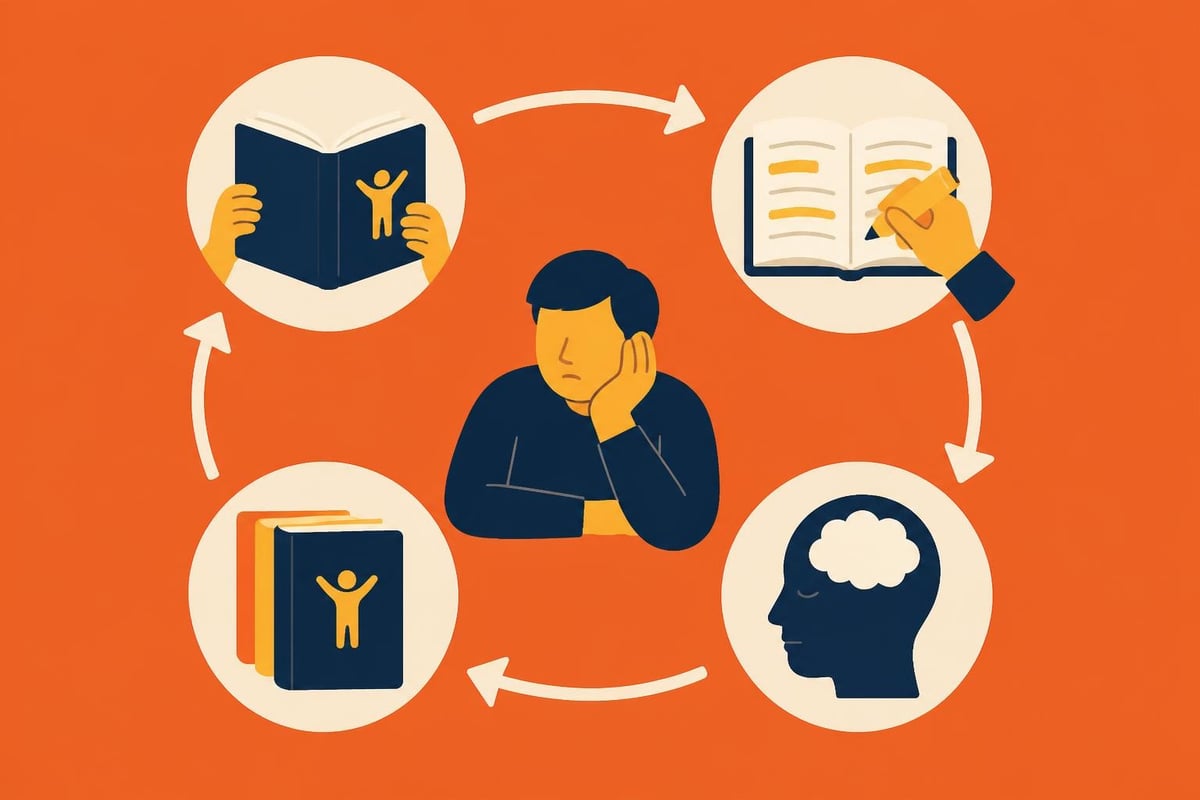
You don't lack information. You lack follow-through. The average man owns three unfinished self-help books and operates at the same capacity he did last year. Research on self-guided interventions shows bibliotherapy works when paired with accountability structures. Alone, it rarely moves the needle. The problem isn't the content. It's the absence of consequences for not applying it.
Reading without action is procrastination dressed as productivity. You highlight passages, nod along, and return to the same habits by Tuesday. The best self improvement books become useful only when someone is checking whether you implemented chapter three. Brotherhood, coaching, and scheduled reviews turn concepts into competencies. Without that pressure, books collect dust and you collect excuses.
The Evidence Standard
Not all titles deserve your time. Clinical reviews of self-help literature distinguish between evidence-based works and motivational noise. Books rooted in cognitive behavioral frameworks, validated habit science, and longitudinal studies outperform inspirational anecdotes. When choosing what to read, prioritize authors with clinical credentials, peer-reviewed research, or decades of documented results. Popularity doesn't equal effectiveness. A book trending on social media often reflects marketing budget, not proven outcomes.
Look for works cited in academic literature. Cross-reference recommendations from psychologists and researchers who study behavioral change. Avoid titles promising transformation without struggle. Growth demands discomfort, and any book selling ease over effort is selling fantasy.
Core Categories That Deliver
The best self improvement books cluster into domains every man over 35 must master: habit architecture, mental resilience, leadership development, and physical optimization. Each category addresses a pillar of self-mastery. Together, they build the complete operator.
Habit Formation and Systems Thinking
Atomic Habits by James Clear remains the standard for habit design. Clear's framework-make it obvious, attractive, easy, satisfying-translates abstract goals into daily rituals. The book's value lies in its practicality. No philosophy lectures. Just repeatable systems for building behaviors that compound over months and years.
The Power of Habit by Charles Duhigg explores the neuroscience behind why habits stick. Understanding cue-routine-reward loops gives you leverage over patterns that currently run you. Duhigg's case studies demonstrate how changing keystone habits creates cascading improvements across life domains. For fathers managing careers, fitness, and family, this knowledge becomes operational advantage.
Book Title | Primary Focus | Best Application |
|---|---|---|
Atomic Habits | Micro-behavior design | Daily routine construction |
The Power of Habit | Neural pattern recognition | Breaking destructive cycles |
Deep Work | Focused productivity | Career and skill advancement |
Essentialism | Priority elimination | Time and energy allocation |
Mental Toughness and Resilience
Man's Search for Meaning by Viktor Frankl isn't self-help in the traditional sense. It's a survival manual for the mind. Frankl's logotherapy-finding meaning in suffering-provides the mental framework men need when life delivers hardship. You will face loss, failure, and setbacks. This book teaches you to extract purpose from pain rather than be destroyed by it.
Can't Hurt Me by David Goggins delivers unfiltered truth about self-discipline. Goggins' concept of the "accountability mirror" forces confrontation with the gap between who you are and who you claim to be. His methods are extreme, but the principle holds: comfort is the enemy of growth. Most men need more Goggins, not less. The book works best when you treat it as a diagnostic tool, not a torture manual.
Mindset by Carol Dweck separates fixed from growth orientations. Fathers raising children must model growth mindset daily. Dweck's research shows how beliefs about intelligence and ability shape long-term outcomes. When you adopt a growth mindset, failure becomes feedback. That shift alone changes trajectory.
Leadership and Influence
Extreme Ownership by Jocko Willink and Leif Babin translates battlefield leadership to civilian life. The core principle-leaders own everything in their world-eliminates victim mentality. You are responsible for your fitness, your marriage, your children's development, and your career outcomes. No exceptions. No excuses. This book is non-negotiable reading for men who lead families.
The 7 Habits of Highly Effective People by Stephen Covey remains relevant decades after publication because the habits are timeless. Begin with the end in mind. Put first things first. Seek first to understand. These aren't slogans. They're operational disciplines that separate effective leaders from busy managers. Covey's framework for integrity-based leadership creates the foundation for influence at home and work.
Leadership development doesn't stop with reading. The Group Coaching Community at The Father Forge pairs these frameworks with weekly accountability and brotherhood designed for fathers over 35 who refuse to plateau.

Physical and Performance Optimization
Body and Brain Integration
Why We Sleep by Matthew Walker demolishes the myth that sleep is optional. Walker's research demonstrates how sleep deprivation destroys testosterone, cognitive function, emotional regulation, and longevity. For men juggling careers and fatherhood, optimizing sleep isn't self-care. It's tactical necessity. The book provides actionable protocols for sleep hygiene, recovery optimization, and circadian rhythm management.
Breath by James Nestor explores how modern breathing patterns sabotage health. Nasal breathing, proper tongue posture, and CO2 tolerance training improve everything from anxiety management to athletic performance. Nestor's work connects ancient practices with modern science. The techniques require no equipment and deliver measurable results within weeks.
Nutrition and Training Mindset
The Obesity Code by Dr. Jason Fung cuts through nutritional noise with insulin-centered fat loss science. Fung's work on intermittent fasting and metabolic health provides the framework men need to drop fat without destroying muscle or energy. The book pairs well with structured training programs that account for recovery and hormonal optimization.
While books provide knowledge, customized programming turns that knowledge into measurable physical change. Theory without application builds nothing.
Relationship and Emotional Intelligence
The 5 Love Languages by Gary Chapman should be mandatory reading for married men. Understanding how your wife receives love-words of affirmation, quality time, physical touch, acts of service, or gifts-prevents years of misdirected effort. Most marriage friction stems from speaking different emotional languages. Chapman's framework creates clarity and actionable steps for deepening connection.
Daring Greatly by Brené Brown addresses vulnerability and shame. Many men resist this title because they mistake vulnerability for weakness. Brown's research shows the opposite: vulnerability is the foundation of authentic connection and courage. For fathers modeling emotional health to sons and daughters, this work matters. It teaches you to show up fully without armor or pretense.
Never Split the Difference by Chris Voss applies FBI negotiation tactics to everyday interactions. Voss' techniques-tactical empathy, mirroring, labeling emotions-improve communication in marriage, parenting, and professional settings. The book treats conversation as high-stakes problem-solving. That reframe elevates every interaction.
Financial and Career Advancement
Rich Dad Poor Dad by Robert Kiyosaki reframes wealth building around assets versus liabilities. Kiyosaki's lessons on financial literacy, passive income, and strategic risk-taking challenge employee mindset. For fathers building generational wealth, this book provides the mental models needed to think like an investor, not just a wage earner.
So Good They Can't Ignore You by Cal Newport dismantles "follow your passion" mythology. Newport argues that career satisfaction follows skill mastery, not pre-existing passion. Build rare and valuable skills, then leverage them for autonomy and impact. This approach works particularly well for men in their 30s and 40s positioning for senior leadership or entrepreneurship. Harvard Business Review's collection of leadership and career titles expands these principles further.
Deep Work by Cal Newport: Focused productivity in a distracted world
The Millionaire Fastlane by MJ DeMarco: Wealth acceleration outside traditional paths
The Lean Startup by Eric Ries: Entrepreneurial methodology and rapid iteration
Principles by Ray Dalio: Decision-making frameworks from a hedge fund titan
How to Actually Use These Books
Reading is step one. Implementation is steps two through infinity. Most men finish a book feeling motivated, then revert to baseline within 72 hours. That pattern ends when you pair reading with structured accountability.
Create Implementation Protocols
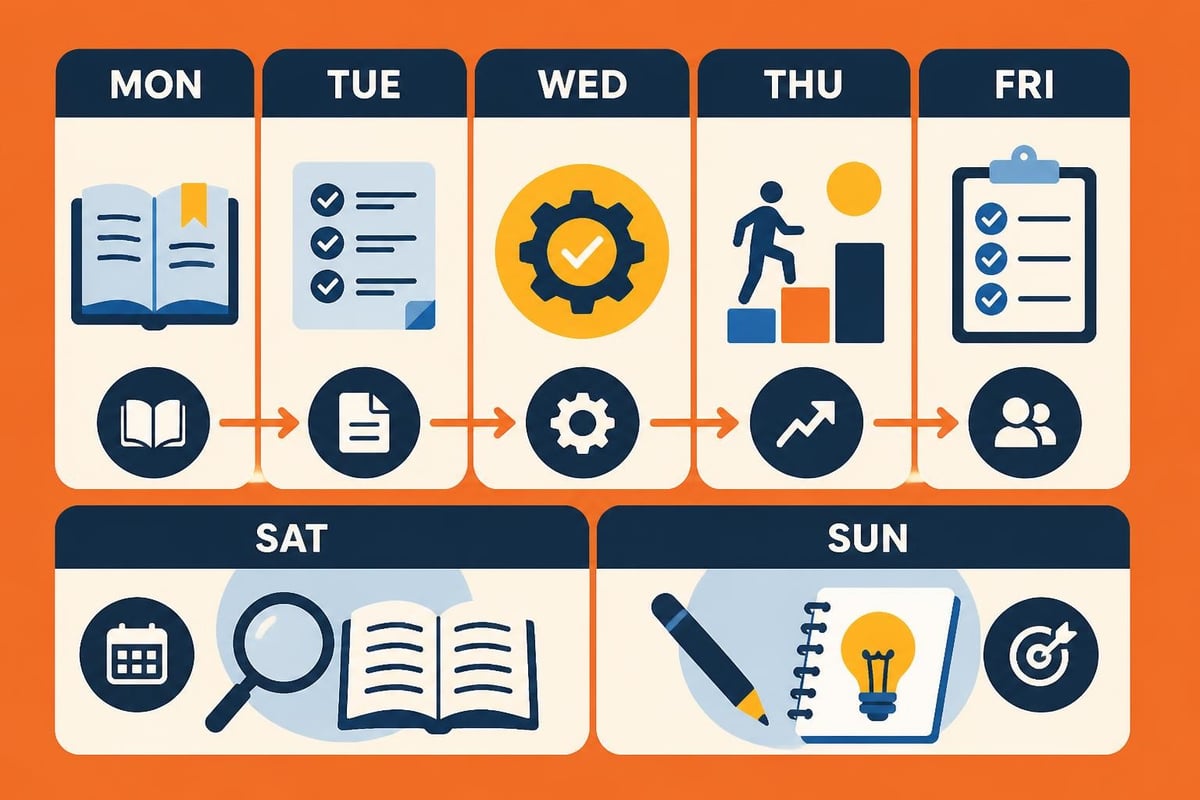
After finishing each chapter, write three specific actions you will take that week. Not someday. This week. Assign deadlines and metrics. "Improve communication with my wife" is useless. "Use tactical empathy technique from Chapter 4 during Thursday evening conversation about finances" is executable.
Share your three actions with someone who will check on Friday whether you followed through. Text a brother in your crew. Post in your accountability group. Schedule a coaching call. Make the commitment public and the follow-up inevitable.
Build a Reading Rhythm
Consistency beats intensity. Fifteen minutes daily outperforms three-hour weekend binges. Most fathers find early morning or late evening windows work best. Protect that time like you protect training time. It's non-negotiable.
Rotate categories to maintain balanced development. One month focus on habits, the next on leadership, then physical optimization. This prevents intellectual binging on one domain while others atrophy. The best self improvement books work synergistically when you develop all competencies in parallel.
Avoid Common Traps
Trap 1: Collecting Without Applying Your bookshelf isn't a trophy case. Own fewer books, implement more deeply. One book fully executed beats five books partially understood. Reread works that moved you. Mastery comes from repetition, not variety.
Trap 2: Reading as Procrastination Stop using books to avoid the hard work. If you've read three titles on habit formation but still skip workouts, the problem isn't information. It's environment and accountability. Fix those first.
Trap 3: Ignoring Context Not every book fits every season. A 25-year-old single man needs different tools than a 40-year-old father of three. Choose titles relevant to your current mission. Tactical reading serves strategic goals.
Quality Filters for New Titles
New self-help books launch weekly. Most are repackaged mediocrity. Apply these filters before investing time:
Author Credentials: Real expertise or influencer packaging?
Citation Density: Does the work reference research or rely on anecdotes?
Longevity: Has the book remained relevant for 5+ years?
Expert Endorsement: Do psychologists and clinicians recommend it?
Practical Application: Can you extract specific actions from each chapter?
The science-backed titles compiled by researchers provide a starting point for evidence-based selection. Prioritize substance over style. The best self improvement books don't entertain. They equip.
Integration With Structured Programs
Books provide maps. You still need guides who've walked the terrain. The best self improvement books accelerate progress when combined with coaching that enforces application. Knowledge without accountability produces temporary motivation. Knowledge with weekly check-ins produces permanent change.
Fathers over 35 face unique challenges: declining testosterone, competing demands on time, legacy pressure. Generic advice doesn't cut it. You need customized approaches that account for your starting point, constraints, and goals. Reading equips you. Structure transforms you.
The Short List
If you read nothing else this year, prioritize these titles based on your current gap:
For Habit and Discipline Deficits:
Atomic Habits by James Clear
The Power of Habit by Charles Duhigg
Can't Hurt Me by David Goggins
For Leadership and Influence Growth:
Extreme Ownership by Jocko Willink and Leif Babin
The 7 Habits of Highly Effective People by Stephen Covey
Never Split the Difference by Chris Voss
For Physical and Mental Performance:
Why We Sleep by Matthew Walker
Breath by James Nestor
Man's Search for Meaning by Viktor Frankl
For Relationship and Emotional Depth:
The 5 Love Languages by Gary Chapman
Daring Greatly by Brené Brown
Mindset by Carol Dweck
Every title on this list passes the evidence filter and delivers practical frameworks. Start with your weakest domain. Read with pen in hand. Extract actions immediately. Report progress weekly.
Beyond Reading
The best self improvement books reveal what you already suspected: you're capable of more. They diagnose gaps, provide language for concepts you've felt but couldn't articulate, and offer tested methods for closing the distance between current and capable.
But books alone won't close that gap. You need environments that demand your best. You need men who refuse to let you settle. You need accountability structures that make mediocrity uncomfortable and excellence inevitable.
Reading is preparation. Execution is transformation. The question isn't which books to buy. It's whether you'll build the systems that make what you read become who you are.
The best self improvement books give you frameworks. Execution gives you results. At The Father Forge, we build custom fitness and mindset programs for men ready to lead at home with the same intensity they bring to every other domain. Mental resilience, physical strength, and accountability built for fathers who refuse to plateau. If you're done reading about change and ready to become it, let's talk.