Back Workouts: Build Strength and Resilience
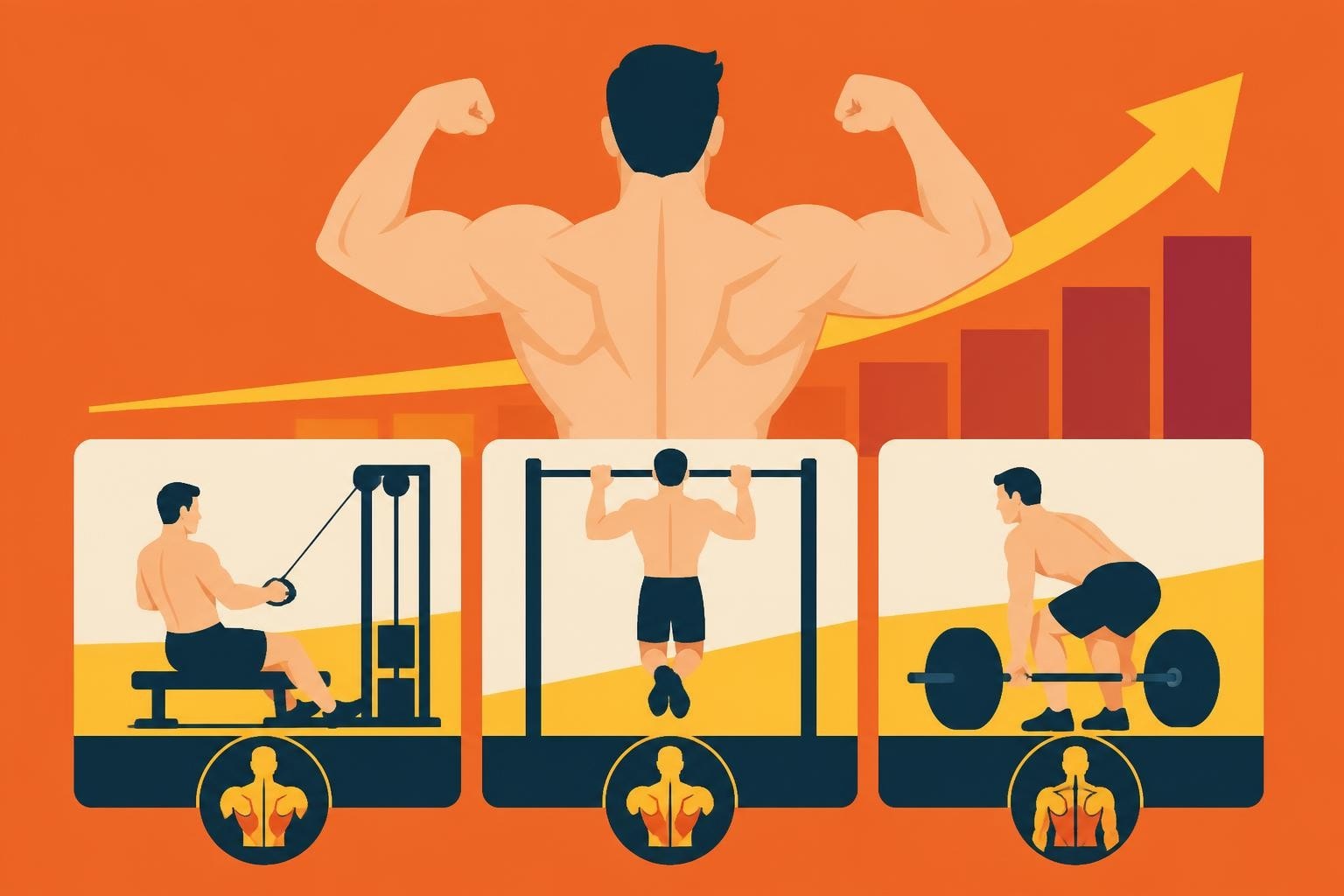
Most men walk into the gym without a plan for their back. They grab a lat pulldown machine, crank out a few sets, maybe throw in some rows, and call it done. That approach fails because it treats training as a task instead of a system. Your back is the foundation of pulling strength, postural integrity, and functional power. Building it requires structure, progressive challenge, and accountability to a plan that compounds over time. The difference between random back workouts and disciplined programming is the difference between motion and progress.
Why Your Back Demands Strategic Training
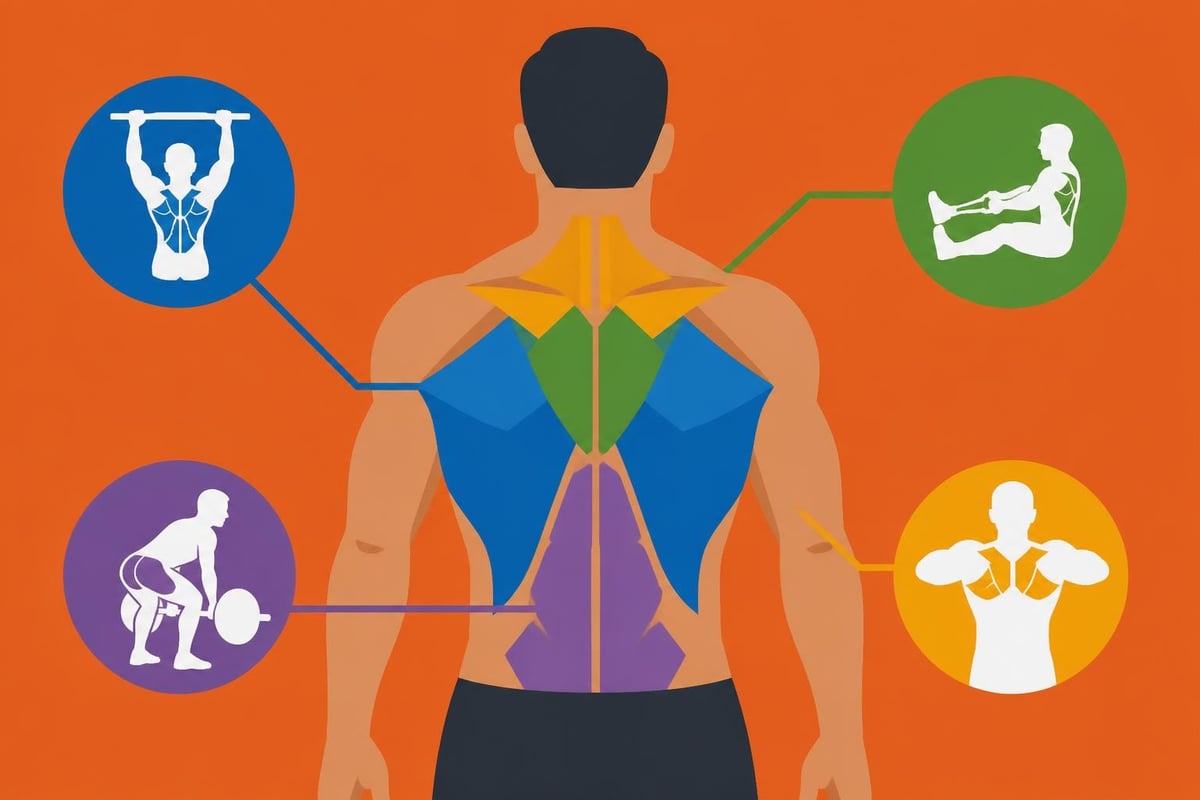
Your back is not one muscle. It is a complex system spanning from your neck to your hips, including the latissimus dorsi, rhomboids, trapezius, erector spinae, and dozens of stabilizers. Each area serves distinct functions: pulling, rotation, extension, and postural control. Training it effectively means understanding movement patterns, not just muscle names.
Most men fail back training because they chase fatigue instead of adaptation. They pick exercises that feel hard but do not progress the load, volume, or skill over weeks. Adaptation requires progressive overload: more weight, more reps, better execution, or greater time under tension. Without tracking and advancing these variables, you are just maintaining, not building.
The evidence supports structured progression. According to the ACSM's position stands on resistance training, muscle hypertrophy and strength gains require systematic manipulation of volume, intensity, and frequency. Random effort does not trigger adaptation. Planned progression does.
The Core Movement Patterns That Build Your Back
Back workouts must cover four foundational patterns. Each targets different fiber groups and functions. Your program should include all four, scaled to your current capacity and progressed weekly.
Vertical Pull: Pull-ups, chin-ups, lat pulldowns. These develop the lats and upper-back width. Vertical pulling is the single most important movement for functional pulling strength and shoulder health.
Horizontal Pull: Barbell rows, dumbbell rows, cable rows, inverted rows. These build thickness in the mid-back, strengthen the rhomboids and rear delts, and balance anterior shoulder stress from pressing movements.
Hip Hinge / Posterior Chain: Deadlifts, Romanian deadlifts, rack pulls. These load the erector spinae, glutes, and hamstrings. The deadlift is the king of total-body strength and back development. No substitutes.
Scapular Retraction and Stability: Face pulls, band pull-aparts, scapular pull-ups. These train the smaller muscles that control shoulder blade movement. Neglecting them leads to imbalance, poor posture, and eventual injury.
Movement Pattern | Primary Muscles | Key Exercises | Volume Recommendation |
|---|---|---|---|
Vertical Pull | Lats, teres major | Pull-ups, lat pulldown | 6-12 sets/week |
Horizontal Pull | Rhomboids, traps, rear delts | Barbell row, cable row | 8-12 sets/week |
Hip Hinge | Erectors, glutes, hamstrings | Deadlift, RDL | 4-8 sets/week |
Scapular Stability | Lower traps, rhomboids | Face pull, band pull-apart | 4-6 sets/week |
Building Your Weekly Back Training Structure
A sustainable back program fits within your total weekly training volume. Most men overtrain their chest and arms while under-training their back. This imbalance shows up as rounded shoulders, weak posture, and shoulder pain. Your back volume should match or exceed your pressing volume.
Frequency and Split Options
Training your back twice per week allows for higher total volume and better recovery than cramming everything into one session. Spread the movement patterns across two days to optimize quality and reduce fatigue.
Option 1: Upper/Lower Split
Day 1 (Upper A): Vertical pull emphasis (pull-ups, lat pulldown) + horizontal pull (barbell row)
Day 2 (Lower): Deadlift or RDL as primary hinge
Day 3 (Upper B): Horizontal pull emphasis (dumbbell row, cable row) + scapular work (face pulls)
Option 2: Push/Pull/Legs
Pull Day 1: Vertical pull + deadlift + rear delt work
Pull Day 2: Horizontal pull + RDL + scapular stability
Option 3: Full-Body (3x/week)
Each session includes one vertical pull, one horizontal pull, and one hinge variation rotated across the week
The structure matters less than the principle: hit each pattern twice per week with enough volume to drive adaptation, then recover and progress.
Exercise Selection and Execution Standards
Not all back exercises are equal. Compound movements that allow progressive loading deliver the most return. Isolation work has a place for addressing weak points and adding volume without excessive fatigue, but it cannot replace the basics.
The Non-Negotiable Movements
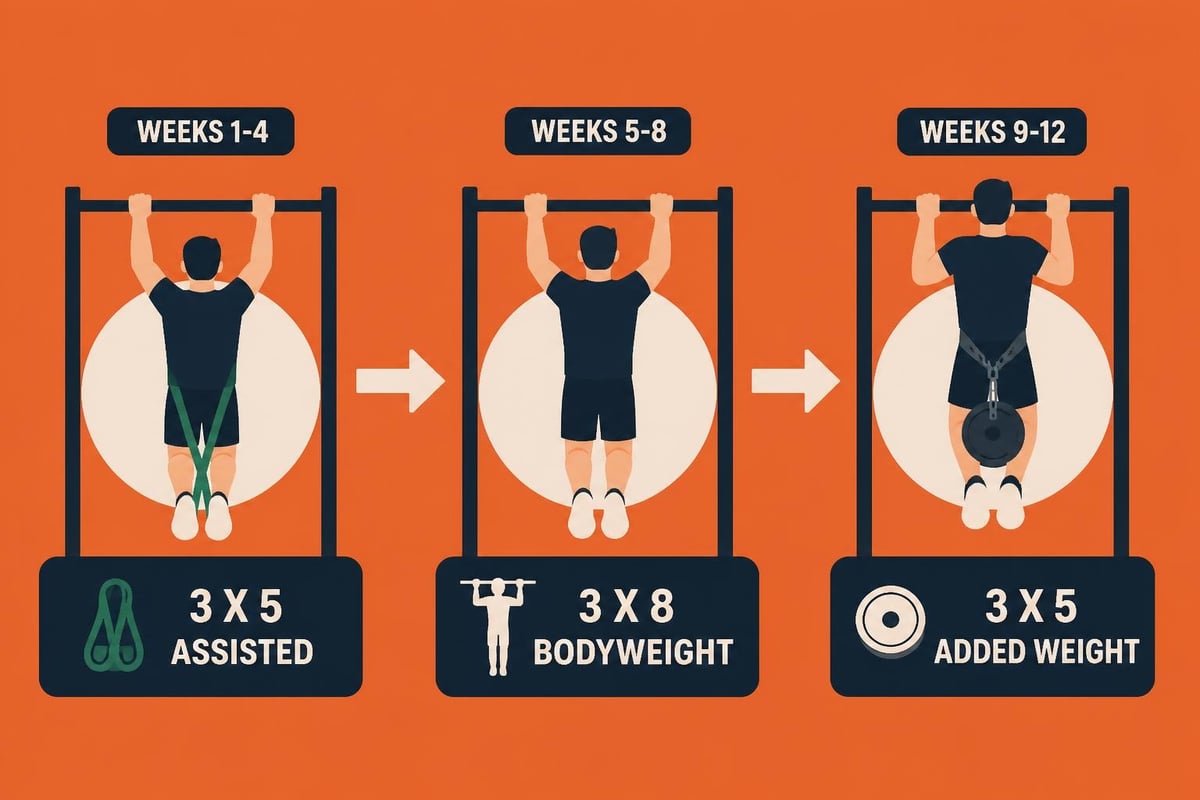
Pull-Ups / Chin-Ups: The gold standard for vertical pulling. If you cannot perform bodyweight pull-ups, use band assistance or negative reps. Progress from assisted to bodyweight to weighted. Track total reps per session and add one rep per week.
Barbell Rows: Bent-over rows with a barbell allow the heaviest loading for horizontal pulling. Maintain a rigid torso, pull the bar to your lower chest or upper abdomen, and control the eccentric. Do not sacrifice position for weight.
Deadlifts: The deadlift is total-body strength. It builds your posterior chain, grip, and mental resilience. Conventional or sumo stance both work. Prioritize clean reps over maximum weight. One heavy set of five reps per week, progressed monthly, builds more than five sloppy sets of ten.
Dumbbell Rows: Single-arm rows allow you to address imbalances and achieve a full stretch and contraction. They also reduce lower-back stress compared to bilateral rows.
Execution Standards You Cannot Compromise
Full range of motion: Every rep starts from a full stretch and finishes with maximum contraction. Partial reps do not build strength or size.
Controlled tempo: Two-second eccentric (lowering), one-second pause, one-second concentric (pull). Rushing reps is wasted effort.
Neutral spine: Your lower back stays in natural alignment. Rounding under load leads to injury, not growth.
Scapular control: Initiate every pull by retracting your shoulder blades. This engages the target muscles and protects your shoulders.
Evidence from systematic reviews on trunk exercise confirms that proper movement quality and progressive loading reduce pain and improve function. Form is not optional. It is the foundation of long-term results.
Programming Variables: Sets, Reps, and Progression
Most men fail back workouts because they do not progress the variables that matter. They use the same weight, same reps, and same rest periods for months, then wonder why nothing changes. Adaptation requires planned progression.
Volume and Intensity Targets
Hypertrophy (muscle growth): 8-15 reps per set, 3-4 sets per exercise, 60-75% of one-rep max
Strength: 3-6 reps per set, 4-5 sets per exercise, 80-90% of one-rep max
Endurance and stability: 15-25 reps per set, 2-3 sets per exercise, 40-60% of one-rep max
For most men, a mix of strength and hypertrophy work delivers the best results. Start each session with a heavy compound movement (pull-ups, rows, or deadlifts) in the 4-6 rep range, then follow with higher-rep accessory work.
Weekly Volume Guidelines by Experience:
Experience Level | Total Sets per Week (All Back Work) | Primary Focus |
|---|---|---|
Beginner (0-1 year) | 10-15 sets | Learning patterns, building base strength |
Intermediate (1-3 years) | 15-20 sets | Progressive overload on compounds, adding volume |
Advanced (3+ years) | 20-25+ sets | Specialization, weak-point work, periodization |
Monthly Progression Framework
Each month should progress one or more training variables. Do not change everything at once. Small, consistent advances compound into major gains.
Month 1 (Establish baseline): Learn movement patterns, find working weights, complete prescribed reps with good form.
Month 2 (Add load): Increase weight by 5-10 pounds on compound lifts. Maintain reps and sets.
Month 3 (Add volume): Add one set to primary movements or one additional exercise. Maintain weight and rep quality.
Month 4 (Intensity techniques): Incorporate drop sets, rest-pause, or tempo changes to increase difficulty without adding sessions.
The Physical Activity Guidelines from HHS recommend muscle-strengthening activities at least two days per week for all major muscle groups. That is the floor, not the ceiling. For serious development, plan and progress deliberately.
Addressing Back Pain and Injury Prevention
Back pain is not a reason to avoid back workouts. It is a reason to train smarter. The evidence is clear: exercise therapy is one of the most effective interventions for chronic low back pain. Cochrane's systematic review shows that structured exercise reduces pain and improves function better than passive treatment.
When to Train Through Discomfort and When to Stop
Pain is information, not a blanket prohibition. Distinguish between discomfort from training stimulus and pain from tissue damage.
Train through: Muscle soreness, mild stiffness, general fatigue. These are normal responses to progressive training.
Modify or stop: Sharp pain, radiating pain down the leg, loss of strength or sensation, pain that worsens with each rep.
If you experience concerning pain, consult a healthcare provider. NIAMS guidance on back pain outlines when imaging and specialist referral are appropriate.
Exercise Modifications for Sensitive Backs
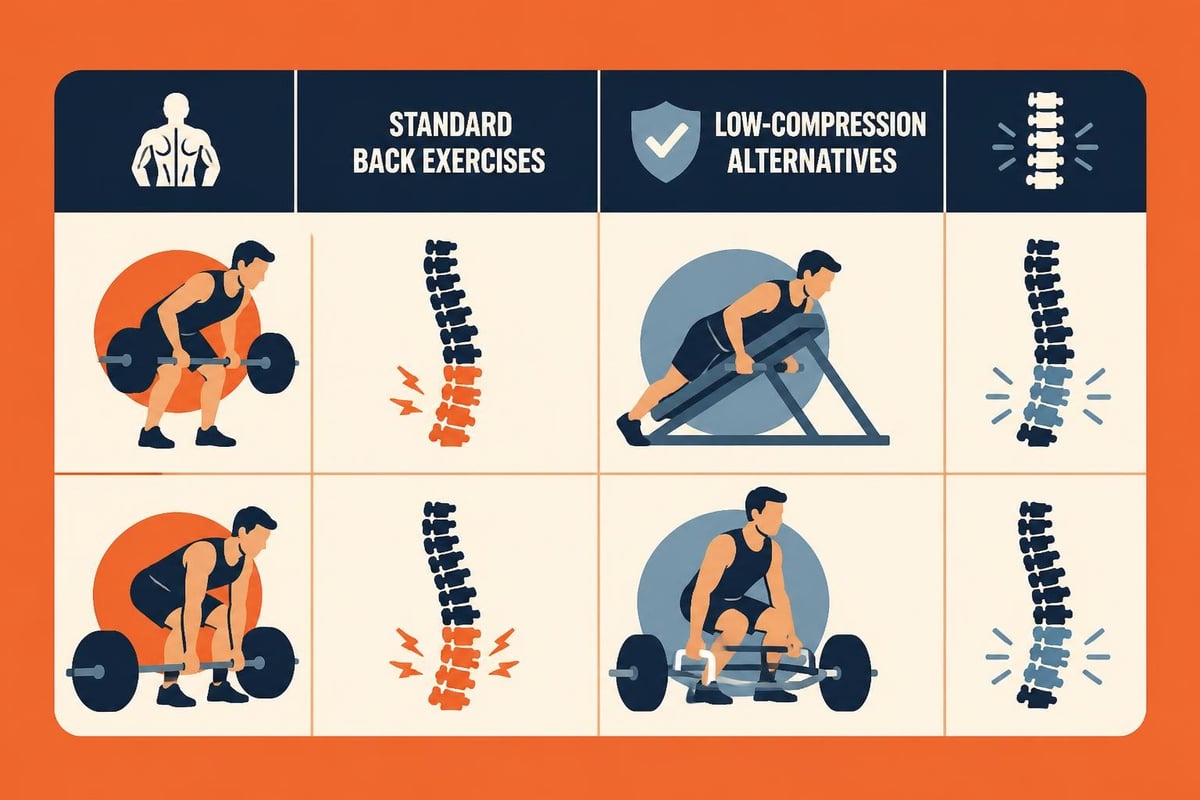
Many men can continue training with adjustments. Swap high-compression movements for alternatives that maintain stimulus without aggravation.
Replace barbell rows with: Chest-supported rows, cable rows, or inverted rows to reduce lower-back load.
Replace conventional deadlifts with: Trap bar deadlifts, Romanian deadlifts, or rack pulls to adjust range and leverage.
Add core stability work: Planks, dead bugs, and bird dogs strengthen the stabilizers that protect your spine during loaded movements.
Harvard Health guidance emphasizes that strengthening exercises, when properly dosed, help prevent recurrence. Avoidance leads to weakness. Smart programming builds resilience.
The Role of Accountability and Coaching in Back Development
You already know what exercises to do. Information is not your limitation. Execution, consistency, and honest feedback are. Most men train their backs sporadically, skip the hard movements, and never track progression. That is not a knowledge problem. It is an accountability problem.
Working with a coach who understands programming, progression, and individual adaptation removes guesswork. The 1-on-1 men's coaching at The Father Forge includes custom workout programming designed for your goals, weekly accountability calls, and adjustments based on your response to training. You do not need another app. You need someone who will hold you to the standard you set for yourself.
What Accountability Looks Like in Practice
Tracking every session: Weight, reps, and notes on execution. You cannot progress what you do not measure.
Weekly review: Compare this week to last week. Identify what improved and what stalled.
Honest assessment: Did you execute the plan, or did you modify it on the fly? If you changed the plan, why?
Course correction: Adjust volume, intensity, or exercise selection based on results, not feelings.
Brotherhood and external accountability create the environment where discipline replaces motivation. Motivation fades. Systems endure.
Nutrition and Recovery for Back Growth
Back workouts break down muscle tissue. Growth happens during recovery. If you train hard but sleep poorly, undereat protein, or skip rest days, you are wasting effort.
Protein Intake for Muscle Repair
Aim for 0.8 to 1 gram of protein per pound of body weight daily. Spread intake across four meals to optimize muscle protein synthesis. Your back muscles respond to training stimulus only if you provide the raw materials for repair.
Sleep as a Non-Negotiable
Seven to nine hours per night. Sleep is when growth hormone peaks and tissues rebuild. Chronic sleep deprivation blunts strength gains and increases injury risk. This is not negotiable for serious lifters.
Active Recovery and Mobility
Light movement on off-days improves blood flow and reduces stiffness. Walking, swimming, or low-intensity cycling supports recovery without adding training stress. Dedicate ten minutes post-workout to stretching the lats, thoracic spine, and hips. Mobility work prevents compensation patterns that lead to injury.
Long-Term Progression and Plateau Management
Plateaus are inevitable. Strength and size gains slow as you approach your genetic potential. The solution is not more volume or intensity. It is smarter periodization and patient progression.
Recognizing a True Plateau
A plateau means no progress for four to six weeks despite consistent effort and recovery. One or two stagnant weeks is normal fluctuation. Do not overreact.
Strategies to Break Through Stalls
Deload week: Reduce volume and intensity by 40-50% for one week. Return refreshed with accumulated adaptations realized.
Change rep ranges: If you have been training heavy (3-5 reps), shift to moderate reps (8-12) for four weeks. Different stimuli trigger different adaptations.
Add exercise variety: Swap barbell rows for dumbbell rows, or strict pull-ups for weighted chin-ups. Keep the pattern, change the tool.
Increase frequency: If you train back once per week, add a second lighter session. More exposure drives skill improvement and volume tolerance.
Address weak links: If your grip fails before your back fatigues, add direct grip work. If your lower back limits your rows, strengthen your erectors and core.
Recent meta-analyses on exercise for low back pain show that specific, progressive loading is more effective than generic activity. Apply the same principle to performance: specific diagnosis, targeted intervention, measurable progress.
Training Your Back as a Father and Leader
Your back training is not vanity. It is preparation for the physical demands of fatherhood: lifting children, carrying gear, maintaining posture through long days. A strong back supports your ability to serve your family without breaking down.
Your training discipline also models leadership. Your kids watch how you handle hard things. Do you show up when it is inconvenient? Do you follow through on your plan? Do you quit when progress slows? The answers to those questions shape the men and women they become.
Building your back requires the same principles you apply to leadership: clarity of purpose, consistent execution, accountability, and the willingness to do hard things when no one is watching. Training is a laboratory for character. The weight does not lie. Your reflection does not flatter. Progress reveals whether your habits match your intentions.
Your back is built through disciplined programming, progressive challenge, and the accountability to execute when motivation fades. Track your sessions, progress your loads, and hold yourself to the execution standards that produce results. The Father Forge builds custom fitness and mindset programs for fathers who are done with guesswork and ready for structure. If you are serious about becoming the strongest version of yourself, physically and mentally, this is where that work begins.