Arm Workouts: Build Strength and Leadership at Home
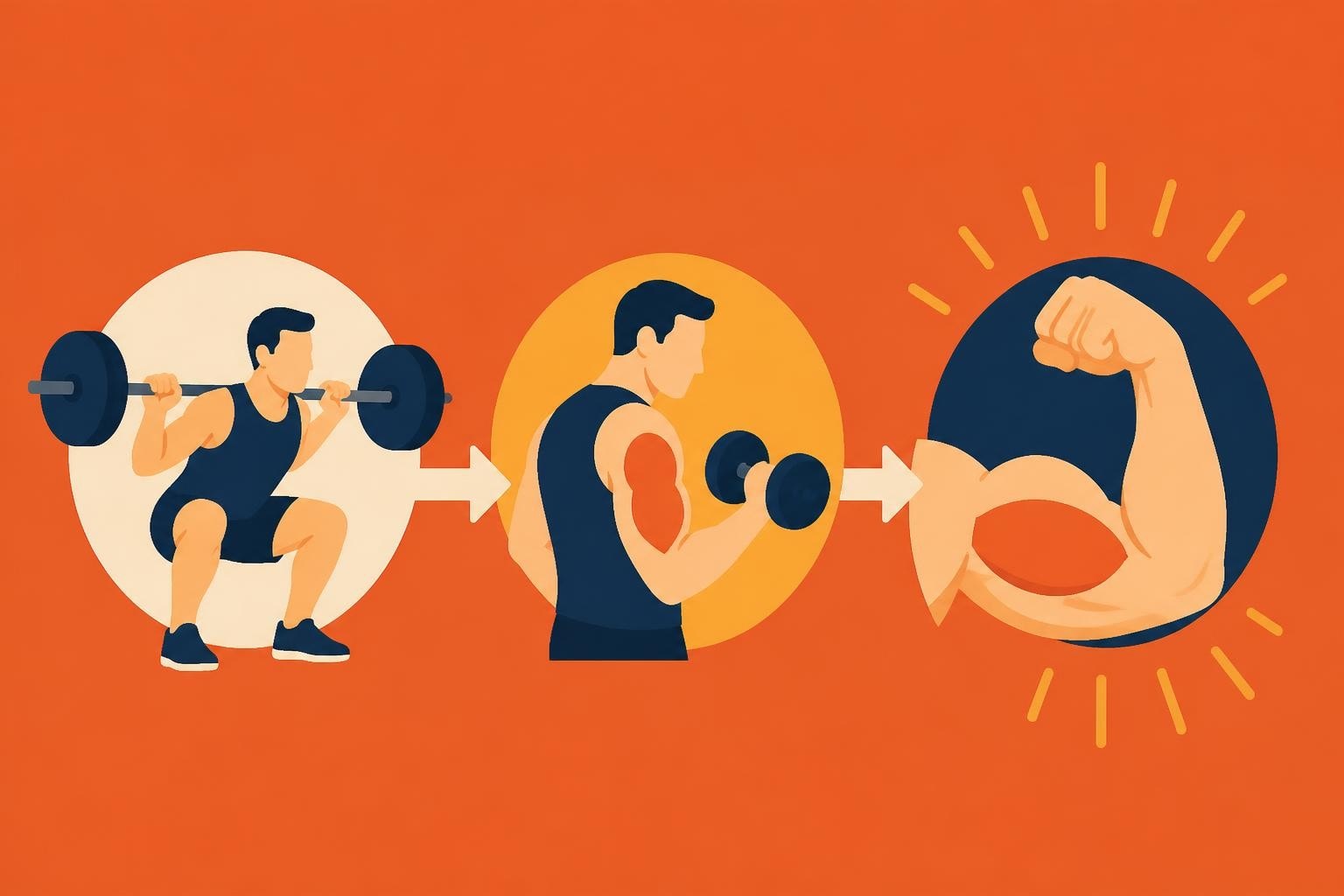
Most men approach arm workouts backward. They chase pump, isolation exercises, and vanity metrics without building the foundational strength and work capacity required for sustained progress. The result is stalled gains, imbalanced development, and a training program that delivers neither functional strength nor visible results. Arm workouts demand the same discipline as leadership: clear objectives, deliberate execution, and accountability to a standard that outlasts motivation. This guide establishes that standard.
Why Arm Workouts Matter Beyond Appearance
Arm strength serves a dual function. Visible arm development signals competence and physical capability to the world around you. But the functional capacity of your biceps, triceps, and forearms determines your ability to carry groceries, lift children, move furniture, and perform every pushing and pulling task life demands. Harvard Health Publishing identifies everyday arm exercises as critical for maintaining independence and physical function across the lifespan.
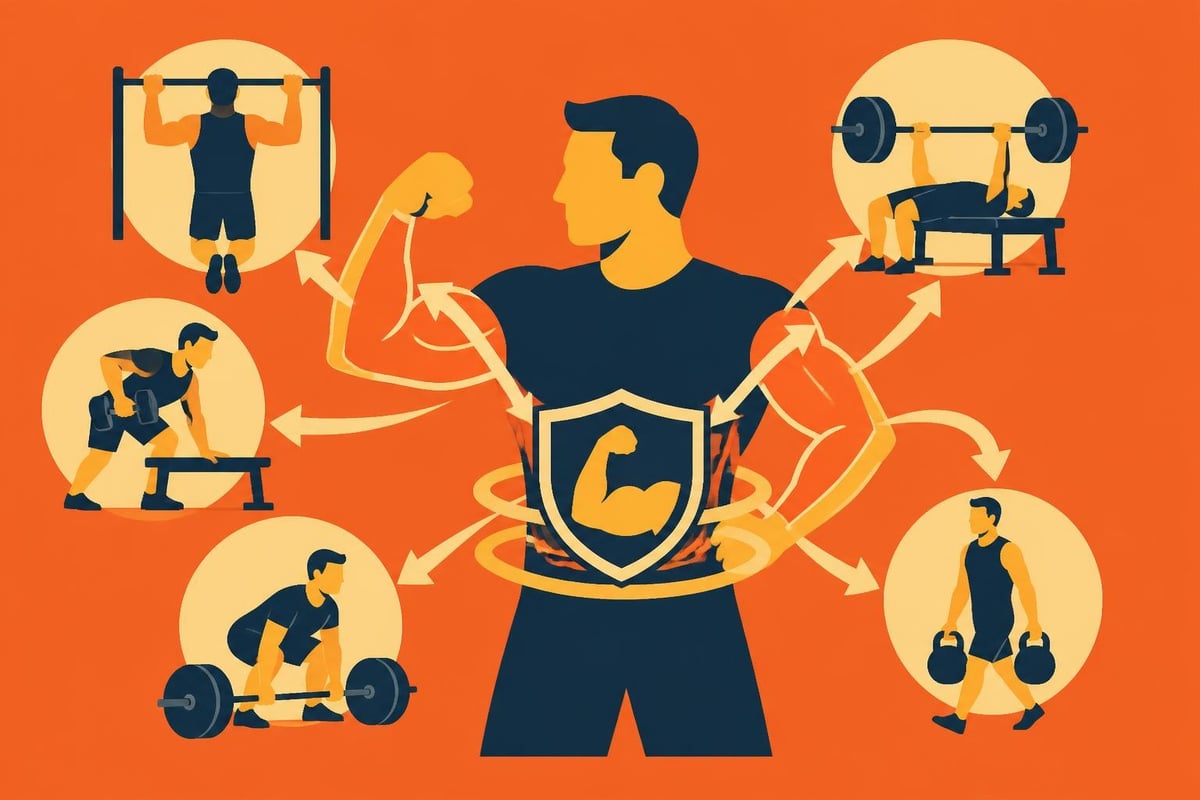
Strong arms support compound movements. Every pull-up, row, press, and deadlift requires arm strength to stabilize load and execute movement patterns safely. Weak arms limit your total-body strength potential regardless of leg or back development. They create structural imbalances that cascade into injury risk and performance plateaus.
The Function-First Hierarchy
Prioritize arm training in this order:
Grip strength and forearm endurance for carrying capacity and work tolerance
Triceps development for pressing strength and lockout power
Biceps hypertrophy for pulling movements and elbow stability
Brachialis and brachioradialis for complete arm development and injury prevention
This hierarchy reflects biomechanical reality. Your triceps comprise roughly two-thirds of upper-arm mass and drive every pressing pattern. Your forearms transfer force from hands to shoulders in every lift. Biceps matter, but they occupy third place for a reason.
Evidence-Based Exercise Selection
Not all arm exercises deliver equal results. ACE Fitness conducted experimental research comparing triceps exercises using electromyography and found significant activation differences between movements. Choose exercises based on muscle recruitment, injury risk, and your training environment.
Top Triceps Movements
Exercise | Primary Benefit | Equipment | Progression Path |
|---|---|---|---|
Close-grip bench press | Maximum load capacity | Barbell, bench | Add 5 lbs weekly |
Dips (bodyweight or weighted) | Compound strength | Parallel bars | Add external load |
Overhead triceps extension | Long-head emphasis | Dumbbell, cable | Increase ROM slowly |
Cable pushdown | Isolation, constant tension | Cable machine | Vary grip attachments |
The close-grip bench press allows progressive overload with measurable increments. Dips build functional pressing strength that transfers to every upper-body task. Overhead extensions target the long head of the triceps, which originates at the shoulder and requires elbow-overhead positioning for full recruitment.
Proven Biceps Exercises
NASM identifies nine best arm exercises based on biomechanics and coaching applications. For biceps development:
Barbell curls remain the foundation for progressive overload and total biceps mass
Hammer curls develop brachialis and brachioradialis while sparing wrist strain
Incline dumbbell curls maximize stretch and time under tension at long muscle lengths
Cable curls provide constant tension throughout the range of motion
Rotate emphasis every four to six weeks. Spend one training block prioritizing heavy barbell curls with controlled eccentrics. The next block, emphasize incline curls for hypertrophy at stretched positions. This rotation prevents adaptation and addresses complete arm development.
Programming Arm Workouts for Sustainable Growth
Arm workouts fail when programming ignores recovery capacity or progression structure. Your biceps and triceps receive significant indirect volume from compound movements. Every row, pull-up, press, and bench variation taxes arm musculature before you perform a single isolation exercise.
Weekly Volume Guidelines
For intermediate lifters (18+ months consistent training):
10-16 sets per week for triceps (combining direct and indirect volume)
8-14 sets per week for biceps (combining direct and indirect volume)
4-8 sets per week for forearms (farmer carries, dead hangs, wrist curls)
Advanced lifters with developed work capacity tolerate higher volumes. Beginners require less direct arm work because compound movements provide sufficient stimulus. The American College of Sports Medicine provides resistance-training guidelines that support these ranges for hypertrophy and strength across training experience levels.
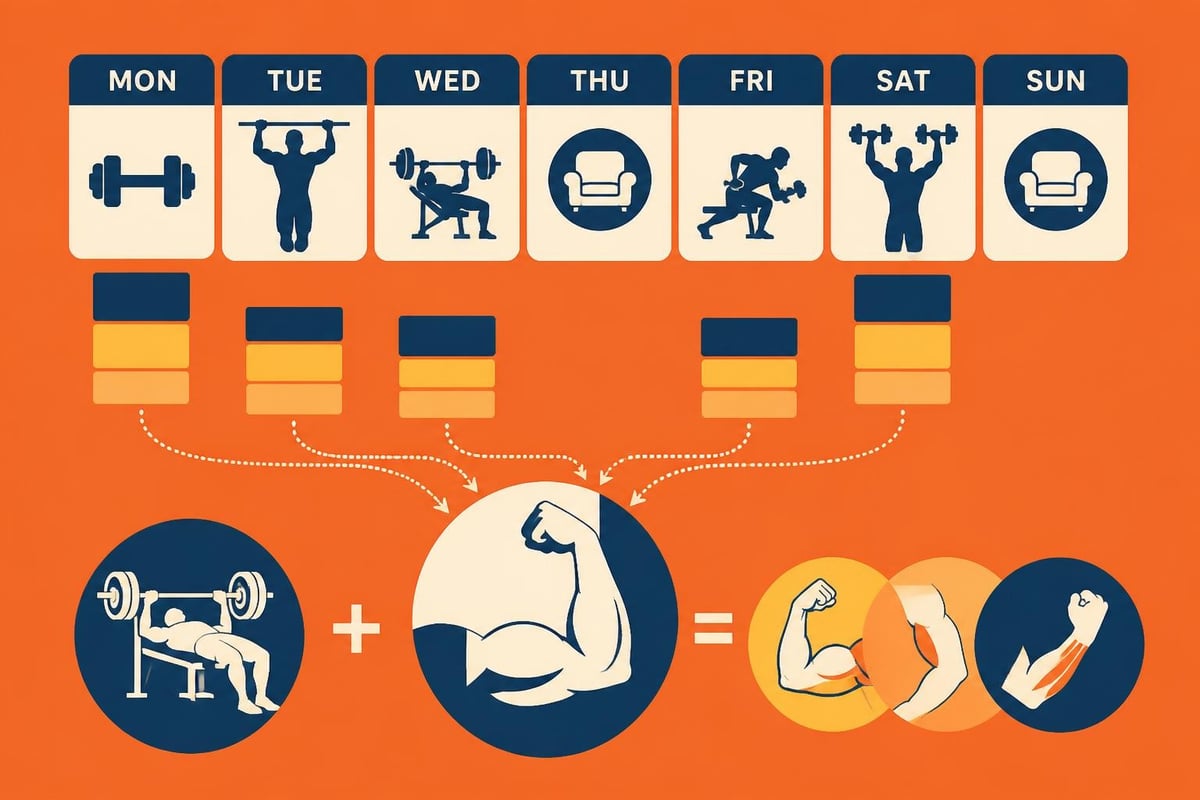
Sample Training Split
Monday: Upper Push Focus
Close-grip bench press: 4 sets × 6-8 reps
Overhead dumbbell extension: 3 sets × 10-12 reps
Cable pushdown (rope): 3 sets × 12-15 reps
Wednesday: Upper Pull Focus
Barbell curl: 4 sets × 6-8 reps
Hammer curl: 3 sets × 10-12 reps
Farmer carry: 3 sets × 40 yards
Friday: Arm Emphasis
Weighted dips: 3 sets × 8-10 reps
Incline dumbbell curl: 3 sets × 10-12 reps
Overhead cable extension: 3 sets × 12-15 reps
Cable curl: 3 sets × 12-15 reps
Dead hang: 3 sets × 30-45 seconds
This split provides 48-72 hours recovery between direct arm sessions while accumulating sufficient weekly volume. Adjust sets and reps based on your recovery capacity and training age. If strength stalls for two consecutive weeks, reduce volume by 20-30% for one week before resuming progression.
Technique Standards and Common Errors
Poor technique in arm workouts produces three outcomes: minimal muscle stimulation, joint inflammation, and wasted training time. Most technique errors stem from ego and impatience, not lack of information.
Non-Negotiable Form Cues
For all curling movements:
Maintain stable shoulder position throughout the set
Control eccentric (lowering) phase for 2-3 seconds minimum
Avoid torso swing or momentum initiation
Keep elbows stationary relative to ribcage
For triceps extensions:
Lock shoulder blade position before initiating movement
Lower weight under control to full elbow flexion
Drive extension through triceps contraction, not momentum
Pause briefly at lockout without hyperextending elbow
The most common error is sacrificing range of motion to move heavier loads. A partial-rep barbell curl with 20 additional pounds produces less stimulus than a full-range curl with appropriate load. Your biceps cannot differentiate weight from tension. They respond to mechanical tension through full ranges of motion under muscular control.
Injury Prevention Priorities
Elbow tendinitis represents the primary injury risk in arm training. Prevent it through:
Gradual load progression (no more than 5% weekly increases)
Full range of motion to distribute stress across joint structures
Varied grip positions to prevent repetitive stress patterns
Adequate recovery between high-volume arm sessions
The American Physical Therapy Association provides clinical guidance for upper-limb rehabilitation and safe exercise progressions. If you experience persistent elbow pain lasting beyond 72 hours post-training, reduce training volume by 40-50% and consult a qualified physical therapist.
Age and Adaptation Considerations
Arm workouts for fathers over 35 require different programming variables than protocols designed for younger lifters. Recovery capacity declines with age while injury risk increases. These realities demand adaptation, not abandonment of training intensity.
Cochrane systematic reviews on progressive resistance strength training demonstrate that older adults achieve significant strength and functional gains when programs account for recovery needs and joint health. Recent research published in Sports Medicine - Open confirms resistance training adaptations remain robust across the lifespan when programming addresses individual capacity.
Training Modifications After 35
Volume adjustments:
Prioritize quality over quantity (fewer sets with higher execution standards)
Extend recovery periods between arm-focused sessions to 72-96 hours
Reduce weekly volume during high-stress work or life periods
Exercise selection:
Emphasize exercises with favorable resistance curves (cables, bands)
Include more unilateral work to address asymmetries
Reduce exercises that aggravate existing joint conditions
Progressive overload strategies:
Use double progression (add reps before adding weight)
Increase time under tension through tempo manipulation
Add sets before increasing load significantly
The 1-on-1 Men's Coaching program accounts for these variables through custom workout programming that adapts to your recovery capacity, injury history, and weekly schedule demands rather than applying generic templates.
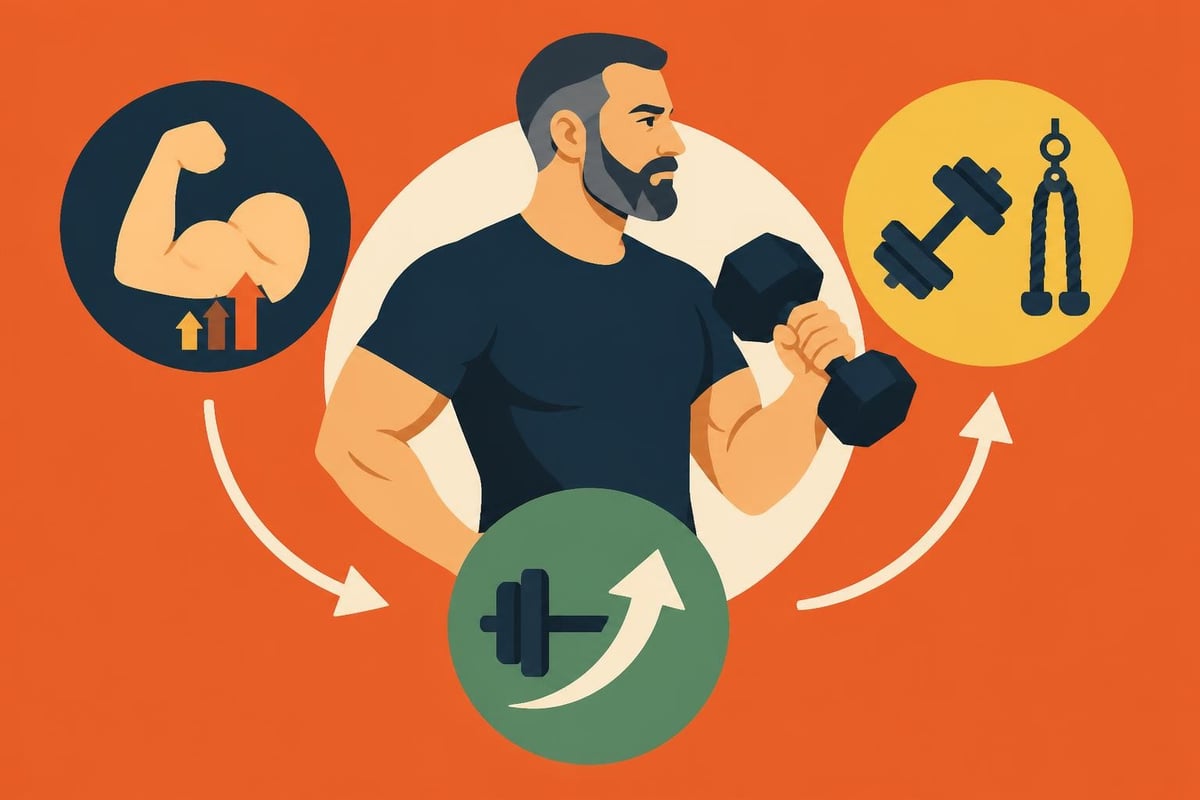
Equipment Options and Home Training Solutions
Effective arm workouts do not require commercial gym access. Minimal equipment produces maximum results when exercise selection and progression align with available tools.
Essential Home Equipment
Equipment | Cost Range | Primary Use | Versatility Score |
|---|---|---|---|
Adjustable dumbbells | $200-$400 | All arm exercises | 9/10 |
Resistance bands | $30-$80 | Curls, extensions, mobility | 8/10 |
Pull-up bar | $25-$60 | Biceps, forearms, back | 10/10 |
Suspension trainer | $50-$180 | Bodyweight variations | 7/10 |
A pull-up bar and resistance band combination provides sufficient equipment for complete arm development. Pull-ups and chin-ups build biceps and forearms. Band pushdowns, overhead extensions, and curls target triceps and biceps through variable resistance patterns. Research on machine-based versus free-weight training shows functional outcomes remain comparable when total volume and intensity match.
Bodyweight Arm Training Protocol
When equipment access is zero:
Triceps options:
Standard push-ups (hands narrow)
Pike push-ups (elevated hips)
Bench dips (feet elevated for progression)
Pseudo-planche push-ups (hands by hips)
Biceps options:
Chin-ups (underhand grip)
Inverted rows (underhand grip, table or bar)
Towel curls (isometric holds with towel tension)
Bodyweight training requires creative progression through leverage manipulation, tempo changes, and volume increases. A standard push-up becomes significantly harder when you elevate feet, add a pause at the bottom, or perform reps explosively.
Nutrition and Recovery for Arm Growth
Arm workouts represent stimulus. Growth occurs during recovery when nutrition and sleep support adaptation. Most training plateaus trace back to insufficient protein intake, inadequate sleep, or accumulated fatigue from life stress.
Protein Requirements
Target 0.8-1.0 grams of protein per pound of bodyweight daily when pursuing muscle growth. A 180-pound man requires 144-180 grams of protein spread across 3-4 meals. Protein timing matters less than total daily intake, but consuming 25-40 grams within two hours post-training optimizes muscle protein synthesis.
Sleep Standards
Muscle growth and nervous system recovery demand 7-9 hours of sleep nightly. Sleep deprivation elevates cortisol, reduces testosterone, and impairs insulin sensitivity. These hormonal disruptions limit hypertrophy regardless of training quality. Protect sleep with the same discipline you apply to training sessions.
Stress Management
Chronic stress from work, marriage conflict, or financial pressure compromises recovery capacity. Your body cannot differentiate physical stress from psychological stress. Both deplete recovery resources. Address stress through:
Structured daily routines that reduce decision fatigue
Clear communication in marriage and family relationships
Financial planning that eliminates crisis-driven reactivity
Community connection with men pursuing similar growth
The Father Forge emphasizes mental resilience and emotional balance because physical results require psychological foundation. Training programs fail when life stress exceeds management capacity.
Tracking Progress and Adjusting Variables
Effective arm workouts produce measurable progress every 4-6 weeks. Track these metrics:
Load progression: Weight used for target rep ranges in primary exercises
Volume progression: Total sets and reps completed weekly
Arm measurements: Biceps circumference at consistent measurement point
Performance markers: Max chin-ups, dips, or other benchmark movements
Photograph arms under consistent lighting every four weeks. Visual progress often precedes measurement changes but provides powerful feedback. If measurements and photos show no progress after six weeks of consistent training, adjust one variable:
Increase weekly volume by 15-20%
Add one training session
Improve nutrition consistency (protein and total calories)
Enhance recovery quality (sleep, stress management)
Change one variable at a time. Multiple simultaneous changes prevent identifying which adjustment produced results.
Building Accountability Into Arm Training
Information does not produce results. Execution produces results. Execution requires accountability structures that outlast motivation. Most men fail arm workouts not because they lack knowledge but because they train alone without external accountability.
Brotherhood provides the accountability framework that information cannot. When you commit to another man who checks your training logs, asks about your nutrition, and expects you to show up regardless of how you feel, execution becomes non-negotiable. This is why group training environments and coaching relationships outperform solo efforts.
Accountability is not cheerleading. It is expectation paired with verification. Someone who knows your stated goals, observes your actual behavior, and names the gap between them provides the leverage motivation cannot sustain. Build this into your training through training partners, coaching relationships, or structured communities that demand standards.
Arm workouts deliver results when approached with the same leadership principles you apply elsewhere: clear standards, consistent execution, and accountability that outlasts feelings. Strong arms support functional capacity, visible development, and the confidence that comes from disciplined effort producing measurable outcomes. The Father Forge builds custom fitness and mindset programs for fathers who refuse to settle for average, combining structured training with the brotherhood and accountability required for sustained transformation.