Anger as the Symptom: What Men Don't Realize
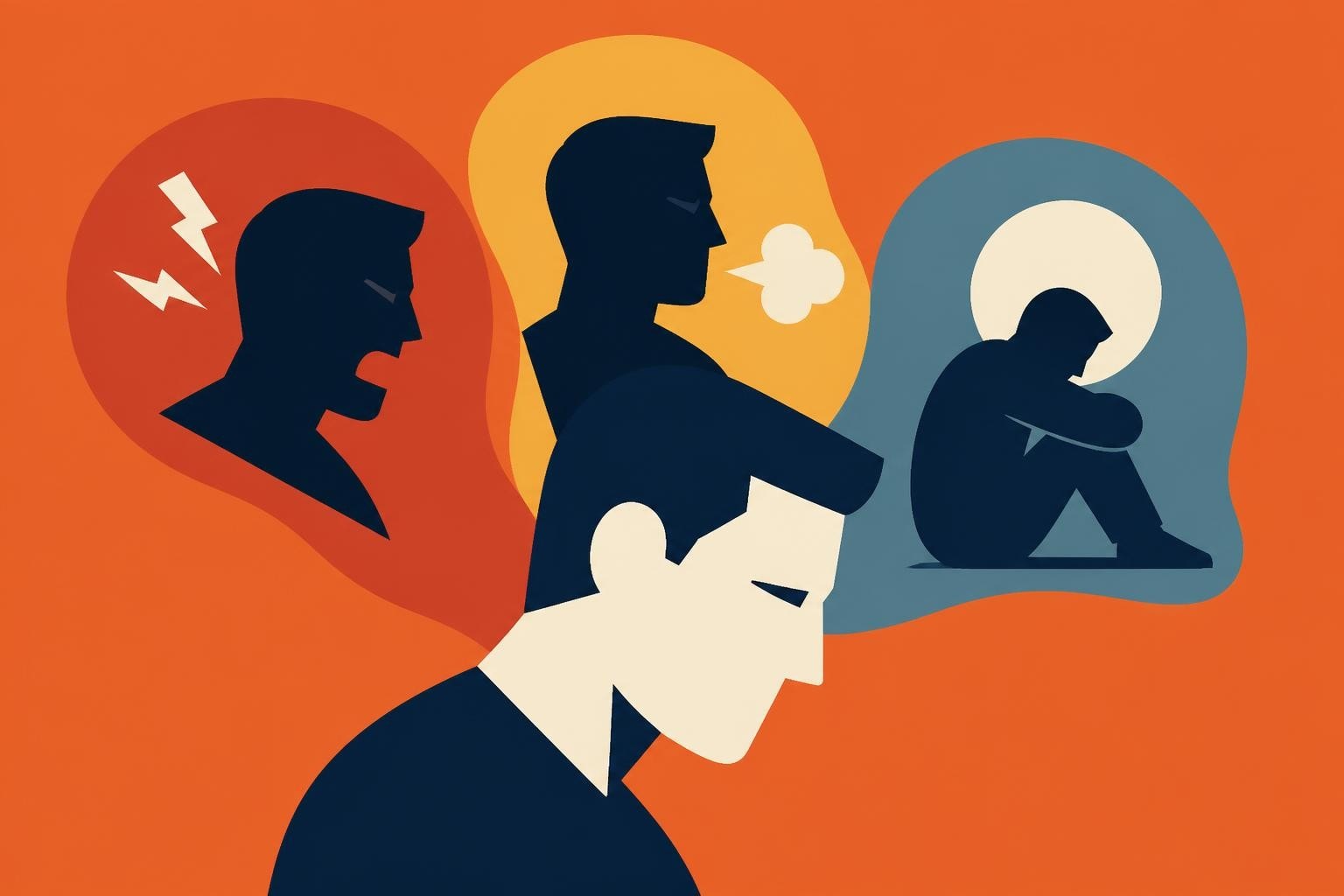
One in five men experience anxiety or depression but most never call it that. We do not use those words. We do not sit in a therapist's office talking about our feelings. Instead, we snap at our kids. We carry tension in our jaw. We work longer hours than necessary. We withdraw from our wife. We take risks that make no sense. Men present differently when something is wrong, and if you do not know what to look for, you will miss it entirely. You will treat the anger, the frustration, the irritability as character flaws instead of what they are: symptoms of something deeper.
The Warning Light You Keep Ignoring
Anger as the symptom is like the check engine light on your dashboard. The light itself is not the problem. The light is telling you something under the hood needs attention. Most men see the anger and think that is what they need to fix. They tell themselves to calm down, to count to ten, to take a breath. Those tactics might dim the light temporarily, but they do nothing about the engine.
After my car crash in 2004, I had 13 screws and titanium put in my pelvis. Doctors said I should not run again. I did not talk about what that did to me mentally. I trained through it. I ran four marathons. But the anger and the frustration I carried during recovery, I did not have a name for that at the time. I thought I was just being tough. I thought pushing through pain was what leaders do. What I did not realize was that anger was my body's way of telling me I had not processed the trauma, the loss, the fear of never being the same.
When you ignore the warning light long enough, the engine fails. For men, that failure looks like broken relationships, lost jobs, health problems, and isolation.Understanding anger as a symptomrequires you to stop treating the surface behavior and start diagnosing the root cause.
How Men Present Differently
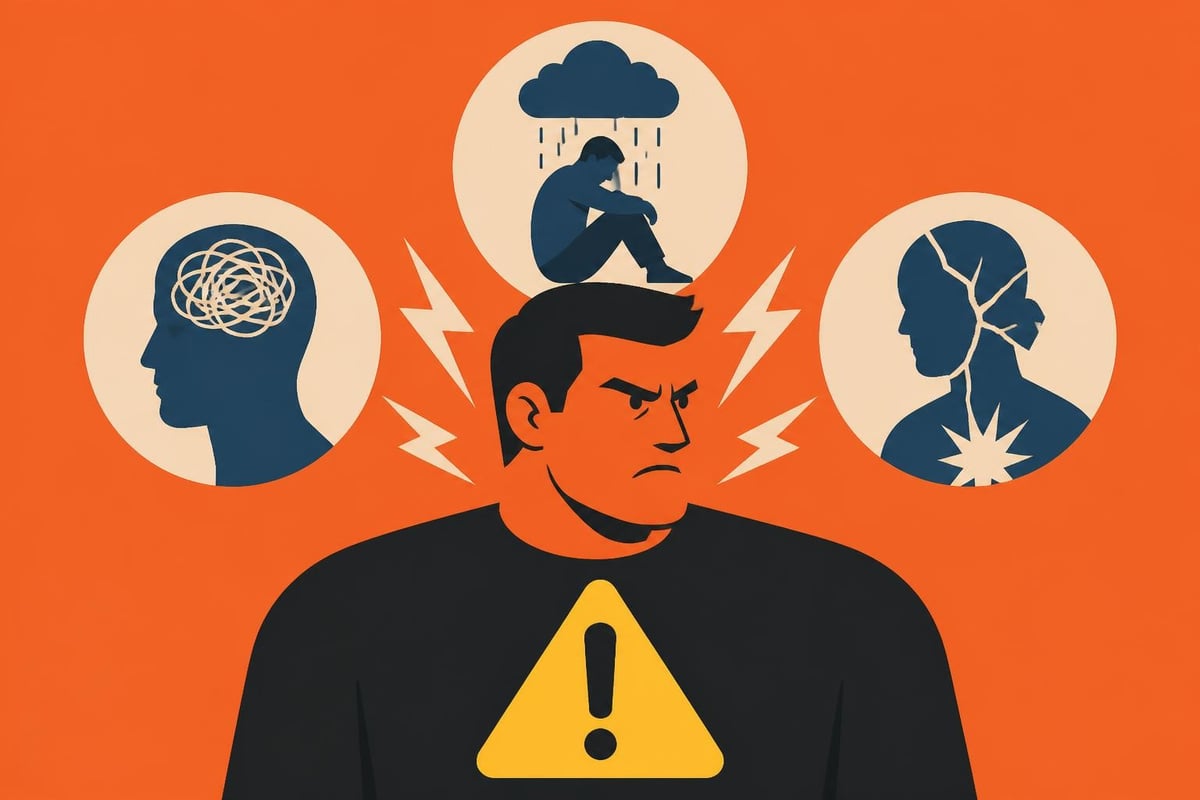
The mental health industry built its diagnostic criteria largely around how women present symptoms. Women with depression often report sadness, crying, loss of interest in activities. Men with depression report none of that. Instead, we show up as:
Irritability and anger: Short fuse, disproportionate reactions, rage over small issues
Emotional numbness: Feeling nothing, disconnection from family, inability to enjoy what used to matter
Overworking: Staying at the office late, taking on extra projects, never sitting still
Withdrawal: Avoiding conversation, spending time alone, shutting down emotionally
Risk-taking: Reckless driving, excessive drinking, dangerous hobbies, financial gambles
These are not personality traits. These aresymptoms of underlying conditionsthat never get diagnosed because we do not recognize them for what they are. A man who works 70 hours a week and snaps at his family is not just stressed. A man who takes up extreme sports at 40 and starts drinking more is not just going through a phase. These behaviors are adaptive responses to internal pain that has no outlet.
The problem is not that men are incapable of feeling. The problem is that we are conditioned to express distress in ways that look like strength. Anger looks strong. Working harder looks responsible. Taking risks looks courageous. But underneath, these are the same fear, sadness, and anxiety that women are allowed to name and address directly.
The Anger Mask
Anger is the most socially acceptable emotion for men. From childhood, boys learn that sadness is weakness but anger is power. You can be angry at a referee, angry at a competitor, angry at injustice. But you cannot be scared. You cannot be sad. You cannot be overwhelmed.
So when life hits you with something you cannot control, when you feel powerless or afraid, your nervous system reaches for the one emotion you are allowed: anger. The anger masks the real issue. It gives you a sense of control when everything else feels out of reach. But anger as the symptom means the real issue never gets addressed. You are fighting the wrong battle.
True EmotionWhat It Looks LikeWhat We Call ItFearHypervigilance, withdrawal, avoidanceBeing careful, strategicSadnessEmotional numbness, isolation, fatigueBeing tired, needing spaceShameSelf-criticism, overworking, perfectionismHigh standards, disciplinePowerlessnessAnger, control behaviors, aggressionStanding your ground
The table shows the translation error most men make. We experience one emotion but express a different one entirely. This is not dishonesty. This is survival in a culture that punishes male vulnerability.
Three Signs to Watch For in Yourself
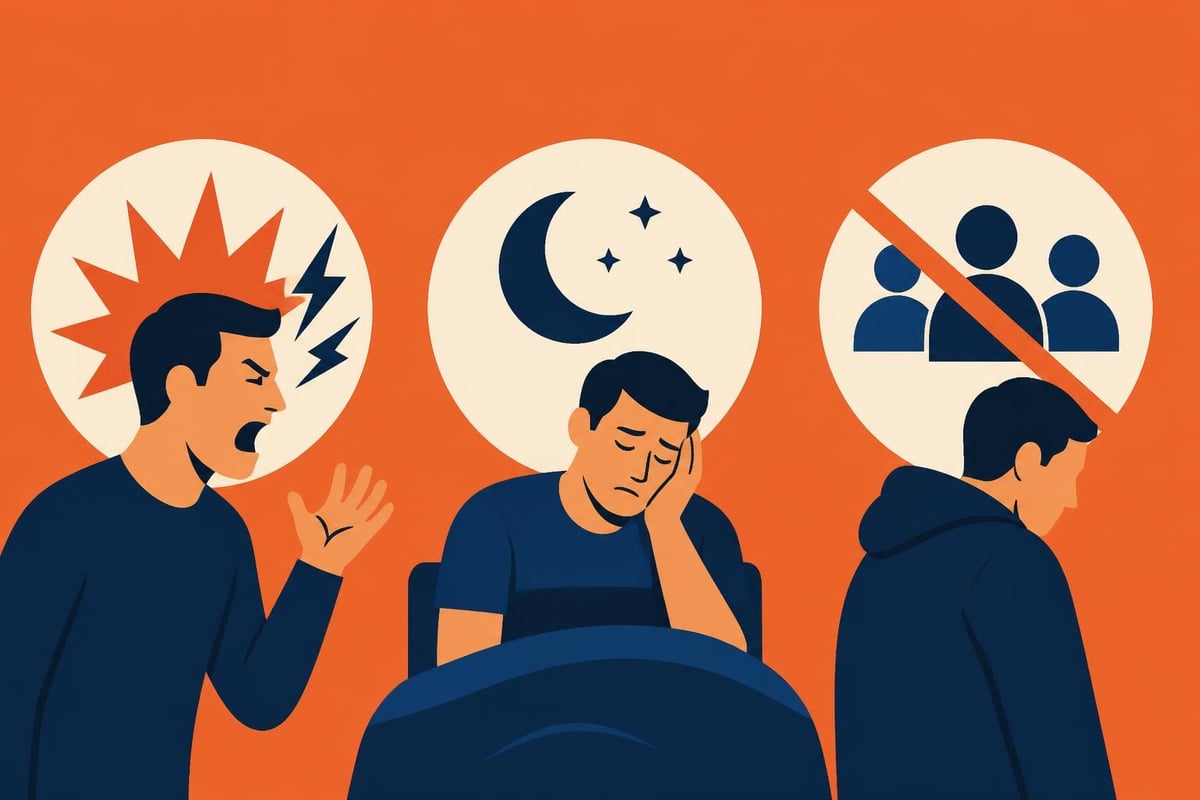
You need to know what to look for. These signs are not occasional bad days. They are patterns. They are consistent responses that have become your default setting.
Sign One: Your Reactions Are Disproportionate
Your kid spills milk and you explode. Your wife asks a simple question and you feel rage. Traffic makes you want to destroy something. The reaction does not match the trigger. This is anger as the symptom of something deeper. The milk is not the problem. The question is not the problem. What is happening is that your nervous system is already maxed out, already flooded with stress hormones, already at capacity. The small trigger is just the final input that causes the overflow.
When your baseline is elevated, everything feels like a threat.Irritability becomes your constant state, not an occasional reaction. You are not a bad person. You are a person whose system is overwhelmed and has no other way to discharge the pressure.
Sign Two: You Cannot Sit Still
Rest feels wrong. Sitting on the couch feels like failure. You need to be doing something, fixing something, building something, moving toward something. The drive never stops. This is not ambition. Ambition has direction and purpose. This is avoidance. You are running from the internal discomfort that shows up the moment you slow down.
Men who cannot sit still are often men who cannot sit with themselves. The overworking, the constant projects, the need to stay busy are all ways of avoiding what you would feel if you stopped. That avoidance is a symptom. The question is: what are you avoiding?
Sign Three: You Have Withdrawn From Connection
You used to talk to your wife. Now you give one-word answers. You used to play with your kids. Now you are just physically present. You used to have friends. Now you have contacts. The withdrawal is gradual. It does not happen all at once. But over time, you have pulled back from the people who matter most.
This is one of the clearest signs that anger as the symptom is operating in your life. Connection requires vulnerability. Vulnerability requires emotional availability. When you are carrying unprocessed pain, anger, or fear, you shut down access to protect yourself. The cost is isolation. The cost is loneliness. The cost is a life where you are surrounded by people but deeply alone.
One Concrete First Step
Stop trying to fix the anger. That is not the problem. The anger is the messenger. Your first step is to name what is underneath.
Here is how you do it:
Set a timer for five minutes. Sit somewhere alone. No phone. No distractions.
Ask yourself one question: What am I actually feeling right now?
Write down whatever comes up. Do not edit it. Do not make it sound good. Just write.
Look for the pattern. Do this daily for seven days. Notice what repeats.
Most men have never done this. They have never sat with their internal state long enough to know what is actually there. The anger feels immediate and overwhelming. The real emotion underneath feels distant and unclear. This exercise closes that gap. It teaches you to recognize the signal before it becomes the explosion.
If you do this for seven days and you notice the same themes showing up, fear, inadequacy, grief, shame, then you have your diagnosis. The anger is not random. It is a response to something specific. Once you know what you are actually dealing with, you can address it directly instead of managing symptoms.
For men who need structure and accountability in this process,personalized coachingcreates the environment where this work happens consistently. You do not need motivation. You need a system and someone who will hold you to it.
Why This Matters for Fathers
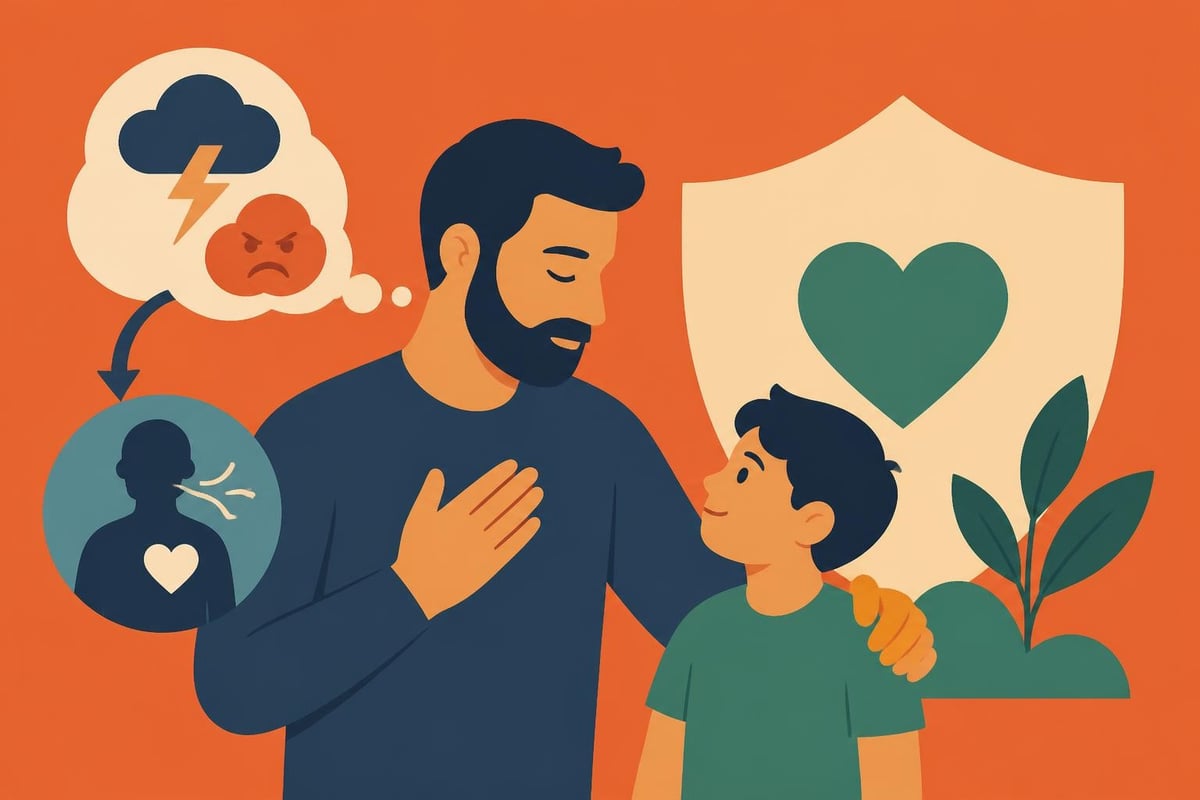
Your kids are watching. They are learning how men handle stress, disappointment, and pain. If all they see is anger, that is what they will learn. If they see you shut down, withdraw, and avoid, that becomes their blueprint. You do not get to separate who you are at work from who you are at home. Your nervous system does not work that way.
Research shows anger functions as a symptomacross multiple contexts, and children raised in environments where anger is the primary emotional expression develop their own dysregulation. This is not about being perfect. This is about being aware. When you recognize anger as the symptom, you can intervene before it becomes the legacy.
Fathers carry the weight of providing, protecting, and leading. That weight is real. But when you carry it without processing the cost, the weight becomes resentment. The resentment becomes anger. The anger becomes the environment your family lives in. You owe them better. You owe yourself better.
The Leadership Standard
Leadership at home is not about being the loudest or the strongest. It is about being the most regulated. Your family needs you present, not perfect. They need you connected, not in control of everything. When you address anger as the symptom instead of treating it as the problem, you model emotional intelligence. You show them that strong men feel things and deal with them directly.
This is the standard. You do not get to ignore your internal state and call it strength. You do not get to explode at your family and call it a bad day. You are responsible for what you bring into your home. If you are bringing unprocessed anger, fear, or pain, that is on you to fix.
The Information vs. Environment Problem
You do not lack information. You know anger is a problem. You know you should handle stress better. You know you should be more present with your family. The problem is not information. The problem is environment.
You need:
Accountability: Someone who will check if you did the work, not just if you intended to
Brotherhood: Other men who understand the battle and will not let you quit
Structure: A system that does not rely on motivation or willpower
Leadership: Someone who has been where you are and made it through
Most men try to fix this alone. They read books. They watch videos. They make promises to themselves. None of that works long-term because the environment has not changed. The same triggers are still there. The same patterns are still running. You need a different environment, one built for growth instead of maintenance.
Frequently Asked Questions
Is anger always a symptom of something else?
Not always, but often. Anger can be a healthy response to injustice or violation. The question is whether your anger is proportionate and productive. If your anger is frequent, intense, and disconnected from real threats, it is functioning as a symptom of unaddressed pain, fear, or stress.Anger issues often signal underlying conditionsthat need direct intervention.
How do I know if I need professional help?
If your anger is damaging relationships, affecting your work, or making you feel out of control, you need help. If you have tried to manage it on your own and the pattern continues, you need outside intervention. Professional help is not a sign of weakness. It is a sign you are serious about fixing the problem instead of managing symptoms.
Can I fix this without talking about my feelings?
No. You can manage the behavior temporarily, but you cannot fix the root cause without addressing what you are actually feeling. This does not mean hours of therapy talking about your childhood. It means learning to identify and name your internal state so you can respond instead of react. The work is practical, not philosophical.
What if my anger is justified?
Your anger might be a reasonable response to a real problem. That does not mean it is useful. Justified anger that is not processed still damages you and everyone around you. The goal is not to eliminate anger. The goal is to use it as information and then choose your response deliberately.
How long does it take to change this pattern?
It depends on how long you have been running the pattern and how committed you are to changing it. Most men see significant shifts in 60 to 90 days with consistent work and accountability. This is not a quick fix. This is a rebuild of how you process and respond to stress. The timeline matters less than the consistency.
Anger as the symptom is the signal most men ignore until the damage is done. You do not have to be that man. The work is not complicated, but it is hard, and you cannot do it alone in an environment that is not built for it.The Father Forgecreates the structure, accountability, and brotherhood that turn awareness into lasting change, building men who lead at home with strength and presence instead of reaction and regret.